Side Bags: A Practical Category for Everyday Carry Brands
A side bag earns its place in an everyday carry range when it holds about 2 litres, sits at the hip on a 45-60 cm drop, and can be opened one-handed while the wearer is moving. Nine checks decide whether it does: wear position, body depth, strap geometry, closure, substance, interior, hardware, freight and documentation. At 500 pcs per style and colourway in 1.0 mm full-grain, expect roughly USD 9.20 FOB Xiamen, sampling in 6-10 working days and bulk in 35-50 days at AQL 2.5 (ISO 2859-1).
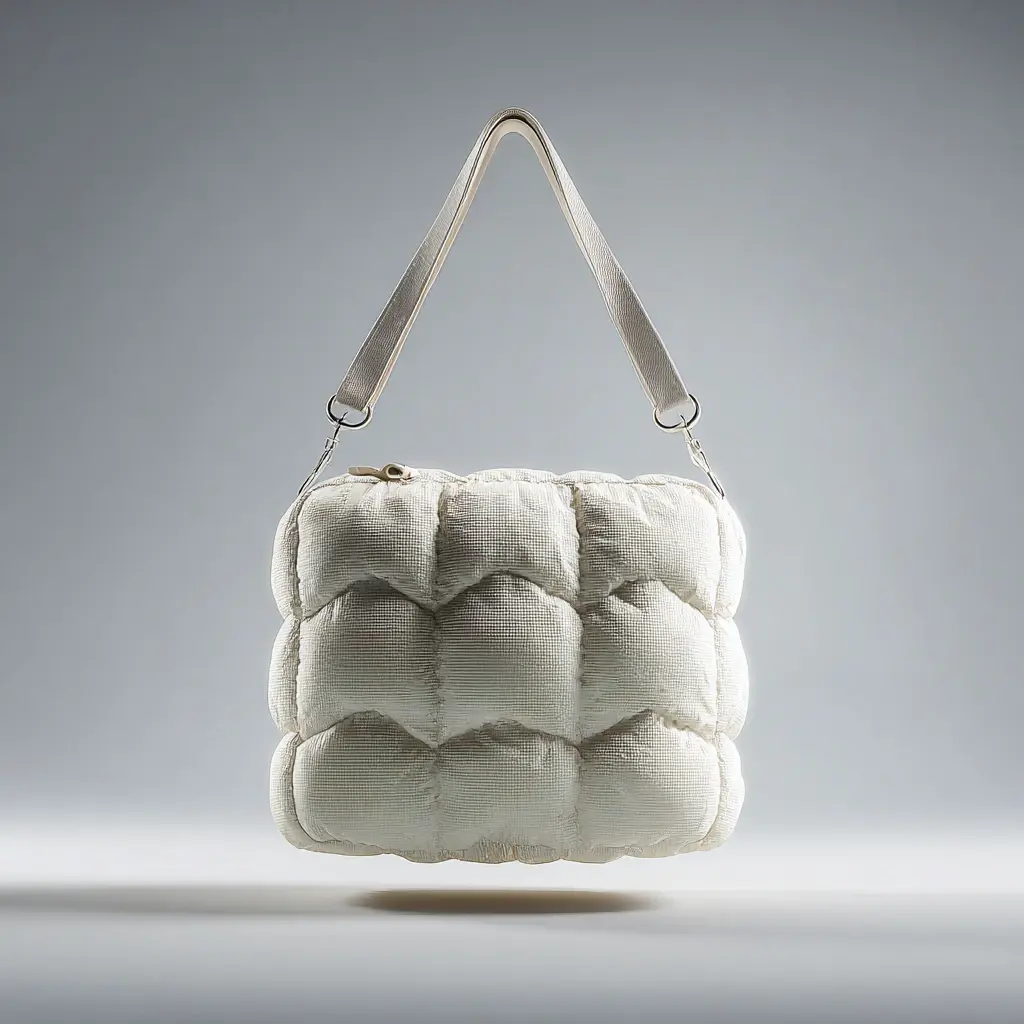
- Start here: the wear position sets every other number
- Checklist: body depth and the 2-litre floor
- Checklist: strap geometry for a hip-worn bag
- Checklist: a closure that works one-handed
- Checklist: substance and finish against daily abrasion
- Checklist: interior layout inside 2 litres
- Checklist: hardware loads on a small body
- Checklist: carton, freight and the light-bag penalty
- Checklist: documentation for EU and US listings
- Where the Unit Cost Sits: A Component Split
- Four Tests Before a Side Bag Bulk Run
A side bag earns its place in an everyday carry range when it holds about 2 litres, sits at the hip on a 45-60 cm drop, and can be opened one-handed while the wearer is moving. Nine checks decide whether it does: wear position, body depth, strap geometry, closure, substance, interior, hardware, freight and documentation. At 500 pcs per style and colourway in 1.0 mm full-grain, expect roughly USD 9.20 FOB Xiamen, sampling in 6-10 working days and bulk in 35-50 days at AQL 2.5 (ISO 2859-1).
Side bag reference specification
Start here: the wear position sets every other number
Every other decision on a side bag follows from one question: where does it sit? A side bag is worn at the hip, slightly behind the hip bone, with the body resting against the side of the torso. That single fact sets the strap drop, the depth of the body, the position of the closure and the shape of the back panel, and getting it wrong produces a bag that is technically correct and practically annoying.
The most common failure is a side bag built like a small crossbody. The body ends up too deep, so it swings forward when the wearer walks; the strap ends up too long, so the bag sits at thigh level rather than at the hip; and the closure ends up on the wrong edge, so opening it requires rotating the whole bag. All three are specification errors, not taste errors, and all three are caught by the checks below before a single hide is cut.
Two product decisions follow from wear position and both are worth making early. First, the back panel should be flat and slightly stiffened, because a curved back panel on a hip-worn bag digs into the torso. Second, the strap should attach at the top corners rather than at the sides, because side attachment rotates the body away from the hip under load. Both are one-line changes in the tech pack and both are expensive to discover at the sample stage.
Checklist: body depth and the 2-litre floor
Volume on a side bag is a narrow band. Below about 1.6 litres the bag cannot hold a large phone plus a small leather goods case and it stops being useful; above about 2.6 litres it starts swinging and stops being a side bag. The working target is 2 litres, which in flat dimensions means roughly 20 cm high, 16 cm wide and 6 cm deep.
- Depth at 6 cm, not 8: depth is what makes a hip-worn bag swing. Every extra centimetre of depth moves the centre of mass away from the body.
- Height at 20 cm and width at 16 cm: this takes a 6.7-inch phone laid flat with 4 mm clearance on all sides.
- Volume stated in litres in the tech pack: it forces agreement before sampling instead of after the first sample arrives looking wrong.
- Back panel flat with a 0.8 mm fibreboard stiffener: stops the contents pressing into the torso and costs about 0.20 USD.
- Gusset as a single folded piece rather than two side seams: fewer operations, and the base does not creep outward over time.
Programmes that skip the volume check end up with the second most common complaint in the category, which is not that the bag is too small but that it is too big. A 3-litre side bag is a small shoulder bag wearing the wrong name, and customers read the discrepancy immediately, even if they cannot articulate it in a review.
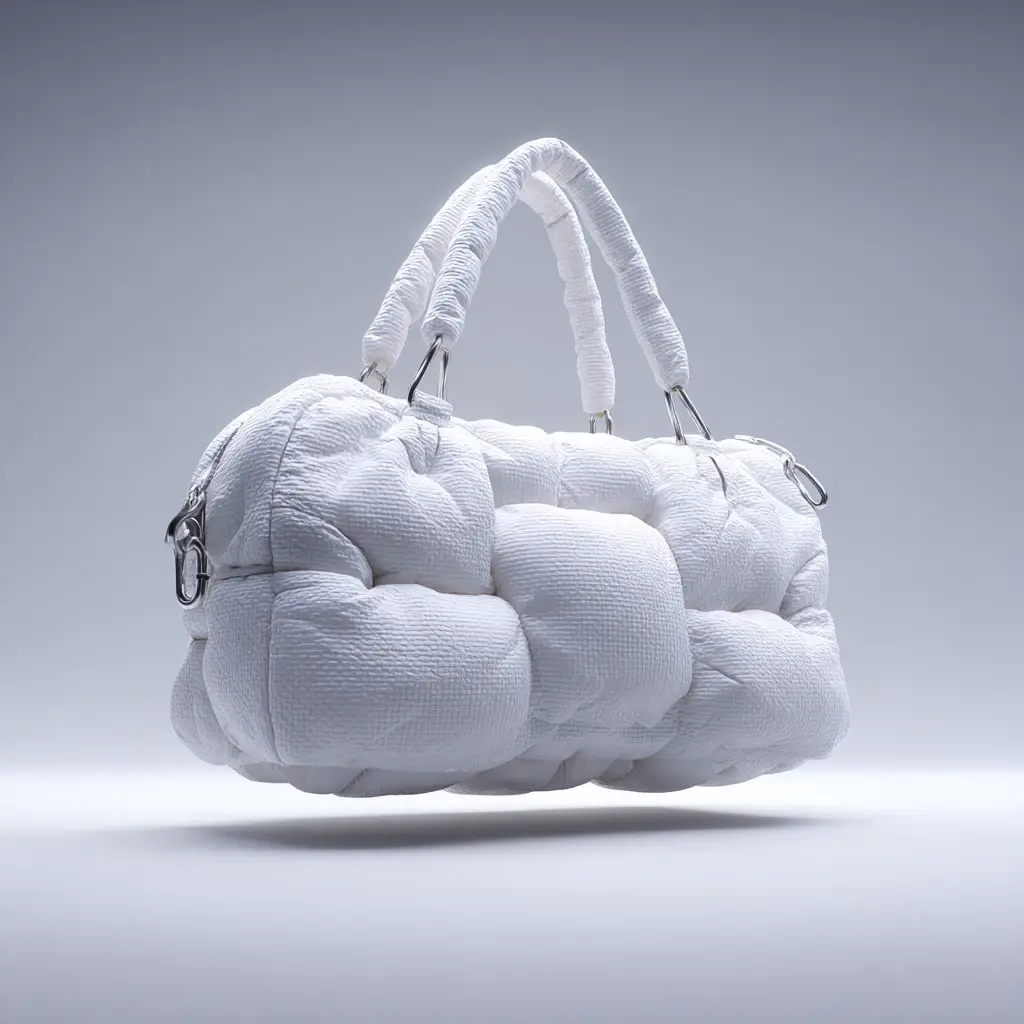
Checklist: strap geometry for a hip-worn bag
Strap drop on a side bag is shorter than most briefs assume. Because the bag sits at the hip rather than across the body, the usable range is 45 to 60 cm, with 52 cm as the default. A 70 cm drop, which is a normal crossbody figure, puts the bag at mid-thigh on most frames and produces exactly the swing problem the shallow body was meant to avoid.
- Drop range 45-60 cm, default 52 cm: shorter than a crossbody because the bag is hip-worn, not body-worn.
- Strap width 18 mm: narrow enough to read light, wide enough not to cut in when the bag holds a full phone and case.
- Attachment at the top corners with 12 mm D-rings: side attachment rotates the body away from the hip under load.
- Adjustment slider on the strap, not on the body: keeps hardware off the panel that rests against clothing.
- Pull test at 2,200 grams on each attachment: catches the failure mode that appears in month two, not in the sample.
Checklist: a closure that works one-handed
A hip-worn bag is opened many times a day, usually while the wearer is standing, walking or holding something else. That makes one-handed operation the primary closure requirement, ahead of security and ahead of looks. A closure that needs two hands gets left open, and an open side bag on public transport is a problem the customer will blame on the brand rather than on their own habits.
| Closure | One-handed | Added cost (USD) | Verdict |
|---|---|---|---|
| Number 3 coil zipper | Yes | 0.85 | Best default for this volume |
| Magnetic tab at 1,800 g pull | Yes | 0.55 | Good, check lining interference |
| Turn lock | No | 1.40 | Looks premium, fails the use case |
| Flap with press stud | Sometimes | 0.70 | Acceptable, slower in daily use |
The number 3 coil zipper is the right default at this size and the number 5 used on larger compact shapes is over-specified here. Magnetic tabs work well but need a pull force around 1,800 grams and a check that the magnet is not sitting directly against a metal ring inside the bag, which is a defect that shows up as a scratched phone rather than as a failed closure. The full comparison of closure hardware on compact shapes is worth reading before locking this line.
Checklist: substance and finish against daily abrasion
An everyday carry bag is rubbed against clothing, car doors, chair backs and desk edges every single day. That makes abrasion the governing property, not softness. At 1.0 mm full-grain the bag is tough enough for years of this and still breaks in; at 0.7 mm it feels lovely in the showroom and shows wear at the corners within a season.
- Substance at 1.0 mm for the body and 1.2 mm for the flap: thinner leather abrades through at the corners first.
- Finish: semi-aniline rather than pure aniline, because an untreated surface marks with the first splash of rain.
- Lining at 120 gsm polyester twill, tested to 20,000 Martindale rubs: below that the lining pills at the mouth.
- Edge paint in two coats with a 1.2 mm build: single-coat edge paint cracks at the fold within months.
- Stitch at 9 per inch with a bonded nylon thread: tighter stitching perforates the leather and weakens the seam.
Colour also belongs on this checklist. Approve the reference under a D65 light source and agree a tolerance of delta E 2.0 against the Pantone reference, because a side bag sits against clothing all day and metamerism is far more visible in that context than on a bag carried in the hand. Asking the tannery for a Leather Working Group audit reference at the same time answers the sourcing question that European retailers now ask as standard.
Checklist: interior layout inside 2 litres
Two litres is not much room, and the temptation is to fill it with pockets. Resist that. Three pockets is the maximum that works at this volume; a fourth eats the usable space and the bag becomes a pocket organiser that cannot hold a phone case. Layout beats quantity here, and the layout that works is determined by what comes out of the bag most often.
- One open slip pocket on the back panel for the phone, sized to 82 mm clear width and 165 mm clear height.
- One zip pocket at 14 cm wide for a small leather goods case and receipts.
- One key clip on a 50 mm webbing tab, positioned near the mouth rather than at the bottom.
- Nothing on the front panel: front pockets on a hip-worn bag bulge against the torso and look wrong in photography.
The key clip position sounds trivial and it is not. A key clip at the bottom of the bag means the wearer has to empty the bag to find keys, which is the small daily irritation that turns a four-star product into a three-star one. Put it within 50 mm of the mouth and the problem disappears for the cost of moving a line on the lining pattern.
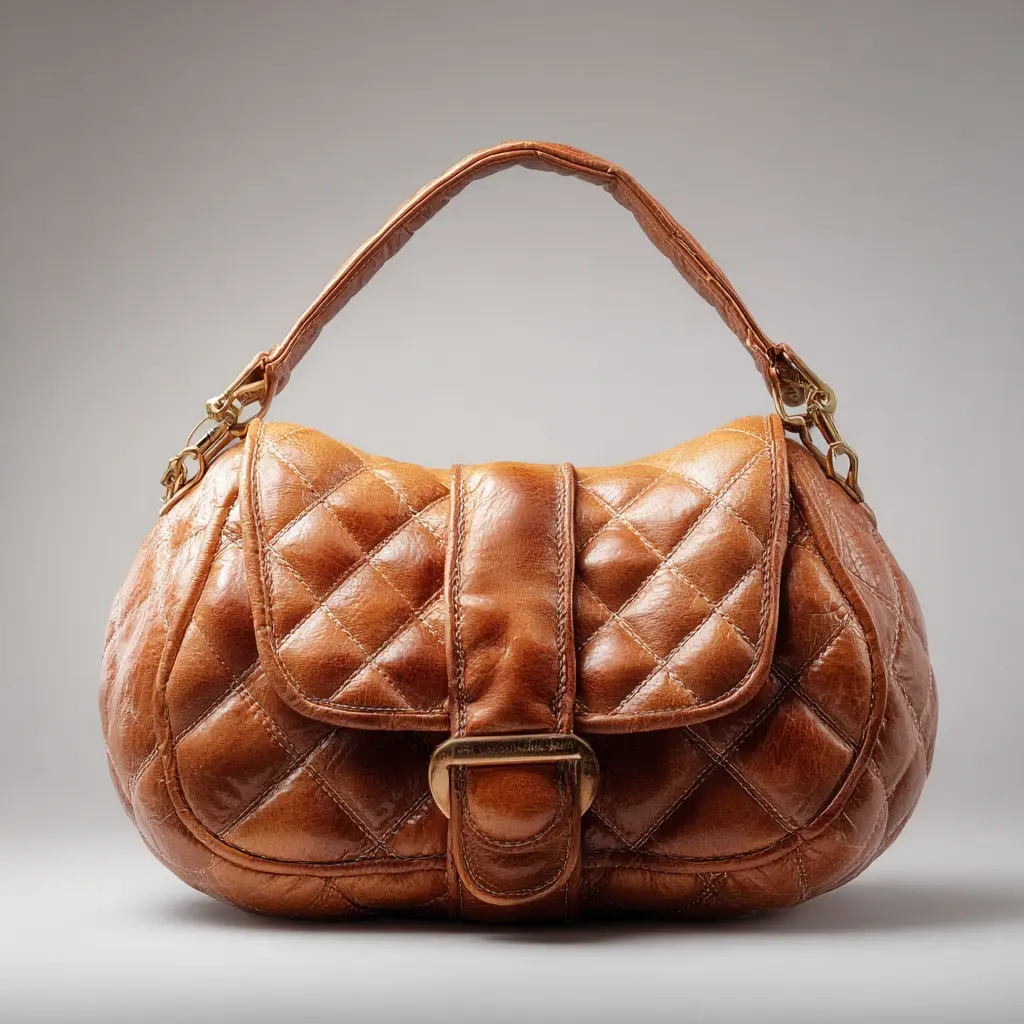
Checklist: hardware loads on a small body
Smaller bags carry lighter loads, so hardware can be lighter too, but the attachment points take proportionally more stress because there is less leather distributing it. That is why strap attachment is the failure point on compact shapes and why the pull test belongs in the tech pack rather than in a verbal assurance.
- 12 mm D-rings with a 1.2 mm wire section: lighter rings deform under the strap load at this body size.
- Rivets backed with a 12 mm washer on the reverse: without a backing washer, rivets pull through 1.0 mm leather.
- Plating class stated with a 24-hour salt spray floor and the certificate attached to the sample approval.
- No hardware on the back panel: it presses into clothing and marks it, which is a return reason.
Checklist: carton, freight and the light-bag penalty
A side bag is light and small, which sounds like a freight advantage and is not. Cartons for light goods cube out before they weigh out, meaning the container is full long before the weight limit is reached, so freight is charged on volume that the product does not use efficiently. The fix is packing density, and it is decided at the carton specification stage rather than at the port.
- Pack bodies nested, alternating direction, at 30 pieces per carton: nesting roughly halves the carton count versus stacking.
- Carton at 55 x 38 x 30 cm: sized for a standard pallet footprint, not for whatever box is cheapest that week.
- Straps folded flat against the body, not coiled: a coiled strap adds 8 mm to every unit and costs cartons.
- Polybag at 40 microns with a silica sachet: thin bags split in transit and the sachet protects the lining from humidity.
Sea freight from Xiamen is quoted on FOB terms with CIF and DDP available, and the packing decisions above typically move landed cost by 3 to 6 percent on a light bag. That is more than most buyers save by negotiating the unit price, which is why the carton specification deserves a line in the first costing email rather than a conversation at the port.
Checklist: documentation for EU and US listings
Documentation is the last checklist and the one most likely to be discovered late. Marketplaces and chain retailers ask for papers at onboarding, not after the first sale, and assembling them during production is what turns a 35-50 day bulk run into a two-month one. Request the pack at quotation stage and it arrives with the goods.
- REACH Annex XVII declaration for restricted substances, required for European Union market access.
- California Prop 65 and CPSIA documentation for United States marketplace listings.
- Leather Working Group audit reference from the tannery, increasingly asked for by European retailers.
- BSCI or Sedex audit reference, requested by most chain retailers at onboarding.
- Inspection report at AQL 2.5 (ISO 2859-1), plus a retained reference sample from the approved run.
With those nine checks closed, a side bag becomes one of the most reliable shapes in an everyday carry range: cheap to sample, quick to photograph, and easy to extend into a second and third colourway. Programmes building a full range usually pair it with a tote at the volume end and use the guidance on balancing a collection across carry positions to decide how many of each to buy. The wider leather handbag sourcing programme treats the side bag as the frequency product of the range: lower ticket, shorter reorder cycle, and the shape most likely to bring the same customer back within a season.
Where a side bag should not go is into a range that already sells a compact sling in the same material at the same price. The two overlap heavily in use, and the trade bodies that track the category, including the Accessories Council and ICFA, report the same pattern: compact formats grow by purchase frequency, not by adding near-identical shapes. If the range already has one, add a different carry position instead of a second version of the same one.
Where the Unit Cost Sits: A Component Split
A reference unit cost is only useful once it is broken open, because the savings on a small bag are not where most buyers look. On a 2-litre body at about USD 9.20 FOB Xiamen, leather and labour are the two large lines and hardware is smaller than expected. Knowing which line is which is what makes a revision productive rather than a request for a better number.
| Line | Cost per unit | Share | Where it can move |
|---|---|---|---|
| Body leather, 1.0 mm full grain | USD 2.60-3.20 | 30-35 per cent | Grade, and the defect allowance on the hide |
| Lining, 120 gsm twill | USD 0.55-0.80 | 7-9 per cent | Weight, and pocket count |
| Zipper, number 3 coil | USD 0.85 | 9 per cent | Chain grade and puller |
| Hardware: D-rings, rivets, slider | USD 0.60-0.95 | 7-10 per cent | Stock finishes instead of custom |
| Cutting and sewing labour | USD 2.20-2.90 | 25-30 per cent | Panel count and pocket count |
| Edge paint, thread, packing | USD 0.70-1.10 | 8-12 per cent | Two-coat rather than three-coat edge |
- Labour is the second largest line on a small bag. A body that needs fewer panels beats a cheaper hide.
- Hardware is small and visible. Moving from a cast puller to a stock one saves USD 0.30-0.55 and is barely noticed at this price.
- The defect allowance is the hidden leather cost. A grade with a 12-18 per cent allowance costs more per usable panel than its price suggests.
Four Tests Before a Side Bag Bulk Run
A side bag is used more often and more casually than any other shape in a range, and the failures that matter are the ones that appear in month two rather than in the sample. Four tests take a day between them and catch almost all of them. Run them on the pre-production piece rather than on the proto, because the piece that predicts the run is the one built from bulk materials.
| Test | Method | Pass criterion |
|---|---|---|
| Strap attachment pull | 2,200 g static on each attachment for 30 seconds | No movement at the root and no rivet pull-through |
| Strap creep | Loaded to 1 kg for 24 hours at the longest setting | Drop changes by less than 5 mm |
| Zipper cycling | 3,000 open and close cycles on the fitted chain | No tooth skip and no slider wear flat |
| Corner abrasion | 500 dry rubs to ISO 11640 on the base corners | No finish loss through to the substrate |
- Test the corners, not the panel. A hip-worn bag wears at the two lower corners first, and that is where a 1.0 mm hide shows it.
- Cycle the zip on the fitted bag, not on a chain sample. Tape tension around a curved mouth is what makes a chain skip.
- Record the results with the golden sample. A test without a number recorded is a test that gets repeated next season.
Run the nine checks above against the current tech pack and send the gaps with the target ship date. A side bag quotation comes back on FOB Xiamen terms at 500 pcs per style and colourway, with sampling at 6-10 working days and bulk at 35-50 days. Our validated partner factory Quanzhou Yingming Bags has exported since 2014 across seven production lines at about 200,000 pcs per month. Get a quote at /contact-quote/.
Frequently Asked Questions
What size should a side bag be for everyday carry?
About 2 litres, which in flat dimensions is roughly 20 cm high, 16 cm wide and 6 cm deep. Below 1.6 litres it cannot hold a large phone plus a small leather goods case; above 2.6 litres it starts swinging away from the hip. Depth is the dimension to watch, since every extra centimetre moves the centre of mass away from the body.
How is a side bag different from a crossbody bag?
A side bag sits at the hip with a 45 to 60 cm drop and a shallow 6 cm body. A crossbody sits across the torso with a longer strap and a deeper body. The wear position drives every other dimension, which is why a side bag built with crossbody proportions swings forward when the wearer walks.
What strap drop works on a hip-worn bag?
Between 45 and 60 cm, with 52 cm as the default. A 70 cm drop, which is normal for a crossbody, puts a hip-worn bag at mid-thigh on most frames and creates the swing problem the shallow body was designed to avoid. Width of 18 mm balances comfort against a light visual read.
How much does a 500-piece side bag order cost?
Around USD 9.20 per unit FOB Xiamen for a 1.0 mm full-grain body with a 120 gsm twill lining, a number 3 coil zipper and 12 mm D-rings. Carton and packing decisions move landed cost by another 3 to 6 percent on a light bag, which is more than most buyers save negotiating unit price.
Which closure is best for a side bag?
A number 3 coil zipper is the best default at 2 litres, costing about 0.85 USD per unit and opening one-handed. A magnetic tab at 1,800 grams pull force works well too and costs about 0.55 USD. Turn locks look premium but need two hands, which fails the primary use case for a hip-worn bag.
What leather thickness suits an everyday carry side bag?
1.0 mm for the body and 1.2 mm for the flap, in a semi-aniline finish. Thinner leather feels better in a showroom and abrades through at the corners within a season. Semi-aniline rather than pure aniline, because an untreated surface marks the first time the bag is caught in rain.
How should a side bag be packed for shipping?
Nest the bodies alternating direction at 30 pieces per carton, sized 55 x 38 x 30 cm for a standard pallet footprint. Fold straps flat rather than coiling them, since a coiled strap adds 8 mm to every unit. Nesting roughly halves the carton count compared with stacking flat.
Why do light bags cost more to ship than expected?
Because cartons of light goods cube out before they weigh out. The container reaches its volume limit long before the weight limit, so freight is charged on space the product does not use efficiently. Packing density, decided at carton specification stage, is the only real lever on landed cost for this shape.
How many pockets should a 2-litre side bag have?
Three at most: an open slip pocket on the back panel for the phone, a 14 cm zip pocket for a small leather goods case, and a key clip on a 50 mm tab near the mouth. A fourth pocket eats usable space, and front-panel pockets bulge against the torso.
What hardware specification suits a small side bag?
12 mm D-rings with a 1.2 mm wire section, rivets backed with a 12 mm washer so they cannot pull through 1.0 mm leather, and plating specified to a 24-hour salt spray floor with the certificate attached to the sample approval. Keep all hardware off the back panel, where it presses into clothing.
What documents are needed to sell side bags in the EU and US?
A REACH Annex XVII declaration for the European Union, California Prop 65 and CPSIA documentation for United States marketplace listings, and a Leather Working Group audit reference from the tannery. BSCI or Sedex audit references are requested by chain retailers at onboarding, and the inspection report at AQL 2.5 closes the pack.
Should a brand stock a side bag and a compact sling together?
Only if they differ in carry position and material. The two overlap heavily in everyday use, and adding a second near-identical compact shape rarely grows the range. Trade bodies including the Accessories Council report that compact formats grow through purchase frequency rather than through adding lookalike silhouettes.
People Also Ask
Is a side bag the same as a sling bag?
No. A side bag is worn at the hip with a 45 to 60 cm drop and a shallow body; a sling is worn higher on the back with a shorter adjustment range and a body built around a phone. They overlap in size but not in wear position or strap geometry.
Can a side bag hold a large phone?
Yes, if the body is at least 20 cm high and 16 cm wide and the slip pocket has 82 mm clear width and 165 mm clear height. That fits a 6.9-inch phone in a case with 4 mm of clearance on each side.
How long does side bag production take?
Sampling takes 6 to 10 working days and bulk takes 35 to 50 days from approved sample. Documentation assembled during production is the usual cause of delay, so request the compliance pack at quotation stage rather than after the bulk run starts.
What is the best colour tolerance for leather side bags?
Delta E 2.0 against the Pantone reference, assessed under a D65 light source. Side bags sit against clothing all day, so metamerism is more visible than on a bag carried in the hand, and a looser tolerance produces complaints when two pieces are seen together.
Sources and further reading
Every figure on this page is either our own programme data or attributed below. Open the originals before you write them into a specification.
- REACH — chemical substances regulationEuropean Commission Annex XVII restricts the substances that may appear in finished leather and coatings.
- Leather Working Group — environmental auditing for tanneriesLeather Working Group Environmental audit protocol for tanneries and leather traceability.
- Incoterms rulesICC The rules that decide where cost, risk and insurance transfer.