Polyester Canvas Bags: When Fabric Beats Leather for Brands
When does polyester canvas beat leather for a brand's bag line? Run six questions in this order: what the bag does each week, what the retail price band allows, how much the empty weight matters, whether the surface has to take print or coating, whether the brand promise is care or permanence, and where the goods ship. Fabric wins whenever the bag is used hard, priced under roughly 149 USD, expected to weigh under 450 g, and expected to be washed or wiped rather than repaired — and it wins on calendar as well, because a 600D reference can be confirmed in 2-4 days against 2-4 weeks for a matched hide. Leather still wins on the other side of every one of those six questions, and the decision tree below tells you which side you are on before a single sample is cut.
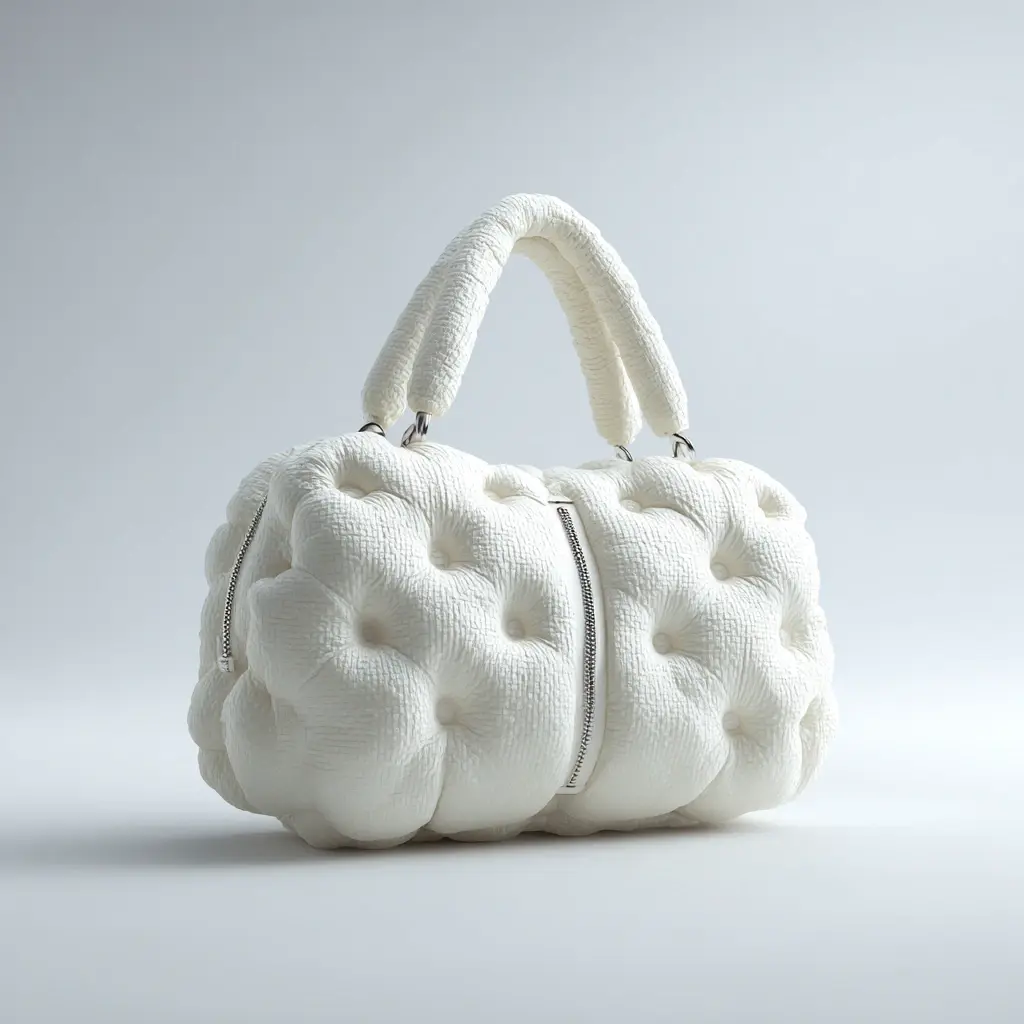
- Start With the Decision Tree: Six Questions in Order
- Question One: What Is the Bag's Job in the Week?
- Question Two: What Does the Price Band Allow?
- Question Three: How Much Does Empty Weight Matter?
- Question Four: Must the Surface Take Print or Coating?
- Question Five: Is the Promise Care or Permanence?
- Question Six: Where Does the Bag Ship and Sit?
- Reading the Numbers: Denier, GSM and Coating
- Where Fabric Loses and Leather Still Wins
- What the Choice Does to Sampling and Bulk
- Acceptance Tests to Write Into the Fabric Purchase Order
When does polyester canvas beat leather for a brand's bag line? Run six questions in this order: what the bag does each week, what the retail price band allows, how much the empty weight matters, whether the surface has to take print or coating, whether the brand promise is care or permanence, and where the goods ship. Fabric wins whenever the bag is used hard, priced under roughly 149 USD, expected to weigh under 450 g, and expected to be washed or wiped rather than repaired — and it wins on calendar as well, because a 600D reference can be confirmed in 2-4 days against 2-4 weeks for a matched hide. Leather still wins on the other side of every one of those six questions, and the decision tree below tells you which side you are on before a single sample is cut.
The numbers that decide fabric against leather
Start With the Decision Tree: Six Questions in Order
Material arguments in this trade go in circles because both sides are right about different bags. A decision tree ends the argument by forcing a sequence: the first question can eliminate leather outright, and the last question only matters if the first five came out the same way. Work the six in order and stop as soon as the answer is unambiguous, because the point of the tree is to reach a decision rather than to complete it.
The tree also has a financial shape. Fabric and leather differ in three places that a spreadsheet can see: material cost per bag, tooling and sampling cost per style, and the cost of a wrong decision. Fabric is cheaper on the first two and dramatically cheaper on the third, because a 600D polyester reference can be swapped in 2-4 days while a matched hide takes 2-4 weeks to source and approve. That asymmetry is why new brands should generally open with fabric and add leather once a silhouette has proven itself.
Question One: What Is the Bag's Job in the Week?
Job first, because it is the only question that can end the conversation immediately. A bag that goes to a gym, a beach, a market, a nursery run or a worksite is being used hard: it gets wet, it gets wiped, it gets thrown into a car and it carries things that leak. Polyester canvas at 600D with a 0.12 mm PU face survives all of that and leather does not, because water spotting and edge wear on a hide are permanent while the same treatment on a coated fabric is a cloth and thirty seconds.
- Gym, swim and beach. Fabric, without argument. Salt water and chlorine stain a hide permanently; a coated polyester wipes clean.
- Market and grocery. Fabric at 900D for the base panel, because the load is unpredictable and the abrasion is real.
- Daily commute with a laptop. Either, and the decision moves to question two, because both survive the job.
- Client-facing work bag. Leather, because the bag is part of how the wearer is read in a room.
- Travel and packable. Fabric, because the empty weight budget is under 400 g and a hide cannot get there.
Notice that the job question is about the customer's week rather than about the product category. Two totes at 38 cm wide can land on opposite sides of this branch purely because one carries a laptop to an office and the other carries towels to a pool, which is why a brief should describe the week the bag lives in before it describes the bag.
Question Two: What Does the Price Band Allow?
Price band is the second filter, and it is the one that decides most lines. Below roughly 149 USD retail, a genuine hide at 1.2-1.6 mm is difficult to make work once cutting yield, hardware and freight are counted, because a tote consumes 1.4 to 1.9 square feet of material and hide is priced per square foot with a yield loss that fabric does not carry. Polyester canvas is sold by the metre with near-total yield, which is why it dominates the 39 to 129 USD band where most ecommerce volume actually sits.
| Retail band | Realistic body material | What gives the band away |
|---|---|---|
| 29-59 USD | 600D polyester, 0.10 mm PU face, minimal hardware | Print quality and the feel of the webbing |
| 79-149 USD | 900D polyester or coated canvas, better hardware | Hardware weight and lining gauge |
| 149-299 USD | Split or corrected grain hide, or a premium coated canvas | Edge finishing and strap construction |
| 299 USD and above | Full grain hide from an audited tannery | Hide selection and hand-finished edges |
The trap in this question is a brand that wants a leather look at a fabric price. Polyurethane-coated split leather and heavy PU-coated fabric both deliver the look, and both disappoint in the same way: they crack rather than crease, and the crack appears at the fold of the strap or at the mouth of the bag after roughly 12 to 18 months. If the price band says fabric, the honest move is to design for fabric and win on print, colour, weight and function rather than to imitate a hide badly.
Question Three: How Much Does Empty Weight Matter?
Weight is the question most briefs skip and most reviews mention. A 38 cm tote in 600D polyester with a 210D lining weighs roughly 380 to 470 g empty; the same shape in 1.4 mm full grain with the same lining weighs 620 to 780 g. That is a difference of 250 to 300 g before anything is put inside, and on a bag that already carries a 1.3 kg laptop it is the difference between a bag that is comfortable for a forty-minute walk and one that is not.
Weight also has a second-order effect that lands in the shipping budget rather than in the review. At 500 pieces, 300 g per unit is 150 kg of freight, and on air freight that is a material line. On sea freight it is not, but the carton count and the volumetric weight still move, which is why a packable or travel programme almost always ends up on fabric. If the brief contains the word packable, lightweight or travel, the tree has already answered.
Question Four: Must the Surface Take Print or Coating?
Surface capability is where fabric wins outright and permanently. A coated polyester takes sublimation, screen print, digital print, heat transfer, embroidery and coating finishes including water repellency, flame retardance and antimicrobial treatment. A hide takes embossing, debossing, laser etching and foil, and it takes print poorly. A brand whose identity lives in graphics, colour stories, seasonal prints or licensed artwork has no realistic leather option at any price.
- Sublimation on polyester. Full-colour photographic output bonded into the fibre, with no hand-feel penalty and no cracking.
- Screen print on coated canvas. Four to six colours, opaque, and the cheapest way to carry a large mark on a fabric tote.
- Embroidery on either. Works on both, but on a hide it is slower and the stitch holes are permanent.
- Embossing on a hide. The fabric equivalent is a silicone patch or a moulded label, and the two read very differently.
There is a compliance side to coating too. Water-repellent finishes have historically been where per- and polyfluoroalkyl substances enter a bag, and a brand selling into states with PFAS restrictions should specify a PFAS-free durable water repellent and say so on the specification. That is easy on a fabric reference and effectively impossible to verify on a finished hide bought through several hands.
Question Five: Is the Promise Care or Permanence?
Every bag brand is selling one of two things, and the material is the loudest statement of which. A fabric bag promises care: it is washable, replaceable, colourful and part of a rotation. A leather bag promises permanence: it is repairable, it acquires a patina, and it is bought once. Neither promise is superior, but they cannot both be made with the same material, and a brand that mixes them confuses the customer at exactly the point where a purchase decision is made.
The test is simple. If the product page says machine washable, wipe clean, lightweight or packable, the promise is care and the material is polyester canvas. If it says full grain, develops character, lifetime or hand-finished, the promise is permanence and the material is a hide. A page that says both is a page that converts poorly, and it is usually the result of a material decision made on cost rather than on promise.
Question Six: Where Does the Bag Ship and Sit?
Climate and channel are the last branch, and they matter more than most people expect. Goods shipped by sea to a humid market and then sitting in a warehouse for eight weeks will grow mould on a hide that was not fully dried, and mould on leather is a write-off rather than a cleaning job. Coated polyester is effectively immune. Conversely, a hide handles cold, dry retail environments and long shelf life better than a PU coating, which can stiffen and, in cheap formulations, hydrolyse over years rather than months.
Channel also matters. Marketplace and direct-to-consumer brands, where the customer cannot touch the bag before buying, benefit from materials that photograph consistently and do not show variation between units. Fabric does that naturally; hide does not, because every panel has grain, scars and shade variation that a customer reading a photograph cannot predict and a customer receiving a different hide than the one photographed will return. Where return rate is the metric being managed, consistency is worth more than character.
Reading the Numbers: Denier, GSM and Coating
Once the tree says fabric, the specification is three numbers and two standards. Denier describes the yarn thickness, and 600D is the everyday handbag standard while 900D is used for load-bearing panels and bases. GSM describes the finished fabric weight, and a coated 600D sits around 240 gsm while a coated 900D sits around 320 gsm. Coating thickness, usually 0.10 to 0.14 mm of polyurethane on the face, is what turns a textile into a bag material.
- Denier
- 600D body, 900D base and strap attachment panels
- Finished weight
- 240 gsm at 600D, 320 gsm at 900D, plus or minus 5 percent
- Coating
- 0.10-0.14 mm PU face; PVC above 0.20 mm where abrasion dominates
- Abrasion
- 20,000 cycles minimum, 30,000 for the base panel, ISO 12947-2
- Tear strength
- 25 N minimum warp and weft at 600D, ASTM D2261
- Water resistance
- 1,000 mm hydrostatic head minimum, ISO 811
- Colour fastness to light
- Grade 4 or better, ISO 105-B02
- Colour fastness to rubbing
- Grade 4 dry and 3-4 wet, AATCC 8
Four of those eight lines are the ones that separate a bag that lasts from a bag that does not, and they are all cheap to test. Abrasion below 20,000 cycles shows as a bald patch at the base corners within a year. Tear strength below 25 N shows as a strap pulling away from the body. Colour fastness to rubbing below grade 3-4 wet shows as dye transfer onto a light shirt, which is the single most common cause of a fabric bag being returned with a complaint rather than quietly kept.
Recycled content is now a standard option rather than a premium one. Post-consumer polyester with Global Recycled Standard certification at 600D performs equivalently to virgin polyester on abrasion and tear, and the certificate is the document a marketplace or a retailer will ask for. A brand making an environmental claim should hold the GRS transaction certificate for the specific fabric lot, because a generic claim without lot-level documentation is the kind of claim that attracts scrutiny.
Where Fabric Loses and Leather Still Wins
Honesty requires the other side of the tree. Leather still wins on four specific counts, and a brand that ignores them will feel the loss. First, edges: a hide can be edge-painted or turned and burnished into a clean, permanent finish, while a coated fabric edge has to be bound, and a bound edge reads as casual at every price. Second, structure: a hide holds shape without interlining, where fabric needs foam or non-woven to stand up.
Third, repair: a leather strap can be re-stitched by a cobbler and a fabric strap generally cannot, which matters to any brand making a durability promise. Fourth, perceived value at the top of the market: above roughly 299 USD retail, customers expect a hide and read fabric as a cost saving regardless of how well it is made. A brand can fight that with a premium coated canvas and superb hardware, and some do successfully, but it is an uphill argument rather than a neutral one.
What the Choice Does to Sampling and Bulk
The last thing the tree decides is the calendar. A polyester canvas reference can be confirmed from a swatch book in 2-4 days, sampled in the standard 6-10 working days and run in the standard 35-50 days, and a second colourway is a dye lot rather than a hide selection. A hide reference takes 2-4 weeks to match, adds yield risk at cutting, and makes each colourway a separate tanning run. On a first programme where the calendar has no slack, that difference is often decisive on its own.
The rule that comes out of the whole tree is short: choose fabric when the bag is used wet, priced under 149 USD, expected under 450 g, printed rather than embossed, and sold through a channel where consistency beats character; choose a hide when the bag is client-facing, priced above 299 USD, and sold on repairability and patina. Where a line contains both, the fabric styles should carry the volume and the hide styles should carry the margin, and the two should be briefed as separate programmes rather than as variants of one.
The two comparisons that follow this decision are the PU against genuine leather guide for the middle of the market and the durability ranking on a budget for the bottom of it. Where the choice lands on recycled content, the eco options that still sell covers certification, and the handbag materials reference sets the full framework.
Acceptance Tests to Write Into the Fabric Purchase Order
Choosing fabric rather than a hide moves the risk from the tannery to the mill, and a mill order is governed by the test thresholds written into it. Six properties cover every failure a fabric bag actually suffers, each with a method so nobody argues about how it was measured, and all six sit inside the referenced standards rather than being invented for the order. Budget USD 60-140 per property per lot and five to seven working days, commissioned during sampling rather than after packing.
| Property | Threshold | Method | Sampling |
|---|---|---|---|
| Abrasion resistance | 20,000 cycles minimum, 30,000 for base panels | ISO 12947-2 | One sample per dye lot |
| Tear strength | 25 N minimum, warp and weft | ASTM D2261 | Three specimens per lot |
| Water resistance | 1,000-1,500 mm hydrostatic head | ISO 811 | One sample per finish batch |
| Colour fastness to rubbing | Grade 4 dry, 3-4 wet | ISO 105-X12 | One per colour |
| Colour fastness to perspiration | Grade 4 | ISO 105-E04 | One per colour, dark shades first |
| Mass per unit area | 240 gsm plus or minus 5 per cent | ISO 3801 | One per 2,000 metres |
Two conditions turn those six rows into enforceable terms. Results have to be reported against the lot actually delivered rather than against a mill standard, so the roll numbers belong on the test report. And where the brief carries a water-repellent finish, specify a per- and polyfluoroalkyl substance free durable water repellent in writing and ask for the declaration with the test report, because that requirement is verifiable on a fabric reference in a way it never is on a finished hide bought through several hands.
Run the tree against your own brief
Send the job, price band, target empty weight and channel. A private label coordinator will return the recommended body material with denier, gsm, coating and test standards, plus a sampling window of 6-10 working days at MOQ 500 pcs per style / colourway. Get a quote.
Frequently Asked Questions
When is polyester canvas a better choice than leather for a bag?
When the bag is used wet or hard, priced under roughly 149 USD, expected to weigh under 450 g empty, printed rather than embossed, and sold through a channel where unit-to-unit consistency matters more than character. Fabric also wins on calendar, because a reference can be confirmed in 2-4 days.
What denier should a bag body use?
600D is the standard for tote, shoulder and crossbody bodies and sits around 240 gsm finished. Move to 900D, around 320 gsm, for base panels, strap attachment zones and any bag expected to carry more than 8 kg. Below 420D the fabric reads as a lining rather than a body.
How is fabric abrasion specified for bags?
In Martindale cycles under ISO 12947-2, with 20,000 cycles the practical minimum for a body panel and 30,000 for a base. Below 20,000 the failure appears as a bald patch at the base corners within about a year of daily use.
What coating thickness should a canvas bag carry?
Between 0.10 and 0.14 mm of polyurethane on the face for general use. Polyvinyl chloride above 0.20 mm is used where abrasion dominates, but it is heavier, stiffer in cold weather and raises more compliance questions than polyurethane does.
How much lighter is a fabric tote than a leather tote?
Roughly 250 to 300 g on a 38 cm tote: 380 to 470 g empty in 600D polyester with a 210D lining against 620 to 780 g in 1.4 mm full grain with the same lining and hardware. At 500 units that difference is 150 kg of freight.
Can polyester canvas be printed with full colour artwork?
Yes, and this is where fabric wins outright. Sublimation bonds full-colour output into polyester fibre with no hand-feel penalty and no cracking, while screen printing carries four to six opaque colours on coated canvas cheaply. A hide takes print poorly.
Do water-repellent finishes create compliance problems?
They can. Durable water repellents have historically been where per- and polyfluoroalkyl substances enter a bag, so a brand selling into jurisdictions restricting PFAS should specify a PFAS-free finish and name it on the specification rather than accepting a generic water-resistant claim.
Does recycled polyester perform as well as virgin polyester?
Yes at equivalent denier. Post-consumer polyester at 600D with Global Recycled Standard certification matches virgin on abrasion and tear strength. What matters is documentation: hold the GRS transaction certificate for the specific fabric lot behind any environmental claim.
Where does leather still beat fabric?
On four counts: edges can be painted or burnished rather than bound, the material holds structure without interlining, a strap can be re-stitched by a cobbler, and above roughly 299 USD retail customers expect a hide and read fabric as a cost saving.
Does fabric reduce the sampling calendar?
Yes, mainly at material confirmation. A canvas reference is confirmed from a swatch book in 2-4 days against 2-4 weeks for a matched hide, and a second colourway is a dye lot rather than a separate tanning run. Sampling itself stays at 6-10 working days.
What colour fastness should be specified on a printed canvas bag?
Grade 4 or better to light under ISO 105-B02, and grade 4 dry with 3-4 wet to rubbing under AATCC 8. Wet rubbing below grade 3-4 is the most common cause of dye transferring onto a light shirt, which produces a complaint rather than a quiet return.
What is the minimum order for a fabric bag programme?
MOQ is 500 pcs per style / colourway. Fabric does not change that figure, because the binding constraints are the trim lots, the plating bath, the print setup and the line changeover rather than the body material, and each of those costs the same at 300 as at 3,000 pieces.
People Also Ask
Is polyester canvas cheaper than leather per bag?
Usually, but the larger saving is in yield and calendar. Fabric is sold by the metre with near-total cutting yield, while a tote consumes 1.4 to 1.9 square feet of hide priced per square foot with unavoidable loss.
Can a fabric bag look expensive?
Yes, through hardware weight, a bound interior with a good lining gauge and clean print registration. What it cannot do is imitate a hide convincingly, because coated surfaces crack at folds after roughly 12 to 18 months.
Should a new brand start with fabric or leather?
Fabric. A wrong fabric decision costs a dye lot and a few days; a wrong hide decision costs a matched hide, a cutting yield and several weeks. Start with fabric, prove the silhouette, then add leather.
Does fabric hold up in humid shipping and storage?
Better than a hide does. Coated polyester is effectively immune to warehouse mould, while a hide that was not fully dried can grow mould in transit that is a write-off rather than a cleaning job.
Sources and further reading
Every figure on this page is either our own programme data or attributed below. Open the originals before you write them into a specification.
- SATRA — technical services for leather, footwear and accessoriesSATRA Independent leather, hardware and accessories testing protocols.
- Leather Working Group — environmental auditing for tanneriesLeather Working Group Environmental audit protocol for tanneries and leather traceability.
- ASTM International — technical standardsASTM International Test methods for strap pull, seam strength and hardware corrosion are published here.