Recycled Materials for Handbags: Eco Options That Still Sell
Which recycled materials for handbags still sell? Five routes hold up commercially: recycled PET fabric at 600D and 210 gsm, bonded recycled leather fibre, recycled-content PU, recycled zinc alloy hardware, and recycled polyester lining and webbing. The ones that sell are the ones where the recycled claim is a certificate rather than an adjective — GRS or RCS with a transaction certificate attached, recycled content stated as a percentage, and no performance figure quietly dropped to get it. Two of the five cost more than virgin stock, two cost about the same, and one is cheaper once the duty saving on certain markets is counted, so the material choice and the claim have to be decided together.
- Three Recycled Routes, Compared Line by Line
- Recycled PET: What the Denier and Coating Decide
- Recycled Leather and Bonded Fibre: When It Works
- Recycled Hardware and Trim: The Quiet Option
- Certification Lines: GRS, RCS and What Buyers Accept
- Cost and Lead Time Against Virgin Material
- Where Recycled Fails and Virgin Still Wins
- Building a Recycled Programme Without Greenwashing Claims
- What a Recycled Claim Costs to Verify
- How to Calculate the Recycled Share of the Bag
Which recycled materials for handbags still sell? Five routes hold up commercially: recycled PET fabric at 600D and 210 gsm, bonded recycled leather fibre, recycled-content PU, recycled zinc alloy hardware, and recycled polyester lining and webbing. The ones that sell are the ones where the recycled claim is a certificate rather than an adjective — GRS or RCS with a transaction certificate attached, recycled content stated as a percentage, and no performance figure quietly dropped to get it. Two of the five cost more than virgin stock, two cost about the same, and one is cheaper once the duty saving on certain markets is counted, so the material choice and the claim have to be decided together.
The five routes at a glance
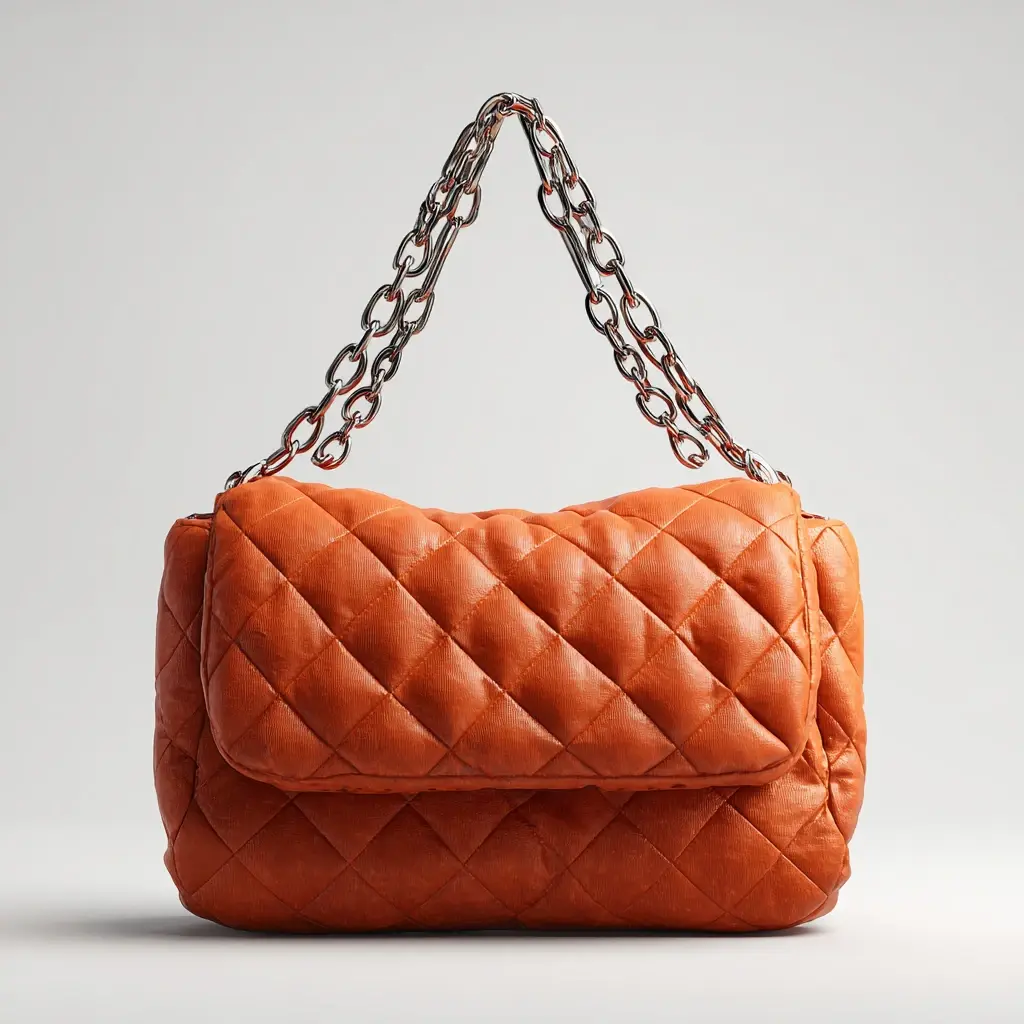
Three Recycled Routes, Compared Line by Line
Recycled content enters a bag in three places, and each one behaves differently at the bench, at the inspection table and in a marketplace listing. The body is where the claim is most visible and where performance risk is highest; the lining and webbing are where the claim is cheapest to buy and easiest to certify; the hardware is where almost nobody looks and where the certificate is hardest to obtain. Buyers who succeed usually start at the lining and work outward.
| Route | Typical spec | Cost against virgin | Certification effort | Best shape |
|---|---|---|---|---|
| Recycled PET body | 600D rPET, 210 gsm, 0.08 mm PU coat | +6 to +14% | Low; mill holds the scope certificate | Backpack, sling, tote |
| Bonded leather fibre | 60% fibre, 40% binder, 1.4 mm | -8 to -18% | Medium; input traceability needed | Structured tote, satchel |
| Recycled-content PU | 30% recycled, 0.9 mm, water-based | +4 to +9% | Medium; content tested per lot | Crossbody, shoulder |
| Recycled polyester lining | 210D rPET twill, 78 gsm | +2 to +5% | Low; easiest first step | Every silhouette |
| Recycled alloy hardware | Zamak, 70% post-industrial feed | +10 to +20% | High; few certified casters | Premium lines only |
Read the cost column carefully, because recycled does not mean cheaper. Bonded leather fibre is the one route that consistently undercuts virgin leather, and it does so because it is made from offcuts that would otherwise be waste. Everything else carries a premium, and the premium is paid for traceability rather than for the material itself — which is exactly why the certificate has to be requested with the quotation, not after it.
Recycled PET: What the Denier and Coating Decide
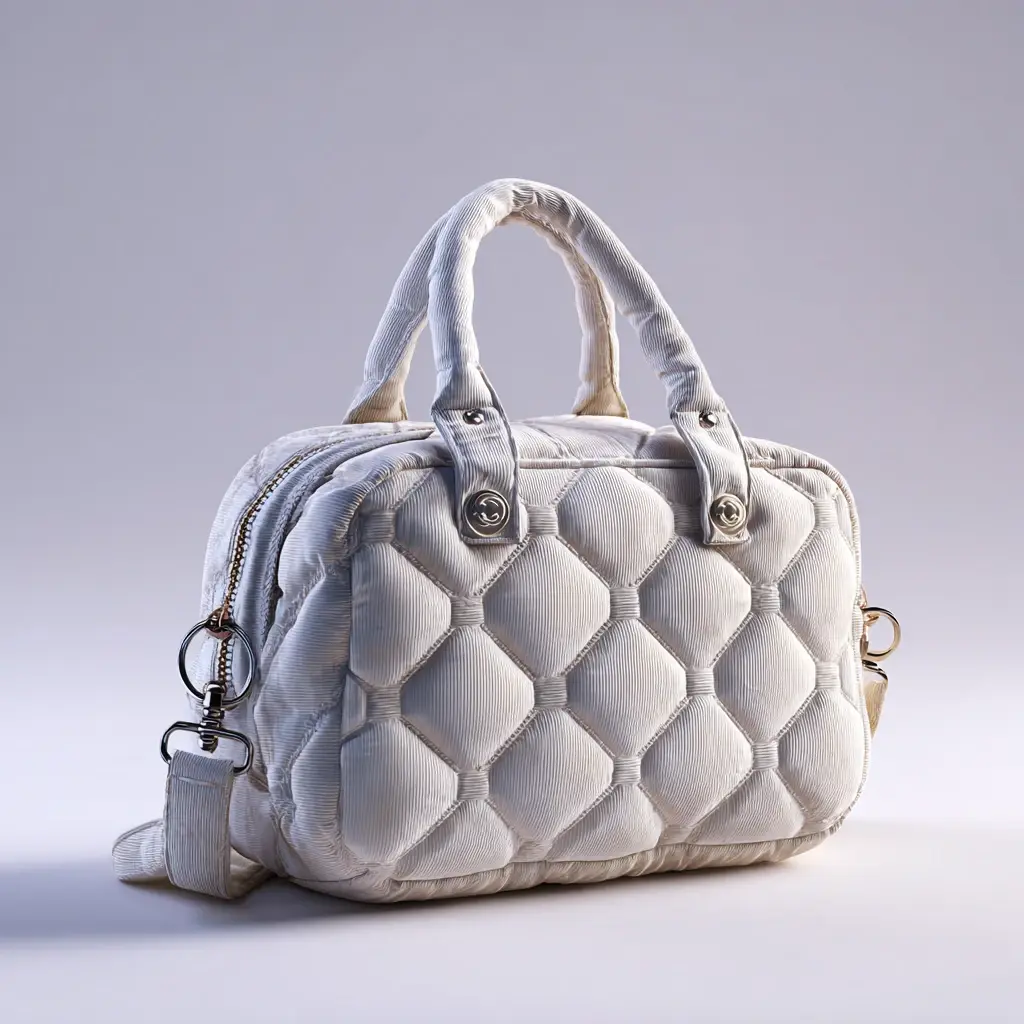
Recycled PET is the most mature of the five routes and the easiest to specify, because it behaves like virgin polyester with two caveats. The first is denier consistency: recycled chip produces slightly more variation in filament diameter, so a 600D rPET fabric may run a shade lighter in hand than a 600D virgin. The second is coating adhesion, since recycled chip carries trace contaminants that affect how a PU coating bonds, which is why a coating weight and an adhesion test should be written on the sheet.
- Denier and weight. 600D at 210 gsm is the commercial body spec; 900D at 260 gsm for a backpack or a base panel that takes abrasion.
- Coating weight. 0.08 mm of PU on one face for shower resistance; specify the coating as water-based where a REACH declaration has to stay clean.
- Tensile and tear. Ask for warp and weft tensile figures and a tear strength figure, and compare them to the virgin equivalent rather than to nothing.
- Hydrolysis resistance. A polyester bag stored in a humid warehouse can lose coating adhesion; five years is a reasonable commercial figure to ask for.
- Colour yield. Recycled chip is grey before dyeing, so very pale shades need more dye and can cost more than mid tones.
The pale-shade point surprises buyers more than any other. A recycled fabric quoted in charcoal, olive or navy prices close to virgin; the same fabric in bone, blush or pale grey can move up by 8-12% because the base is grey and the dye load is higher. Choose the recycled colourway with that in mind, and put the first recycled run in a colour that flatters the material rather than fighting it.
Recycled Leather and Bonded Fibre: When It Works
Bonded recycled leather fibre is made from tannery offcuts and finishing waste, shredded and re-bonded with a binder onto a backing. At 60% fibre and 40% binder at around 1.4 mm it cuts and sews predictably, takes embossing well, and holds a structured shape better than most split leather. It is not a substitute for full grain in a bag that is sold on the hand of the leather, and it is an excellent substitute in a bag sold on silhouette, colour and structure.
- Where it wins. Structured tote, satchel, briefcase and any shape where a panel has to stand up empty and hold a crease line.
- Where it loses. Soft hobo and slouchy shapes, and any bag where the customer is buying the feel of the hide.
- Edge behaviour. A bonded edge paints cleanly and takes a three-coat build well; it does not fold and stitch as neatly as full grain.
- Water behaviour. Better than suede, worse than a corrected grain; specify a water-repellent finish where the destination is a wet market.
- Traceability. Ask which tannery the fibre came from; Leather Working Group audited tanneries are the ones with credible input records.
Recycled-content PU is the other route and prices closer to virgin PU than most buyers expect, at a premium of roughly 4-9% for 30% recycled content at 0.9 mm. It matters most where a brand has made a public commitment to reducing virgin fossil input, because PU is the one body material with no natural alternative at the same price point. Specify it as water-based where possible; solvent-based PU with recycled content tends to cancel its own story.
Recycled Hardware and Trim: The Quiet Option
Recycled hardware is the route most programmes skip and the one with the highest certificate cost relative to its visibility. Zinc alloy castings can be run from a melt with 70% post-industrial feed, and recycled polyester webbing, zipper tape and thread are all readily available at a small premium. What is genuinely difficult is documentation: far fewer component makers hold a scope certificate than fabric mills do, so the recycled claim on the hardware often cannot be supported even where the metal itself is recycled.
- Decide what the claim covers. A bag with a recycled body and a certified lining can be described accurately without ever mentioning the zipper.
- Buy recycled trim first. Webbing, zipper tape and thread in recycled polyester are cheap, certified and easy to source at 500 pcs.
- Treat recycled alloy as premium. +10 to +20%, and only worth it where the brand story specifically covers metal.
- Keep the plating specification intact. Recycled feed does not change the corrosion requirement; 24 hours to first corrosion under ASTM B117 still applies.
- Ask for the transaction certificate for every certified component, not just for the body fabric.
The quiet win in this section is recycled polyester lining and webbing. At a premium of only 2-5% over virgin, they move a bag from zero recycled content to a certifiable figure for very little money, and they are the right place to start a programme that has never bought a recycled material before.
Certification Lines: GRS, RCS and What Buyers Accept
Two standards carry almost all recycled claims in this trade, both administered by Textile Exchange. The Global Recycled Standard requires a minimum of 20% recycled content to certify a product and 50% before the GRS logo may be used, and it adds social and environmental criteria on top of the content claim. The Recycled Claim Standard tracks content only, with the same 20% floor, and is the lighter route where a brand wants the number without the broader criteria.
| Certificate | Minimum content | What it covers | What you still cannot say |
|---|---|---|---|
| GRS 4.0 | 20% to certify, 50% for the logo | Content plus social and environmental criteria | Anything about carbon footprint |
| RCS | 20% | Recycled content tracking only | Anything social or chemical |
| Transaction certificate | Per shipment | Ties this lot to a certified input | That the whole bag is recycled |
| LWG tannery rating | Not a content claim | Environmental performance of a tannery | That the leather is recycled |
The document that actually matters at import is the transaction certificate, issued per shipment, which ties the goods in that carton to a certified input. Without it the scope certificate on the mill's website is marketing. Ask for it as a delivery condition on the purchase order, alongside the REACH declaration and, where California is a destination, the Proposition 65 review of hardware and coated trim.
Cost and Lead Time Against Virgin Material
The recycled premium is real but smaller than most quotations imply, and part of it is a sourcing artefact rather than a material cost. Certified inputs are bought in smaller lots than virgin ones, so the premium includes a lot-size penalty that shrinks as a programme repeats. On a first order of 500 pcs per style and colourway, expect the following shape of numbers.
- Body material premium. +6 to +14% for rPET, +4 to +9% for recycled-content PU, and a discount of 8-18% for bonded leather fibre.
- Certification cost. A transaction certificate per shipment; budget it as a per-order line rather than discovering it at handover.
- Lead time. Add 5-8 days for certified input on a first order, falling to 2-3 days once a standing input is held.
- Sampling. Unchanged at 6-10 working days where the material is in stock; 12-15 where a certified lot has to be called in.
- Bulk. Unchanged at 35-50 days, provided the input is confirmed before the slot is booked.
The way to reduce all of it is to repeat. A programme that runs the same recycled body across three silhouettes buys one certified input lot for all three, spreads the transaction certificate across three SKUs, and removes the call-in delay on the second order entirely. That is the economic argument for standardising a material across a line rather than choosing a different fabric for each shape.
Where Recycled Fails and Virgin Still Wins
Honesty about this section is what keeps a recycled programme credible. There are four places where virgin material is still the right decision, and choosing recycled in any of them produces a worse bag and a claim that will not survive scrutiny. A material that fails in the field costs more in returns than the premium ever cost in purchase.
- High-abrasion bases. A recycled polyester base panel on luggage abrades faster than a virgin 900D; use virgin where the bag is dragged.
- Very pale shades. The grey base of recycled chip makes bone and blush expensive and inconsistent between lots.
- Load-bearing webbing. Recycled webbing has marginally lower tensile consistency; keep virgin on a strap that carries heavy content.
- Fine embossing detail. Bonded fibre takes a shallow emboss well and a deep, sharp one poorly; full grain still wins on a logo die.
None of these are arguments against recycled material. They are arguments for placing it where it performs, which is also how a brand ends up with a claim it can defend: recycled body, virgin base panel, recycled lining, and a percentage stated honestly on the hangtag rather than implied by a leaf icon.
Building a Recycled Programme Without Greenwashing Claims
Environmental claims are regulated in every market this site sells into, and the rules all point the same way: a claim has to be specific, substantiated and scoped. ISO 14021 sets the rules for self-declared environmental claims, including the requirement to state whether a claim covers the product or only its packaging. The United States Federal Trade Commission Green Guides require the recycled figure to be qualified as pre-consumer or post-consumer, and the European rules on green claims now require substantiation before a claim is published.
- State a percentage. Made with 60% recycled polyester says something. Eco-friendly says nothing and is the phrase regulators look at first.
- Say pre-consumer or post-consumer. Both are legitimate and they are not the same claim.
- Scope the claim. If only the body and lining are recycled, say so; a claim covering the whole bag when only part of it is certified is the classic failure.
- Hold the certificate. One transaction certificate per shipment, on file, plus the scope certificate of the input maker.
- Match the hangtag to the file. The number printed on the hangtag should be the number on the certificate, to the same rounding.
Two material decisions run alongside this one, and both are worth reading before the brief is sent: the lining comparison across polyester, nylon and suede explains where recycled polyester lining fits, and the durability-on-a-budget material guide ranks the same materials by cost of ownership. The materials reference holds the full library.
Programmes have been running through our validated partner factory Quanzhou Yingming Bags since 2014, across 7 production lines with capacity of about 200,000 pcs per month, with GRS-certified input available and export documentation covering REACH, Proposition 65, CPSIA, BSCI and Sedex.
What a Recycled Claim Costs to Verify
The material premium on a recycled programme is the smaller half of the cost. The other half is proof, and it is billed per shipment rather than per season, which is why it surprises buyers who budgeted only the fabric. Six lines cover the verification of a recycled claim on a first order.
| Line | Cost | Frequency |
|---|---|---|
| Scope certificate, held by the input maker | USD 200-600 a year | Annual; a copy sits in the file |
| Transaction certificate | USD 60-180 per shipment | Every consignment, without exception |
| Recycled content test | USD 120-260 | Per lot or per colourway |
| Chromium VI to ISO 17075 | USD 45-90 per material | Per material, per season |
| Nickel release to EN 1811 | USD 60-120 per finish | Per metal finish |
| REACH restricted substance screen | USD 250-450 | Per programme or per retailer request |
On a 500-piece first buy the unavoidable lines are the transaction certificate and the content test, which together are USD 180-440 or USD 0.36-0.88 a bag. Add a laboratory screen and the first-season verification bill lands at USD 475-1,100, or USD 0.95-2.20 a bag, which is comparable to the material premium itself and is the reason a certificate is cheaper to hold across three silhouettes than to buy three times.
How to Calculate the Recycled Share of the Bag
A claim that says recycled means nothing to a regulator and nothing to a retail buyer. A claim that gives a percentage by weight can be substantiated, and the calculation is a weigh-in rather than an opinion. The worked example below is a 600D rPET tote with a recycled lining and webbing on standard hardware.
| Component | Weight | Counted as recycled |
|---|---|---|
| Body, 600D rPET at 210 gsm | 340 g | Yes |
| Lining, 210D rPET twill | 85 g | Yes |
| Webbing and zipper tape | 35 g | Yes |
| Sewing thread | 8 g | Yes |
| Foam and interlining | 45 g | No |
| Hardware, zinc alloy set | 90 g | No |
| Total finished weight | 603 g | Recycled share 468 g, or 78 per cent |
That gives a defensible line: made with 78 per cent recycled material by weight, against a GRS threshold of 20 per cent to certify and 50 per cent to use the logo. Swap the hardware for a recycled alloy feed and the figure rises to about 87 per cent for a premium of 10-20 per cent on the metal, which is the cheapest percentage point available once the body is already certified.
Pick the recycled route, get it costed
Tell a handbag programme specialist which route you want — rPET body, bonded fibre, recycled PU or recycled trim — along with your silhouettes and target retail price. You will get a costed specification with the certificate line included, sampling at 6-10 working days and bulk at 35-50 days. Get a quote.
Frequently Asked Questions
What recycled materials work best for private label handbags?
Five routes hold up commercially: recycled PET body fabric at 600D and 210 gsm, bonded recycled leather fibre at around 1.4 mm, recycled-content PU at 0.9 mm, recycled zinc alloy hardware, and recycled polyester lining and webbing. Most programmes start with the lining and webbing because they carry only a 2-5% premium and are the easiest to certify.
How much more does recycled material cost than virgin?
Recycled PET body fabric runs 6-14% above virgin, recycled-content PU 4-9% above, and recycled alloy hardware 10-20% above. Bonded leather fibre is the exception and typically comes in 8-18% below virgin leather, because it is made from offcuts that would otherwise be waste. Certification adds a per-shipment transaction certificate cost.
What is the difference between GRS and RCS certification?
Both are administered by Textile Exchange and both set a 20% minimum recycled content, but the Global Recycled Standard adds social and environmental criteria to the content claim, while the Recycled Claim Standard tracks content only. GRS requires 50% content before its logo may be used, and neither certificate says anything about carbon footprint.
Why do I need a transaction certificate and not just a scope certificate?
A scope certificate shows that an input maker is covered by a standard; a transaction certificate ties the specific goods in your shipment to a certified input. Without the transaction certificate there is no evidence that the material in your cartons is the material on the certificate, which is the gap regulators and marketplace compliance teams look for first.
Is bonded recycled leather fibre as strong as full grain leather?
It is stronger in some directions and weaker in others. At 60% fibre and 40% binder it holds a structured shape better than most split leather and sews predictably, but it has lower tear strength at a stitch line and does not fold and stitch as neatly as full grain. Use it on structured shapes rather than on soft, slouchy ones.
Can recycled PET be dyed any colour?
Mid and dark shades yes, very pale shades only with difficulty. Recycled chip is grey before dyeing, so bone, blush and pale grey need a higher dye load and can cost 8-12% more while varying more between lots. Put the first recycled run into a colour that flatters the base rather than one that fights it.
How long does a recycled material order take?
Sampling stays at 6-10 working days where the certified material is already in stock and 12-15 where a certified lot has to be called in, and bulk stays at 35-50 days provided the input is confirmed before the production slot is booked. Add 5-8 days to a first order for certified input, falling to 2-3 days once a standing lot is held.
Where should recycled material not be used on a bag?
Four places: high-abrasion base panels on luggage, very pale colourways, load-bearing webbing on a heavy strap, and fine sharp embossing detail. In each of those virgin material still performs measurably better, and choosing recycled there produces a weaker bag and a claim that becomes hard to defend in returns data.
What can I legally say on a hangtag about recycled content?
State a percentage, say whether it is pre-consumer or post-consumer, and scope the claim to the parts of the bag that are actually certified. ISO 14021 governs self-declared environmental claims, the Federal Trade Commission Green Guides require the pre-consumer or post-consumer qualification, and European green claims rules require substantiation before publication.
Does recycled hardware still need corrosion testing?
Yes. A recycled feed changes where the metal came from, not how the plating performs. Zamak castings from a melt with 70% post-industrial feed still need the same plating stack, the same thickness in microns and the same 24 hours to first corrosion under ASTM B117 that a virgin casting would be measured against.
What is the cheapest way to start a recycled handbag programme?
Start with recycled polyester lining and webbing at a premium of only 2-5%, then move the body on the second order once the certificate process is familiar. That sequence gets a certifiable claim onto the bag quickly without taking performance risk on the panel the customer sees and touches most.
Does the MOQ change for recycled materials?
The programme minimum stays at 500 pcs per style and colourway, but the effective material minimum can be higher, because certified input is bought in set lots. Expect to buy a full certified lot rather than the exact metres a 500-piece run needs, which is one reason a recycled material is cheaper when it is standardised across several silhouettes.
People Also Ask
Is recycled fabric as durable as virgin fabric?
At the same denier and coating weight, yes for most uses. The measurable differences are slightly more variation in filament diameter, marginally lower tensile consistency in webbing, and poorer coating adhesion on pale shades dyed over grey recycled chip.
Can a bag be called recycled if only the lining is recycled?
Not without qualification. A claim has to be scoped: lining made with recycled polyester is accurate, while recycled bag is not. ISO 14021 requires self-declared claims to state whether they cover the product or only part of it.
What percentage of recycled content is worth claiming?
Twenty percent is the floor for certification under GRS or RCS and fifty percent is where the GRS logo becomes available. Above roughly sixty percent the claim starts to be meaningful to a shopper reading a hangtag rather than only to a compliance team.
Does recycled leather fibre come from a Leather Working Group tannery?
It should, and you should ask which one. Tanneries audited by the Leather Working Group keep the input records that make a bonded fibre claim traceable, and the ones that cannot name their source usually cannot support the certificate either.
Sources and further reading
Every figure on this page is either our own programme data or attributed below. Open the originals before you write them into a specification.
- Leather Working Group — environmental auditing for tanneriesLeather Working Group Environmental audit protocol for tanneries and leather traceability.
- SATRA — technical services for leather, footwear and accessoriesSATRA Independent leather, hardware and accessories testing protocols.
- Recycled Claim Standard (RCS)Textile Exchange Recycled content claims when a full GRS audit is not warranted.