OEM Leather Handbags: Full Grain vs Corrected Grain Programs
Full grain or corrected grain for a leather handbag programme? Full grain at 1.2-1.6 mm for a bag that is sold on how it ages; corrected grain at 1.0-1.3 mm with a pigment finish of 0.10-0.20 mm for a bag that is sold on uniform colour. The grade is not a quality ranking, it is a choice about what the surface is allowed to do — a mark that develops versus a mark that never appears — and the two differ by about 1.40 to 2.60 dollars of leather per tote. Twelve specification lines settle it, and six of them are checkable before the hide is cut.
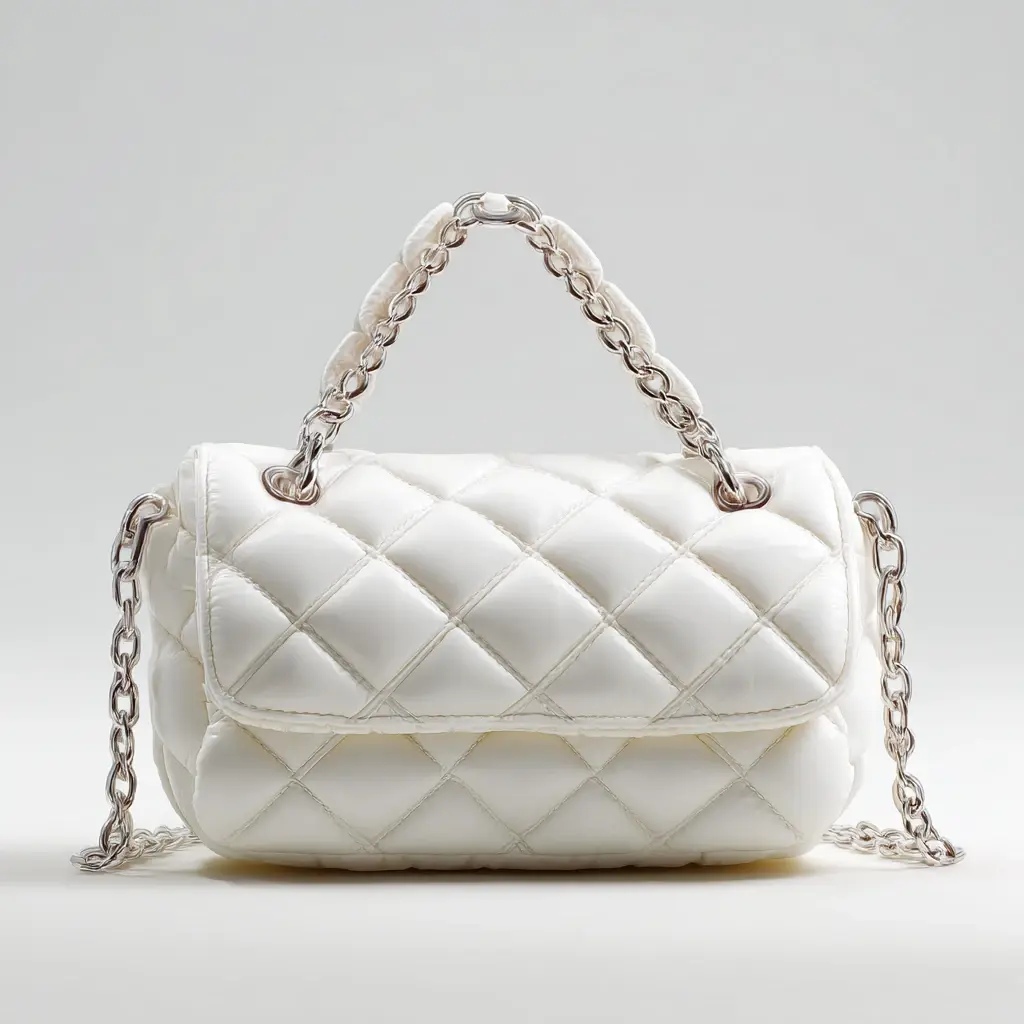
- The Twelve-Point Leather Checklist
- Line One: Grade, and What Each Name Really Means
- Line Two: Thickness and Consumption, Checked Together
- Line Three: Finish, Emboss and Colour Fastness
- Line Four: Strength and Tear Resistance
- Line Five: The Chemistry File
- Line Six: Traceability and the Tannery Audit
- Which Grade Belongs on Which Bag
- What the Two Grades Cost Per Piece
- Cutting and Yield: What the Grade Takes Off the Hide
- What Each Grade Does in Year Two
- What the Hangtag Is Allowed to Say
Full grain or corrected grain for a leather handbag programme? Full grain at 1.2-1.6 mm for a bag that is sold on how it ages; corrected grain at 1.0-1.3 mm with a pigment finish of 0.10-0.20 mm for a bag that is sold on uniform colour. The grade is not a quality ranking, it is a choice about what the surface is allowed to do — a mark that develops versus a mark that never appears — and the two differ by about 1.40 to 2.60 dollars of leather per tote. Twelve specification lines settle it, and six of them are checkable before the hide is cut.
The leather constants
The Twelve-Point Leather Checklist
A Boston brand ordered a six-dollar tote in full grain and received a bag whose panels were uniformly flawless and marginally cheaper to make. The leather was not full grain. It was corrected grain with a printed grain pattern, and it would have been exactly right for the price band had it been specified, declared and priced as such. The checklist below exists so that the conversation happens before the hide is cut rather than after the cartons are opened.
| Line | Method or reference | Why it is on the list |
|---|---|---|
| Grade | EN 15987 terminology | Full grain, top grain and corrected grain are different surfaces |
| Thickness | ISO 2589 | Decides structure, weight and how the bag hangs |
| Consumption | 1.4-1.9 sq ft per tote | The material cost of the unit |
| Finish build | 0.02-0.05 mm aniline, 0.10-0.20 mm pigment | Decides whether the surface marks or stays uniform |
| Rub fastness | ISO 11640, 500 dry and 250 wet rubs | Colour transfer onto a pale garment |
| Light fastness | ISO 105-B02, blue wool 4+ | A bag fading in a window display |
| Tensile strength | ISO 3376 | Whether the panel holds under load |
| Tear resistance | ISO 3377-2, 25 N or better | Whether a stitch line rips out |
| Chromium VI | ISO 17075, below 3 mg/kg | Market access in the European Union |
| Azo dyes | ISO 14362-1, below 30 mg/kg | Market access in the European Union |
| pH and formaldehyde | ISO 4045 and ISO 17226-1 | Skin contact and retailer requirements |
| Traceability | Leather Working Group audit | The evidence behind a leather claim on a hangtag |
Twelve lines sounds like a lot and it is not: the whole list is one page, and it is the same page that a retailer's compliance team will ask for twelve months later.
Line One: Grade, and What Each Name Really Means
Leather terminology is standardised under EN 15987, and the names describe what was done to the surface of the hide, not how good the hide was. That distinction is the whole of the first line.
- Full grain. The natural grain surface is intact. The hide has been finished, usually aniline or semi-aniline, but not sanded. It marks, and it is bought precisely because it marks: the marks become the patina the brand is selling.
- Top grain. The surface has been lightly sanded to remove the worst defects. A compromise grade at 1.0-1.4 mm that takes colour well and marks less.
- Corrected grain. Buffed to remove defects, then pigment-finished and usually embossed with a printed grain. It holds a uniform colour across every panel and across every shipment, at 1.0-1.3 mm.
- Split. The lower layer of the hide, suede or coated, at 0.9-1.2 mm. Used for gussets, linings and straps rather than for a visible body panel.
- Nubuck and suede. Sanded to a nap, one on the grain side and one on the flesh side. Both mark heavily and both need a protector in the box.
The useful test is a physical one: press a fingernail into a corner offcut. Full grain darkens where it is pressed and the mark stays. Corrected grain shows nothing, because the pigment film is doing the work rather than the fibre.
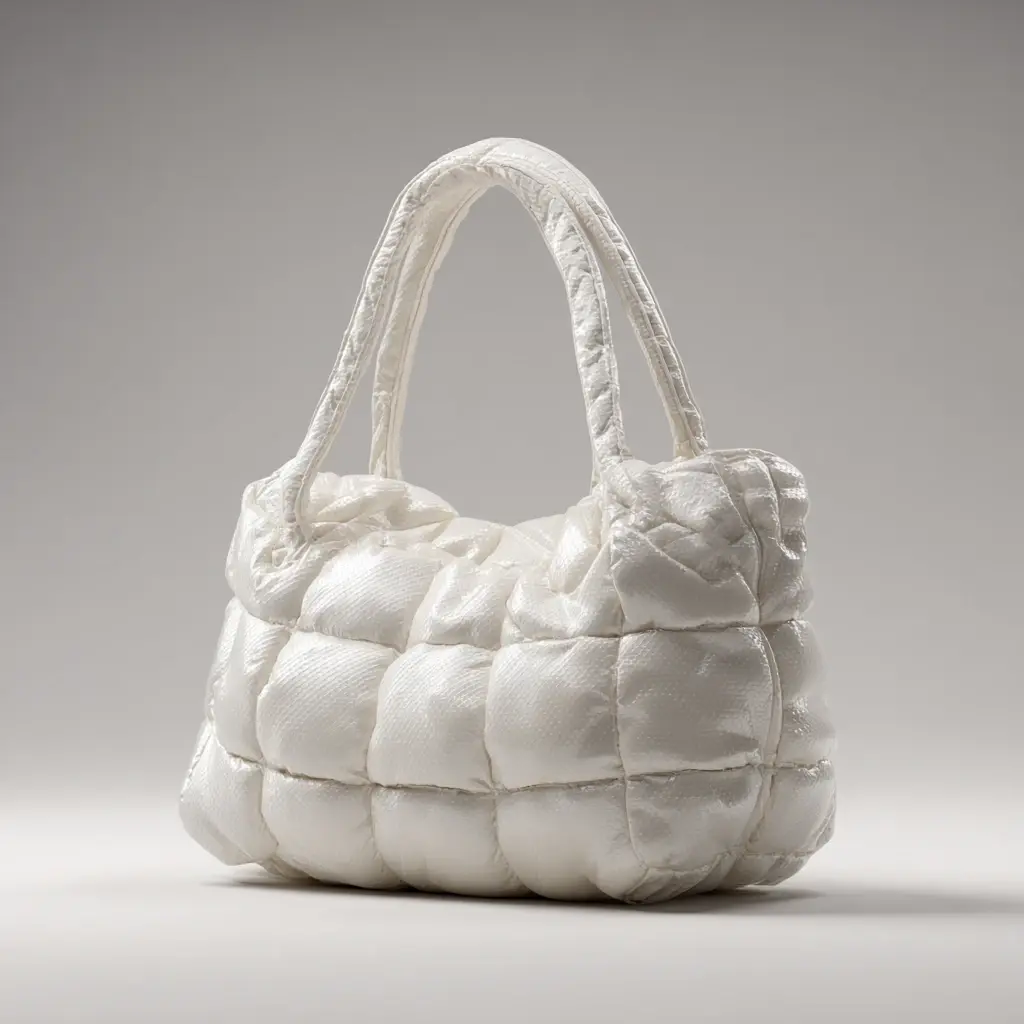
Line Two: Thickness and Consumption, Checked Together
Thickness and consumption are one line on the list because they cannot be specified apart. A thicker leather consumes more square feet per bag and yields fewer panels per hide, and both effects land on the same line of the invoice.
| Shape | Consumption | Pieces per 18-22 sq ft hide | Thickness |
|---|---|---|---|
| Crossbody, 18-26 cm wide | 0.9-1.3 sq ft | 12-18 | 1.0-1.3 mm |
| Tote, 34-42 cm wide, 8-12 cm gusset | 1.4-1.9 sq ft | 8-12 | 1.2-1.6 mm |
| Structured satchel with a separate gusset | 2.6-3.1 sq ft | 5-7 | 1.4-1.8 mm |
Nesting yield of 55-70 per cent is the figure to ask for, because it is the number that turns a hide size into a piece count. An order of 1,500 totes at 1.4-1.9 sq ft per piece, after yield, consumes roughly 150-200 hides, and a supplier quoting per piece without stating either consumption or yield has left the most negotiable number in the calculation unstated.
Line Three: Finish, Emboss and Colour Fastness
Finish build is the thickness of the coating sitting on the surface, and it decides how the bag behaves in the second year. An aniline finish of 0.02-0.05 mm leaves the pore structure open and lets the hide breathe and darken. A pigment finish of 0.10-0.20 mm closes it, holds the colour and resists a spill.
- Rub fastness. Tested under ISO 11640 at 500 dry rubs and 250 wet rubs, judged on the AATCC grey scale. Four or better is the working floor; below four, a dark tote transfers onto a pale coat and the return writes itself.
- Light fastness. Under ISO 105-B02 against the blue wool scale, four or better for a bag that will sit in a window for a season. Displays are the most common cause of a colour complaint that has nothing to do with the tannery.
- Perspiration fastness. Where a bag is carried against the body in a warm climate, ISO 105-E04 at four or better.
- Emboss retention. A printed grain holds if the finish build is right; too thin and it flattens at the folds within a season.
Colour itself should be specified as a Pantone TCX reference at Delta E 2.0 or better under a D65 light source, with a physical shade band card approved rather than a screen. Metamerism is the usual culprit when a panel looks right in the sample room and wrong in the shop.
Line Four: Strength and Tear Resistance
The fourth line is about the fibre rather than the surface, and it is where a cheap hide is exposed. Two tests cover the useful ground, and both are cheap to run at brief stage.
- Tensile strength and elongation under ISO 3376. A bag leather commonly measures 15-25 N per square millimetre with elongation of 35-60 per cent. Low elongation is the warning sign, because it means a panel that will not give at the seam.
- Tear resistance under ISO 3377-2. Twenty-five newtons or better for a bag body. This is the figure that decides whether a stitch line rips out when the bag is dropped full.
- Softness under ISO 17235, which is what makes a slouchy hobo drape rather than stand.
- Water behaviour under ISO 17230, with static absorption below 30 per cent in two hours for a bag that will meet rain.
Two of those figures also protect the sixth month. A corrected grain with excellent rub fastness and poor tear resistance is a bag that looks new in month twelve and splits at the handle in month thirteen.
Line Five: The Chemistry File
The chemistry file is market access, not quality, and it applies to every grade equally. A corrected grain that fails it is unsaleable in the European Union, and a full grain that fails it is unsaleable in the same place for the same reason.
| Substance | Method | Limit |
|---|---|---|
| Chromium VI | ISO 17075 | Below 3 mg/kg, REACH Annex XVII entry 47 |
| Azo dyes | ISO 14362-1 | Below 30 mg/kg of listed amines |
| pH of the aqueous extract | ISO 4045 | Between 3.5 and 6.0 |
| Formaldehyde | ISO 17226-1 | Below 150 mg/kg for skin contact |
| Nickel release from hardware | EN 1811 | Below 0.5 µg/cm²/week |
| Phthalates in coated trim | REACH Annex XVII entry 51 / 52 | Below 0.1 per cent by weight |
A Proposition 65 review covers California, and CPSIA documentation with third-party testing at 90 ppm of lead applies where a bag is marketed to children. The approved component list is where the leather entries sit alongside the trim entries, and the two should be tested together rather than separately.
Line Six: Traceability and the Tannery Audit
The sixth line is the one that turns a leather claim into a defensible statement. Leather Working Group audits tanneries against an environmental protocol and issues gold, silver and bronze ratings, and a transaction certificate travels with the hide to prove where it was tanned.
- Ask which tannery. A named tannery with an LWG rating is a different proposition from a hide bought on a spot market.
- Ask for the certificate. A transaction certificate is the document that survives an audit, and it is the one a marketplace will ask for when a claim is printed on a listing.
- Ask about the origin country of the raw hide, since some retailers require it for their own reporting.
- Record the article number of the leather on the approved component list, so the second order buys the same article rather than a lookalike.
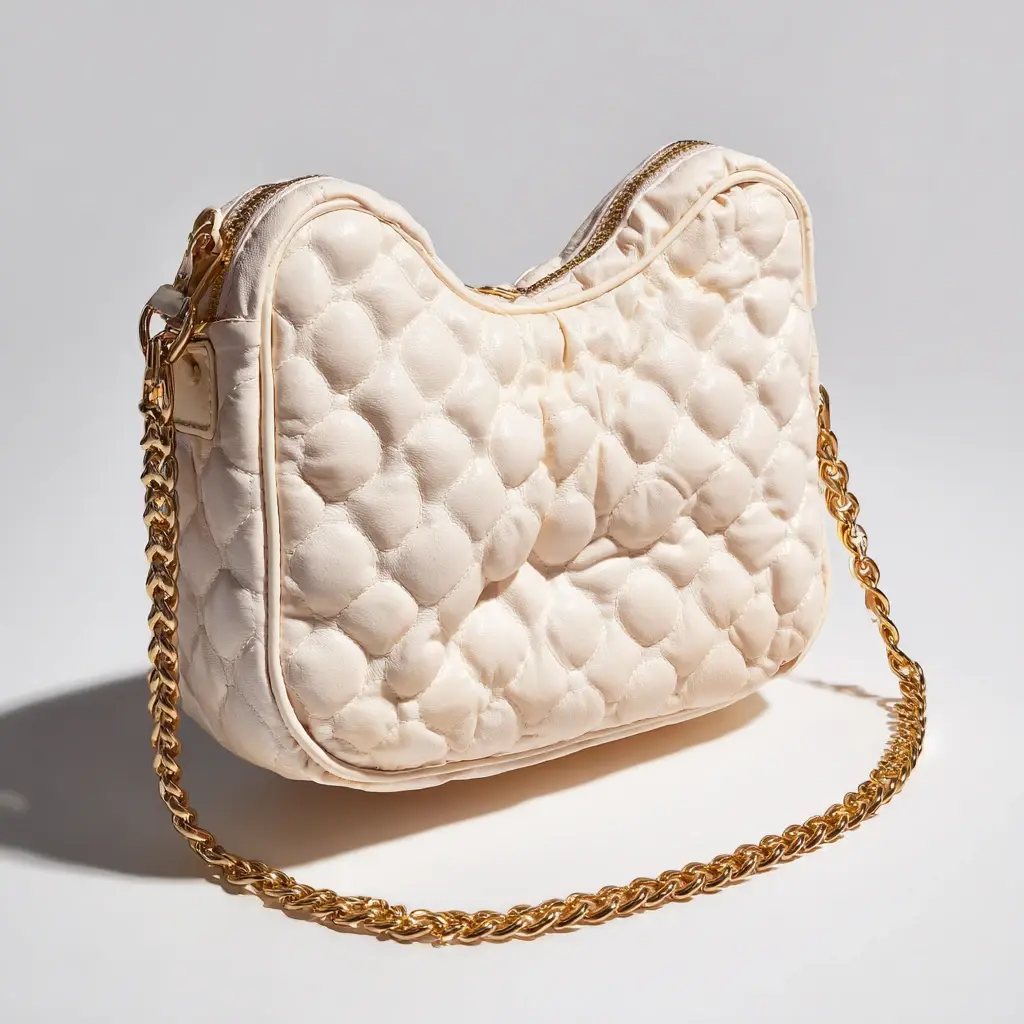
Which Grade Belongs on Which Bag
The grade follows the proposition and the price band, not the other way round. Four pairings cover most of the programmes in this trade.
- A bag sold on ageing. Full grain at 1.2-1.6 mm for a tote or a satchel in the 120 to 260 dollar band, where the patina is the story.
- A bag sold on uniform colour. Corrected grain at 1.0-1.3 mm for a structured shape in the 60 to 140 dollar band, where every panel has to match every other panel across three shipments.
- A bag sold on softness. Full grain at 0.9-1.2 mm for a hobo or a slouch, where the leather is thinner and drapes.
- A bag sold on weight. Split or coated split at 0.9-1.2 mm for the gusset, the strap and the internal structure, whatever the body is.
The mistake to avoid is a full grain specification on a shape that needs a uniform surface across three shipments. Some hides will always be darker than others, and a brand that specifies full grain and then rejects panels for shade variation has bought the wrong material for its own standard.
What the Two Grades Cost Per Piece
Leather is bought by the square foot and sold by the bag, so the per-piece effect of the grade depends on consumption. The worked figures below use a tote at 1.4-1.9 sq ft.
| Grade | Price per sq ft | Leather per tote | Difference per tote |
|---|---|---|---|
| Full grain | $4.20-6.80 | $5.90-12.90 | Baseline |
| Corrected grain | $2.80-4.20 | $3.90-8.00 | $2.00-4.90 lower |
| Split, for structure and lining | $1.60-2.60 | $2.20-4.90 on a matching area | $3.70-8.00 lower |
On a 500-piece buy, moving from full grain to corrected grain releases roughly 1,000 to 2,450 dollars of material money. That is the whole of the saving, and it is worth checking what it buys elsewhere before it is taken: a better zipper, a longer plating cycle under ASTM B117, or a lower retail price.
Programmes have been produced through our validated partner factory Quanzhou Yingming Bags since 2014 across 7 production lines and about 200,000 pcs per month, with inspection at AQL 2.5 under ISO 2859-1 and traceability available through Leather Working Group tanneries. The brief that avoids costly revisions shows where these twelve lines belong in a specification, and the OEM and ODM service page sets out the programme.
Cutting and Yield: What the Grade Takes Off the Hide
Grade is not only a surface decision, it decides how many panels a hide gives up. A corrected grain has had its defects removed before it arrives, so the usable area is higher and more predictable, while a full grain carries its scars and the cutter has to place panels around them.
| Grade | Usable area | Where panels can be placed |
|---|---|---|
| Full grain | 60-75 per cent | Prime back and shoulder only for visible panels |
| Top grain | 65-78 per cent | Most of the hide, with small defects avoided |
| Corrected grain | 75-88 per cent | Almost anywhere; the finish hides the rest |
| Split | 80-90 per cent | Gussets, straps, linings and hidden structure |
Two practical notes follow. Belly and flank stretch 15-25 per cent more than the back, so a panel cut there grows in use and a structured body drifts out of tolerance. And a cutter quoting a 55-70 per cent nesting yield is quoting a grade-dependent number, which is why the yield belongs on the quotation beside the price per square foot.
What Each Grade Does in Year Two
The grade shows itself in the second year rather than in the showroom, and the two failure modes are different. A full grain develops the marks it was bought for, while a corrected grain either keeps its uniform face or, where the finish build is too thin, cracks at the flex points.
| Behaviour | Full grain | Corrected grain | Test |
|---|---|---|---|
| Surface marking | Darkens where handled; intended | Resists, because the pigment film takes the contact | ISO 11640, 500 dry rubs |
| Flex cracking | Rare; the fibre moves with the finish | Possible below 0.10 mm of finish build | ISO 11644 flex, 20,000 cycles |
| Colour change | Patina, usually darker | Little until the finish fails | ISO 105-B02, blue wool 4 |
| Edge and fold wear | Burnishes back and recovers | Finish flakes at a hard fold | Visual at 20,000 rubs |
The specification answer is finish build. A corrected grain at 0.10-0.20 mm survives a fold, the same leather at 0.06 mm does not, and the difference is invisible at approval and obvious at month fourteen. Name the build in microns alongside the grade.
What the Hangtag Is Allowed to Say
A leather claim on a hangtag is a labelling question as much as a sourcing one, and the two common errors are both avoidable. The first is using a trade name that does not describe the material, and the second is implying that a rated tannery certifies the assembled bag.
- Name the material by its standard term. Under EN 15987 the grade names describe what was done to the surface, and a term such as genuine leather describes nothing a buyer can check.
- State the composition where the market requires it, with the coating declared where a finish build above about 0.15 mm is present.
- Keep the tannery claim separate. A Leather Working Group rating covers the tannery, not the finished bag, and the two must not be merged on one line.
- Add the care and origin lines the destination requires, because country-of-origin marking is checked at customs rather than in the shop.
The commercial point is that a precise claim is worth more than a flattering one. A hangtag reading full grain, 1.4 mm, tanned at an LWG gold-rated tannery is defensible in a listing and in a retailer's own system, while one reading premium leather is worth nothing and carries risk.
Specify the leather in twelve lines
Send the shape, the price band and the proposition — ageing or uniform colour. A private label coordinator will return a twelve-line leather specification with the grade, the thickness, the consumption per piece and the test limits, against MOQ 500 pcs per style / colourway and bulk at 35-50 days. Get a quote.
Frequently Asked Questions
What is the difference between full grain and corrected grain leather?
Full grain keeps the natural grain surface intact and is finished lightly, usually at 1.2-1.6 mm. Corrected grain has been buffed to remove defects and then pigment-finished at 1.0-1.3 mm with a finish build of 0.10-0.20 mm. The first marks and develops a patina; the second holds a uniform colour across every panel.
Is full grain always better than corrected grain?
No. The names describe what was done to the surface, not the quality of the hide, and each grade suits a different proposition. A bag sold on uniform colour across three shipments needs corrected grain, while a bag sold on how it ages needs full grain.
How much leather does a handbag consume?
A tote 34-42 cm wide with an 8-12 cm gusset consumes 1.4-1.9 sq ft, a crossbody 0.9-1.3 sq ft and a structured satchel with a separate gusset 2.6-3.1 sq ft. With a hide of 18-22 sq ft nesting at 55-70 per cent, that is 8-12 totes per hide.
What thickness should a handbag body leather be?
1.2-1.6 mm for a full grain tote or satchel that has to hold its shape, 1.0-1.3 mm for a corrected grain structured body, 0.9-1.2 mm for a slouchy shape, and 0.9-1.2 mm split for a gusset, a strap or an internal structure.
Which fastness tests should be specified for leather?
Rub fastness under ISO 11640 at 500 dry and 250 wet rubs, judged at four or better on the AATCC grey scale, and light fastness under ISO 105-B02 at four or better on the blue wool scale for a bag that will sit in a window display for a season.
What strength figures should a bag leather meet?
Tensile strength of 15-25 N per square millimetre with elongation of 35-60 per cent under ISO 3376, and tear resistance of 25 newtons or better under ISO 3377-2. Low elongation is the warning sign, because a panel that will not give at the seam will tear there.
Which chemical limits apply to leather in the European Union?
Chromium VI below 3 mg/kg under ISO 17075 and azo dyes below 30 mg/kg under ISO 14362-1, both entries in REACH Annex XVII. The file is completed by pH between 3.5 and 6.0 under ISO 4045 and formaldehyde below 150 mg/kg under ISO 17226-1.
How much does the choice of grade change the cost of a bag?
On a tote consuming 1.4-1.9 sq ft, full grain at 4.20-6.80 dollars per sq ft costs 5.90-12.90 dollars of leather and corrected grain at 2.80-4.20 dollars costs 3.90-8.00. On a 500-piece first buy the difference releases about 1,000 to 2,450 dollars.
Why does nesting yield matter to a buyer?
Because it converts a hide size into a piece count and therefore into a price. A supplier quoting per piece without stating consumption per bag or a yield of 55-70 per cent has left the most negotiable number in the calculation unstated.
What is a Leather Working Group rating?
An environmental audit of a tannery resulting in a gold, silver or bronze rating, with a transaction certificate travelling with the hide. It is the evidence behind a leather claim printed on a hangtag and the document a marketplace asks for when it checks one.
How should leather colour be approved?
Against a Pantone TCX reference at Delta E 2.0 or better under a D65 light source, on a physical shade band card rather than on a screen. Metamerism is the usual reason a panel looks right in the sample room and wrong in the shop.
What is the most common leather specification mistake?
Specifying full grain on a shape that needs absolute colour uniformity. Some hides are darker than others, and a brand that specifies full grain and then rejects panels for shade variation has specified a material that cannot meet its own standard.
People Also Ask
Can two grades be used on the same bag?
Often, and well. A full grain body with a corrected grain base panel and a split gusset uses each material where it earns its cost, and it is the construction most mid-market brands settle on.
Does a thicker leather mean a better bag?
Not necessarily. Thickness adds structure and weight, and above about 1.8 mm a hand-held bag becomes heavy for its price band. The right thickness follows the shape rather than the grade.
How many hides does an order need?
An order of 1,500 totes at 1.4-1.9 sq ft per piece, after a 55-70 per cent nesting yield, takes roughly 150-200 hides of 18-22 sq ft. That figure is what a tannery books against.
What should be done with the offcuts?
Use them. Strap keepers, zip pullers, logos patches and internal pockets can all be cut from the nesting waste, and it is a genuine saving on a 2.6-3.1 sq ft shape.
Sources and further reading
Every figure on this page is either our own programme data or attributed below. Open the originals before you write them into a specification.
- Leather Working Group — environmental auditing for tanneriesLeather Working Group Environmental audit protocol for tanneries and leather traceability.
- REACH — chemical substances regulationEuropean Commission Annex XVII restricts the substances that may appear in finished leather and coatings.
- FashionUnited — fashion industry news and dataFashionUnited Industry news and company data for the fashion sector.