OEM Handbags vs Private Label: Brand Ownership Compared
What is the difference between OEM handbags and private label? The bag can be identical; the contract is not. Under a private label arrangement the brand owns the mark, the tooling and exclusivity by position; under a straight OEM arrangement the pattern, the mould and often the artwork stay with the maker, and the buyer is purchasing access to a shape rather than ownership of one. Ownership in this category consists of exactly three things: a registered mark, tooling paid for and stored, and exclusivity by position and territory written into the contract. A brand holding all three can change production partner without changing product; a brand holding none has to rebuild its line from photographs.
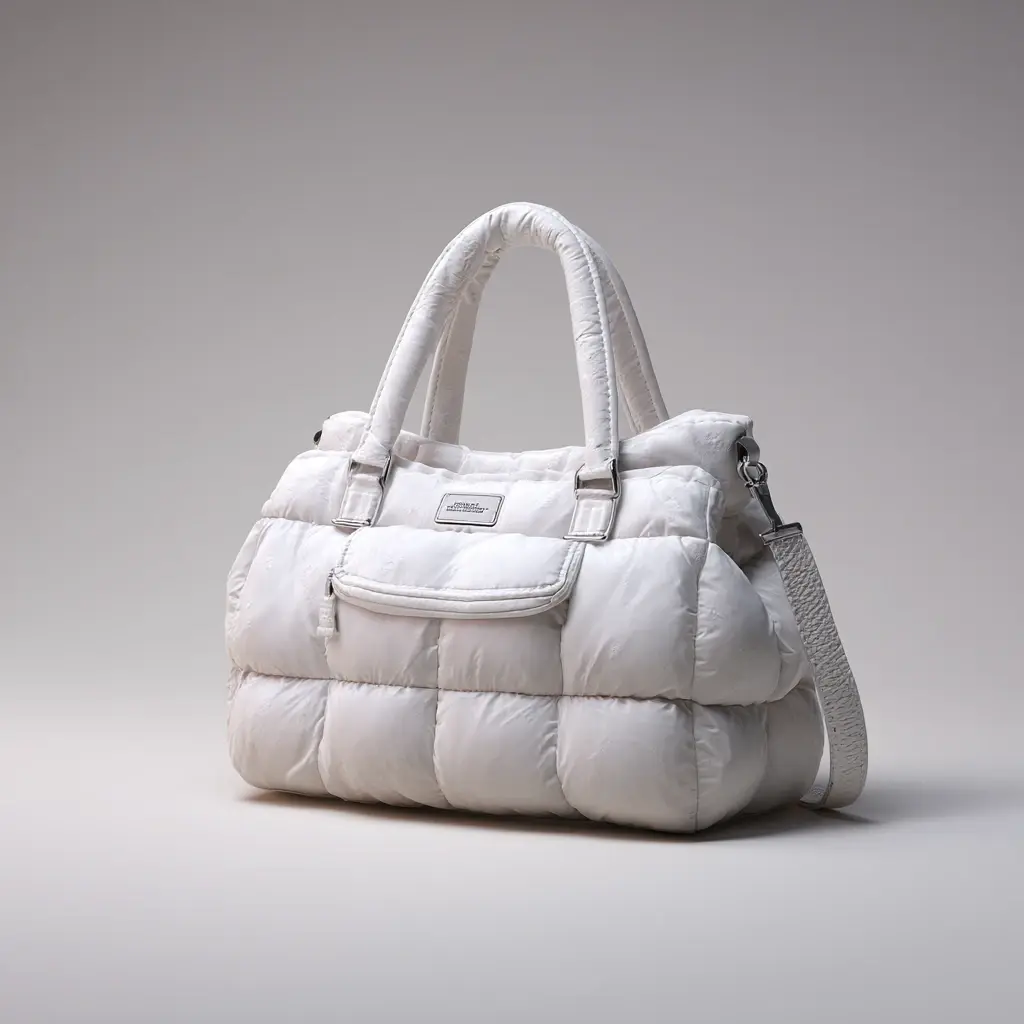
- Two Labels, One Season, Opposite Outcomes
- What Ownership Actually Means in a Bag Contract
- The Matrix: Six Questions, Two Columns
- Where Private Label Gives You More Than a Logo
- Where the Custom Route Is the Only Honest Answer
- The Asset Register After the First Season
- Trademark, Tooling and Territory: The Three Ownerships
- What the Matrix Cannot Tell You
- Moving Between the Two Without Starting Again
- The Ownership Checklist Before You Sign
- What the Ownership Clauses Cost, and Where They Break Even
- The Calendar for Filing, Tooling and Exclusivity
- When an Ownership Is Missing: Symptom and Cost
What is the difference between OEM handbags and private label? The bag can be identical; the contract is not. Under a private label arrangement the brand owns the mark, the tooling and exclusivity by position; under a straight OEM arrangement the pattern, the mould and often the artwork stay with the maker, and the buyer is purchasing access to a shape rather than ownership of one. Ownership in this category consists of exactly three things: a registered mark, tooling paid for and stored, and exclusivity by position and territory written into the contract. A brand holding all three can change production partner without changing product; a brand holding none has to rebuild its line from photographs.
Two Labels, One Season, Opposite Outcomes
What happened to each of them?
Two labels launched the same tote in the same quarter of 2024, from the same catalogue, at the same 500 pcs per colourway. One was a Copenhagen label selling through its own site; the other was a Melbourne marketplace seller who had found the shape first and moved fastest. Both sold out. Eighteen months later, only one of them still had a product.
The Copenhagen label had registered its mark in Nice Class 18 before the first sample was cut, paid for the embossing die as a separate line, and negotiated twelve months of exclusivity by position across Scandinavia. When its catalogue partner raised prices in 2026, it moved the entire line in a fortnight, because every asset that mattered travelled with it: a stored die, a stored specification, an approved material reference and a registered mark. The Melbourne seller had taken the shape as it came, with the die charge folded into the unit price and no exclusivity clause at all. By the following autumn the same tote was listed in three other territories at thirty per cent less, and there was nothing to stop it, because there was nothing to own.
The bags were the same. The paperwork decided which of the two businesses survived, and the paperwork was written in the first week, before either of them knew whether a single unit would sell. That is the part of the comparison worth reading twice: ownership is not bought later, at the point a brand becomes valuable. It is bought at brief stage, in the same email that asks for a price.
What Ownership Actually Means in a Bag Contract
Ownership language in this trade is loose, and the looseness is expensive. Three distinct things get called ownership, and they are separable: a brand can hold one and not the other two. Separating them is the whole exercise, because each is defended by a different document and each fails in a different way.
- The mark. A registered trademark, filed in the markets where the bag is sold. Registration under the Nice Classification places leather goods and bags in Class 18, and it is the only one of the three that is defended by law rather than by contract.
- The tools. A die, a mould and a label setup, each paid for, individually listed and stored. These are physical objects, and they are what make a line portable between production partners.
- The position. Exclusivity by position and territory: an agreement that a specific mark sits in a specific place on a specific shape, for a specific period, in a specific market. Two brands can share a pattern; only one mark can occupy a position.
Nothing else in a handbag programme is ownable. A material is bought, a pattern is shared, a colour is a dye lot, and an operation sequence is a skill. The Accessories Council has made the point for years in its reporting on brand value: the durable assets in this category are the mark and the tooling, and everything else is rented.
The Matrix: Six Questions, Two Columns
| Question | Private label | Straight OEM arrangement |
|---|---|---|
| Who owns the tooling? | Brand, listed individually and stored | Maker, unless stated otherwise |
| Is the shape exclusive? | By position and territory, in writing | Shared, absent a clause |
| Can production be moved? | Yes, the specification travels | Only by rebuilding the line |
| What is the entry quantity? | 500 pcs per style / colourway | 500 pcs per style / colourway |
| Where is the identity spent? | On the mark and one signature part | On volume and speed |
| What does the second season cost? | Zero tooling, sampling often skipped | Re-quoted as if new |
Read the third and the sixth rows together, because they are the same fact viewed at two points in time. Portability and a cheap second season are both consequences of holding the mark and the tooling, and both are purchased in the first email. The entry quantity, by contrast, is identical across the two routes, which surprises people who expect ownership to require volume.
Where Private Label Gives You More Than a Logo
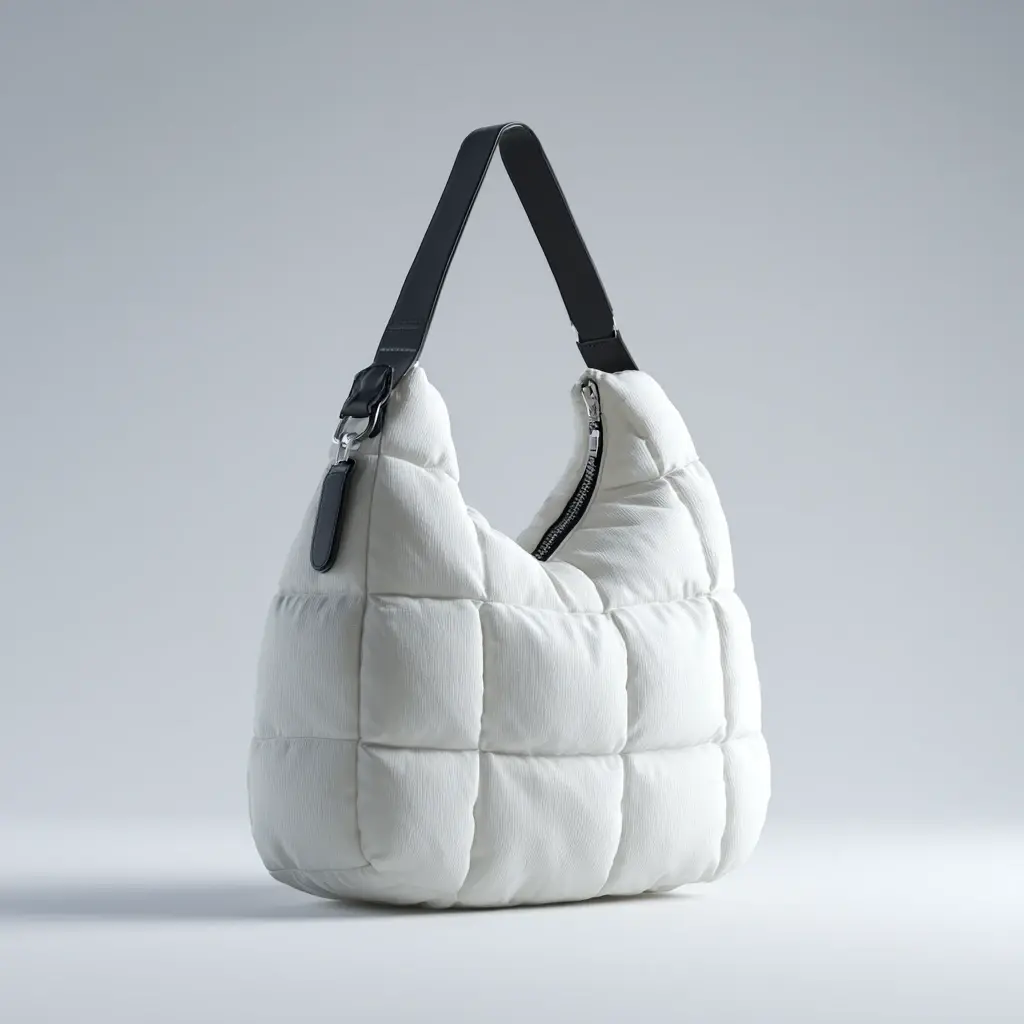
The obvious benefit of holding the mark is that the bag is recognisable. The less obvious one is that the documentation set exists at all, and it is the documentation that turns a first order into a repeatable operation. Three documents do most of the work.
- A stored specification. Width, gusset and strap drop in millimetres with a tolerance of plus or minus 3 mm, plus the construction numbers: 7-9 stitches per inch, a 10 mm seam allowance and Tex 40 thread.
- An approved material reference. A physical swatch matched to a Pantone TCX reference at Delta E 2.0 or better, with the lining specified too, typically 210D at 68 gsm rather than 190T at 52 gsm where the bag has to carry weight.
- A retained tooling list. Each tool identified, its storage location recorded, and its use restricted to the brand that paid for it.
With those three on file, a repeat can skip sampling entirely and remove 6-10 working days from the calendar, and a change of production partner becomes a document transfer rather than a redevelopment. That is the practical meaning of owning a line, and it is available at 500 pcs, not only at 5,000.
Where the Custom Route Is the Only Honest Answer
Ownership is not free, and it is not always the right first move. Two situations argue for taking a shared shape and spending the budget elsewhere, and both are common enough to be worth naming rather than treating as a compromise.
- When the retail band is below about 59 USD. At that level a tooling charge of 3.60-5.60 USD per piece is a large share of the cost, and a stock part with a debossed mark delivers most of the brand signal for a fraction of it.
- When the shape has not been validated. Paying to own tooling for a silhouette that has never sold is buying an asset in an unproven design. The pilot order at 300-500 pieces is the cheaper way to find out which shapes deserve a tool.
- When the territory is not yet decided. Exclusivity is written per market; negotiating it before the market is known means negotiating it twice.
The sequence that works is to borrow the shape, prove the sell-through, then buy the tooling on the repeat. The Copenhagen label did this in reverse order and was paying for a tool before it knew whether the tote would sell, which is a bet that happened to win.
The Asset Register After the First Season
A useful way to test whether a first season produced a business or only a set of cartons is to write down what it left behind. The register below is the standard one, and it is short enough to fit on a single page.
| Asset | Private label | Straight OEM arrangement | Why it matters |
|---|---|---|---|
| Registered mark, Nice Class 18 | Held | Held or not, independent of the maker | Defended by law, not by contract |
| Embossing die | Owned and stored | Not owned | Makes the second season cheaper |
| Stored specification | Yes, with tolerances | Held by the maker | Makes the line portable |
| Approved dye-lot reference | Yes | Held by the maker | Colour matching restarts from a standard |
| Exclusivity clause | 12 months by position and territory | None | Prevents the same bag being resold |
| Inspection report | AQL 2.5 under ISO 2859-1, issued to the buyer | Available | The only enforceable quality record |
Three of the six rows are free to obtain and usually are not obtained. A mark can be filed before the first sample; an inspection report is produced anyway and simply has to be requested by name; an approved physical swatch costs a courier fee. The remaining three require a clause each, and the clauses are one paragraph of a contract.
Trademark, Tooling and Territory: The Three Ownerships
These three are routinely confused with one another, and the confusion produces the worst clauses in the trade. A contract that grants exclusivity but says nothing about tooling leaves the brand unable to move. One that transfers tooling but grants no exclusivity leaves the brand competing with its own shape. The three need separate sentences.
- The mark is filed in each market where the bag will be sold, in Class 18 of the Nice Classification, and it is the brand's property regardless of who makes the bag.
- The tooling is listed individually, stored, and never run for another brand; a twelve-month inactivity clause is the usual storage term.
- The territory names the markets, the period and the position on the bag: a mark in a specific place, on a specific shape, for a specific term, in specific countries.
Only the third of these is genuinely negotiable, and it is the one most often skipped. Exclusivity by position is what the Copenhagen label had and the Melbourne seller did not, and it is the cheapest of the three to ask for, because it costs nothing until it is enforced.
What the Matrix Cannot Tell You
A comparison of two routes is only as good as the third variable it leaves out, and here that variable is speed. Neither column captures the fact that a shelf shape can be in cartons inside the standard 35-50 day bulk window while a bespoke shape is still in its second sample round, and for a brand with a season to hit that difference outweighs the whole ownership question.
The honest reading is that ownership and speed are bought from the same budget and one is bought with the other. A brand that borrows a shape for a season and buys the tooling on the repeat gets most of both, at the cost of one season without exclusivity. That trade is available at 500 pcs, and it is the one most first lines should take. The is OEM cheaper than ODM analysis approaches the same trade from the cost side rather than the ownership side.
Moving Between the Two Without Starting Again
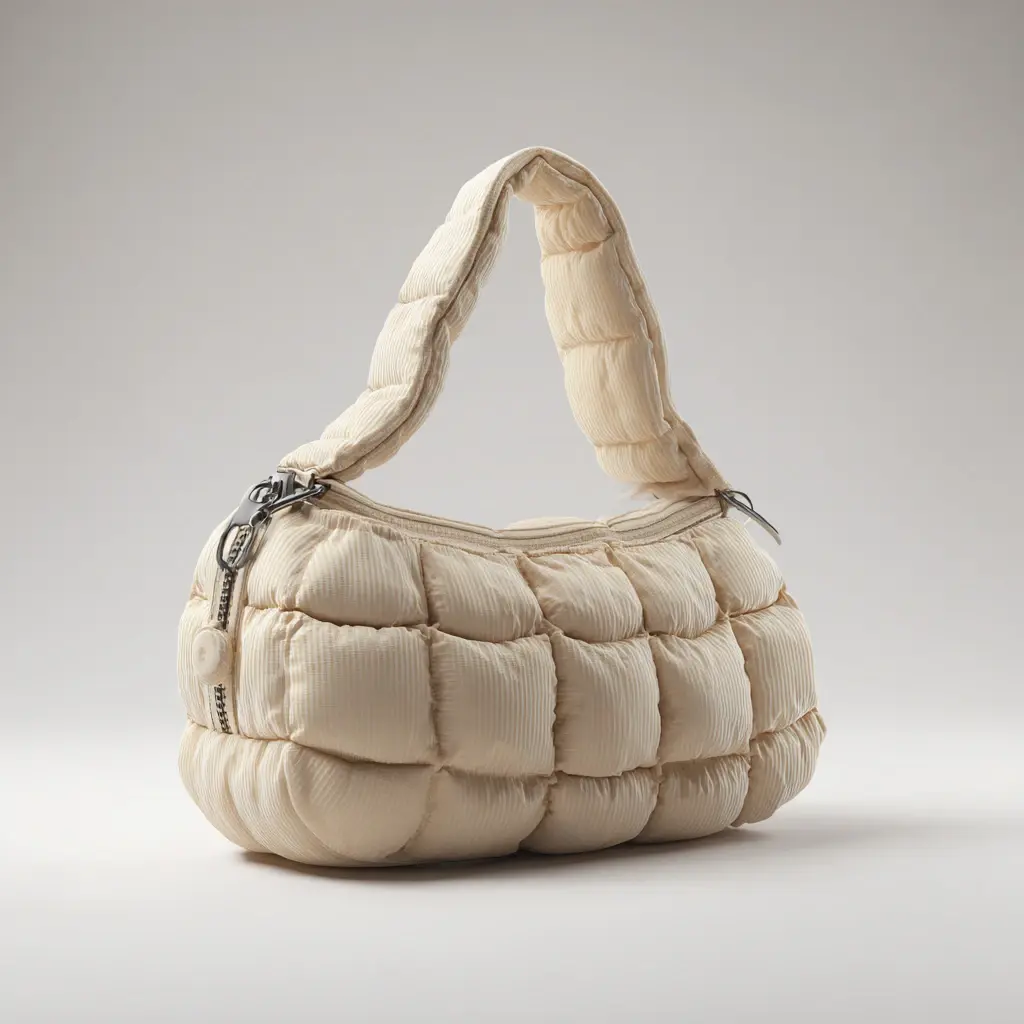
The transition is not a new development, it is an acquisition. Once a shape has proven itself, three steps convert a borrowed product into an owned one, and none of them require a new sample round.
- File the mark in each target market in Class 18 before the repeat is ordered.
- Buy the tooling that matters, one part at a time, starting with the embossing die at 180-420 USD.
- Write the exclusivity clause into the repeat contract by position, territory and period.
Each step is affordable on its own and each improves the second season rather than the first, which is exactly why they are usually deferred and exactly why they are worth doing early. The custom tooling budget prices the middle step in detail.
The Ownership Checklist Before You Sign
- Is the mark filed, in Class 18, in every market the bag will be sold in?
- Is the tooling listed individually and stated to be the property of the brand?
- Is exclusivity granted by position, territory and period, in months?
- Is the specification stored with tolerances of plus or minus 3 mm on the three dimensions that matter?
- Is the inspection standard named, AQL 2.5 under ISO 2859-1, with the report issued to the brand?
- Is the term stated, FOB Xiamen with T/T and a 30% deposit, and is the trade term the one the landed cost was calculated on?
Six questions, and a contract that answers them is worth more than a lower unit price. The full OEM programme reference sets out the document set in the order a retail buyer will ask for it, including BSCI and Sedex audit references, ISO 9001, REACH, Proposition 65 and CPSIA documentation, and Leather Working Group traceability where hides are sourced that way.
What the Ownership Clauses Cost, and Where They Break Even
Ownership is bought with four small cheques rather than one large one, and the size of each is known in advance, which is what makes the decision possible at 500 pcs. A mark filing in one market under the Nice Classification, Class 18, runs a few hundred to over a thousand USD depending on the jurisdiction; an embossing die is 180-420; a zinc-alloy mould is 1,200-2,800; exclusivity by position usually costs nothing to ask for and nothing until it is enforced. Amortised across 500 pieces, the first three are a few dollars a unit and the fourth is free.
| Item | Cost | Per piece at 500 | Pays back |
|---|---|---|---|
| Mark filing, Class 18, one market | 350-1,200 | 0.70-2.40 | First season, and it is defended by law |
| Embossing die | 180-420 | 0.36-0.84 | Season two, at zero marginal cost |
| Zinc-alloy mould | 1,200-2,800 | 2.40-5.60 | Only above about 59 USD retail |
| Exclusivity by position | 0, or a 0-3 per cent premium | 0 | The moment a copy appears |
| Retained swatch and specification | A courier fee | 0 | Every reorder, at 6-10 working days saved |
The Calendar for Filing, Tooling and Exclusivity
Three ownership decisions sit at three different points in the calendar, and two of them are usually late. A mark should be filed before the first sample is cut, because registration takes months and a mark that is not filed cannot be defended. A die belongs inside the sampling window, because it takes four to six days to cut and has to be fitted to a panel that already exists. An exclusivity clause belongs in the first contract, because it costs nothing then and everything later.
| Step | When | How long it takes | What happens if it is late |
|---|---|---|---|
| File the mark, Class 18 | Before the first sample | Registration 4-12 months by market | The name can be taken while the bag is being made |
| Order the embossing die | During sampling | 4-6 days to cut | A late die adds a second round at 6-10 working days |
| Order a mould, where justified | After the shape has sold once | 8-12 days, then plating | A mould on an unproven shape is a bet |
| Write the exclusivity clause | First contract | One paragraph | The same shape appears elsewhere at 30 per cent less |
| Retain the reference set | At swatch approval | 2-4 days to assemble | Colour disputes become unresolvable |
| Renewal and audit reminders | Every 12 months | One diary entry | A lapsed mark or audit is found at onboarding |
When an Ownership Is Missing: Symptom and Cost
The cost of a missing ownership is never visible at the moment it is skipped, which is why it is skipped. It arrives later, as a rebrand, a re-cut die or a margin collapse, and it always arrives in a season that already has a launch date in it. The five below are the common ones, priced at what they cost to repair rather than at what they would have cost to prevent.
| Missing | Symptom | Cost to repair |
|---|---|---|
| Registered mark | Another party files the name in your market | Rebrand: new packaging plates 300-600, relabelling 0.35-0.60 a unit |
| Die ownership | The line cannot be moved between partners | Re-cut a die at 180-420 plus 6-10 working days of sampling |
| Stored specification | The repeat is re-quoted as if new | 6-10 working days of sampling and a second revision round |
| Retained colour reference | A bulk lot is visibly different and nobody can prove it | A re-sort at 0.35-0.60 a unit, or a markdown |
| Exclusivity clause | The same bag is listed in three territories at 30 per cent less | Margin loss across the season, unrecoverable |
Own the mark, the tooling and the position
Send the shape, the territory and the retail band. A private label coordinator will return a contract-ready specification with tooling listed individually, exclusivity by position, sampling at 6-10 working days, bulk at 35-50 days and inspection at AQL 2.5 under ISO 2859-1. Programmes have moved through our validated partner factory Quanzhou Yingming Bags since 2014, across 7 production lines and about 200,000 pcs per month. Get a quote.
Frequently Asked Questions
What is the real difference between OEM handbags and private label?
The product can be identical; the contract is not. Under private label the brand owns the mark, the tooling and exclusivity by position. Under a straight OEM arrangement the pattern, the mould and often the artwork remain with the maker, and the brand holds a resale right rather than an asset.
Which trademark class covers handbags?
Class 18 of the Nice Classification, which covers leather and imitations of leather, and goods made of those materials including bags. The classification is administered by WIPO and used by national offices, and filing in each market where the bag is sold is what makes the mark enforceable there.
Can two brands share the same shelf shape?
Yes, and most do. Sharing a pattern is normal and efficient; what should not be shared is the position. Exclusivity by position means a specific mark sits in a specific place on a specific shape for a specific term in specific markets, and it is enforceable where a general claim to the shape is not.
How long should an exclusivity clause run?
Twelve months by position and territory is the common period for a first arrangement, and it is usually enough to cover a season plus its repeat. Longer periods are negotiable but are normally tied to a volume commitment rather than granted for the asking.
Does owning a private label line require a larger order?
No. The entry quantity is 500 pcs per style and colourway on either route. What ownership requires is documentation rather than volume: a filed mark, a tooling list and an exclusivity clause, all of which are obtainable at the minimum quantity.
What happens to the tooling if production moves elsewhere?
It moves with the brand, provided it was individually listed and stored, and provided the storage location was recorded. Without a list and a storage clause, the physical die exists but there is no enforceable right to have it released, which is the practical failure behind most moves.
Is a private label arrangement always the better choice?
Not for a first season at a low retail band. Below about 59 USD a tooling charge of 3.60-5.60 USD per piece takes too large a share of the cost, and a stock part carrying a debossed mark delivers most of the brand signal. The better sequence is to borrow the shape, prove the sell-through, then buy the tooling on the repeat.
What documents should a private label contract require?
A tooling schedule listing each tool and its owner, an exclusivity clause naming position, territory and period, a specification with tolerances of plus or minus 3 mm, an inspection report at AQL 2.5 under ISO 2859-1, plus REACH, Proposition 65 and CPSIA documentation and BSCI or Sedex audit references.
How does a brand move production without changing the product?
By transferring three documents: the stored specification with its tolerances and construction numbers, the approved physical swatch matched at Delta E 2.0 or better, and the retained tooling list. With those three a new partner can quote a repeat without a sample round, which is the practical definition of owning a line.
What is exclusivity by position worth in practice?
It is the difference between a line and a listing. Without it, the same shape can be resold in another territory at a lower price, and there is no contractual basis to object. With it, the brand has a named position on a named shape for a named period and can act on it.
How much does an embossing die cost and who should pay for it?
Between 180 and 420 USD depending on area and depth, and the brand should pay for it as a separate line item. Billed separately it disappears from the second order; folded into the unit price it is invisible and tends to be charged twice.
What lining specification suits a bag that carries weight?
210D at 68 gsm rather than 190T at 52 gsm, with a 0.9 mm bonded non-woven reinforcement at the base and the strap attachment. The lining is not a visible part, but it is where a loaded bag fails first, and an inspector will check the reinforcement before checking the seam.
People Also Ask
Is private label just another name for the same arrangement?
No. Both can produce the same physical bag from the same catalogue, but they allocate the mark, the tooling and the exclusivity differently, and those three decide what the brand still owns if it ever changes production partner.
Should a new brand file a trademark before its first order?
Yes, in each market where the bag will be sold. Filing in Class 18 costs far less than discovering later that the mark is unavailable, and it is independent of any manufacturing arrangement.
What is the cheapest ownership asset to obtain?
Exclusivity by position, because it costs nothing until it is enforced and requires only a clause. The second cheapest is the inspection report, which is produced anyway and simply has to be requested by name.
Can a borrowed shape later become an owned one?
Yes, in three steps and without a new sample round: file the mark, buy the tooling one part at a time, and add the exclusivity clause to the repeat contract.
Sources and further reading
Every figure on this page is either our own programme data or attributed below. Open the originals before you write them into a specification.
- World Intellectual Property OrganizationWIPO International trademark and design registration before tooling starts.
- FashionUnited — fashion industry news and dataFashionUnited Industry news and company data for the fashion sector.
- SATRA — technical services for leather, footwear and accessoriesSATRA Independent leather, hardware and accessories testing protocols.