How to Plan a Seasonal Handbag Collection Around Trends
How do you plan a seasonal handbag collection around trends without betting the season on a guess? Start 180 days before the floor date and let three fixed numbers do the filtering: 500 pcs per style / colourway, 6-10 working days for a first sample, and 35-50 days for bulk. A Lisbon direct-to-consumer label planned four styles for spring 2026 on a trend report alone, committed 2,500 pieces at an average FOB Xiamen price of USD 21.40, and landed nine days after its own launch window because one revision round and one failed pre-shipment inspection were never in the calendar. Nothing about the trend was wrong. The plan was. This page walks that case backwards, turns it into a planning sequence any brand can run, and shows where trend input belongs in a collection and where it does not.
- A Spring Drop That Landed Nine Days Late
- The Backwards Calendar: 180 Days From Floor Date
- How Many Styles Fit Inside a 500-Piece Minimum
- Ranking Trend Inputs by How Fast They Move
- Three Roles Every Collection Has to Fill
- Where Colourway Count Eats the Budget
- The Sampling Gate That Decides the Season
- Planning the Reorder Before the First Drop Ships
- What to Carry Over and What to Retire
- What a 2,500-Piece Season Costs Month by Month
- Turning a Trend Signal Into a Specification Line
How do you plan a seasonal handbag collection around trends without betting the season on a guess? Start 180 days before the floor date and let three fixed numbers do the filtering: 500 pcs per style / colourway, 6-10 working days for a first sample, and 35-50 days for bulk. A Lisbon direct-to-consumer label planned four styles for spring 2026 on a trend report alone, committed 2,500 pieces at an average FOB Xiamen price of USD 21.40, and landed nine days after its own launch window because one revision round and one failed pre-shipment inspection were never in the calendar. Nothing about the trend was wrong. The plan was. This page walks that case backwards, turns it into a planning sequence any brand can run, and shows where trend input belongs in a collection and where it does not.
The fixed numbers a seasonal plan is built around
A Spring Drop That Landed Nine Days Late
The label is a direct-to-consumer business in Lisbon selling mostly to Portugal and Spain, with a spring window it opens on 1 March every year. For spring 2026 the founder read the category reporting in early November, picked four silhouettes from it, and sent sketches in the third week of November. The buy was four styles: one hero tote, one small crossbody, one sling and one commuter backpack, with two colourways on the hero and one on each of the rest, which is five lots of 500 pcs and 2,500 units in total at an average FOB Xiamen price of USD 21.40.
The arithmetic of the calendar is where it went wrong. Sketches left on 20 November. First samples arrived on 5 December, inside the 6-10 working day window. The founder disliked the strap drop on three of the four styles and asked for a revision, which took another 11 working days. Approval was granted on 22 December, which put bulk into a period that already carried a holiday stoppage. Bulk finished on 12 February instead of the planned 4 February. The vessel then rolled, and the cartons cleared on 10 March, nine days after the window opened. Every step performed roughly as quoted; none of them were sequenced.
The Backwards Calendar: 180 Days From Floor Date
A collection is planned from the floor date backwards, not from the idea forwards. Take 1 March and subtract. Ocean transit plus customs clearance takes 20-35 days to most North American and European destinations, so the ex-factory date is no later than 25 January. Bulk takes 35-50 days, so production start is no later than 6 December. Sampling takes 6-10 working days per round, and planning for two rounds rather than one is the realistic assumption for a new style, so the first tech pack has to be complete by early November.
- Day 180: freeze the category decision and the retail band. Nothing else starts until the price point is fixed.
- Day 165: complete tech packs for every style, with material, hardware, dimensions and tolerances written down.
- Day 150: submit for costing and first samples; 6-10 working days is the standard window, 12-15 for complex builds.
- Day 130: review round one, write the revision list as numbered items, and submit round two.
- Day 112: approve the golden sample, seal and photograph it, and release the deposit for bulk.
- Day 105: bulk starts; 35-50 days, with an inline visit planned at 15-30 per cent completion.
- Day 55: pre-shipment inspection at AQL 2.5 under ISO 2859-1, plus six calendar days held as a re-sort buffer.
- Day 45: book the vessel; transit runs 20-35 days depending on the lane and the port pair.
Two lines in that sequence are optional in theory and mandatory in practice. The second sample round is one: the probability that a brand approves a new silhouette on round one is low, and the calendar that assumes it is the calendar that slips. The six-day inspection buffer is the other, because roughly one first order in four fails its first pre-shipment inspection and a re-sort adds three to six days. Building both in costs nothing and removes the two most common causes of a missed window.
How Many Styles Fit Inside a 500-Piece Minimum
The minimum is the real constraint on the size of a collection, not the mood board. At 500 pcs per style / colourway, a budget of 2,500 units buys exactly five lots. The question is how those five lots are distributed, and the answer depends on how much of the budget the brand can afford to have in a style that does not work. Four styles across five lots concentrates risk; two styles across five lots concentrates it further but makes each one re-orderable at an efficient run.
| Structure | Lots of 500 pcs | What it buys | Main risk |
|---|---|---|---|
| Four styles, hero in two colourways | 5 | Broadest shelf presence on a fixed budget | Four toolings and four sample rounds to manage |
| Three styles, hero in three colourways | 5 | Depth on the best seller | A weak hero leaves the season thin |
| Two styles, two to three colourways each | 5 | Efficient reruns and simpler QC | Narrow shelf presence at launch |
| One hero style in five colourways | 5 | Lowest unit cost and fastest rerun | Single point of failure if the shape misses |
For a first season the third row is usually the right answer, because it keeps the number of drawings, hardware toolings and sample rounds at a level a small team can actually review. For a fourth or fifth season, when the brand already knows which silhouette sells, the fourth row becomes attractive: one shape in five colourways means the line never resets, the unit cost drops, and a reorder can be placed in a single lot rather than five. The trend question enters only after this decision, and it should be read alongside the 2026 market figures for brand owners.
Ranking Trend Inputs by How Fast They Move
Not all trend input has the same shelf life, and treating a colour forecast the same way as a silhouette forecast is how a season ends up half-obsolete on arrival. The useful sort is by how quickly the input changes and by how much it costs to change it in production.
- Colour and finish: moves fastest, cheapest to change, and can be decided latest. A colourway can be switched up to the point where the material is booked.
- Hardware and trim: moves on a two to three season cycle and carries a tooling lead time, so it has to be decided before colour, not after.
- Material family: moves slowly but has the longest booking lead time of the three, and certified content adds a transaction certificate to the schedule.
- Silhouette: moves slowest of all, takes the longest to sample correctly, and is the one decision that must be right before the others are worth making.
- Proportion and detail: strap drop, base width and pocket layout change quietly and are the reason two seasons of the same shape sell differently.
Three Roles Every Collection Has to Fill
A collection is a portfolio, and the portfolio needs three jobs covered. The first is the hero, the style that carries the campaign and most of the units. The second is the volume style, the cheaper unit that keeps cash moving and absorbs the marketplace. The third is the signal style, the one that exists to make the brand look current and is not expected to reorder. Assigning each style to one of those three roles before costing begins is what stops a collection from becoming four versions of the same idea.
- Hero: usually 40-50 per cent of the units, priced in the middle of the range, and the style that gets the extra colourway.
- Volume: 25-35 per cent of the units, lowest FOB of the three, simplest construction, and the one that reorders fastest.
- Signal: 10-20 per cent of the units, highest risk, and deliberately capped so that being wrong about it costs a defined amount.
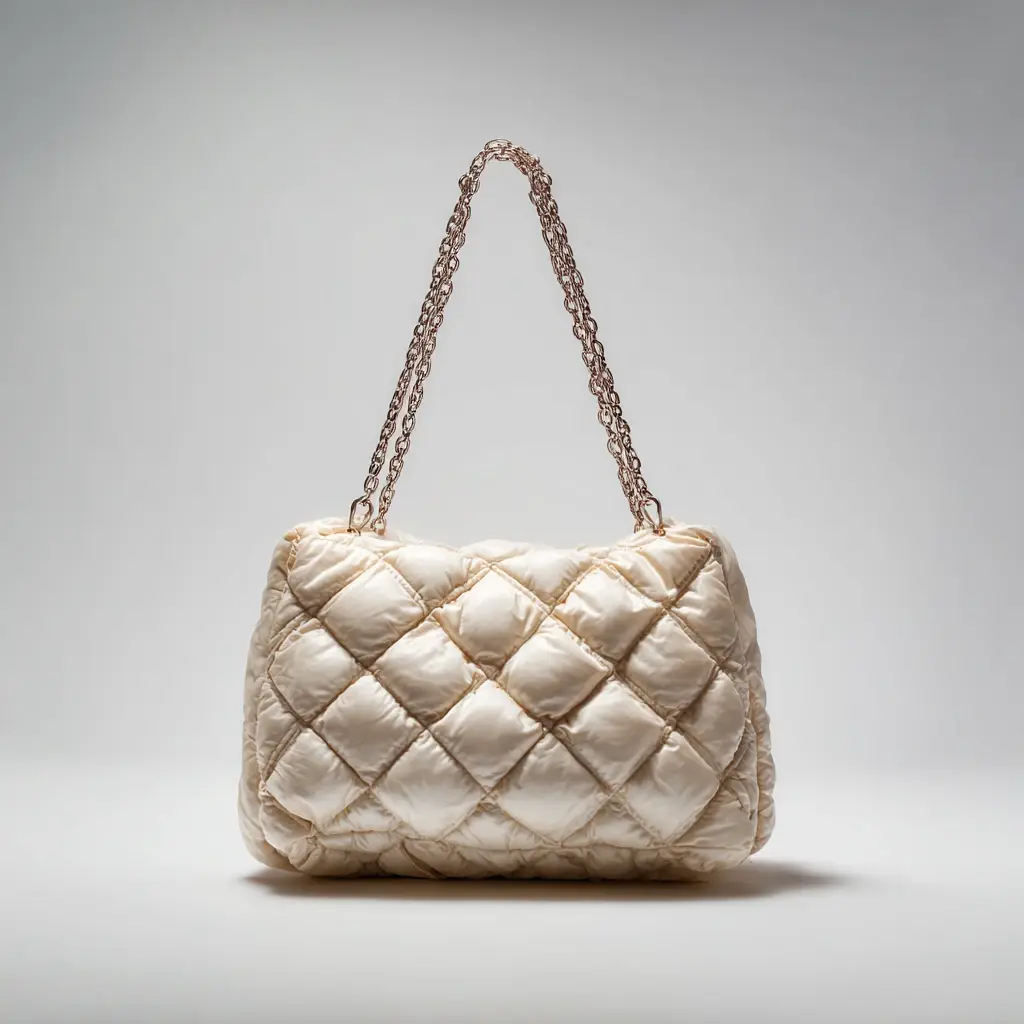
In the Lisbon case the split was accidental rather than designed: the hero tote took two colourways and roughly 40 per cent of units, the small crossbody took another 20 per cent, and the sling and the backpack split the rest. Post-season the data was unambiguous. Two of the five lots delivered 62 per cent of the units sold in the first ten weeks, and both were the hero tote. Had the split been designed, the same money would have gone into three colourways of the tote and one supporting style, and the season would have been simpler to run and cheaper to reorder.
Where Colourway Count Eats the Budget
A colourway is a production lot, not a variation. At 500 pcs per style / colourway, adding a third colour to a style costs the same as adding a new style in a single colour, and it consumes the same amount of the season's working capital. What it does buy is a much cheaper failure: a wrong colour on a right shape can be sold down over two seasons, whereas a wrong shape in the right colour cannot.
The colour decision also carries the tightest schedule dependency in the whole plan, because dye lots have to be booked and matched. A reference matched to within Delta E 1.5 under a D65 light source is the usual commercial standard, and a colour that misses it on the first pull adds a second pull at roughly 5-8 working days. Deciding colour last is therefore only safe if that second pull is already in the calendar, which is another way of saying the backwards plan has to include one round of everything, not zero.
The Sampling Gate That Decides the Season
Sampling is the one stage where a season is genuinely won or lost, because it is the only stage where a change is still cheap. Two disciplines make it work. The first is reviewing against the tech pack rather than against taste, so that every comment is a measurable item. The second is numbering revisions, so that the approved unit and the approved drawing carry the same revision code.
| Review habit | What the line receives | Effect on the season |
|---|---|---|
| Comments in chat, no revision code | Newest unit against the oldest drawing | Mixed units, arguments, three to six lost days |
| Numbered revision list per round | R2 unit against an R2 drawing | One re-check pass, clean cartons |
| Sealed golden sample, photographed | Inspector compares against the sealed unit | Dispute settled inside the report |
| Measurement stated with tolerance | Dimensions checked at plus or minus 3 mm | Fit complaints drop sharply after launch |
The gate itself needs a written exit condition: the season moves to bulk when the golden sample is sealed, the drawing carries the same revision number, the defect classes are agreed at AQL 2.5 under ISO 2859-1, and the material lot is booked. Anything less and the plan is running on optimism rather than on documents. For categories where the demand signal is still forming, that gate is also the moment to apply the tests in separating a fad from a lasting category before money is committed to bulk.
Planning the Reorder Before the First Drop Ships
The second order is where a private label programme becomes a business, and it is decided before the first one ships. Three things have to be in place at the point of approval: a material that can be booked again in the same lot, a drawing at a revision code that can be sent again unchanged, and a sales read on which lot is actually moving. Without the first two, the reorder restarts the sampling clock and lands a season later.
- Book 10-15 per cent more material than the order needs so a mid-season reorder does not wait on a new hide or roll booking.
- Keep the approved drawing frozen and record any bulk-stage change as a new revision, so the next order starts from a known state.
- Set a reorder trigger on units sold, not on weeks elapsed; 60 per cent of a lot sold is a more reliable signal than a date on the calendar.
- Hold the inspection report per lot and write one conclusion line naming whether each defect was systemic or incidental.
What to Carry Over and What to Retire
Most collections are over-edited between seasons. The instinct after a slow style is to drop it, but a slow style that returns a full-price sell-through of 55 per cent over two seasons is often more valuable than a fast style that has to be discounted to clear. The carry decision should rest on three numbers: full-price sell-through, return rate, and whether the style can be rerun without a new tooling or a new material booking.
Retiring is easier to judge. A style goes when it needs a new tooling to stay current, when its material can no longer be sourced at the same specification, or when its sell-through depends on permanent promotion. Everything else is a candidate for a colour refresh rather than a redesign, which is the cheapest way to keep a range feeling new. Where the category itself is shifting, the drivers are worth reading before the edit, and the commuter and travel demand drivers are the clearest current example. The wider category reference sits in the handbag library.
What a 2,500-Piece Season Costs Month by Month
Five lots of 500 pieces is not one payment of 2,500 units. It is a series of commitments spread across roughly six months, and the shape of that series decides whether the season can be funded at all. Three of the five lines below fall due before a single unit is available to sell.
| Moment | Payment | Amount |
|---|---|---|
| Month one, deposit on lots 1-5 | 30 per cent of 53,500 USD | 16,050 USD |
| Month one to two, sampling rounds | Two rounds across four styles | included in the programme |
| Month three, balance on lot 1 | 70 per cent of 10,700 USD | 7,490 USD |
| Month three, freight and duty on lot 1 | About 3.5-4.5 USD per piece | 1,750-2,250 USD |
| Month four to five, balance, freight and duty, lots 2-5 | Repeats per lot | 9,240-9,740 USD per lot |
| Month six, contingency | One revision round plus a re-sort buffer | six calendar days |
Turning a Trend Signal Into a Specification Line
A trend report describes an outcome rather than an instruction, and the step between the two is where most of a season's risk sits. Each signal has to be converted into a line with a figure attached, or it survives only as an adjective and gets interpreted on the bench by whoever happens to be cutting that week.
| Trend signal | Specification line | Figure to write down |
|---|---|---|
| Softer, slouchier bodies | Interlining weight and placement | 40 gsm non-woven on the flap, nothing in the gusset |
| Quiet hardware | Plating finish and colour temperature | Brushed or antique finish, 8-12 microns, nickel-free |
| Warmer neutral palette | Pantone TCX reference per colourway | Delta E 2.0 or better under D65 |
| Textured surfaces | Emboss depth and panel flatness | Relief 0.6-1.2 mm on a flat area of at least 40 x 25 mm |
| Smaller, lighter carry | Body width, gusset and finished weight | 200-230 mm wide, 60-75 mm gusset, under 400 g |
Send us your floor date and the styles you are considering and we will return a backwards calendar, a lot structure at 500 pcs each and a sampling schedule with the buffers already in it. Get a Quote → /contact-quote/
Frequently Asked Questions
How far in advance should a seasonal handbag collection be planned?
Roughly 180 days before the floor date. Transit and clearance take 20 to 35 days, bulk takes 35 to 50 days, and two sampling rounds take about 25 working days between them. Add tech pack and costing time and the drawing has to be frozen around five to six months out. Brands that start twelve weeks ahead usually finish the season paying for air freight.
How many styles should a first seasonal collection have?
Two or three styles across five lots of 500 pcs is the most workable structure for a first season. It keeps the number of drawings, hardware toolings and sample rounds small enough for a small team to review properly, while leaving enough shelf presence to look like a range. Four styles across five lots is possible but doubles the review load at exactly the point where attention is scarcest.
Is a second sample round really necessary?
Plan for it. The probability of approving a new silhouette on round one is low, particularly where strap drop, proportion or base width are involved. A calendar that assumes one round is the calendar that slips, because the revision takes 10 to 15 working days that were never allocated. Assuming two rounds costs nothing and is the single cheapest buffer in a seasonal plan.
How much of a collection budget should go into the hero style?
Between 40 and 50 per cent of units, with the extra colourway attached to it rather than to a supporting style. The hero carries the campaign and usually delivers the majority of full-price sell-through, so concentrating units there reduces the number of styles that have to work. In the case examined on this page, two lots of the hero delivered 62 per cent of units sold in ten weeks.
When can the colour decision be made?
Latest of all the decisions, but only if a second dye pull is already in the calendar. Colour moves fastest of any trend input and a colourway can be changed up to the point where material is booked. Matching to within Delta E 1.5 under a D65 source is the usual commercial standard, and a first pull that misses it adds roughly 5 to 8 working days.
What is the most common reason a seasonal drop lands late?
Sequencing rather than performance. Every stage usually runs close to its quoted time; what goes wrong is that stages are arranged so that a revision round or a failed inspection has nowhere to go. Two missing buffers account for most late seasons: a second sample round, and six calendar days held for a re-sort after a lot fails AQL 2.5 under ISO 2859-1.
Should a brand reorder the same style or launch new styles each season?
Both, in proportion. A carried-over hero with a refreshed colour is the cheapest unit a brand will ever buy, because the drawing is frozen and the material is already booked. New styles belong in the signal role, capped at 10 to 20 per cent of units, so that being wrong about them costs a defined and survivable amount.
How does a trend report fit into collection planning?
As a filter applied after the structural decisions, not before them. Decide the retail band, the lot structure and the three roles first, then use trend input to choose colour, hardware finish and proportion within that frame. Reading trend reports first tends to produce four styles that all chase the same signal and none of which reorder.
What exit condition should gate the move from sampling to bulk?
Four things simultaneously: a golden sample sealed and photographed, a drawing carrying the same revision code, defect classes agreed at AQL 2.5 under ISO 2859-1, and the material lot booked. Moving to bulk with three of the four is the most common shortcut and it converts directly into arguments during inspection and rework after it.
How much inventory buffer should a first drop carry?
For a 2,500-piece season, holding 10 to 15 per cent of material over the order quantity is more useful than holding finished units, because material can be converted into whichever lot is actually selling. Finished buffer tends to sit in the wrong colourway. The same logic applies to reorder triggers, which should be set on units sold rather than on weeks elapsed.
How is a style judged for carry-over into the next season?
On three numbers: full-price sell-through, return rate, and whether it can be rerun without new tooling or a new material booking. A slow style selling 55 per cent at full price over two seasons often beats a fast style that only clears on promotion. Retire a style when it needs new tooling to look current or when its material can no longer be matched.
People Also Ask
Why do seasonal handbag launches miss their window so often?
Because the plan is built forwards from the idea rather than backwards from the floor date, and because two normal events are left out of it. A second sample round and a six-day inspection buffer are the two items most often missing. Adding both costs nothing and absorbs the two delays that account for the majority of late seasons in this category.
How many pieces should a first seasonal collection order?
Five lots of 500 pcs is a workable first season, distributed as two or three styles rather than four or five. That structure keeps the number of drawings and hardware toolings manageable while giving enough shelf presence to read as a collection. A single-style five-colourway buy is cheaper per unit but leaves the season with one point of failure.
Which trend inputs can be decided latest in the season?
Colour and finish, because they move fastest and cost least to change, followed by hardware finish. Material family has to be decided earlier because of booking lead times, and certified content earlier still because of the transaction certificate. Silhouette must be settled first, since it takes longest to sample and every later decision depends on it.
What makes a handbag style worth carrying into a second season?
A full-price sell-through above roughly 55 per cent, a return rate at or below the category norm, and the ability to rerun it without new tooling or a new material booking. Styles meeting all three usually deserve a colour refresh rather than a redesign, which is the cheapest way to keep a range feeling current without restarting the sampling clock.
Sources and further reading
Every figure on this page is either our own programme data or attributed below. Open the originals before you write them into a specification.
- Accessories Council — accessories industry bodyAccessories Council Accessories industry body tracking handbag category direction.
- Incoterms rulesICC The rules that decide where cost, risk and insurance transfer.
- FashionUnited — fashion industry news and dataFashionUnited Industry news and company data for the fashion sector.