Best Small Handbag Trends With Low MOQ and High Margin
Which small handbag trends give a new brand strong margin without a punishing minimum? The six worth building are the small crossbody, the sling, the micro shoulder bag, the belt bag, the card-case shoulder and the mini bucket, and all six share three economics: about 3.8 square feet of material per unit against 7.2 for a tote, roughly 24 finished units per export carton against 8, and a first run that still sits at 500 pcs per style and colourway. The margin comes from that carton density and that yield, not from a lower minimum, because the minimum does not move. This page compares the six on cost, yield and risk, then compares three ways of assembling them into a capsule, and finishes with the arithmetic on a 500-piece run and the three places small-bag programmes usually lose the advantage they started with.
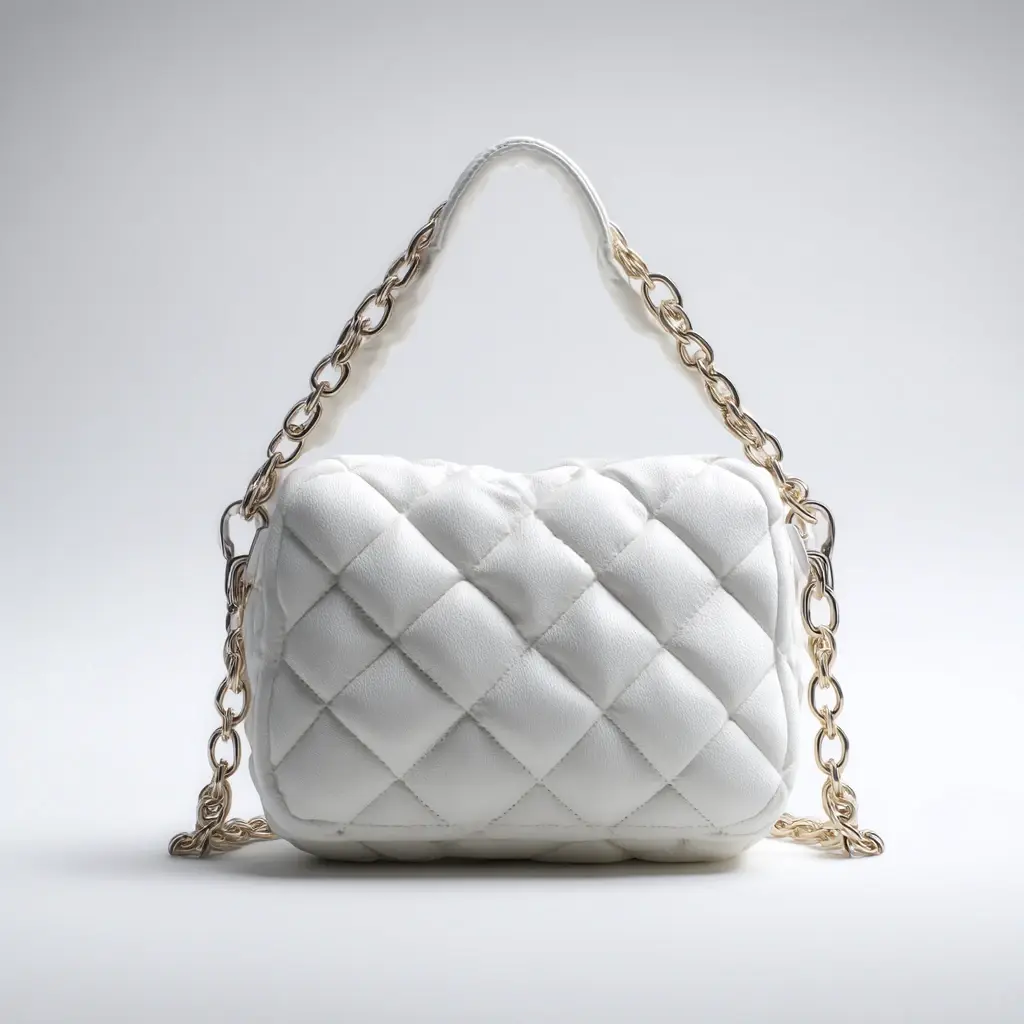
- Why Small Silhouettes Carry the Best Margin per Carton
- Six Small Styles Compared on Cost, Yield and Risk
- Three Ways to Build a Small-Bag Capsule, Compared
- Margin Arithmetic on a 500-Piece Run
- Material Yield: Where Small Bags Save and Where They Do Not
- Hardware Cost Does Not Shrink With the Bag
- Which Small Styles Reorder and Which Do Not
- Three Launch Scenarios and the Capsule for Each
- Where a Small-Bag Programme Goes Wrong
- A Specification Sheet for a Small Bag
- Transit Damage on Small Bags and the Packaging Fix
Which small handbag trends give a new brand strong margin without a punishing minimum? The six worth building are the small crossbody, the sling, the micro shoulder bag, the belt bag, the card-case shoulder and the mini bucket, and all six share three economics: about 3.8 square feet of material per unit against 7.2 for a tote, roughly 24 finished units per export carton against 8, and a first run that still sits at 500 pcs per style and colourway. The margin comes from that carton density and that yield, not from a lower minimum, because the minimum does not move. This page compares the six on cost, yield and risk, then compares three ways of assembling them into a capsule, and finishes with the arithmetic on a 500-piece run and the three places small-bag programmes usually lose the advantage they started with.
The economics a small-bag programme is built on
Why Small Silhouettes Carry the Best Margin per Carton
Three mechanisms push margin up as a bag gets smaller, and only the first is obvious. Material is the obvious one: a small crossbody consumes roughly 3.8 square feet of leather against about 7.2 for a medium tote, which on a hide costing USD 4.10 per square foot is a difference of close to USD 14 per unit before anything else is considered. That single line is usually the largest component of the price gap between the two categories.
The second mechanism is freight, and it is the one most first-time founders miss. Freight is charged on volume. An export carton of about 60 x 40 x 40 cm holds roughly 24 small crossbody bags and roughly 8 medium totes, so the freight attributable to each small unit is close to a third of the freight on a large one. On a 500-piece order that is the difference between freight running 6-9 per cent of landed cost and running 14-19 per cent. The third mechanism is damage and return rate: smaller units are less likely to be crushed in transit, and they photograph consistently, which keeps the return rate down on marketplace channels where returns are the margin killer.
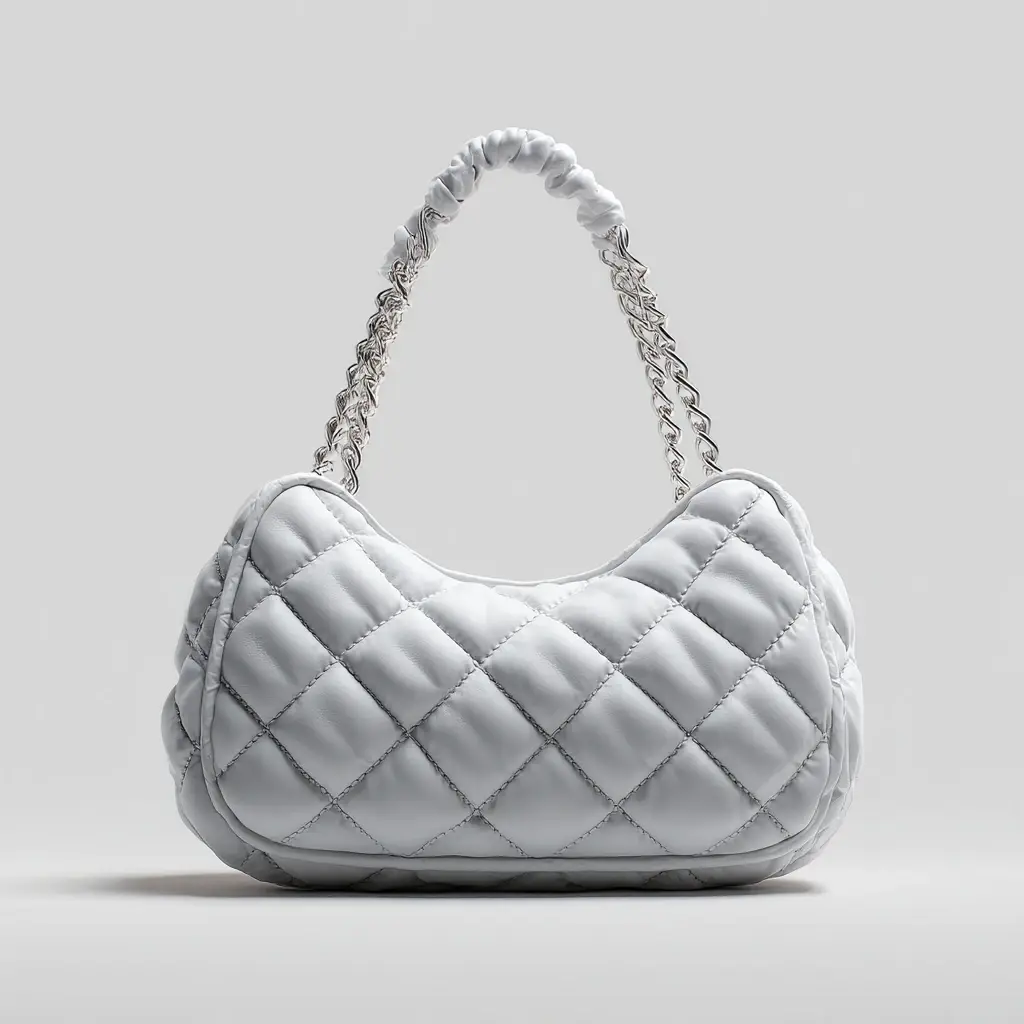
Six Small Styles Compared on Cost, Yield and Risk
Not every small style deserves a 500-piece run. The six below are compared on what they cost to make, how efficiently they cut, and what can go wrong with them in the field. The FOB Xiamen figures are indicative ranges for a mid-band build in coated synthetic or corrected-grain leather.
| Style | FOB Xiamen range | Cutting yield | Main risk |
|---|---|---|---|
| Small crossbody | USD 9.80-14.20 | High, panel shapes nest well | Strap drop has to be right or it is returned |
| Sling | USD 8.40-12.60 | Highest, one body panel plus strap | Very trend sensitive, short shelf life |
| Micro shoulder bag | USD 10.20-15.40 | Medium, curved panels waste more | Capacity expectations are often unrealistic |
| Belt bag | USD 7.60-11.80 | High, but webbing and buckle add cost | Hardware is the whole product and must be tested |
| Card-case shoulder | USD 8.90-13.10 | High, small parts from offcuts | Interior card slots need tight tolerance |
| Mini bucket | USD 11.40-16.80 | Lowest of the six, drawcord and base add labour | Base structure adds weight and cost |
Read across the risk column rather than down the cost column. The sling is the cheapest of the six and the most exposed, because a sling is a trend item with a shelf life measured in seasons; the mini bucket is the most expensive and the most durable as a category, because a bucket shape has been in continuous production for decades. For a brand that wants one style to carry a first season, the small crossbody is the most forgiving of the six on both cost and shelf life.
Three Ways to Build a Small-Bag Capsule, Compared
A capsule is how a 500-piece minimum is spent. Three structures are in common use, and they are genuinely different rather than three versions of the same advice, because they optimise for different things: cash efficiency, shelf presence, and speed to a second order.
| Structure | Lots of 500 pcs | Optimises for | Cost to being wrong |
|---|---|---|---|
| One style, three colourways | 3 | Unit cost and reorder speed | High: one shape carries everything |
| Three styles, one colourway each | 3 | Shelf presence and learning | Low: a weak style costs one lot |
| Two styles, hero in two colourways | 3 | Balance of both | Medium: the hero is still half the buy |
The first row is the cheapest to run and the fastest to reorder, because a single shape in three colours means one drawing, one hardware schedule and the ability to rerun whichever colour sold. It is also the only structure where a wrong shape decision affects the whole season. The second row spreads that risk and produces the most useful data, at the cost of three drawings and three sample rounds. The third row is the compromise most programmes land on, and it is the right default unless the brand already knows which shape sells.
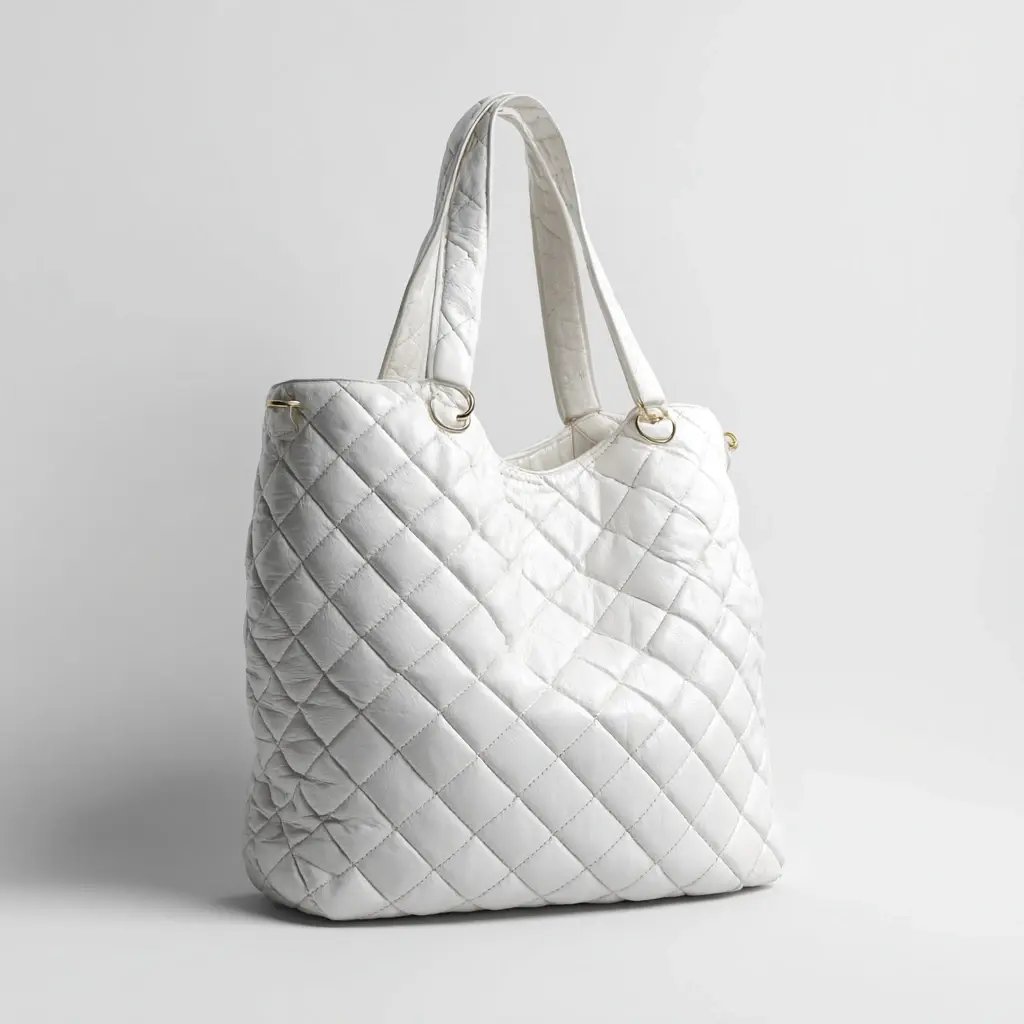
Margin Arithmetic on a 500-Piece Run
Work one example all the way through, because the arithmetic is where the claim about margin is either confirmed or exposed. Take a small crossbody at USD 11.40 FOB Xiamen, 500 pcs in one colourway, sold into a North American marketplace at USD 79 retail.
- Goods: 500 x USD 11.40 gives USD 5,700 at the FOB point.
- Freight and duty: roughly 6-9 per cent of goods value on a dense small-bag carton, about USD 400-520 landed.
- Marketplace fee and payment processing: 15-18 per cent of retail, about USD 5.90-7.10 per unit.
- Return provision: 8-12 per cent of units on a marketplace channel, provisioned at about USD 1.20 per unit sold.
- Packaging and inserts: USD 0.85-1.40 per unit for a dust bag, tissue and a card.
Landed cost per unit lands near USD 20.10 after freight, duty, packaging and the return provision. At USD 79 retail less an 18 per cent channel fee, net revenue is about USD 64.80, which leaves a gross contribution of roughly USD 44.70 per unit, or about 69 per cent of net revenue, and a multiple of 3.2 times the landed cost. Run the same model on a medium tote at USD 24.90 FOB and USD 129 retail and the multiple comes out near 2.4, because freight and returns both scale with size.
Material Yield: Where Small Bags Save and Where They Do Not
Yield is the ratio of usable cut panel to purchased material, and it is the number that decides whether the material saving on a small bag actually arrives. Small panels nest efficiently around the natural defects in a hide, which is the source of the advantage; but small bags also use proportionally more edge, more lining and more closure hardware per unit of body area, which eats into it.
- Save on the body panel: small pieces can be placed around scars and brand marks, lifting usable yield from about 72 per cent to roughly 85 per cent on a corrected-grain hide.
- Lose on edge finishing: perimeter falls far more slowly than area, so edge paint and binding cost per unit stays close to a large bag's.
- Lose on closures: a magnetic closure, a zipper and a chain strap cost the same whether the bag is 20 cm or 40 cm wide.
- Save on lining complexity: a single-piece lining is realistic on a small bag and impractical on a large structured one.
- Save on interlining: less structure is needed, which removes both material and a labour operation.
Net of those five effects, the material saving on a small bag is real but smaller than the raw area comparison suggests: closer to 35-40 per cent less material cost rather than the 47 per cent the square footage implies. The carton density saving is the one that arrives in full, which is why freight should be modelled before material when comparing categories.
Hardware Cost Does Not Shrink With the Bag
This is the point that surprises most first-time buyers. A turn-lock, a magnetic closure, a zipper and a chain are priced per piece, and a small bag uses roughly the same number of them as a large one. On a large tote hardware might be 12-18 per cent of the FOB price; on a small crossbody the same components can run 22-30 per cent. Hardware, not material, is the dominant cost line on a small bag.
Two consequences follow. First, hardware is where the specification has to be tightest: plating thickness, salt spray resistance and cycle testing matter more on a small bag because the customer handles the closure constantly and notices it immediately. Second, hardware is where a brand can differentiate cheaply, because a custom puller or an engraved plate costs a modest tooling fee and reads as a design decision rather than as a cost. Where the hardware is custom, the tooling lead time needs to be in the calendar before sampling starts, and the parameters worth writing down are covered in the recycled and innovative fabric options alongside the material side.
Which Small Styles Reorder and Which Do Not
Reorder behaviour is the number that turns a launch into a programme, and it varies sharply across the six styles. The pattern in Accessories Council and FashionUnited retail coverage is consistent: styles that solve a carry problem reorder, and styles that express a moment do not.
| Style | Typical full-price sell-through | Reorder pattern |
|---|---|---|
| Small crossbody | 55-70 per cent in a season | Reliable, usually in a new colourway |
| Sling | 40-60 per cent in a season | Sharp first drop, weak second |
| Micro shoulder bag | 45-60 per cent in a season | Reorders if the strap drop is right |
| Belt bag | 35-55 per cent in a season | Seasonal, repeats in summer only |
| Card-case shoulder | 50-65 per cent in a season | Steady, often bought as a second unit |
| Mini bucket | 48-62 per cent in a season | Slow but long-lived, worth carrying |
Two of those rows deserve a caution. The sling's first-drop numbers look best of all six and its second-drop numbers look worst, which is the signature of a trend item; the discipline is to cap it at one lot. The mini bucket looks average on every measure and is the most valuable of the six over three seasons, because it never has to be redesigned. Knowing which of those two patterns a style follows is exactly the question answered by separating a fad from a lasting category.
Three Launch Scenarios and the Capsule for Each
- Marketplace first drop, USD 39-79 retail: one style in three colourways, 1,500 pcs total, chosen for carton density and a simple closure. Optimise for landed cost and review score.
- Own-site launch, USD 80-129 retail: two styles with the hero in two colourways, 1,500 pcs total, with custom hardware on the hero. Optimise for photography and unboxing.
- Boutique wholesale, USD 130 and above: three styles in one colourway each, 1,500 pcs total, in leather with a named tannery. Optimise for material honesty and provenance documentation.
Where a Small-Bag Programme Goes Wrong
Three failure modes account for most of the disappointment in this category, and none of them is about the style choice. The first is assuming the minimum moves with the size of the bag. It does not: a small crossbody still runs at 500 pcs per style and colourway, because the constraint is line setup and material buying, not material quantity. A brand that expects to order 200 pieces of a small bag will spend its first month discovering otherwise.
The second is under-specifying the closure. On a bag where hardware is 22-30 per cent of cost and the customer touches it every day, plating wear and closure feel are the two things that generate reviews. Specifying salt spray resistance, plating thickness and a cycle count costs nothing at the drawing stage. The third is ordering six styles at once because each one is cheap; 3,000 pieces across six small styles is six drawings, six hardware schedules and six sample rounds, which is more than a small team can review properly. Buyer behaviour by segment, which is what should drive the choice between those three capsules, is set out in who actually buys private label handbags, and the category-level figures sit in the handbag library.
A Specification Sheet for a Small Bag
Small bags are specified more tightly than large ones, not less, and the reason is ratio: a 2 mm error on a 220 mm body is visible in a photograph, while the same 2 mm on a 360 mm tote is not. Eight lines cover the category, and four of them differ from the equivalent tote sheet: thinner material, a smaller needle, tighter stitch density and a tighter dimensional tolerance. Writing them before sampling is what keeps a small bag from being quoted as a scaled-down large one.
| Line | Small bag | Medium tote |
|---|---|---|
| Shell thickness | 0.9-1.1 mm | 1.2-1.4 mm |
| Needle | #14/90 | #18/110 |
| Thread | Tex 40 bonded polyester | Tex 60 bonded nylon |
| Stitch density | 9-10 per inch | 7-9 per inch |
| Seam allowance | 8 mm, 6 mm turn | 10-12 mm, 8 mm turn |
| Body tolerance | +/- 2 mm | +/- 3 mm |
| Webbing | 12 mm, slider to 5,000 cycles | 20-25 mm, no slider |
| Interlining | 1.5 mm foam, or none on a soft body | 240 gsm plus a base board |
Transit Damage on Small Bags and the Packaging Fix
A small bag is cheap to make and expensive to damage, because the front panel is the whole product in a photograph. Five damage modes account for most of what arrives unsellable, and each is closed by a packaging decision costing cents. The total below is under half a dollar a unit, which is a fraction of the 12 to 19 USD a return costs, and it sits entirely within the buyer's control rather than inside the production run.
| Damage | Cause | Fix | Cost per unit |
|---|---|---|---|
| Crushed front panel | Empty body in a full carton | 25 gsm tissue fill to about 70 per cent of volume | 0.06 |
| Creased strap | Folded at 90 degrees | Coil the strap and secure with a 40 mm paper band | 0.03 |
| Hardware imprint | Puller pressed into the panel | 3 mm corner clearance and a polybag | 0.04 |
| Corner scuff | Carton corners flexing in the stack | E-flute board insert at the four corners | 0.12 |
| Carton crush | Stacked eight high on a 32 ECT carton | Stack six high, or move to a 44 ECT carton | 0.18 |
Send us the small style you want to build and the retail band you are aiming at and we will return a 500-piece costing with a yield estimate, a hardware schedule and a landed cost per unit. Get a Quote → /contact-quote/
Frequently Asked Questions
Which small handbag style gives the best margin?
The small crossbody, on balance. It consumes about 3.8 square feet of material against 7.2 for a tote, packs roughly 24 units to an export carton against 8, and reorders reliably at 55 to 70 per cent full-price sell-through. The sling is cheaper to make but has the weakest second drop of the six styles, so its apparent margin advantage rarely survives a full season.
Does a small bag have a lower minimum order quantity?
No. The minimum is 500 pcs per style and colourway regardless of size, because the constraint is line setup and material buying rather than material quantity. A small crossbody consumes less leather per unit, but the line still has to be set, the hardware still has to be bought in production lots, and the inspection still has to cover a statistically valid sample under ISO 2859-1.
How much material does a small handbag use?
About 3.8 square feet for a small crossbody, against roughly 7.2 square feet for a medium tote. Cutting yield on small panels runs around 85 per cent against about 72 per cent for larger panels, because small pieces can be nested around natural marks in a hide. The net saving is about 35 to 40 per cent of material cost rather than the 47 per cent that the raw area implies.
Why is freight such a large part of small-bag margin?
Because freight is charged on volume, not on piece count or weight. An export carton of about 60 x 40 x 40 cm holds roughly 24 small crossbody bags and about 8 medium totes, so the freight attributable to each small unit is close to a third. On a 500-piece order that moves freight from 14-19 per cent of landed cost down to 6-9 per cent.
Is hardware more expensive on a small bag?
Proportionally yes. A closure, a zipper, a magnetic catch and a chain are priced per piece, and a small bag uses about the same number of them as a large one. Hardware typically runs 12-18 per cent of the FOB price on a large tote and 22-30 per cent on a small crossbody, which makes plating thickness, salt spray resistance and cycle testing the most important lines in the specification.
Should a first small-bag order be one style in many colours or many styles in one colour?
It depends on what the brand needs. One style in three colourways gives the lowest unit cost, one drawing and one hardware schedule, but puts the whole season on a single shape. Three styles in one colourway each costs more to develop and produces far more useful data. Two styles with the hero in two colourways is the usual compromise.
What retail price suits a small private label handbag?
Between USD 39 and USD 89 retail for a marketplace or entry direct-to-consumer position, rising to USD 90-129 where the hardware is custom and the packaging is considered. On a worked example at USD 11.40 FOB Xiamen and USD 79 retail, landed cost is near USD 20.10 and the multiple is about 3.2 times landed cost after freight, duty, channel fees and a return provision.
Which small bag trends are fading?
The sling is the clearest example of a shape with a short cycle: strong first-drop sell-through of 40-60 per cent followed by a weak second. Belt bags behave seasonally, repeating in summer and disappearing otherwise. Shapes with a long horizon are the small crossbody and the mini bucket, both of which have been in continuous production for decades and can be recoloured rather than redesigned.
How many small styles should a first collection have?
Two or three at most, at 500 pcs each. Six small styles looks affordable because each unit is cheap, but it means six drawings, six hardware schedules and six sample rounds of 6-10 working days each, which is more than a small team can review properly. Three lots of 500 pcs gives enough shelf presence to read as a range without losing control of the specification.
What makes a small handbag feel expensive?
The closure and the edge. Because the body panel is small, the customer's hand goes straight to the hardware, and plating quality, closure sound and puller weight are what get noticed. Edge paint applied evenly at about 0.8 mm with no overflow onto the stitch line is the second detail, and it is the one most often wrong on a first sample round.
How should a small bag be specified for inspection?
Name the closure cycle count, the plating standard and the colour tolerance at Delta E 1.5 under D65, and state the strap drop tolerance at plus or minus 5 mm because that is the fitting dimension. Then inspect at AQL 2.5 under ISO 2859-1 with an inline visit at 15-30 per cent completion, and hold six calendar days for a re-sort on a 500-piece lot.
People Also Ask
Are small handbags more profitable than large ones?
Usually, for two reasons. Material per unit is roughly 3.8 square feet against 7.2 for a tote, and carton density is about 24 units against 8, which cuts freight from 14-19 per cent of landed cost to 6-9 per cent. The offset is that closures and hardware are priced per piece, so hardware rises from about 12-18 per cent of FOB to 22-30 per cent.
What is a realistic first order for a small handbag line?
500 pcs per style and colourway, which is the same minimum as any other category. Three lots of 500 is a workable first buy, either as one shape in three colours for unit cost or as three shapes in one colour for information. Sampling runs 6-10 working days per round and bulk runs 35-50 days, so the full first cycle is roughly three months.
Why do small bags need tighter hardware specification?
Because hardware carries a larger share of the cost and gets handled more. A closure on a small bag is opened constantly and sits under the hand, so plating wear shows early in the product's life. Specifying plating thickness, salt spray hours and a cycle count costs nothing at the drawing stage and prevents the most common source of negative reviews in the category.
How is margin on a small handbag actually calculated?
Take the FOB price, add freight and duty at 6-9 per cent of goods value for a dense carton, add packaging at roughly USD 0.85-1.40 per unit, and provision for returns at 8-12 per cent of units. Deduct the channel fee of 15-18 per cent from retail. On USD 11.40 FOB at USD 79 retail that leaves about USD 44.70 of contribution per unit, or roughly 3.2 times landed cost.
Sources and further reading
Every figure on this page is either our own programme data or attributed below. Open the originals before you write them into a specification.
- SATRA — technical services for leather, footwear and accessoriesSATRA Independent leather, hardware and accessories testing protocols.
- Accessories Council — accessories industry bodyAccessories Council Accessories industry body tracking handbag category direction.
- FashionUnited — fashion industry news and dataFashionUnited Industry news and company data for the fashion sector.