How to Design a Dust Bag That Protects and Reinforces Brand
How do you design a dust bag that both protects a handbag and carries the brand? Treat it as two specifications on one object: a barrier that has to survive a 35-50 day sea transit inside a carton, and a printed surface that a customer reads before they read the bag. The build that does both is decided by three numbers — fabric weight in gsm, the abrasion the surface meets in the carton, and the packing time each construction adds on the line — not by how the swatch looks on a desk. This page puts three real builds side by side on seven criteria: a 210D polyester transit sleeve, a 140 gsm cotton muslin with a one-colour print, and a 300 gsm brushed twill with a sewn-in card pocket. It prices all three at MOQ 500 pcs per style / colourway and names the scenario where each one is the correct answer.
- What a Dust Bag Is Actually Being Asked to Do
- Option A: The 210D Transit Sleeve
- Option B: The 140 gsm Muslin With a One-Colour Print
- Option C: The 300 gsm Brushed Twill Drawstring
- Seven Criteria Across Three Builds
- Freight and Packing Time Outweigh Fabric Price
- Print, Seam and the Three Places It Tears
- Where Each Build Is the Right Answer
- Writing the Dust Bag Spec on One Page
- What the Dust Bag Does in a Humid Container
- Ordering the Dust Bag: Its Own Minimum and Screen
How do you design a dust bag that both protects a handbag and carries the brand? Treat it as two specifications on one object: a barrier that has to survive a 35-50 day sea transit inside a carton, and a printed surface that a customer reads before they read the bag. The build that does both is decided by three numbers — fabric weight in gsm, the abrasion the surface meets in the carton, and the packing time each construction adds on the line — not by how the swatch looks on a desk. This page puts three real builds side by side on seven criteria: a 210D polyester transit sleeve, a 140 gsm cotton muslin with a one-colour print, and a 300 gsm brushed twill with a sewn-in card pocket. It prices all three at MOQ 500 pcs per style / colourway and names the scenario where each one is the correct answer.
The dust bag numbers that decide the build
What a Dust Bag Is Actually Being Asked to Do
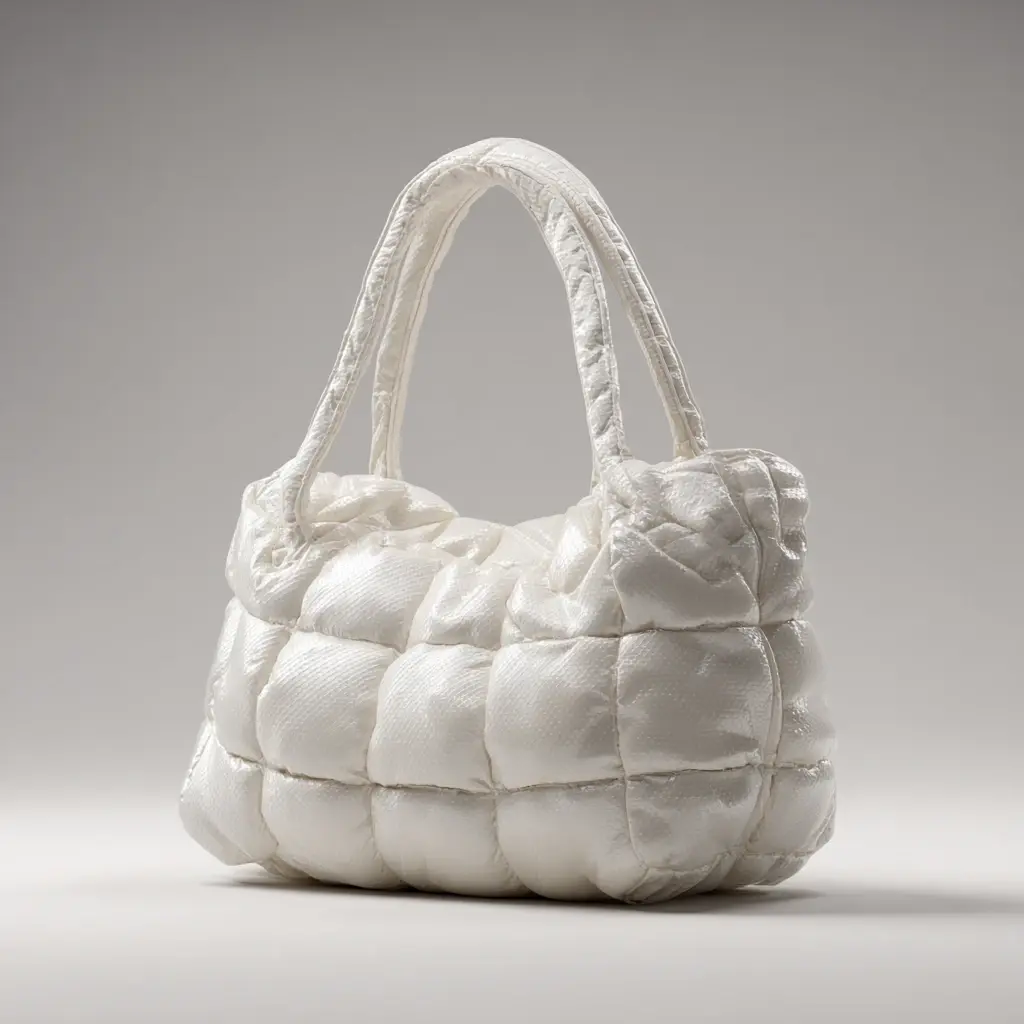
A dust bag does two jobs that pull in opposite directions. As protection it has to stop hardware scratching leather, stop dye transferring between a bag and the carton wall, and stop dust settling into a grain during a sea leg that can run 35-50 days in humidity above 80 per cent. As presentation it has to hold a printed mark cleanly, feel like part of the product rather than part of the logistics, and survive being kept. Those goals want different fabrics: protection wants a tight, cheap, lint-free synthetic; presentation wants a soft natural surface that takes ink and has a hand.
Almost every dust bag argument is really a decision about which job gets the budget. A brand selling at USD 90 retail needs the barrier and nothing else, because the bag will be opened at home and the wrap will be in the recycling within a minute. A brand selling at USD 600 needs the object, because the dust bag is the first thing a customer touches and the last thing they keep. The three builds below sit at those poles and in the middle.
Option A: The 210D Transit Sleeve
A 210D polyester sleeve at roughly 70 gsm is the cheapest thing that does the protective job properly. The denier describes the yarn, and 210D is the point where the weave becomes tight enough that hardware cannot catch a thread and fine enough that it does not shed lint onto a suede interior. It is usually made as a simple envelope with a 10 mm double-folded seam, no cord, and a 40 x 40 mm printed mark in one colour on the front panel.
What it does not do is feel like anything. The hand is papery, the print sits flat, and the bag is not reused, which means the brand impression it creates is close to zero. It is also the build most likely to be specified with a recycled yarn, and GRS-certified 210D polyester is widely available, so the sustainability story can be real rather than decorative. Cost at 500 pieces sits around USD 0.22-0.34 per unit, and the packing step is the fastest of the three at about 14 seconds.
Option B: The 140 gsm Muslin With a One-Colour Print
Cotton muslin at 140 gsm is the standard retail dust bag and the point where the object starts to carry brand weight. Below about 120 gsm the fabric turns translucent and the print looks washed; above 160 gsm it stops draping and starts behaving like a tote. At 140 gsm a one-colour screen print holds a clean edge, the surface still creases softly, and a 5 mm cotton cord in a 12 mm channel draws without bunching.
The weakness is protection at the two ends. Muslin is not lint-free, so it is a poor choice against a suede or napped lining, and it has no water resistance at all, which matters in a container that can sweat. The usual fix is an inner 210D sleeve for transit and muslin for the retail box, an approach that costs more per unit but separates the two jobs cleanly. On its own, at 500 pieces, muslin with a one-colour print lands around USD 0.55-0.85.
Option C: The 300 gsm Brushed Twill Drawstring
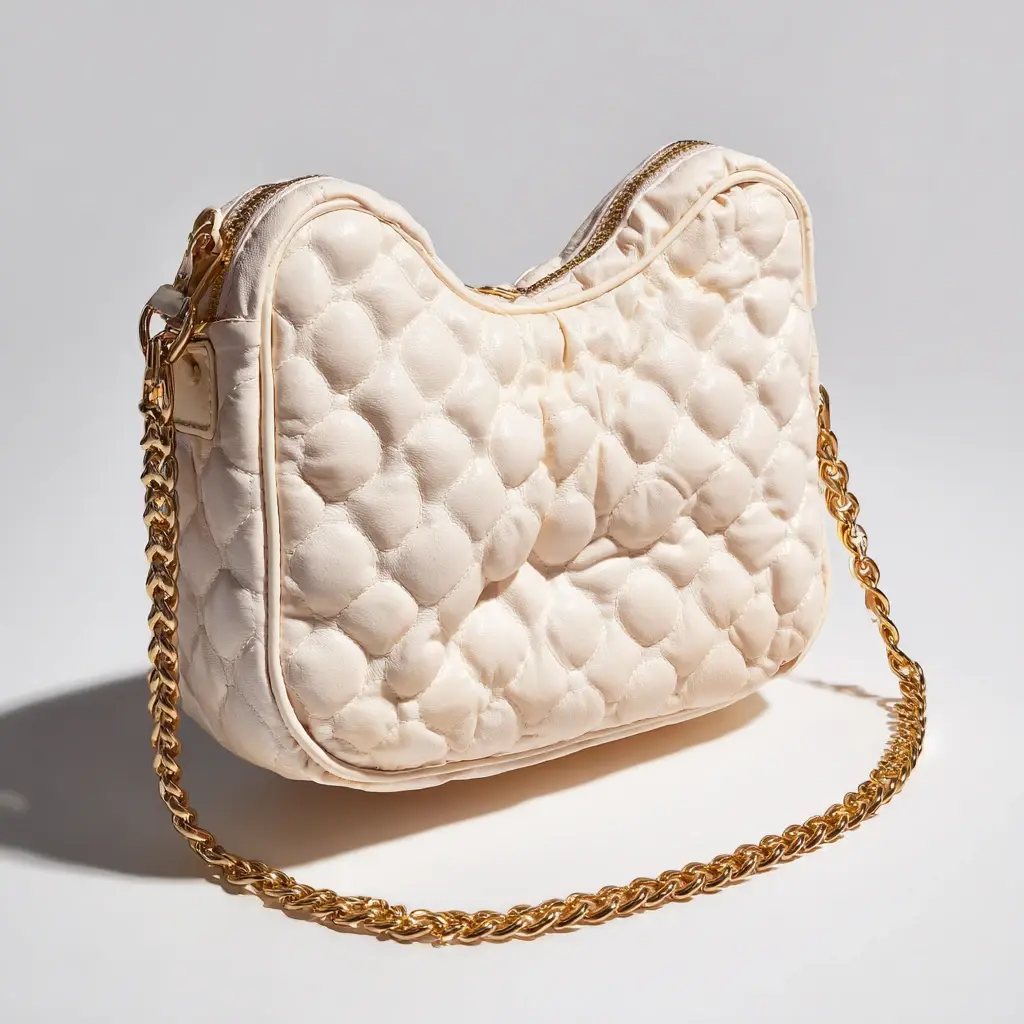
Brushed cotton twill at 300 gsm behaves like a small garment bag. The brushed face takes a heavier ink deposit, so a two-colour print or a small foil block sits on it without the fibre texture breaking the letterforms, and the weight gives the bag enough body to stand on a shelf. It is the only one of the three that a customer is likely to keep and use for shoes, cables or laundry, which is the entire point of spending at this level.
The costs are weight and time. A 300 gsm bag weighs roughly 2.4 times a 210D sleeve at the same dimensions, which is 0.6-0.9 kg per 100 units and shows up in air freight rather than sea freight. It also needs a heavier cord, usually 5 mm cotton with a metal-free aglet, and a bar-tacked channel end, taking packing time to about 26 seconds. At 500 pieces the unit cost sits at USD 1.15-1.70 depending on print colours.
Seven Criteria Across Three Builds
Score the three on the same seven lines and the choice stops being a matter of taste. The matrix below uses costs at 500 pcs per style / colourway, which is the volume where a first order actually lands, and it assumes a 350 x 450 mm bag sized for a medium tote or a satchel.
| Criterion | 210D sleeve | 140 gsm muslin | 300 gsm twill |
|---|---|---|---|
| Unit cost at 500 pcs | USD 0.22-0.34 | USD 0.55-0.85 | USD 1.15-1.70 |
| Hardware scratch protection | Strong | Moderate | Strong |
| Lint against a napped lining | Low | High | Moderate |
| Print quality on a text mark | Flat but clean | Good at one colour | Best, two colours or foil |
| Weight per 100 bags | 3.1 kg | 4.2 kg | 7.0 kg |
| Packing time per unit | 14 seconds | 19 seconds | 26 seconds |
| Likelihood of being reused | Low | Moderate | High |
The single most useful line in that table is packing time, because it is the one nobody puts in a quotation. Fourteen seconds against twenty-six is twelve seconds per unit, which is 100 minutes across a 500-piece run and closer to seven hours across 2,000. On a line running 7 production lines and about 200,000 pcs per month, that difference is absorbed quietly; on a small first order it can move a ship date.
Freight and Packing Time Outweigh Fabric Price
A dust bag is mostly air, so its freight behaviour is driven by how it is packed rather than by what it weighs. All three builds ship flat in bundles of 50, and the difference is the bundle height: a 210D sleeve bundles at about 45 mm per 50, muslin at 60 mm, and 300 gsm twill at 95 mm. On 500 pieces that is 450 mm against 950 mm of carton height, which is the difference between fitting beside the bags and needing its own carton.
Packing time then compounds it. A dust bag is inserted after the bag is stuffed and before the tissue, so it sits in the middle of the sequence and any fumble costs twice: once at insertion and once at the rework of a shifted strap. Anything that makes the bag easier to open — a wider 12 mm channel, a cord already threaded and knotted, a hem that does not curl — pays back in seconds per unit rather than in cents.
Compliance sits in the same budget conversation. Azo dyes and certain amines are restricted under REACH Annex XVII, and a printed dust bag is a textile article that touches a consumer product, so the dye statement has to cover the bag as well as the ribbon. California Prop 65 warnings depend on what is in the ink rather than on the fabric, which is why an ink with a documented heavy-metal screen is worth specifying early.
Print, Seam and the Three Places It Tears
Dust bags fail in three predictable places: the channel end where the cord exits, the side seam at the base corner, and the print edge where the screen deposited a heavier film. The channel end tears because the cord is pulled against a single row of stitching, so specify a bar-tack 8 mm long at each end and a channel depth of 12 mm rather than 8 mm, which spreads the load over more fabric.
The base corner tears because a 10 mm seam allowance folded once leaves a raw edge that unravels after a few insertions. A double-fold at 10 mm, or an overlock with a 4 mm bite, removes the failure almost entirely for a few cents. The print edge fails differently: a heavy ink film on a brushed surface can crack when the bag is folded flat, so ask for the print to be positioned at least 30 mm from any fold line and verify on a folded sample rather than a flat one.
Inspection for all of this fits inside the existing AQL 2.5 (ISO 2859-1) routine used for the bag itself, with three additions: pull each cord to its full extension, invert the bag and check the base seam against a light, and fold the print panel along the intended crease. Ten units from a 500-piece lot is a reasonable check, and the failures are visible in seconds. How a packaging component gets tested before a bulk order is set out in testing packaging before the bulk order.
Where Each Build Is the Right Answer
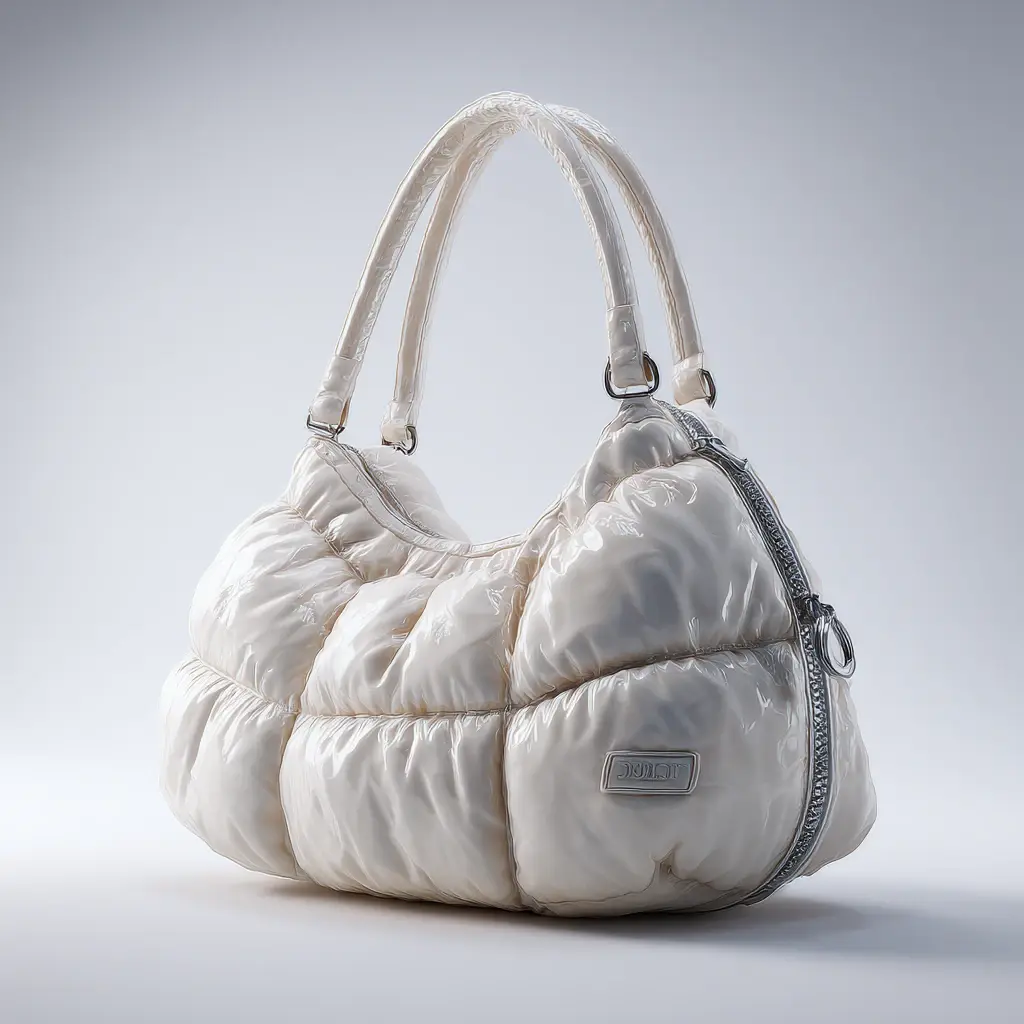
Choose the 210D sleeve when the bag sells under USD 120, when the lining is suede or napped and lint is a real risk, or when the dust bag is genuinely a transit wrapper and the brand moment happens in the box instead. Choose 140 gsm muslin when the bag sells between USD 120 and USD 350, the mark is one colour, and the dust bag will be photographed in unboxing content. Choose 300 gsm twill when the bag sells above USD 350, when the dust bag is part of a keepsake set with a card pocket, or when two print colours or a foil block are central to the identity.
There is also a split-build answer that suits seasonal programmes: a 210D sleeve for the carton and a muslin bag inside the retail box, at a combined cost of about USD 0.80-1.20, which is still under the twill and protects better than either alone. It doubles the packing steps, so it only works when the retail box is packed at a different station from the export carton. Where the bag sits relative to tissue, seals and the insert card is covered in the premium unboxing checklist.
Writing the Dust Bag Spec on One Page
The specification needs eleven fields and no adjectives: fabric and weight, dimensions with a tolerance of plus or minus 5 mm, seam type and allowance, channel depth and cord diameter, print method and number of colours, print size and position, ink compliance statement, fold and packing format, bundle count, carton marking, and the approval standard. Anything written as soft or premium will be interpreted differently by the next person who reads it.
- Name the fabric by weight and construction, not by trade name: 140 gsm cotton muslin, plain weave.
- Give dimensions as width x height with a plus or minus 5 mm tolerance measured flat.
- State the seam: 10 mm double-folded side seam, overlocked base, 4 mm bite.
- State the channel: 12 mm deep, 5 mm cotton cord, 8 mm bar tack at both ends.
- Name the print method, colour count and the ink compliance route under REACH Annex XVII.
- Fix the print position from the top edge, with a 30 mm clearance from any fold line.
- Approve colour and print on a sealed sample under D65, and photograph it flat and folded.
Two ordering facts belong on the same page. Sampling runs 6-10 working days for a standard build and 12-15 where a new screen or a foil block is involved, and the dust bag has to be briefed alongside the bag rather than after it, or it becomes the reason a 35-50 day bulk window slips. Production ships FOB Xiamen, and both the bag and its dust bag should leave on the same document so the AQL 2.5 inspection covers the pair. The full trim and packing scope sits in the private label handbag reference.
What the Dust Bag Does in a Humid Container
A sea leg from Xiamen runs 30-38 days to Northern Europe, and a container interior regularly sits above 80 per cent relative humidity with the temperature cycling day and night. The dust bag is the only thing between the leather and that environment, so its barrier behaviour matters more than its print.
- Against moisture. A 210D polyester sleeve sheds water and dries fast; a 140 gsm cotton muslin absorbs it and holds it against the shell, which is why the muslin build is paired with an inner sleeve on long routes.
- Against dye transfer. A printed bag on a light leather can mark it in humidity. Specify a rub fastness figure on the print rather than trusting a cure time.
- Against hardware. Feet, a base ring and a toggle press against the shell for weeks. A tighter weave stops an edge catching a thread; a loose muslin weave does not.
- What to pack with it. A 5-10 g desiccant sachet per carton and cartons stored off a concrete floor do more for the bag than any change to the dust bag fabric.
Ordering the Dust Bag: Its Own Minimum and Screen
The dust bag is a separate purchase with its own economics, and it is the trim item most often ordered too late. It carries its own minimum, its own setup charge and its own lead time, and none of the three match the bag it goes inside.
| Line | Typical figure | Why it differs | When to brief it |
|---|---|---|---|
| Minimum per print | 500-1,000 pcs per artwork | A screen or plate is set up per design, not per garment | With the bag, not after it |
| Screen or plate setup | USD 30-90 per colour | One screen per print colour | Before the artwork is finalised |
| Lead time | 10-15 days once the artwork is approved | Printing runs after the fabric is bought | During sampling of the bag |
| Bundle and carton | Flat in bundles of 50; 450-950 mm of carton height per 500 | Height, not weight, decides whether it needs its own carton | When the carton plan is written |
| Inspection | Ten units from a 500-piece lot inside the AQL 2.5 routine | The failures are visible in seconds | With the pre-shipment inspection |
Send the bag dimensions and the retail price band, and the three builds come back costed at 500 pcs per style / colourway with print and freight separated. Get a Quote → /contact-quote/
Frequently Asked Questions
What gsm should a handbag dust bag be?
140 gsm is the retail default for cotton muslin because it holds a print edge without turning translucent, which happens below about 120 gsm. A transit sleeve in 210D polyester sits near 70 gsm and protects better than muslin at that weight. Above 300 gsm the bag stops draping and starts behaving like a tote, which is a different product.
Does a dust bag actually protect a handbag in transit?
Yes, against the three things that damage a bag inside a carton: hardware striking leather, dye transferring between surfaces, and dust settling into a grain. It does not protect against compression or moisture, which is why a carton liner or a desiccant is a separate decision. Over a 35-50 day sea leg, the abrasion protection is the part that matters most.
Should the dust bag be printed on one side or both?
One side is enough for most programmes, positioned on the front panel roughly 40 mm below the channel. Printing both sides doubles the screen passes and adds packing confusion because the bag can be inserted either way. If the bag will be photographed flat in unboxing content, print the side that faces up when the bag is laid on tissue.
How much does a custom dust bag cost at 500 pieces?
A 210D polyester sleeve runs USD 0.22-0.34, 140 gsm muslin with a one-colour print USD 0.55-0.85, and a 300 gsm brushed twill with two colours or a foil block USD 1.15-1.70. Setup for a new screen is typically USD 40-90. At MOQ 500 pcs per style / colourway the setup is a visible line, so consolidating colourways helps.
Which fabric is safest against a suede lining?
A tight synthetic such as 210D polyester, because it sheds almost no fibre. Cotton muslin is the worst of the three on this point, since loose fibres transfer to a napped surface and are difficult to remove once the bag has been packed. If muslin is required for presentation, use a synthetic sleeve for transit and muslin only in the retail box.
How do you stop the drawstring channel from tearing?
Bar-tack each end of the channel with an 8 mm stitch run, and make the channel 12 mm deep rather than the 8 mm that many patterns use. The deeper channel spreads the pull across more fabric and keeps the cord away from the seam line. A 5 mm cotton cord in a 12 mm channel also draws more smoothly than a 4 mm cord in an 8 mm channel.
Does the dust bag need its own compliance documentation?
It is a textile article that touches a consumer product, so the dye statement should cover it under REACH Annex XVII, and the ink should carry a heavy-metal screen for California Prop 65 purposes. Ask for the statement per lot rather than once per year. If the fabric is recycled, the GRS transaction certificate must name the specific lot as well.
How is a dust bag inspected before shipment?
Inside the same AQL 2.5 (ISO 2859-1) routine used for the bags, with three extra checks: pull each cord to full extension, invert the bag and hold the base seam against a light, and fold the print panel along its intended crease. Ten units from a 500-piece lot is usually enough, because these failures are visible in seconds rather than minutes.
Does a heavier dust bag cost more to ship?
Slightly, but the carton height costs more than the weight. Bundled in 50s, the three builds take roughly 45, 60 and 95 mm of height, so 500 twill bags need about 950 mm against 450 mm for sleeves. That can force a second carton, which is a bigger line on the freight invoice than the 3.9 kg weight difference per 100 units.
Can the dust bag and the bag ship on one inspection?
Yes, and they should. Booking both into the same AQL 2.5 inspection keeps one report, one sample plan and one corrective action trail if something fails. Shipping FOB Xiamen on a single set of documents also avoids the situation where a carton of dust bags arrives after the bags it was meant to wrap.
How long does a custom dust bag sample take?
Six to ten working days for a standard build in an existing fabric, and twelve to fifteen where a new screen, a foil block or a colour match against leather is involved. The bag should be briefed at the same time as the dust bag, because a label or trim brief that arrives after sample approval usually becomes the reason the bulk window extends.
People Also Ask
Is a printed dust bag worth it on a low-price handbag?
Usually not. Below about USD 120 retail the dust bag is opened once and discarded, so the money is better spent on the carton and the tissue that the customer actually photographs. A plain 210D sleeve at USD 0.22-0.34 does the protective job, and the brand moment can be carried by an insert card instead.
What is the cheapest way to make a dust bag feel premium?
Raise the fabric weight before adding print colours. Moving from 140 gsm to 220 gsm muslin changes how the bag drapes and how it sounds when handled, which is what customers read as quality, and it costs less than a second screen. A deeper 12 mm channel and a properly bar-tacked cord end finish the effect.
Can one dust bag size fit a whole range?
One size fits a range only if the largest bag in it still closes. A 350 x 450 mm bag covers most totes and satchels, but a bucket or a hobo collapses into it and a mini crossbody swims. Two sizes, at roughly 300 x 400 mm and 400 x 500 mm, cover most programmes without doubling the order complexity.
How does the dust bag affect the unboxing sequence?
It is the second thing the customer touches, after the carton lid. A bag that opens smoothly and drapes over the hand sets the tone before the handbag is seen, while one that snags or rustles reads as packaging rather than product. That is why the channel depth and cord diameter matter more than the print.
Sources and further reading
Every figure on this page is either our own programme data or attributed below. Open the originals before you write them into a specification.
- SATRA — technical services for leather, footwear and accessoriesSATRA Independent leather, hardware and accessories testing protocols.
- REACH — chemical substances regulationEuropean Commission Annex XVII restricts the substances that may appear in finished leather and coatings.
- FashionUnited — fashion industry news and dataFashionUnited Industry news and company data for the fashion sector.