Handbag OEM vs ODM Glossary: Terms Every Buyer Should Know
What do OEM and ODM actually mean when a handbag order is on the table? They are two starting points, not two prices: an OEM programme begins at a blank tech pack and 6-10 working days of sampling, while an ODM programme begins at a shelf pattern that has already run and only needs a colourway, a lining and a logo position. Every term below is a cost, a document or a date, and the twelve in the first table settle most sourcing disputes before a deposit moves. The numbers behind them are fixed here: MOQ 500 pcs per style / colourway, bulk at 35-50 days, inspection at AQL 2.5 under ISO 2859-1, and delivery FOB Xiamen by T/T.
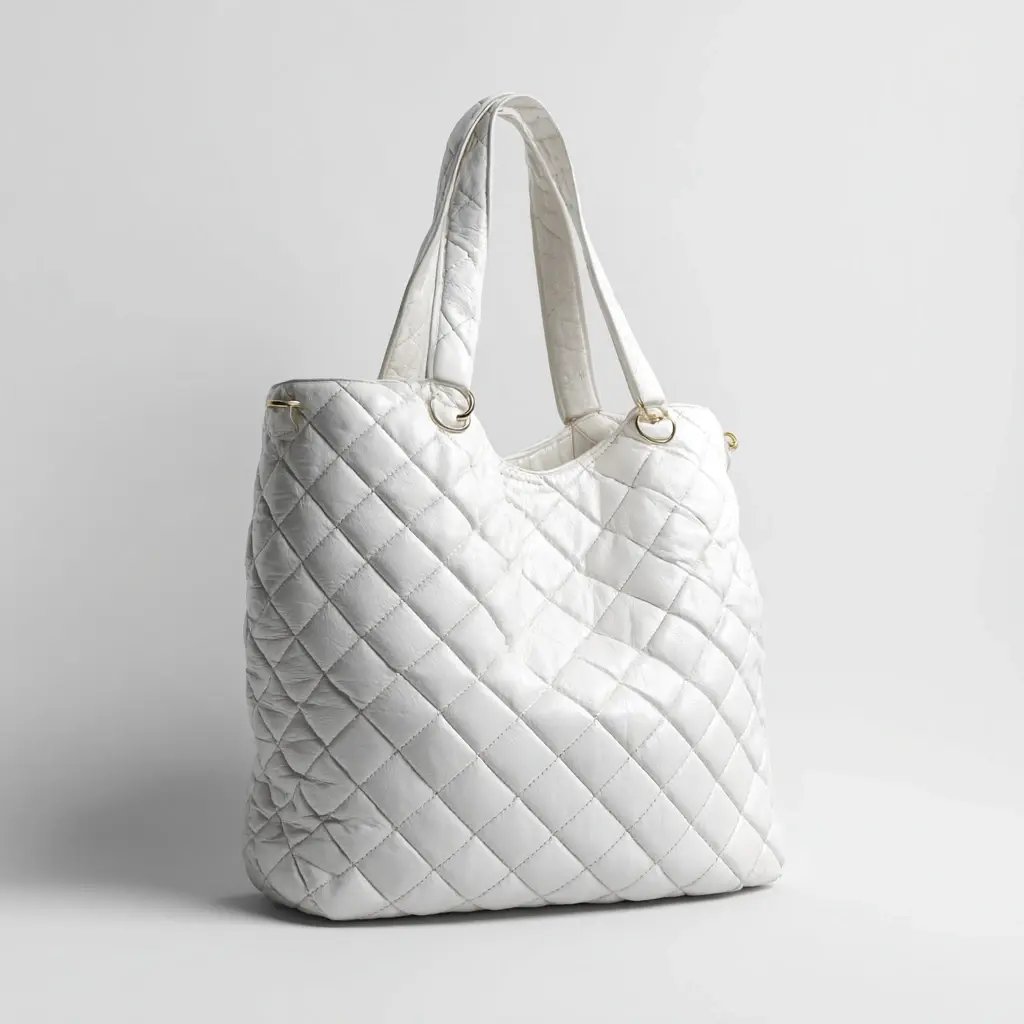
- The Two Models, Compared Term by Term
- Development Terms: Tech Pack, Pattern, Grading and Yield
- Sample Terms from Proto to Sealed Golden Sample
- Material Terms: Grain, Split, Coating and Lining Count
- Hardware and Trim Terms: Gauge, Plating and Crocking
- Commercial Terms: MOQ, Tooling, Deposit and T/T
- Quality Terms: AQL, Inspection Level and Defect Classes
- Compliance Terms: REACH, Prop 65, CPSIA, LWG and GRS
- Logistics Terms: FOB, Carton Marks and HS Codes
- The Six Terms Most Often Read Wrong
What do OEM and ODM actually mean when a handbag order is on the table? They are two starting points, not two prices: an OEM programme begins at a blank tech pack and 6-10 working days of sampling, while an ODM programme begins at a shelf pattern that has already run and only needs a colourway, a lining and a logo position. Every term below is a cost, a document or a date, and the twelve in the first table settle most sourcing disputes before a deposit moves. The numbers behind them are fixed here: MOQ 500 pcs per style / colourway, bulk at 35-50 days, inspection at AQL 2.5 under ISO 2859-1, and delivery FOB Xiamen by T/T.
The constants behind every term
The Two Models, Compared Term by Term
Both routes end at the same export carton, and they start about forty days apart. The vocabulary is where the two branches separate: one word can mean a drafting job on the left side of the table and a colour choice on the right. Every quotation, purchase order and inspection report in this trade uses these words, and the disagreements that end up in a lawyer's inbox almost always trace back to one of them.
| Term | On an OEM programme | On an ODM programme |
|---|---|---|
| Tech pack | Supplied by the brand, 12-18 pages, dimensions in mm | Supplied with the shelf style and annotated by the brand |
| Pattern | New pattern drafted, nested and graded | Existing pattern, re-measured only if dimensions change |
| Sampling | 6-10 working days, 12-15 for framed or woven shapes | 1-2 days to pull a physical shelf sample plus courier |
| Tooling | Embossing die, cutting die, hardware mould | The branding die only; the pattern tooling already exists |
| MOQ | 500 pcs per style / colourway | 500 pcs per style / colourway, the same rule |
| Colourways | A new dye or coating lot for each one | 4-6 shelf shades dyed in rotation |
| Lead time | 55-80 days from signed brief to handover | 40-60 days, the sampling window removed |
| Design ownership | The brand owns the drawing and the tooling it paid for | The brand owns its mark; the base pattern stays shared |
| Unit price | Carries development and tooling amortisation | Lower entry point; the tooling is already amortised |
| Branding position | Any position and any method the pattern allows | Positions already in the pattern; the die and label are new |
Two rows decide the commercial shape of the whole thing. The tooling row is what makes a first OEM order expensive and a second one cheaper, and the design-ownership row is what stops a shelf style from appearing in the shop across the street under a different mark. The full comparison of the two models carries both arguments further, including the point at which a brand stops rebranding shelf styles and starts drawing its own.
Development Terms: Tech Pack, Pattern, Grading and Yield
Development vocabulary describes work that has to happen before a single hide is cut. These four entries carry most of the cost that first-time brands never see on a quotation, because they are billed once and then spread across the units.
- Tech pack. The specification document: dimensions in millimetres with a tolerance, materials by reference number, hardware by finish and gauge, stitch count, the branding position measured from a datum edge, and the packing method. Twelve to eighteen pages is a working pack; three photographs and a price question is not one.
- Pattern and nesting. The flat shapes and the marker used to lay them on a hide or a roll. Grading matters far less for bags than for apparel, since one size means one pattern, but the marker decides yield.
- Yield and consumption. A tote 34-42 cm wide with an 8-12 cm gusset consumes 1.4-1.9 sq ft of hide; a structured satchel with a separate gusset piece can consume 2.6-3.1 sq ft. The spread between those two figures is the material cost of the bag.
- Tolerance. Write it into the pack: plus or minus 3 mm on width, gusset and height, plus or minus 2 mm on strap drop, plus or minus 1 mm on a centred logo position. Without a tolerance, a measurement argument has no referee.
- Cutting per carton. Yield also fixes packing: 20-24 pieces of a tote per export carton, 30-40 for a flat shoulder shape.
How Detailed Does a Tech Pack Have to Be?
Detailed enough that a cutting room can act without calling back. The test is simple: if a question about stitch count, seam allowance, hardware finish or lining colour would require a reply, the pack is not finished. A complete pack removes 2-4 working days from the 6-10 working days of sampling window, because the sampling room stops guessing and starts cutting.
Sample Terms from Proto to Sealed Golden Sample
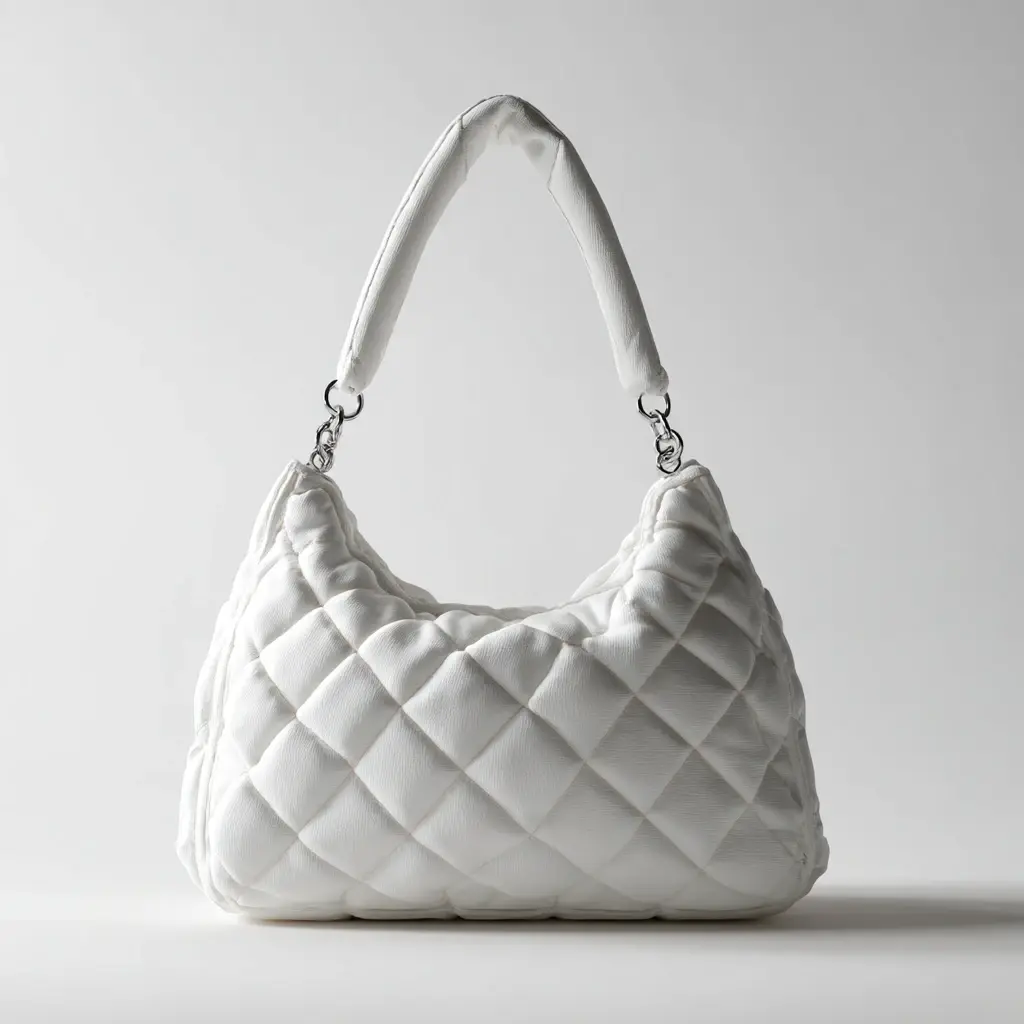
Six sample types circulate in this trade and only two of them carry commercial weight. The first three are conversation; the last three are evidence, and evidence is what an inspector holds on the table.
- Proto or development sample. The first physical bag, made to find out whether the drawing works. The material is usually whatever is on the shelf, and it should never be the approval standard.
- Salesman sample. A clean version for a range review, a trade show or a photo shoot. Useful for selling, useless as a specification.
- Revision sample. Rounds two and three, each one narrower than the last. Three rounds is a normal conversation; six rounds is a sign the tech pack arrived thin.
- PP sample. Two or three pieces built from bulk materials on bulk tooling before the line starts. This is the reference the inspector measures the shipment against.
- Golden sample. The countersigned PP sample, sealed and retained in three places: one set with the brand, one at the line, one at inspection. The purchase order should state that the bulk must match it.
- TOP and shipment samples. Two or three units pulled from the first 50-100 pieces of the run and from the packed cartons, to prove the line has not drifted.
Sampling runs 6-10 working days, extending to 12-15 for framed, woven or stacked constructions, and the PP and golden sample walkthrough covers the handover step by step. The most expensive habit in this trade is approving a proto sample and then discovering at inspection that the bulk matches nothing at all.
Material Terms: Grain, Split, Coating and Lining Count
Material vocabulary is where a quotation can be quietly downgraded. Every word in this group has a cheaper neighbour, and the difference between them is invisible in a photograph and obvious in the sixth month of use.
| Term | What it means | What to specify |
|---|---|---|
| Full grain | The top of the hide, grain intact, lightly finished | 1.2-1.6 mm thickness; consumption stated per hide |
| Top grain | Grain lightly sanded to remove surface defects | 1.0-1.4 mm; finish build stated in microns |
| Corrected grain | Heavily buffed and pigment-finished, often embossed | 1.0-1.3 mm; finish 0.10-0.20 mm; emboss pattern named |
| Split | The lower layer of the hide, suede or coated | 0.9-1.2 mm; tensile and tear figures stated |
| Bonded | A sheet of leather fibre, not leather under most labelling rules | Avoid where the hangtag will say genuine leather |
| PU / PVC coated textile | A woven or knitted base with a 0.15-0.35 mm coating | Hydrolysis resistance of 3-5 years; peel strength stated |
| Microfibre | A non-woven mat with a polyurethane matrix | 0.8-1.2 mm at 280-420 gsm |
| Lining | 190T or 210D polyester, or 300D for loaded shapes | Colour reference plus rub fastness of 4 or better |
Two numbers belong in the material clause of every purchase order: thickness in millimetres and consumption in square feet or metres. A quotation that names only genuine leather can be met at either end of a 40% price spread, and both ends will photograph identically.
Hardware and Trim Terms: Gauge, Plating and Crocking
Hardware is the part that fails first in the field, and the part most often bought by description rather than by specification. The terms in this group have published test methods behind them, which is what makes them negotiable.
| Term | What it means | Test or reference |
|---|---|---|
| Zipper gauge | Chain width: #3, #5 or #8 | BS 3084 slide fastener specification |
| Slider and puller | Auto-lock, semi-auto-lock or pin-lock construction | 5,000 open-close cycles; pull-off force stated |
| Plating | Nickel underplate plus a decorative colour deposit | 5-8 µm nickel, 0.10-0.20 µm flash; ASTM B117 salt spray |
| Nickel release | Free nickel migrating out of a plated or coated part | EN 1811 at 0.5 µg/cm²/week under REACH Annex XVII |
| Crocking | Colour transferring off dyed leather, webbing or edge paint | ISO 11640 at 500 dry and 250 wet rubs; grey scale 4+ |
| Rivets and foot studs | Base metal, wall thickness and cap diameter | Pull-through load on the finished panel |
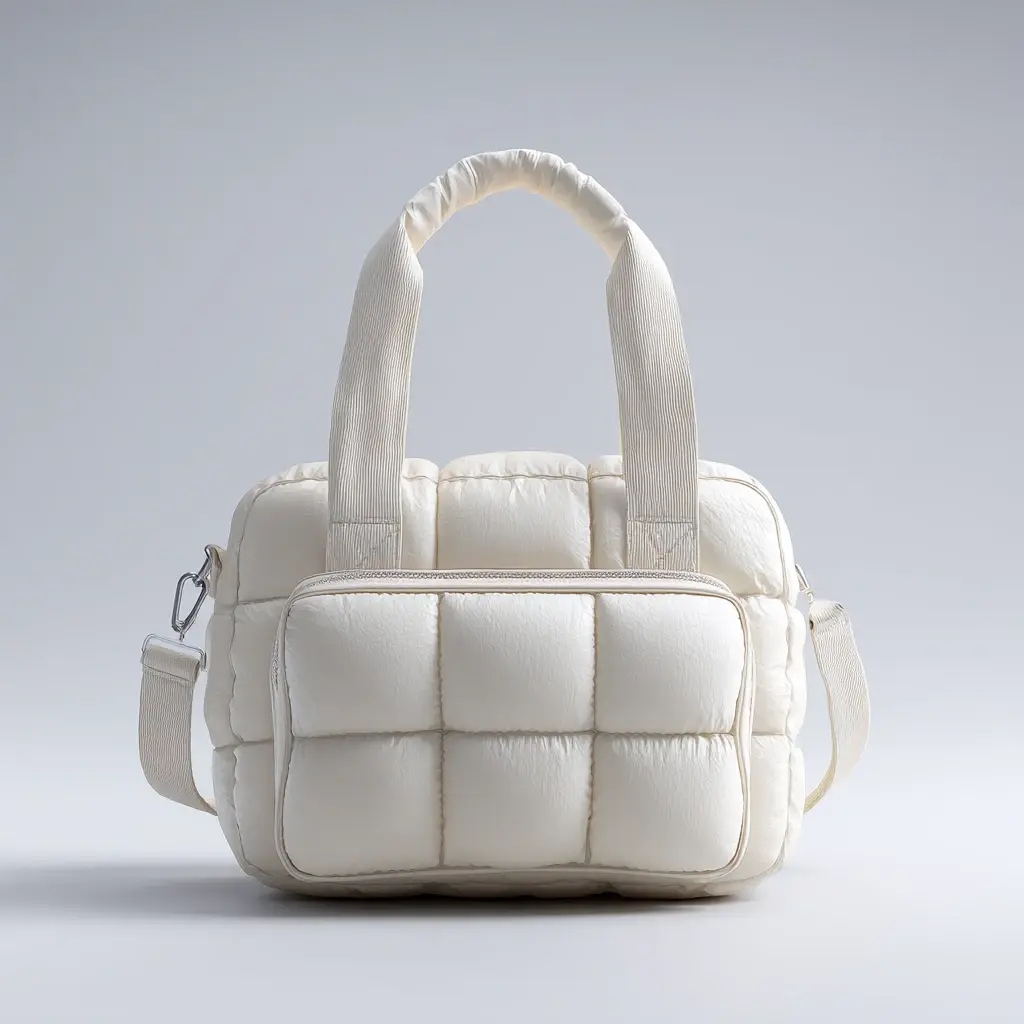
The cheapest trim question to ask is how many hours of salt spray the plating is rated for. Twenty-four hours under ASTM B117 is the working standard for a bag that lives in a hallway; forty-eight hours is the sensible floor for anything sold near a coast or displayed in a window.
Commercial Terms: MOQ, Tooling, Deposit and T/T
Four entries decide the cash profile of the order, and they are the four most frequently skimmed. MOQ is 500 pcs per style / colourway, and each colourway counts separately because each one is a separate dye or coating lot.
- MOQ. 500 pcs per style / colourway. Two colourways of one style is 1,000 pieces, not 500 split in half.
- Tooling. A physical asset: an embossing die, a cutting die, a hardware mould. Ask whether it is billed as a separate line or amortised into the unit price, and who owns it. The tooling and hardware budgeting guide sets out how each one is priced and how long it lasts.
- Deposit and balance. 30% on order confirmation by T/T, with the 70% balance before release of the documents or against a copy of the bill of lading.
- Price validity. A foreign-currency quotation holds for 30 days; after that the exchange rate and the hide market decide.
- Incoterms. FOB Xiamen is the standard, and CIF or DDP can be quoted where a door price is easier to plan against.
The MOQ expectation for custom runs explains why the number sits where it does: a dye lot, a trimming lot, a plating bath and a line changeover each cost roughly the same whether 100 or 500 pieces are made. Below that line the fixed costs dominate the unit price, which is why a smaller quantity comes back more expensive per piece rather than cheaper.
Quality Terms: AQL, Inspection Level and Defect Classes
Quality vocabulary is the only vocabulary in this trade with an international standard behind it. ISO 2859-1 sets the sample size and the accept and reject numbers; the rest is opinion, and opinion is not enforceable at the inspection table.
| Term | What it means | Working number |
|---|---|---|
| AQL | The defect rate tolerable for a pass | 2.5 for majors; 0 for criticals |
| General inspection level II | How the sample size is drawn from the lot | A 1,201-3,200 pc lot draws 200 units |
| Accept / reject | The count that passes or fails the lot | 10 accepted, 11 rejected at AQL 2.5 on 200 units |
| Critical defect | Unsafe or illegal: a sharp edge, a broken needle fragment | Accepted 0, rejected 1 |
| Major defect | Visible or functional: an open seam, a mis-set zipper | AQL 2.5 |
| Minor defect | Cosmetic within tolerance: a light crease, a 1 mm shade drift | AQL 4.0 |
| ISO 9001 | A quality system reference, not a product standard | Request it with the report |
Ask for the written report and offer third-party inspection by SGS alongside it. Shelf styles arrive with known defect histories, which is one reason a first pre-shipment inspection on a rebranded pattern passes more often than a first inspection on a brand-new drawing.
Compliance Terms: REACH, Prop 65, CPSIA, LWG and GRS
Compliance vocabulary is the vocabulary of market access. A bag can be beautifully made and still unsaleable if the chemistry file is missing, and the file has to exist before customs asks for it.
- REACH Annex XVII (EU). Chromium VI below 3 mg/kg tested under ISO 17075, azo dyes below 30 mg/kg under ISO 14362-1, nickel release below 0.5 µg/cm²/week under EN 1811, phthalates below 0.1% by weight.
- Proposition 65 (California). A warning requirement covering listed substances including lead and phthalates in coated trim. It is enforced through private litigation, so the label decision is a legal one rather than a marketing one.
- CPSIA (U.S.). Where a bag is marketed to children: 90 ppm of lead in coatings and substrates, tested by a CPSC-accepted third-party laboratory.
- Leather Working Group. The tannery audit protocol with gold, silver and bronze ratings, and the traceability evidence behind any leather claim printed on a hangtag.
- GRS. The Global Recycled Standard, used where a recycled-content claim is made, with transaction certificates passed down the chain.
- BSCI and Sedex / SMETA. The social-compliance audits retail buyers ask for. Both can be supplied for our validated partner factory Quanzhou Yingming Bags, alongside 7 production lines and about 200,000 pcs per month of capacity.
Logistics Terms: FOB, Carton Marks and HS Codes
The last group decides whether a well-made order arrives as a usable delivery. These entries are unglamorous and they are where a good season becomes a held container.
| Term | What it means | Working number |
|---|---|---|
| FOB Xiamen | Seller loads; buyer carries ocean freight from the port | Xiamen, Fujian |
| CIF / DDP | Seller carries freight, and for DDP the duties as well | Quoted on request |
| HS code | The customs classification of the finished bag | 4202.21 for a leather outer surface |
| Carton specification | 5-ply corrugated board, BC flute | 20-24 pcs for a tote, 12-15 kg gross |
| Container loading | How much fits a 40-foot high-cube container | 2,400-3,200 pieces depending on the shape |
| Carton marks | Shipping mark, side mark and piece count | Stated on the carton and the packing list |
Transit is 18-28 days to the U.S. West Coast, 30-38 days to Northern Europe and 5-8 days by air. Marine insurance is conventionally written at 110 per cent of the invoice value, and a bill of lading released against the balance payment is the normal control point.
The Six Terms Most Often Read Wrong
Six words account for most of the money that changes hands unexpectedly in a first programme. Reading them correctly costs nothing, and reading them wrong costs a season.
| Term | What is usually assumed | What the purchase order should say |
|---|---|---|
| Sample | Any bag sent across for approval | A PP sample from bulk materials, countersigned as the golden sample |
| Genuine leather | A grade | Full grain 1.2-1.6 mm with ISO 17075 and ISO 11640 results attached |
| Colour | A name such as tan or black | A Pantone TCX reference at Delta E 2.0 or better under D65 |
| MOQ | 500 for the order | 500 per style and per colourway |
| AQL | A vague promise of good quality | AQL 2.5 under ISO 2859-1, level II, with the written report |
| Tooling | Included in the price | Listed, owned by the brand, stored, and never run for another label |
A brief written in this vocabulary changes the first reply. Instead of a range too wide to plan against, the answer comes back as a number with a sample date and an inspection standard attached, and the OEM and ODM service page sets out both routes in the same terms.
Send the brief in these terms
Silhouettes, material direction, target retail price and launch date are enough to start. A private label coordinator will answer in the same vocabulary: MOQ 500 pcs per style / colourway, sampling at 6-10 working days, bulk at 35-50 days, inspection at AQL 2.5 under ISO 2859-1, and shipment FOB Xiamen by T/T. Get a quote.
Frequently Asked Questions
What is the difference between OEM and ODM in handbag sourcing?
An OEM programme builds a bag to your own drawing, starting with a fresh pattern, fresh tooling and a 6-10 working days of sampling window. An ODM programme takes a shelf pattern that has already been produced, and changes the colourway, the lining, the trim and the branding. Both carry the same MOQ of 500 pcs per style / colourway.
What should a handbag tech pack contain?
Dimensions in millimetres with a stated tolerance, materials by reference number, hardware by finish and gauge, stitch count and seam allowance, the branding position measured from a datum edge, and the packing method. Twelve to eighteen pages is a working pack that a cutting room can act on without calling back.
What is a PP sample and why does it matter?
A pre-production sample is two or three pieces built from bulk materials on bulk tooling before the line starts. It matters because it is the physical reference an inspector holds when measuring the finished shipment. Approving a proto sample instead means the bulk has no measurable standard to be compared against.
What does a golden sample mean on a purchase order?
The golden sample is the countersigned PP sample, sealed and retained in three places: one set with the brand, one at the line and one at inspection. The purchase order should state that the bulk must match it, which converts an argument about appearance into a comparison against a signed object.
How is the MOQ of 500 pcs calculated for a custom handbag run?
Four upstream minimums cost the same whether 100 or 500 pieces are made: the dye or coating lot, the trimming and hardware lots, the plating bath and the line changeover. Below about 500 units those fixed costs dominate the unit price, so a smaller quantity returns a higher price per piece.
What does AQL 2.5 actually require on a 2,000-piece lot?
With a lot of 1,201-3,200 pieces and general inspection level II, ISO 2859-1 draws 200 units and passes the lot at 10 major defects while rejecting it at 11. Critical defects are handled separately at an acceptance number of zero, and minor defects are commonly run at AQL 4.0.
How long does a handbag programme take from brief to shipment?
Plan 55-80 days from a signed brief to goods handed to the forwarder, then 18-28 days of transit to the U.S. West Coast or 30-38 days to Northern Europe. Within that figure, sampling is 6-10 working days, review is 3-6 days, the bulk run is 35-50 days and inspection is 1-2 days.
Which compliance documents should be requested before the deposit is paid?
Material test reports against REACH Annex XVII for chromium VI, azo dyes, nickel release and phthalates, a Proposition 65 review of hardware and coated trim for California, CPSIA documentation where a bag is marketed to children, BSCI or Sedex audit references, and Leather Working Group traceability where hides are bought that way.
What does FOB Xiamen include and what does it exclude?
FOB Xiamen covers the goods, inland delivery to the port and export clearance, and places them on board the vessel. It excludes ocean freight, marine insurance, import duty and inland delivery at destination. CIF adds freight and insurance; DDP adds duty and delivery to the door.
Who should own the tooling on a custom handbag order?
The brand, in writing, before the deposit moves. The purchase order should list the embossing die, the cutting die and any hardware mould, state that they were paid for, and state that they will be stored and never run for another label. Retained tooling is what makes the second order cheaper.
What is the difference between full grain and corrected grain leather?
Full grain keeps the natural surface of the hide with the grain intact and takes a light finish, typically at 1.2-1.6 mm thickness. Corrected grain has been buffed to remove defects and then pigment-finished, usually at 1.0-1.3 mm with a finish build of 0.10-0.20 mm. The first develops a patina; the second holds a uniform colour.
What are the standard payment terms for a first handbag order?
Thirty per cent deposit by T/T on order confirmation, with the seventy per cent balance paid before the shipping documents are released or against a copy of the bill of lading. Bank details should be confirmed by a voice call on a known number, because email interception on payment instructions is a live risk in this trade.
People Also Ask
Do I need to learn all sixty terms before the first email?
Twelve are enough. The terms that change money are MOQ, tooling, AQL, the PP sample, the golden sample and FOB, plus the six in the final table. The rest can be learned while the first order is being made.
Is a glossary really a substitute for a specification?
No. A glossary stops arguments about what a word means; a specification stops arguments about what the bag is. The two work together, and a brief written in this vocabulary arrives at a quotation two to three days faster.
Which term is most expensive to get wrong?
Tooling. A brand that pays for an embossing die and a hardware mould without an ownership clause has bought an asset it cannot take away, and the second order then carries the same development cost as the first.
Can the same glossary be used for shelf styles and custom drawings?
Yes, and that is the point. The vocabulary is shared; the readings differ. A tech pack on a shelf style is an annotation job rather than a drafting job, which is the clearest single difference between the two models.
Sources and further reading
Every figure on this page is either our own programme data or attributed below. Open the originals before you write them into a specification.
- REACH — chemical substances regulationEuropean Commission Annex XVII restricts the substances that may appear in finished leather and coatings.
- Incoterms rulesICC The rules that decide where cost, risk and insurance transfer.
- Leather Working Group — environmental auditing for tanneriesLeather Working Group Environmental audit protocol for tanneries and leather traceability.