Handbag OEM Sampling: PP Sample and Golden Sample Explained
What is the difference between a PP sample and a golden sample? The PP sample is two or three pieces built from bulk materials on bulk tooling before the line starts; the golden sample is that same PP sample countersigned, sealed and retained in three places. The golden sample is the only quality standard that is enforceable, because an inspector holding a signed object does not need a meeting to decide whether a bag matches. Two or three pieces, 6-10 working days, a 3 mm tolerance and a 45 to 90 minute approval meeting stand between a drawing and a 35-50 day bulk run.
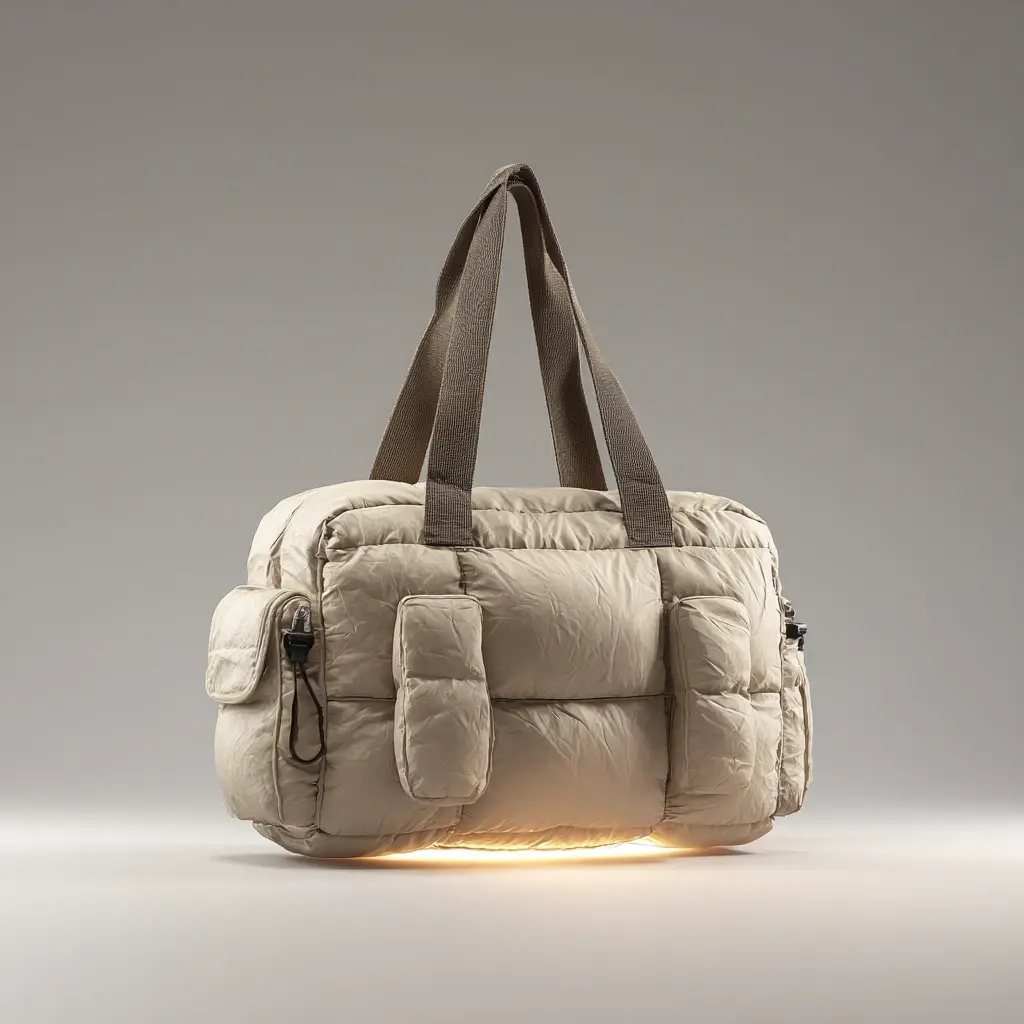
- Why Are There So Many Samples
- What Makes a PP Sample Different
- What Turns a PP Sample into a Golden Sample
- What Should Happen at the Approval Meeting
- What Does the Bulk Have to Match
- How Is the Golden Sample Used at Inspection
- What Happens When the Bulk Does Not Match
- A Sampling Calendar in Working Days
- What a PP Sample Costs, Line by Line
- Three Ways a PP Sample Lies
- The Conditioning and Measurement Protocol
- How Long a Sealed Reference Stays Honest
What is the difference between a PP sample and a golden sample? The PP sample is two or three pieces built from bulk materials on bulk tooling before the line starts; the golden sample is that same PP sample countersigned, sealed and retained in three places. The golden sample is the only quality standard that is enforceable, because an inspector holding a signed object does not need a meeting to decide whether a bag matches. Two or three pieces, 6-10 working days, a 3 mm tolerance and a 45 to 90 minute approval meeting stand between a drawing and a 35-50 day bulk run.
The sampling constants
Why Are There So Many Samples
A Vancouver direct-to-consumer brand received six parcels in eleven weeks and approved the wrong one. The first three were development samples, made to find out whether the drawing worked; the fourth was a clean version for a photo shoot; the fifth was the pre-production sample; and the sixth was the sealed reference that followed it. The brand had approved the third, because it looked the best, and the third had been made from a substitute leather that was never going to be used in bulk.
The six parcels exist because they answer six different questions, and only one of them is a question about approval. Understanding which question each sample answers is most of the discipline of the sampling stage.
- Proto or development sample. Does the drawing work at all? Built from whatever material is on the shelf, and useful for finding a problem rather than for approving a bag.
- Revision sample. Has the marked-up list been addressed? Rounds two and three are normal; six rounds mean the tech pack arrived thin.
- Salesman sample. Can the range be shown? A presentation object for a trade show or a photo shoot, and never an approval standard.
- PP sample. Will the bulk be right? Built from bulk material on bulk tooling, and the only sample that answers an approval question.
- TOP sample. Has the line drifted? Two or three pieces pulled from the first 50-100 units of the run.
- Shipment sample. What is actually in the cartons? Pulled from the packed goods at inspection.
What Makes a PP Sample Different
A PP sample is defined by what it is made of and what it is made with, not by how it looks. Three conditions have to be true at the same time, and the third is the one most often quietly dropped.
- Bulk materials. The body material, the lining, the zipper, the webbing and the hardware have to be the articles and finishes that the bulk will use. A substitute trim makes the sample a rendering rather than a standard.
- Bulk tooling. The embossing die, the clicker knife and any hardware mould have to be the production tools, so a logo position approved on a PP sample is a logo position that the line will reproduce.
- Bulk methods. The stitch specification, the edge treatment and the assembly sequence have to be the production sequence, because a sample hand-finished by a senior operator is not a sample of the line.
Ask for two or three pieces, not one. One piece is needed at the line, one at the inspection bench and one with the brand, and a single PP sample means somebody will be working from a photograph by week four.
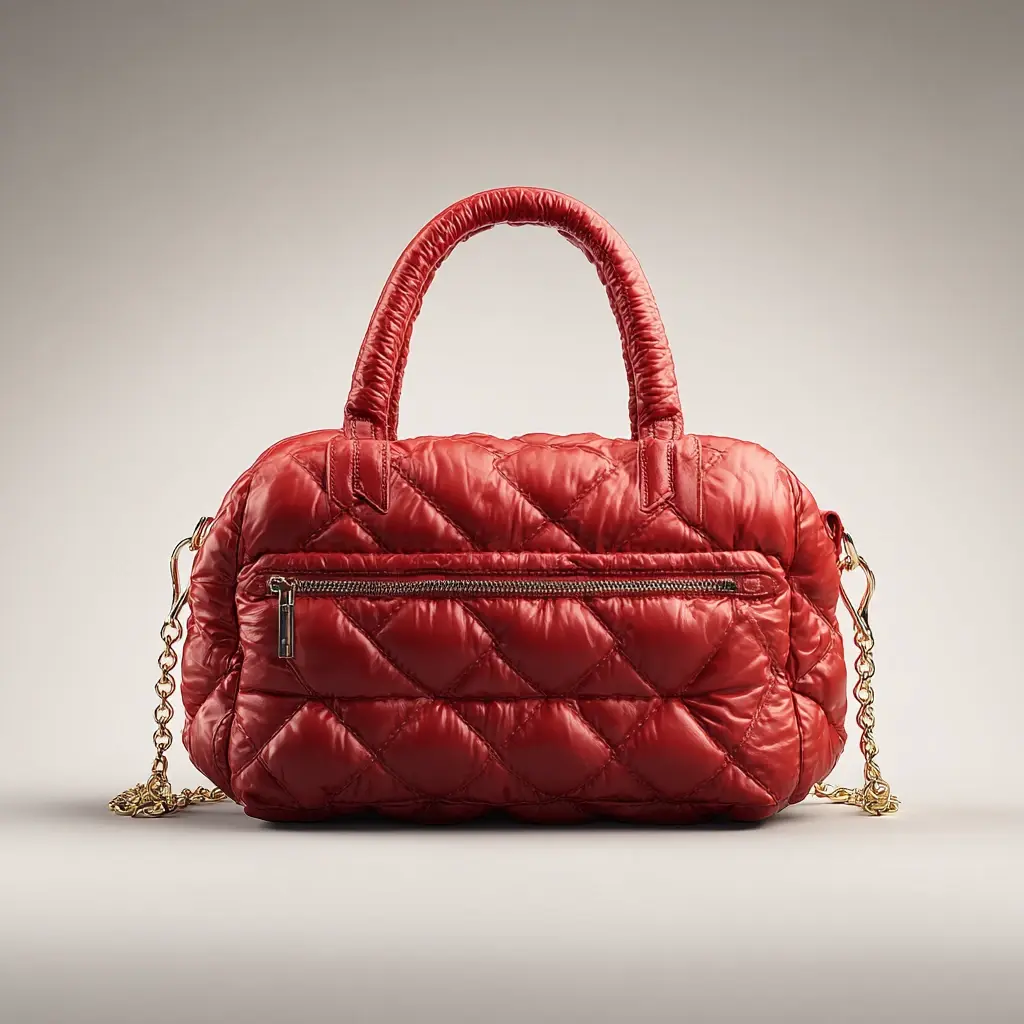
What Turns a PP Sample into a Golden Sample
Nothing changes about the bag. What changes is the paperwork and the storage: a PP sample becomes a golden sample when it is countersigned, sealed and placed where it will be used.
| Step | Action | Why it matters |
|---|---|---|
| 1 | Countersign the approval tag with a date and a name | An unsigned sample is an object, not a reference |
| 2 | Photograph the sample in three views with a scale | A photograph travels; the bag cannot |
| 3 | Seal it in a poly bag with the signed tag inside | A sealed bag shows if it has been opened |
| 4 | Retain three sets: brand, line and inspection | Each of the three is where a comparison happens |
| 5 | Record the retention period, usually 24 months | A stored reference is what makes the repeat order cheap |
The retention period is the practical point. A golden sample held for 24 months is the reason a repeat order can skip the 6-10 working days of sampling window entirely, and a brand that lets its sealed reference be thrown away has thrown away the fastest part of the second calendar.
What Should Happen at the Approval Meeting
Approval should be a meeting of 45 to 90 minutes with a numbered list, not a reaction to a parcel. Eighteen to twenty-four checks cover a structured bag, and every one of them has a number attached.
- Dimensions. Width, height and gusset to plus or minus 3 mm, and strap drop to plus or minus 2 mm. Measure at three points on a structured shape, not one.
- Logo position. Plus or minus 1 mm from the datum edge stated in the tech pack, which is the most common approval failure on a rebranded shelf style.
- Stitch count. 7-9 stitches per inch with a 10 mm seam allowance, in Tex 40 bonded nylon, counted over three inches rather than estimated.
- Colour. Against the approved Pantone TCX reference at Delta E 2.0 or better under a D65 light source, on a physical swatch card.
- Hardware. Plating at 5-8 µm of nickel with a 0.10-0.20 µm flash, 24 hours to first corrosion under ASTM B117, and nickel release below 0.5 µg/cm²/week under EN 1811.
- Edge finish. Three coats at a 0.3-0.5 mm build, sanded between, with no ridges at the folds.
- Load paths. The strap attachment, the handle and the base, each pulled to the working load and inspected for movement.
Write the numbered list into the approval email and keep the numbering. A revision list of seven numbered points is closed in one round; a paragraph of impressions is not, and the difference is 3-6 days each time.
What Does the Bulk Have to Match
The purchase order should say what the standard is, and it should be one sentence: the bulk must match the golden sample within the tolerances recorded at approval. Everything else follows from that sentence.
| Attribute | Tolerance | How an inspector checks it |
|---|---|---|
| Body dimensions | Plus or minus 3 mm | Tape measure at three points |
| Strap drop | Plus or minus 2 mm | Measured under a light load |
| Logo position | Plus or minus 1 mm | From the stated datum edge |
| Colour | Delta E 2.0 or better | Physical comparison under D65 |
| Stitch count | 7-9 SPI | Counted over three inches |
| Assembly and finishing | As the sealed reference | Side by side on the bench |
Two things should also be recorded at approval and not discovered later: the packing method, since 20-24 pieces per carton for a tote is what the carton and the freight were quoted against, and the care label and hangtag content, which is a legal document in most markets once the goods are in the country.
How Is the Golden Sample Used at Inspection
Inspection is where the sealed reference earns its money. At AQL 2.5 under ISO 2859-1, an inspector draws 200 units from a lot of 1,201-3,200 pieces and passes it at 10 major defects, rejecting at 11. Every one of those judgements is a comparison between a drawn unit and the golden sample.
- Critical defects. Accepted at 0 and rejected at 1: a sharp edge, a broken needle fragment, a non-compliant substance. These are not compared; they fail on their own.
- Major defects. Judged at AQL 2.5 against the reference: an open seam, a mis-set zipper, a crooked logo, a visible shade difference beyond Delta E 2.0.
- Minor defects. Judged at AQL 4.0: a light crease, a 1 mm shade variance, a small finish blemish.
- The report. Written, dated and issued to the brand with the photographs attached, plus an ISO 9001 quality system reference.
Third-party inspection by SGS, Intertek or TÜV is available alongside the in-house report, and it is worth booking at the same time as the production slot rather than in the final week. An inspection booked late is an inspection that holds the container.
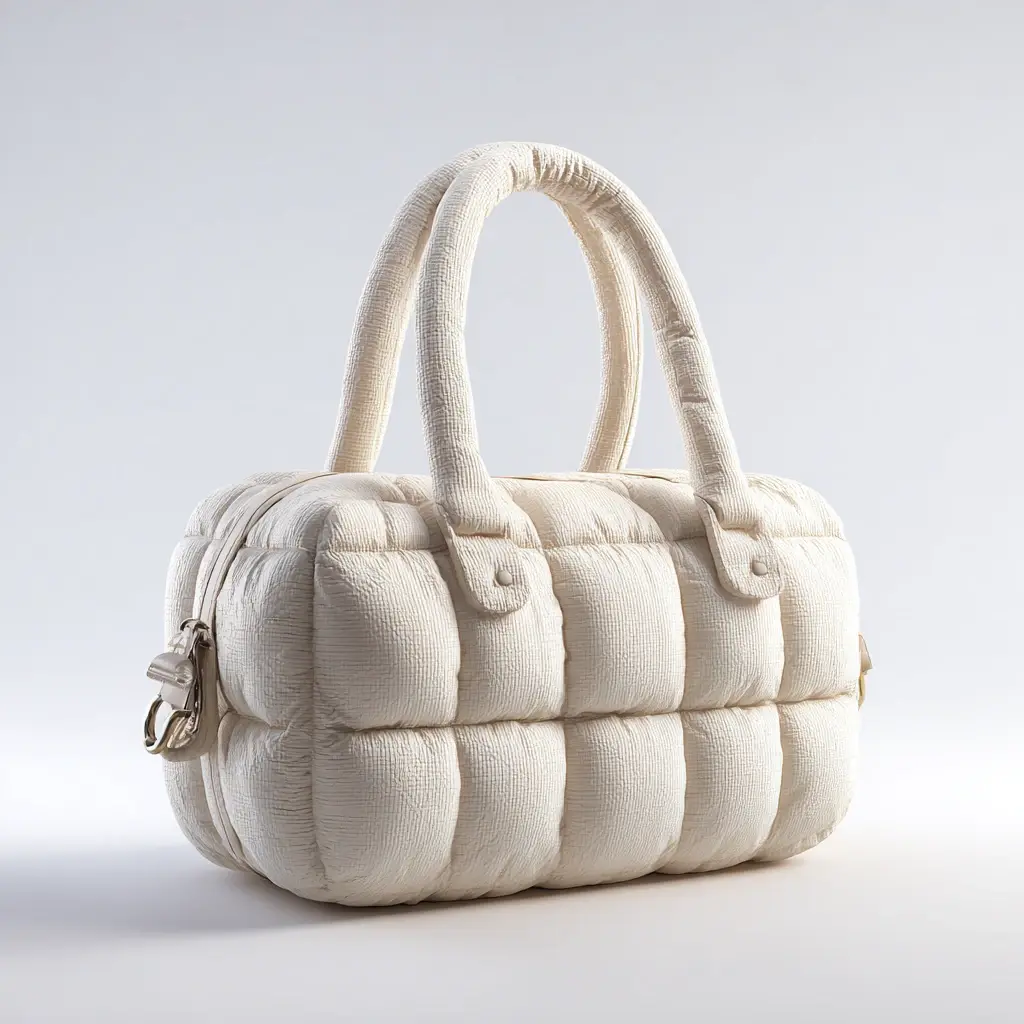
What Happens When the Bulk Does Not Match
Two outcomes are possible, and the purchase order should already have chosen between them. Otherwise the decision is made in the last week, by whoever has the most to lose.
- Re-sort and rework. The lot is re-sorted against the golden sample, the defects are reworked where they can be, and the lot is re-inspected. This is the usual outcome for a major-defect count between the accept and reject numbers.
- Reject and re-run. The lot is rejected and the shortfall is re-made. This is the outcome for a critical defect or for a structural failure, and it costs the calendar rather than the week.
The clause to write in advance is that re-sorting happens before the container is released, at the producer's cost, with photographs sent the same day. That one sentence converts a three-week argument into a two-day transaction.
A Sampling Calendar in Working Days
The sampling stage is the most compressible part of the calendar, and it should be planned in working days rather than in weeks.
| Stage | Working days | What shortens it |
|---|---|---|
| Tech pack review | 1-2 | A complete 12-18 page pack |
| PP sample production | 6-10 | A complete pack removes 2-4 days |
| Courier to the brand | 3-5 | Approve from photographs where possible |
| Approval meeting and revision list | 1-2 | A numbered list of 18-24 checks |
| Revision sample if needed | 6-10 | A list short enough to close in one round |
| Sealing and retention | 1 | Three sets prepared at the same time |
| Total to a sealed reference | 18-30 | Every stage is a number |
The walk from tech pack to finished cartons places this stage in the full calendar, and the MOQ expectation for custom runs explains why the sampling stage is priced the way it is. Where the specification is unchanged on a repeat, the whole 18-30 day block disappears and the second order moves straight to bulk at 35-50 days.
Sampling at 6-10 working days and bulk at 35-50 days run through our validated partner factory Quanzhou Yingming Bags, which has produced programmes since 2014 across 7 production lines and about 200,000 pcs per month. The OEM and ODM service page sets out both routes, and the tooling and hardware budgeting guide covers the dies the PP sample has to be made with.
What a PP Sample Costs, Line by Line
A PP sample is cheap as an object and expensive as a process. The sample charge runs 1.5-3 times the bulk unit price, so a bag quoted at USD 12 FOB Xiamen costs USD 18-36 to sample, and a revision round is billed at 50-100% of the first. Add a courier at USD 35-60 for a 1-2 kg parcel over three to five days each way, and the sampling line on a two-round programme lands at USD 90-190 before a single bulk unit is cut.
| Line | Cost | Working days | Note |
|---|---|---|---|
| PP sample, 2-3 pieces | USD 18-36 per piece | 6-10 | Usually credited against the order |
| Revision round | 50-100% of the first charge | 6-10 | Avoidable with a numbered list |
| Courier, both directions | USD 35-60 per parcel | 3-5 each way | One leg can be removed by approving from photographs |
| Sealing and retention | No charge | 1 | Three sets prepared together |
| Total, two rounds | USD 90-190 | 18-30 | Against goods worth USD 5,500-8,000 |
Read against the order value, the sampling bill is 1-3% of the goods and it insures the whole 35-50 day run. The argument for spending it is not the money, it is the asymmetry: a revision made on two pieces costs an operator's afternoon, and the same revision made in bulk costs 500 units at MOQ 500 pcs per style / colourway.
Three Ways a PP Sample Lies
A PP sample can pass every check on the approval list and still not represent the run. Three failure modes account for most of the gap between an approved sample and a rejected lot, and each one has a symptom that is visible at approval rather than at inspection.
| Symptom at approval | Cause | Fix before bulk |
|---|---|---|
| The piece is better finished than the specification | Built by a senior operator at 2-3 hours against 35-50 minutes on the line | Pull a TOP sample from the first 50-100 units |
| Colour matches the swatch but not the carton | Panels taken from the first cutting of a dye lot | Compare the first and last cutting at Delta E 2.0 |
| Handle drop measures correctly when empty | Strap and handle creep 5-8 mm under load | Measure with 2-3 kg in the body, held for 60 seconds |
The third row is the one that reaches the customer. A drop measured empty at 25 cm reads closer to 26 cm loaded, and on a shoulder bag that difference decides whether the strap sits or slides. Recording the loaded measurement at approval takes one minute and removes the most common fit complaint in the category.
The Conditioning and Measurement Protocol
Two measurements of the same bag only agree if the bag is in the same state each time. Condition the piece for 24 hours at 20 plus or minus 2 degrees C and 65 plus or minus 5% relative humidity before measuring, because leather and coated cloth move with moisture: a panel cut at 1.4 mm can read 1.5 mm after a humid week. Measure flat on a bench rather than on a hook, empty and then loaded, and record both numbers.
- Dimensions. Width, height, gusset and drop at three points each, to plus or minus 3 mm on the body and 2 mm on strap drop.
- Stitch count. 7-9 per inch counted over three inches on a straight run, not across a corner where the feed changes.
- Colour. Delta E 2.0 or better against the physical swatch card under a D65 source, read on a flat panel rather than at a folded edge.
- Hardware. Plating at 5-8 microns with a 0.10-0.20 micron flash, and a #5 coil slider that travels at 25-40 N of pull force with no stiff spots.
- Weight. Finished weight in grams, because a 480 g flat body and a 900 g structured body sit in different fulfilment bands downstream.
How Long a Sealed Reference Stays Honest
A golden sample is stored, not archived. Held at 18-25 degrees C below 55% relative humidity and out of daylight, a leather reference drifts by roughly Delta E 0.3-0.6 over twelve months and a pale coating by 0.5-1.0, which is enough to move a borderline judgement made at a tolerance of Delta E 2.0. Adhesives and edge paint keep curing inside the sealed bag, so a reference opened at month eighteen is no longer the object that was countersigned.
- Re-verify at six and twelve months against the three-view photographs and the scale, and record any drift in the approval file.
- Replace the reference at 24 months, before the retention period expires, by re-cutting from the frozen specification rather than from memory.
- Store it flat, dark and sealed, with the signed tag inside; a reference hung on a hook distorts at the handle root within weeks.
- Log every opening with date, name and reason, because an unlogged opening ends the reference's authority in a dispute.
The reason to be strict about it is commercial. A stored, current reference is what lets a repeat order skip the 6-10 working days of sampling window entirely and move straight into a 35-50 day bulk run; a reference that has drifted or been lost puts the whole 18-30 day sampling block back into the second calendar.
Approve the right sample
Send the silhouettes, the material direction and the target retail price. A private label coordinator will return a quotation with the sampling plan attached: 2-3 PP pieces from bulk materials, 6-10 working days, a numbered 18-24 point approval list and a sealed golden reference retained for 24 months. Get a quote.
Frequently Asked Questions
What is a PP sample in handbag production?
A pre-production sample: two or three pieces built from bulk materials, on bulk tooling, by bulk methods, before the line starts. It is the only sample that answers an approval question, and it is the physical reference an inspector measures the finished shipment against.
What is a golden sample?
The countersigned PP sample, sealed in a poly bag with its approval tag inside and retained in three places: with the brand, at the line and at inspection. It is retained for about 24 months, which is what allows a repeat order to skip sampling.
Why should a proto sample never be the approval standard?
Because it is built from whatever material is on the shelf, to find out whether a drawing works. Approving it means the bulk has no measurable standard, and the mismatch is discovered at inspection rather than at approval, which is the most expensive possible place to discover it.
How many PP samples should be requested?
Two or three. One is needed at the line, one at the inspection bench and one with the brand, and a single PP sample means somebody will be working from a photograph by week four of the bulk run.
What tolerances should be recorded at approval?
Plus or minus 3 mm on body dimensions, 2 mm on strap drop and 1 mm on the logo position from the stated datum edge, with colour at Delta E 2.0 or better under a D65 light source. Without a tolerance, a measurement argument has no referee.
What stitch specification should a handbag be approved to?
Tex 40 bonded nylon at 7-9 stitches per inch with a 10 mm seam allowance. Below 7 stitches per inch the seam is loose and will open; above 9 it perforates the panel. An inspector counts stitches over three inches because it is the fastest check on a sewing room.
How long does the sampling stage take?
Six to ten working days for the PP sample itself, extending to 12-15 for framed, woven or stacked constructions. With review, courier and one revision round, plan 18-30 working days from a signed tech pack to a sealed reference.
What happens if the bulk does not match the golden sample?
The lot is re-sorted against the reference and reworked where possible, then re-inspected, or it is rejected and the shortfall re-made. The purchase order should state in advance that re-sorting happens before the container is released, at the producer's cost, with photographs sent the same day.
How is the golden sample used at AQL 2.5?
Every defect judgement is a comparison against it. An inspector draws 200 units from a lot of 1,201-3,200 pieces, passes at 10 major defects and rejects at 11, and each major is a visible or functional difference from the sealed reference rather than an opinion.
What plating standard should hardware be approved to?
5-8 µm of nickel with a 0.10-0.20 µm colour flash, 24 hours to first corrosion under ASTM B117 for an indoor bag and 48 hours for a coastal market, plus nickel release below 0.5 µg/cm²/week under EN 1811 for European market access.
Can sampling be skipped on a second order?
Yes, where the specification is unchanged, which removes a further 6-10 working days from the calendar. The requirements are a stored golden reference, retained tooling and an approved material reference, and they are the three things a first order should leave behind.
What is a TOP sample?
Two or three pieces pulled from the first 50-100 units of the bulk run, to prove the line has not drifted from the reference. It is the last checkpoint before the remaining units are made, and it is a far cheaper place to catch a drift than at final inspection.
People Also Ask
Can a sample be approved from photographs?
Colour and finish cannot, and dimensions can only be approved with a scale in the frame. A physical PP sample is the standard, with three-view photographs held as a record for anyone who cannot hold the bag.
What is the most common approval failure?
The logo position. It is measured from a datum edge and it is the detail most often described in words rather than in millimetres, so it is the one that arrives a few millimetres out of place on every piece.
How many revision rounds are normal?
Two or three. Six is a sign the tech pack arrived thin rather than a sign the sampling is careful, and each round costs 6-10 working days plus 3-6 days of review.
Should the brand keep its sealed sample?
Yes, and for the full retention period. A brand that throws away its sealed reference has thrown away the fastest part of the second calendar and the evidence in any later dispute.
Sources and further reading
Every figure on this page is either our own programme data or attributed below. Open the originals before you write them into a specification.
- REACH — chemical substances regulationEuropean Commission Annex XVII restricts the substances that may appear in finished leather and coatings.
- SATRA — technical services for leather, footwear and accessoriesSATRA Independent leather, hardware and accessories testing protocols.
- FashionUnited — fashion industry news and dataFashionUnited Industry news and company data for the fashion sector.