DTC Handbag Brand vs Marketplace Seller: Which Model Scales
Which model scales: a DTC handbag brand or a marketplace seller? Run one 500-piece order through both and the answer appears in month nine, not month one. Two founders bought the same structured tote at MOQ 500 pcs per style / colourway, landed at USD 14.60 FOB Xiamen, and priced it at USD 79. The marketplace seller booked revenue in eleven days and about USD 31,400 gross by month three. The direct brand waited 47 days for first revenue — 6-10 working days of sampling plus 35-50 days of bulk — and reached only about USD 18,900 over the same stretch. By month twelve the ranking had inverted. The cause is not traffic; it is the platform take, the return rate, and the fact that only one of them owns a list of 1,340 names.
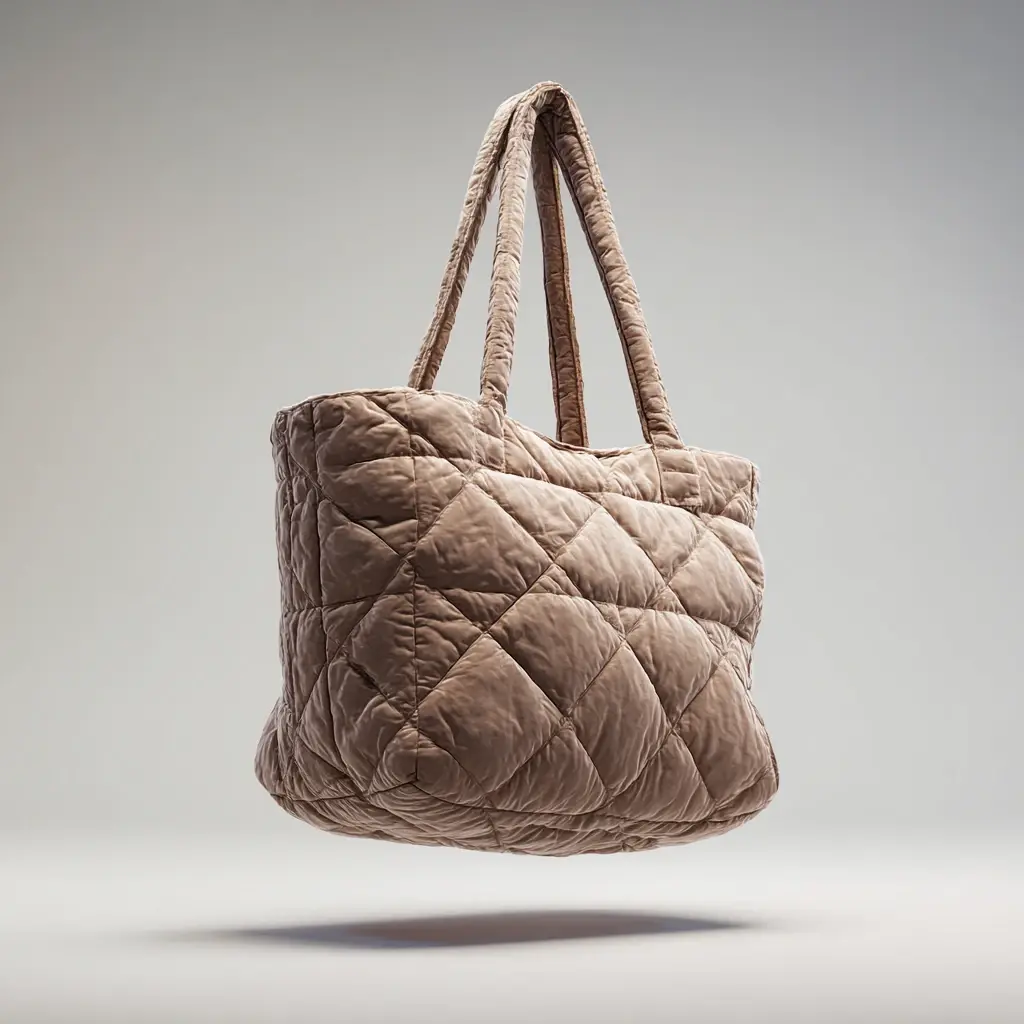
- Two Sellers, One 500-Piece Order, Twelve Months Later
- Where the Money Actually Goes in Each Model
- Speed to First Revenue: 35-50 Days Versus Tomorrow
- Inventory Risk and the Arithmetic of Colourway Splits
- Who Owns the Customer Record
- Returns, Fees and the Hidden Discount
- How Production Planning Differs Between the Two
- Switching Models Without Losing the Season
- Which Model Scales Past the Second Order
- The Content Bill Behind Each Model
- Acquisition Cost Per Buyer, Drop by Drop
- The Fulfilment Band and What Weight Does to Contribution
Which model scales: a DTC handbag brand or a marketplace seller? Run one 500-piece order through both and the answer appears in month nine, not month one. Two founders bought the same structured tote at MOQ 500 pcs per style / colourway, landed at USD 14.60 FOB Xiamen, and priced it at USD 79. The marketplace seller booked revenue in eleven days and about USD 31,400 gross by month three. The direct brand waited 47 days for first revenue — 6-10 working days of sampling plus 35-50 days of bulk — and reached only about USD 18,900 over the same stretch. By month twelve the ranking had inverted. The cause is not traffic; it is the platform take, the return rate, and the fact that only one of them owns a list of 1,340 names.
The twelve-month comparison, one style, 500 pcs
Two Sellers, One 500-Piece Order, Twelve Months Later
Both founders ordered in the same week from the same sourcing partner, with the same 500-piece minimum and the same 35-50 day bulk window. The difference was entirely downstream of the goods. One listed on a marketplace within eleven days of the cartons landing and let the platform supply the traffic. The other spent those eleven days building a store, writing three emails and shooting a second set of photographs, then opened with no traffic at all and had to buy it.
By month three the marketplace seller was ahead by a wide margin and looked right. By month six the gap had closed, because the direct brand's second drop arrived with 900 names on a list and 31 per cent of it sold before it was publicly announced. By month nine the direct brand was selling at a contribution margin roughly nine points higher per unit, and by month twelve the marketplace seller was still re-buying the same traffic at the same price while the direct brand's third drop cost nothing to announce.
None of this means the marketplace is the wrong place to start. It means the two models charge for different things. The marketplace rents you demand and takes a percentage of every transaction plus a fee for holding and moving the goods. The direct model sells you demand at a fixed acquisition cost that you can subsequently drive to zero. Which one wins depends on whether you expect to be selling the second bag to the same person, and handbags are a category where that answer is usually yes.
Where the Money Actually Goes in Each Model
A USD 79 bag landed at USD 14.60 looks like a 64-point gross margin in both models, and it is not. Take the same unit through each channel and the contribution lines separate immediately.
| Line | Direct store | Marketplace |
|---|---|---|
| Retail price | USD 79.00 | USD 79.00 |
| Landed product cost | USD 14.60 | USD 14.60 |
| Platform referral | USD 0.00 | USD 11.85 |
| Fulfilment and pick-pack | USD 6.40 | USD 3.20 |
| Payment processing | USD 2.29 | USD 0.00 |
| Return provision at 11 per cent | USD 7.04 | USD 8.69 |
| Contribution per shipped unit | USD 48.67 | USD 40.66 |
The eight-point gap looks small until it is multiplied by 500 units and then by four seasons, at which point it is roughly USD 16,000 a year of contribution on a single style. It also behaves differently under stress: when paid acquisition costs rise, the direct brand can shift volume to its own list, while the marketplace seller's referral percentage rises with the price. That asymmetry is the whole argument, and it is an arithmetic argument rather than an ideological one.
Speed to First Revenue: 35-50 Days Versus Tomorrow
The marketplace wins the opening decisively, and the reason is structural rather than strategic. Goods that are already landed can be listed the same afternoon; goods that are not yet made cannot. Sampling runs 6-10 working days, or 12-15 on a complex build with custom hardware, and bulk runs 35-50 days after approval. That is 41 to 60 days of committed cash before a single unit is sellable in either model.
- Days 1 to 10: sampling. Both models are identical here; the only decision that changes the calendar is whether custom hardware is specified.
- Days 11 to 60: bulk production and inspection at AQL 2.5 under ISO 2859-1. Use this window to build the store, the emails and the photography.
- Day 61 onward: the marketplace seller can list immediately; the direct brand needs traffic, which is why the list built during days 11 to 60 matters.
- The mistake: ordering first and building the store afterwards, which parks finished inventory for three to six weeks at full carrying cost.
The practical rule is to treat the 35-50 day production window as the marketing build window rather than dead time. Every founder who uses it that way reaches first revenue within a week of the cartons landing, and every founder who does not spends most of the next month doing urgently what could have been done calmly.
Inventory Risk and the Arithmetic of Colourway Splits
MOQ 500 pcs applies per style and per colourway, which is the constraint that shapes everything. A single style in one colourway is 500 units of exposure. The same style in three colourways is 1,500 units, and the third colourway is almost always the one that does not sell.
The two models handle that exposure differently. A marketplace listing can absorb a slow colourway because traffic is continuous and the slow unit simply drags on the shelf for two seasons. A direct store cannot, because a drop is an event and a colourway that misses its event has nowhere to go until the next one. That is why direct brands should start with one colourway and add a second only once the first has a measured sell-through rate.
| Approach | Units committed | Where it works |
|---|---|---|
| One style, one colourway | 500 | Direct launch with a single drop date |
| One style, two colourways | 1,000 | Marketplace, where demand is continuous |
| One style, three colourways | 1,500 | Only after two seasons of sell-through data |
| Two styles, one colourway each | 1,000 | Direct, when the second style shares the hardware set |
Who Owns the Customer Record
This is the difference that compounds and the one most first-time sellers ignore in month one. In the direct model the buyer's name, email, size preference, colour choice and purchase date are yours, and the second drop can be announced to 900 people for nothing. In the marketplace model the same buyer is a transaction inside somebody else's system, and reaching them again costs the same referral percentage it cost the first time.
The measured gap is large. In the comparison above, 24 per cent of direct buyers purchased again within twelve months against 7 per cent of marketplace buyers, and the difference is almost entirely explained by whether the brand could reach them. Accessories Council sessions on brand building have made the same point for years: the repeat transaction is where the category's economics actually live, and a first sale at a 15 per cent referral does not build toward it.
Returns, Fees and the Hidden Discount
Handbags return at about 11 per cent, and the reasons are concentrated rather than random: the strap drop was wrong for the buyer's height, the colour read differently on their screen, and the bag did not hold what the photography implied. Every one of those reasons is a specification or photography problem, not a channel problem, which is why returns follow the product into both models.
- Strap drop: publish the measurement in centimetres and show the bag worn, because drop is the fitting dimension buyers actually feel.
- Colour: photograph under a 5,500 K source and state the light, because a colour tolerance without a light source is unenforceable.
- Capacity: state what fits in litres or by named object, not by adjective, because capacity mismatch is the fastest route to a return.
- Fees: read the fulfilment schedule by weight band; a 900 g structured bag and a 400 g flat bag are not in the same band.
The hidden discount is the last piece. Marketplace buyers compare within the platform, which means a USD 79 bag sits next to a USD 39 bag of similar silhouette, and the gap has to be justified on the page in eight seconds. On a direct store the comparison set is whichever other tabs the buyer has open, which is a far more forgiving environment.
How Production Planning Differs Between the Two
The marketplace rewards continuous availability; a listing that goes out of stock loses rank that is expensive to regain. The direct model rewards scarcity; a drop that sells out is a marketing asset. Those two incentives point at different ordering patterns even though the goods and the lead times are identical.
A marketplace seller should therefore order on a rolling basis, keeping perhaps eight weeks of cover and accepting a slightly higher unit cost on smaller repeat runs. A direct brand should order in discrete drops timed to a calendar, taking the full 500-piece minimum per colourway and accepting the carrying cost in exchange for a cleaner story. Mixing the two patterns is the usual failure: a direct brand with continuous availability has no events to announce, and a marketplace seller with drop-based inventory loses rank twice a year.
Switching Models Without Losing the Season
Most brands end up running both, and the sequence matters more than the mix. Start where the traffic is cheap to buy, build the list, then move the repeat business to the channel that does not charge a percentage for it.
- Season one: list on the marketplace to prove demand and generate cash inside 60 days of landing.
- Season one, simultaneously: put an insert in every box offering a care guide by email, which converts at a few per cent and costs nothing.
- Season two: open the direct store and announce it only to the list, so the first direct drop sells without paid traffic.
- Season three: keep the marketplace for acquisition and treat the direct store as the margin channel for repeats.
- Never: price the direct store below the marketplace, because the list will find it and the referral percentage will then be paid for nothing.
Which Model Scales Past the Second Order
Scaling means the third order is cheaper to sell than the second one was. In the direct model that happens automatically if the list is being built: the third drop reaches roughly 1,340 names at zero media cost, and about a quarter of the units go before the public launch. In the marketplace model the third order costs exactly what the first one cost, plus whatever the category's advertising rate has done in the interim.
The honest caveat is that the direct model only scales if something is being done with the list between drops, which is why the retention programme behind a second purchase is not optional reading for anyone choosing this path. And because the direct model has no rented demand, the product has to carry more of the persuasion: the narrative a direct store needs is what replaces the platform's comparison grid.
Cash is the deciding variable for most founders, and it is worth being blunt about it. The direct model needs roughly USD 18,000 to 24,000 of working capital tied up across a 35-50 day production cycle plus a marketing build, while a marketplace first order can be run on less because the channel supplies demand immediately. Where that cash is allocated in practice is laid out in how launch budgets are split across tiers, and the sourcing assumptions behind every number on this page are described in how a private label programme is put together.
The Content Bill Behind Each Model
Both models need the same goods and very different content, and the content is bought before the first unit sells. A marketplace listing runs on six to eight images plus a title and five bullets; a direct store needs twelve to sixteen images per SKU, a size and capacity panel, a worn shot and a short film. At USD 250-600 for a stills shoot and USD 400-900 for motion, the content bill for one style lands at USD 650-1,500 in the direct model and USD 180-400 on a marketplace.
| Asset | Direct store | Marketplace | Cost per unit at 500 |
|---|---|---|---|
| Stills, 6 against 14 images | USD 250-600 | USD 120-260 | USD 0.26-0.68 |
| Motion, 15-30 seconds | USD 400-900 | Not required | USD 0.80-1.80 |
| Copy, size and capacity panel | USD 150-350 | USD 60-150 | USD 0.30-0.70 |
| Insert, care card and dust bag | USD 0.35-0.90 per unit | USD 0.10-0.30 per unit | Included above |
Amortised over 500 pieces, the direct model carries USD 1.70-4.00 per unit of content against USD 0.36-0.82 on a marketplace, a gap of roughly USD 670-1,590 per drop. Against a contribution margin difference of about nine points on a USD 79 bag, that gap is recovered inside the first drop and then repeats free on every reorder, because the assets are already made.
Acquisition Cost Per Buyer, Drop by Drop
The two models buy demand differently: one rents it per transaction, the other buys it once and reuses it. A marketplace charges a referral percentage plus advertising, which lands at USD 14-26 of cost per buyer on a USD 79 bag in a competitive category. A direct store pays USD 18-32 to acquire the first buyer through paid social, and then USD 0.02-0.05 per email sent to reach them again.
| Drop | Direct cost per buyer | Marketplace cost per buyer | Cumulative gap on 500 units |
|---|---|---|---|
| Drop one | USD 18-32 | USD 14-26 | Direct behind by USD 2,000-3,000 |
| Drop two | USD 6-11 | USD 15-27 | Gap closed |
| Drop three | USD 2-5 | USD 16-28 | Direct ahead by USD 5,000-8,500 |
| Drop four | USD 1-3 | USD 17-29 | Direct ahead by USD 8,000-13,000 |
The break-even sits at drop two, which is the number worth planning against. It is also why the list has to be built during the 35-50 day production window rather than after it: a founder who opens a store with no names on a list pays drop-one acquisition costs again on drop two, and the model never reaches its break-even. The goods and the calendar are identical either way.
The Fulfilment Band and What Weight Does to Contribution
Handbags are light and bulky, and both models price fulfilment on the same two numbers: the weight band and the dimensional divisor. A flat tote at 480 g in a 38 x 35 x 12 cm shipper sits in a low band; a structured bag at 900 g crosses into the next one. At a divisor of 5,000 the same carton bills at 3.2 kg of volumetric weight against 0.48 kg actual, so volume, not mass, sets the fee.
- Band steps. Fulfilment fees move at roughly 400 g, 900 g and 1.5 kg; crossing one costs USD 1.40-3.60 per unit.
- Volumetric weight. Length x width x height divided by 5,000 gives 3.19 kg for a 60 x 40 x 40 cm carton, whatever is inside it.
- Flat packing. A body that ships flat halves the dimensional weight against the same bag boxed, which is worth USD 0.90-2.20 a unit.
- Returns freight. At 11% returns, inbound return shipping adds USD 0.60-1.40 per unit sold across the drop.
Those four lines are the reason a specification decision made months earlier shows up as a margin difference. Choosing a body that packs flat, holding finished weight under 500 g and specifying a carton that matches the product rather than a stock size removes USD 2-6 per unit of downstream cost in both models, and none of it requires a price negotiation with anybody.
Tell us which model you are running and we will quote 500 pcs per style / colourway with a production calendar that matches your drop or your restock rhythm. Get a Quote → /contact-quote/
Frequently Asked Questions
Which model should a first-time handbag founder choose?
Start on a marketplace if cash is tight and you need revenue inside 60 days, because the channel supplies demand immediately after goods land. Move to direct as soon as you have a list worth emailing. The mistake is treating the choice as permanent; the sequence that works is marketplace for proof and cash, then direct for margin and repeats.
How much does the platform really take on a USD 79 handbag?
About 15 per cent once referral and fulfilment are combined, which is roughly USD 11.85 on a USD 79 unit before any advertising spend. Add a return provision at around 11 per cent and the contribution per shipped unit falls to about USD 40.66 against roughly USD 48.67 for the same bag sold direct after payment processing.
Does the 500-piece minimum apply per colourway?
Yes, MOQ is 500 pcs per style and per colourway. One style in three colourways is 1,500 units of committed inventory, not 500. That is why a first direct drop should usually be a single colourway; the third colourway is nearly always the one left over after the event has passed.
How long before either model produces revenue?
Sampling runs 6-10 working days, or 12-15 on complex builds with custom hardware, and bulk production runs 35-50 days after approval. Neither model can sell before roughly day 41 to day 60. After landing, the marketplace lists the same afternoon while a direct store has to buy or build traffic, which is the only real speed difference.
Why do handbags return at around 11 per cent?
Three reasons account for most of it: strap drop wrong for the buyer's height, colour reading differently on their screen, and capacity not matching what the photography implied. All three are specification or photography problems rather than channel problems, so returns follow the product into whichever model you choose.
Can a brand sell on both channels at the same time?
Yes, and most do, provided pricing is consistent. Never price the direct store below the marketplace, because list subscribers will find it and the referral percentage will then be paid for nothing. Keep the marketplace for acquisition and let the direct store carry the repeat business at the higher contribution margin.
Which model handles a slow colourway better?
The marketplace, because demand is continuous and a slow unit simply sells over two seasons without hurting anything. A direct drop is an event, so a colourway that misses its moment has nowhere to go until the next one. Direct brands should add colourways only after two seasons of measured sell-through.
What is the working capital difference between the two?
A direct first drop typically needs USD 18,000 to 24,000 tied up across a 35-50 day production cycle plus a marketing build, because no rented demand exists. A marketplace first order can run leaner, since goods list the day they land. Both carry the same 500-piece minimum; only the speed of cash recovery differs.
How do production patterns differ between the models?
Marketplace listings need continuous availability because going out of stock costs search rank that is expensive to regain, so order on a rolling basis with about eight weeks of cover. Direct drops need scarcity, so order discretely against a calendar. Mixing the two is the common failure mode.
Is inspection the same in both models?
Yes, the goods are identical, and inspection at AQL 2.5 under ISO 2859-1 applies regardless of channel. What differs is consequence: a failed lot costs a direct brand its announced drop date, while it costs a marketplace seller rank and momentum. Calendar slack of about six days protects both.
Does a marketplace listing need the same photography as a direct store?
It needs a different set, not less. Marketplace search reads structured bullets and white-background frames, while a direct store converts on worn shots and scale references. Shoot both from the same session, because a photography variable changed mid-test invalidates any comparison you run afterwards.
What decides which model scales past the second order?
Whether the third drop is cheaper to sell than the second. Direct reaches a list at zero media cost, so roughly a quarter of units can sell before public launch. Marketplace pays the same referral every time plus whatever advertising rates have done since, so costs stay flat per unit rather than falling.
People Also Ask
Is selling handbags DTC more profitable than selling on a marketplace?
Per unit, yes, by roughly eight contribution points on a USD 79 bag landed at USD 14.60, which is about USD 48.67 direct against USD 40.66 after platform referral and fulfilment. The marketplace still wins the first five months on speed to revenue, so the honest answer is that direct is more profitable once a list exists and not before.
Why does the marketplace model stop scaling?
Because every sale rents demand at the same percentage. Referral rises with price, advertising rates rise with competition, and the buyer record stays with the platform. A direct brand's third drop reaches names it already owns, so acquisition cost falls toward zero while the marketplace seller's cost per unit stays flat.
What is the biggest hidden cost in marketplace bag selling?
The combination of fulfilment fees by weight band and the return provision. A structured 900 g bag sits in a different band from a flat 400 g one, and at an 11 per cent return rate the return provision adds several dollars per shipped unit. Both are invisible if you only look at landed cost and retail price.
How should inventory be ordered for a direct drop business?
Discretely, against a calendar, taking the full 500 pcs per style / colourway in one colourway first. Direct demand is event-driven, so continuous availability removes the very mechanism that makes a drop sell. Add a second colourway only after two seasons of sell-through data show the first one clearing.
Sources and further reading
Every figure on this page is either our own programme data or attributed below. Open the originals before you write them into a specification.
- FashionUnited — fashion industry news and dataFashionUnited Industry news and company data for the fashion sector.
- Accessories Council — accessories industry bodyAccessories Council Accessories industry body tracking handbag category direction.
- ITC Trade Map — import and export statisticsInternational Trade Centre Import and export statistics by HS code and destination market.