Handbag Brand Photography: Product Photos That Earn Clicks
How much does handbag product photography cost, and what does each frame actually earn? A nine-frame set per style runs USD 380-720 shot on a half-day booking, which works out at USD 22-40 per finished image once you account for a studio delivering 60-90 retouched frames a day. The money is not spread evenly across those nine frames. In marketplace split tests the hero frame carries somewhere between 55 and 70 per cent of the click variance, which means one photograph decides whether the other eight are ever seen. Getting that frame right is a lighting and file question, not a creative one: 5,500 K light at CRI 95 or better, a 45-degree three-quarter view, 2,048 px on the long edge, sRGB, under 500 KB. Shoot the sealed golden sample during the 35-50 day bulk window and the images are ready ten days before cartons land rather than ten days after.
- What Nine Frames Cost Before a Single Bag Sells
- The One Frame That Carries 60 Per Cent of the Click
- Lighting Numbers: 5,500 K, CRI 95, and Why Both Matter
- File Specs That Keep a Page Under Three Seconds
- Colour Accuracy: Getting Within Delta E 2.0 of the Sample
- The Six Frames Every Style Needs, in Shooting Order
- Scale, Model and Context Shots Without a Studio Fee
- Retouching Rules That Do Not Become a Returns Problem
- Building a Shot List That Survives Three Colourways
- The Frame-to-Slot Map for a Nine-Frame Set
How much does handbag product photography cost, and what does each frame actually earn? A nine-frame set per style runs USD 380-720 shot on a half-day booking, which works out at USD 22-40 per finished image once you account for a studio delivering 60-90 retouched frames a day. The money is not spread evenly across those nine frames. In marketplace split tests the hero frame carries somewhere between 55 and 70 per cent of the click variance, which means one photograph decides whether the other eight are ever seen. Getting that frame right is a lighting and file question, not a creative one: 5,500 K light at CRI 95 or better, a 45-degree three-quarter view, 2,048 px on the long edge, sRGB, under 500 KB. Shoot the sealed golden sample during the 35-50 day bulk window and the images are ready ten days before cartons land rather than ten days after.
The nine-frame budget, line by line
What Nine Frames Cost Before a Single Bag Sells
Start with the bill, because the bill decides how disciplined the shot list has to be. A product studio day in most sourcing cities runs USD 450-900 and realistically delivers 60-90 retouched frames, which puts a finished image at USD 22-40. A brand launching one style in three colourways needs roughly nine frames of the silhouette plus three colourway swaps, so the photography line on a first-order budget lands between USD 380 and 720. That is a meaningful number against a first order held at MOQ 500 pcs per style / colourway, and it is the reason to plan the frames rather than shoot hopefully.
The second cost is the one nobody budgets: reshooting. Images get thrown away for predictable reasons — the sample photographed was not the approved revision, the hardware finish reads differently under the shop light than it does under the studio strobe, or the product page went live and the leather reads two shades darker than the physical bag. Each of those costs a half-day booking and, more painfully, a week of calendar. Photograph revision numbers alongside the bags and keep the shot list in the same folder as the specification, and two of the three causes disappear.
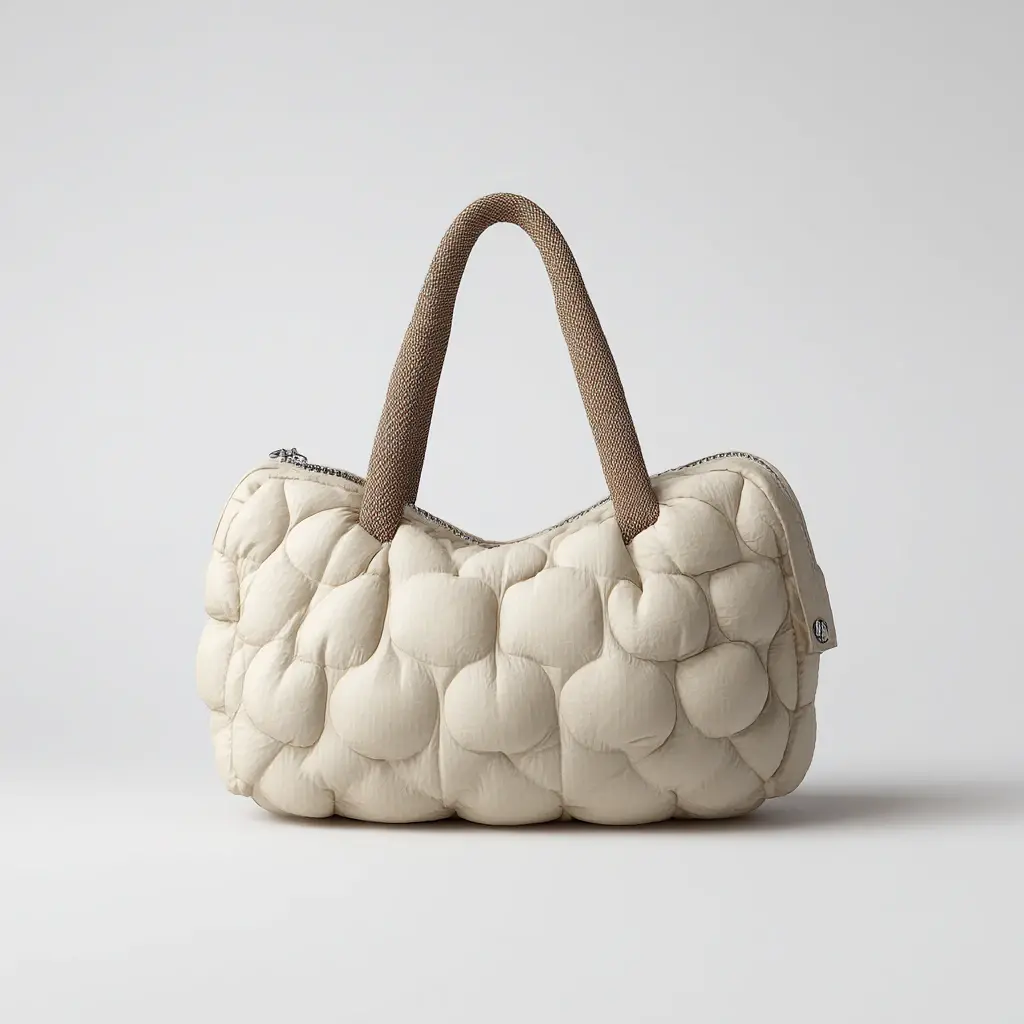
Timing is the cheapest lever available, and it is free. Sampling runs 6-10 working days, after which a sealed golden sample exists. Bulk then runs 35-50 days. That bulk window is when the photographs should be made: the sample is already approved, nothing about the product can change, and there is a month of dead time in which images can be shot, retouched, cropped into 1:1 and 4:5 ratios and loaded before a single carton is unpacked. FashionUnited has noted more than once that accessories labels which shoot during production rather than after it launch materially earlier on identical calendars.
The One Frame That Carries 60 Per Cent of the Click
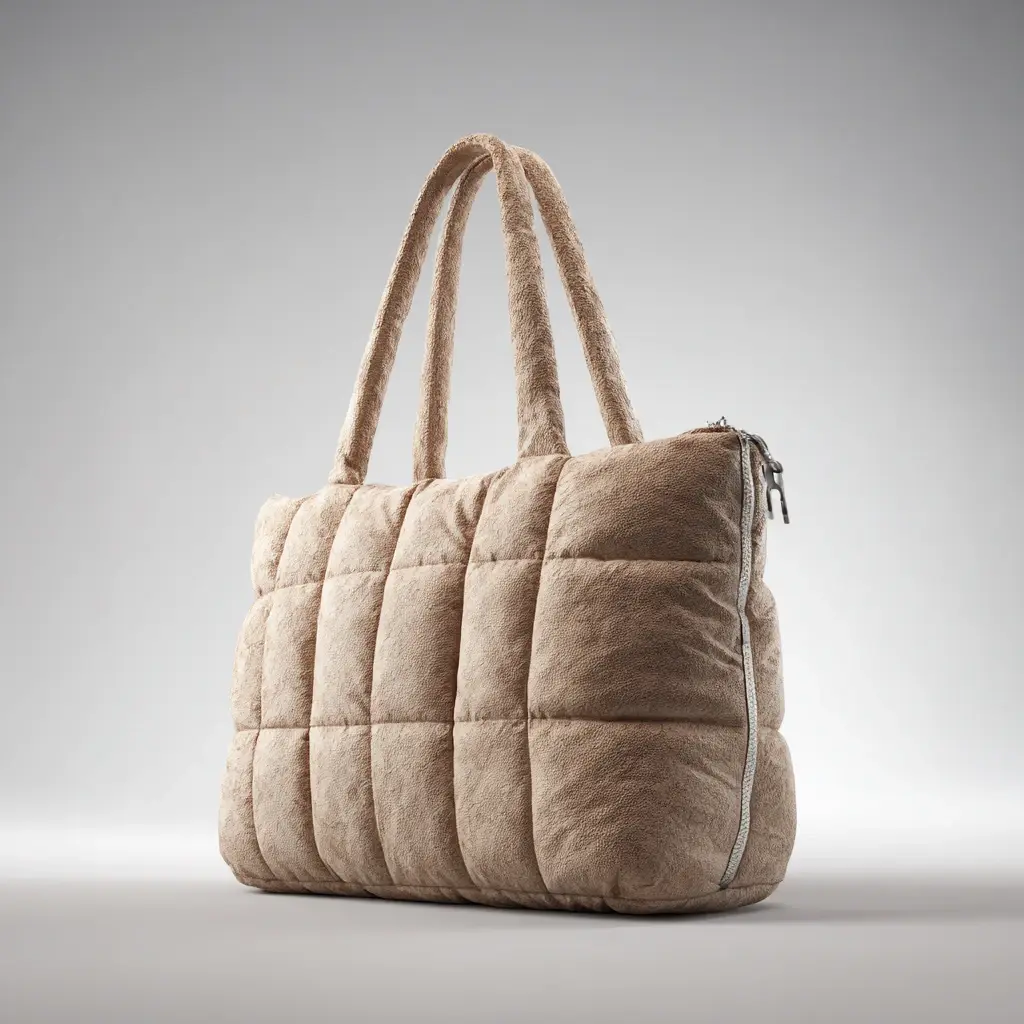
The hero frame is the thumbnail a customer sees in a grid of forty others, and in split tests it accounts for the majority of click variance on a listing. That means its job is not beauty, it is legibility at 300 pixels. Three variables decide legibility: silhouette separation from the background, contrast at the hardware, and whether the bag reads as the category the shopper is searching for. A structured tote shot three-quarter at 45 degrees with a 15-degree downward tilt satisfies all three; a flat lay on a linen background satisfies none of them at thumbnail size.
- Shoot three-quarter, not straight on. A 45-degree rotation shows depth, which is what distinguishes a structured body from a soft one in a small thumbnail.
- Tilt down 15 degrees. Straight-on eye level flattens the top edge and hides whether a closure sits proud or recessed.
- Fill the frame to 85 per cent. A bag occupying 60 per cent of a square thumbnail reads as a small bag regardless of its actual size.
- Keep the background pure. RGB 255/255/255 on marketplace listings, and a maximum of one soft shadow at 20-30 per cent opacity.
Notice that none of those four instructions are artistic. They are the reason a nine-frame set can be shot in half a day: the decisions are already made, and the photographer is executing a list rather than exploring. Brands that skip the list spend the booking on discussion and end up with 40 frames of which three are usable, which is a USD 450 way to buy three images.
Lighting Numbers: 5,500 K, CRI 95, and Why Both Matter
Colour temperature and colour rendering are different measurements and both are load-bearing. Colour temperature says how warm the light is; 5,500 K is the reference point that matches daylight and is what ASTM D1729 and ISO 3664 specify for visual appraisal of opaque materials. Colour rendering index says how completely the source reproduces the spectrum; a cheap panel at CRI 80 will make a tan leather look grey-green and a brass finish look like antique gold, and no amount of retouching recovers information the light never delivered.
| Setup | Typical spend | What it does to the product |
|---|---|---|
| Window light, north-facing, mid-morning | USD 0 | Good colour, uncontrollable across a 9-frame set, weather dependent |
| Two softboxes at 5,500 K, CRI 95 | USD 180-400 one-off | Repeatable, matches the appraisal reference, needs about 2 m of floor |
| Studio strobe with a 120 cm beauty dish | USD 450-900 per day | Best edge definition on hardware, overkill below about 12 frames |
| On-camera flash, direct | USD 0 | Blown highlights on plating, harsh shadow under the handle, avoid |
The middle row is the right answer for most first orders: two continuous panels at 5,500 K and CRI 95 or above, positioned at 45 degrees to the subject on both sides, with a white bounce card below the bag to lift the shadow under the base. That rig costs a few hundred US dollars once, shoots every season afterwards, and produces the same result in March as it does in November, which is the property that actually matters when a colourway is being approved against a reference.
File Specs That Keep a Page Under Three Seconds
Beautiful images that arrive slowly do not get seen. A product page carrying nine frames has a weight budget, and the practical ceiling is a three-second load on a mid-range mobile connection, which in round numbers means no single frame above 500 KB and a total page image payload under about 4 MB. That constraint pushes toward JPEG at quality 82-88 rather than PNG, sRGB rather than Adobe RGB, and 2,048 px on the long edge rather than the 6,000 px the camera can produce.
- Export at 2,048 px on the long edge for the hero and 1,600 px for supporting frames; enough for a zoom, light enough to load.
- Work and export in sRGB. Adobe RGB files embedded without conversion render desaturated in most browsers.
- JPEG quality 82-88. Below 80 the edge paint and stitch lines start to smear, which is exactly the detail being sold.
- Produce 1:1 and 4:5 crops of the hero in the same session; resizing later means reopening the raw file.
- Strip metadata but keep one filename convention: style-colourway-frame, so a swap does not require relinking the page.
Colour Accuracy: Getting Within Delta E 2.0 of the Sample
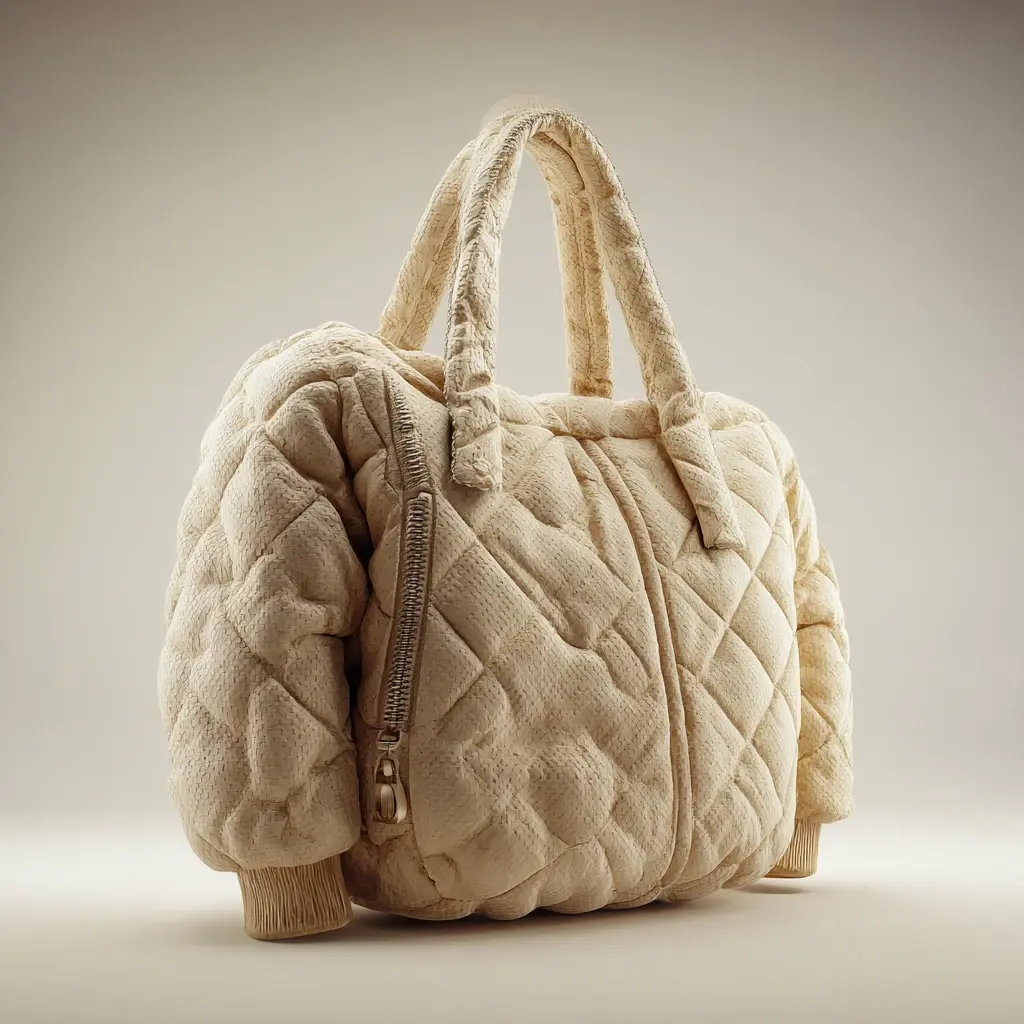
Colour mismatch is the single largest driver of returns in online accessories, and it is almost entirely preventable. The target is a Delta E under 2.0 between the physical unit and the published image, measured against the sealed golden sample rather than against memory. Practically, that means three things: balance the camera to the same 5,500 K the panels emit, shoot a grey card at the head of every set, and correct on a calibrated display rather than a laptop lid.
The trap is correcting by eye on an uncalibrated screen. A display running at native brightness with a blue cast will push a retoucher to warm the image, and the warm image then reads orange on the customer's phone. Calibrating a monitor to 120 cd/m² at 6,500 K and D65 white takes twenty minutes with a USB probe and removes the entire class of error. Where a customer-facing colour name is involved, the same reference discipline applies that governs inspection of dye-lot shading in production: one named reference, one light source, one numeric tolerance.
The Six Frames Every Style Needs, in Shooting Order
Order matters on a booked day because the bag is handled least at the start. Shoot clean-product frames first, detail frames second, and anything requiring handling or a model last. Six frames cover what a buyer needs to decide without visiting a shop, and the remaining three of the nine are colourway swaps and a packed shot.
- Hero, three-quarter at 45 degrees, 15-degree downward tilt, bag filled to hold its shape, handles dressed.
- Front elevation, straight on, both handles symmetrical, used to judge width and proportion.
- Interior opening, lining visible, pockets distinguishable, a light card inside to lift the shadow.
- Hardware close-up, 100 mm macro on the closure and one other fitting, showing plating and edge finish.
- Base, flat, showing feet if fitted and the panel construction at the corners.
- Scale shot, the bag beside a common object or worn, which is the frame that answers how big is it.
Filling the bag is a step most first-timers skip and it changes everything. An unstructured hobo photographed empty collapses into a shape nobody recognises; the same bag stuffed with acid-free tissue to about 70 per cent of its volume photographs as the product on the drawing. Budget twenty minutes per style for stuffing and dressing handles, and keep a box of tissue and a lint roller on the table, because leather dust and fingerprints are visible at 2,048 px in a way they are not to the naked eye.
Scale, Model and Context Shots Without a Studio Fee
Scale and context frames are where a small brand can look expensive without spending like one. The purpose of a scale shot is purely to answer a measurement question, and the cheapest way to do that is a fixed reference: the same object, at the same distance, in every set, so customers learn to read it across the catalogue. A context frame answers a different question — what does this look like in use — and for that a friend, a doorway and one hour of daylight is often better than a booked studio.
| Approach | Cost | When to use it |
|---|---|---|
| Fixed reference object in every frame | USD 0 | Catalogue consistency; works for tote, shoulder, crossbody |
| Worn shot, hands and torso only | USD 0-80 | Strap drop and carry position, which dimensions alone never explain |
| Booked model, half day | USD 250-600 | Capsule launches where one face carries the whole season |
| Dimension graphic overlay | USD 20-60 | Marketplace listings where the shopper is comparing numbers directly |
When choosing between those rows, think about which question the customer is actually asking. A shopper comparing two crossbody bags wants the strap drop and the body width, and a dimension graphic answers it in half a second. A shopper who has never heard of the label wants to know whether the bag looks like something a real person carries, and a worn shot answers that. Neither needs a studio, and confusing the two is how brands spend USD 600 to answer a question a graphic would have settled.
Retouching Rules That Do Not Become a Returns Problem
Retouching has one job: to make the photograph match the product. Everything beyond that is a future return. Dust, fingerprints, loose thread ends and the studio stand are all fair removals. Changing the colour, sharpening the grain into a smoother finish, filling a natural scar in full-grain leather, or straightening a line that the pattern cannot actually hold are all misrepresentations, and they surface as a complaint about the bag being not as described.
- Remove: dust, fingerprints, temporary creases from packing, background seams, support stands.
- Never change: colour, grain texture, hardware plating tone, stitch density, the shape of a pattern panel.
- Disclose rather than hide: natural grain variation and shade difference between panels are properties of the material, not defects.
- Keep the raw file with the same filename convention, so a customer complaint can be checked against the source image.
The last item has a compliance edge as well as an ethical one. REACH Annex XVII and California Prop 65 sit behind the material declarations, and a product page whose images imply a finish or coating different from what was declared is a problem that begins in the retouching suite. Keeping the raw frame and the material declaration in the same lot folder is the cheapest defence, and it is the same one-file-per-lot discipline that ISO 9001 record-keeping expects downstream.
Building a Shot List That Survives Three Colourways
A shot list is what turns a half-day booking into nine usable frames instead of forty exploratory ones, and it should live in the same folder as the specification. Write one line per frame naming the angle, the crop, the fill state and the file name, then repeat the list per colourway with only the colour token changing. The photographer works down the list; nobody discusses anything; the day finishes early.
The discipline compounds across a season. Once the list exists, the second style takes two thirds of the time the first one did, and the third takes half — because lighting stays set, the reference object stays put and the file names are predictable. That is what makes nine frames per style affordable at all on a first-order budget, and it is why the brand that writes the list before the booking consistently publishes more frames for less money than the brand that books a studio and hopes.
Two adjacent decisions shape what the list should contain. The budget tier you are launching at caps how many colourways can be shot at all, and the niches a small brand can realistically win decide whether the hero frame should sell material or silhouette. Both are worth settling before the shot list is written, because each one changes what the nine frames need to prove.
Finally, note where the photographs sit in the wider plan. They are the largest single asset produced between sample approval and launch, they are reused across every channel, and they are the only part of the programme a customer ever sees twice. Full programme context sits in how the private label handbag service is structured, and the launch-side timing question is handled in planning a launch timeline around sampling and bulk.
The Frame-to-Slot Map for a Nine-Frame Set
A nine-frame set is not nine images on a page, it is nine files with nine jobs, and each slot has a ratio, a pixel size and a weight ceiling. Deciding the destinations before the shoot is what keeps the page under three seconds on a mid-range phone, and it is also what stops the familiar problem of a beautiful 6,000-pixel hero being downsampled by the platform into something soft. The total payload budget is about 4 MB across the page, which at the sizes below leaves room to spare.
| Slot | Frame | Ratio | Long edge | Weight ceiling |
|---|---|---|---|---|
| Grid thumbnail | Hero | 1:1 | 1,200 px | 180 KB |
| Gallery position one | Hero | 4:5 | 2,048 px | 420 KB |
| Gallery two | Front elevation | 4:5 | 1,600 px | 300 KB |
| Gallery three | Interior opening | 4:5 | 1,600 px | 300 KB |
| Gallery four | Hardware macro | 4:5 | 1,600 px | 320 KB |
| Gallery five | Base and feet | 4:5 | 1,600 px | 300 KB |
| Gallery six | Scale shot | 4:5 | 1,600 px | 320 KB |
| Colourway swatches | Three swaps | 1:1 | 800 px | 90 KB each |
| Packed or lifestyle | One context frame | 16:9 | 1,600 px | 350 KB |
| All frames | Alt text, naming material and colour | - | - | 90-125 characters |
Ask for the sealed golden sample to be photographed during your 35-50 day bulk window, and the nine frames will be ready before the cartons land. Our validated partner factory Quanzhou Yingming Bags runs 7 production lines at about 200,000 pcs per month, with export experience since 2014. Get a Quote → /contact-quote/
Frequently Asked Questions
How much should a handbag brand budget for product photography?
Between USD 380 and 720 per style for a nine-frame set. A studio day costs USD 450-900 and delivers 60-90 retouched frames, putting the finished image at USD 22-40. Three colourways of one silhouette need nine frames plus colourway swaps. Shooting in-house with two 5,500 K panels costs a few hundred US dollars once and then only photographer time.
How many photographs does each handbag style need?
Nine is a workable standard: hero, front elevation, interior opening, hardware close-up, base, scale shot, worn shot, detail frame and a packed shot. Six of those carry the buying decision, and the remaining three answer handling questions. Below six frames, customers start asking questions in the inbox instead of finding answers on the page.
What colour temperature should handbag product photos use?
5,500 K, with a colour rendering index of 95 or above. That combination is the reference specified by ASTM D1729 and ISO 3664 for visual appraisal of opaque materials, which means the image and the physical sample are being judged under comparable conditions. A panel at CRI 80 will misrepresent tan leather and brass plating in ways retouching cannot repair.
When should the photographs be taken in the production timeline?
During the 35-50 day bulk run, against the sealed golden sample. Sampling finishes in 6-10 working days and produces the approved unit; thereafter nothing about the product can change, so there is a month of otherwise idle calendar in which images can be shot, retouched and loaded before cartons arrive.
What file size and resolution should product images be?
2,048 px on the long edge for the hero and 1,600 px for supporting frames, sRGB, JPEG at quality 82-88, and no single file above 500 KB. That keeps a nine-frame page under roughly 4 MB and inside a three-second mobile load. PNG is unnecessary, and Adobe RGB without conversion renders desaturated in most browsers.
How do you keep product colours accurate on screen?
Three habits: balance the camera to the same 5,500 K the panels emit, shoot a grey card at the head of every set, and correct on a display calibrated to 120 cd/m² at D65. Target a Delta E under 2.0 between the image and the sealed sample. Correcting by eye on an uncalibrated laptop is the usual cause of mismatch complaints.
Should the bag be stuffed for photography?
Yes, to about 70 per cent of its volume with acid-free tissue. An unstructured body photographed empty collapses into a shape nobody recognises and photographs smaller than it is. Allow twenty minutes per style for stuffing and dressing handles, and keep a lint roller on the table, because dust is visible at 2,048 px even when the eye misses it.
Is a model necessary for handbag photography?
Not for a first launch. A worn shot showing hands and torso answers the strap-drop and carry-position questions for USD 0-80, and a fixed reference object answers the size question for nothing. A booked model at USD 250-600 makes sense for a capsule where one face carries a whole season, not for a nine-frame product set.
What retouching is acceptable on handbag product photos?
Remove dust, fingerprints, packing creases, background seams and support stands. Never change colour, grain texture, hardware plating tone, stitch density or the shape of a pattern panel. Changing those converts a photograph into a misrepresentation and it returns as a not-as-described complaint, often with a regulatory edge where material declarations are involved.
Why do product photos get thrown away and reshot?
Three causes cover almost every case: the sample photographed was not the approved revision, the hardware finish reads differently under shop light than under studio light, or the published image is two shades darker than the bag. Photographing revision numbers with the bags and keeping the shot list beside the specification removes the first and third.
Do marketplace and own-store images need to differ?
Yes, in two respects. Marketplace grids usually require a pure white background at RGB 255/255/255 and reward a legible silhouette at thumbnail size. An own-store page can carry mood and context, and it should, because the shopper already chose to arrive. Export both from the same session as 1:1 and 4:5 crops.
How does photography connect to the wider launch plan?
It is the largest asset produced between sample approval and launch and the only one reused across every channel, including paid social and influencer seeding. Because it depends on the sealed sample and runs in parallel with bulk, it belongs on the critical path rather than after it, which is why the shot list is written in the same week as the specification.
People Also Ask
What is the cheapest way to photograph handbags well?
Two continuous panels at 5,500 K and CRI 95, positioned 45 degrees on both sides, with a white bounce card under the bag and a grey card at the head of each set. That rig costs a few hundred US dollars once, works in any room with about two metres of floor, and returns identical results season after season, which is what matters when approving a colourway.
Why does the hero image matter more than the rest?
Because it is the thumbnail in a grid of forty competitors and it carries 55-70 per cent of the click variance. If it fails, the other eight frames are never seen. Legibility at 300 pixels depends on silhouette separation, hardware contrast and category recognition, which a 45-degree three-quarter view with a 15-degree tilt delivers and a flat lay does not.
How big should handbag product images be for zoom?
2,048 px on the long edge is the practical floor for a usable zoom and 3,000 px is comfortable. Larger files add weight without adding perceived quality on a phone screen, and anything above about 500 KB per frame pushes a nine-image page past a three-second mobile load, which costs more conversions than the extra resolution earns.
Can I reuse the same photographs across colourways?
Partly. Silhouette, interior and base frames can be reshot per colourway in minutes because lighting and framing stay set, which is the main saving in a nine-frame list. The hero, hardware close-up and any worn shot should be genuinely reshot, because plating tone and body colour are exactly what changes and exactly what the customer is choosing between.
Sources and further reading
Every figure on this page is either our own programme data or attributed below. Open the originals before you write them into a specification.
- SATRA — technical services for leather, footwear and accessoriesSATRA Independent leather, hardware and accessories testing protocols.
- Leather Working Group — environmental auditing for tanneriesLeather Working Group Environmental audit protocol for tanneries and leather traceability.
- Accessories Council — accessories industry bodyAccessories Council Accessories industry body tracking handbag category direction.