Crossbody Bag Dimensions and Wear Positions Explained
What dimensions should a crossbody bag be, and where should it actually sit on the body? The wear position decides the numbers, not the other way round. A bag carried at high hip wants a 480-540 mm strap drop, a 200-230 mm body width and a 60-75 mm gusset; the same body dropped to mid-thigh needs 560-600 mm of drop and reads about 15 per cent smaller in a listing photograph. Strap width then follows the load, at 20, 25 or 32 mm, and the interior follows the phone, at roughly 95 by 165 mm of pocket. This page works through the six questions a buyer actually faces in order, using AQL 2.5 inspection under ISO 2859-1 and a 6-10 working days of sampling window at MOQ 500 pcs per style / colourway.
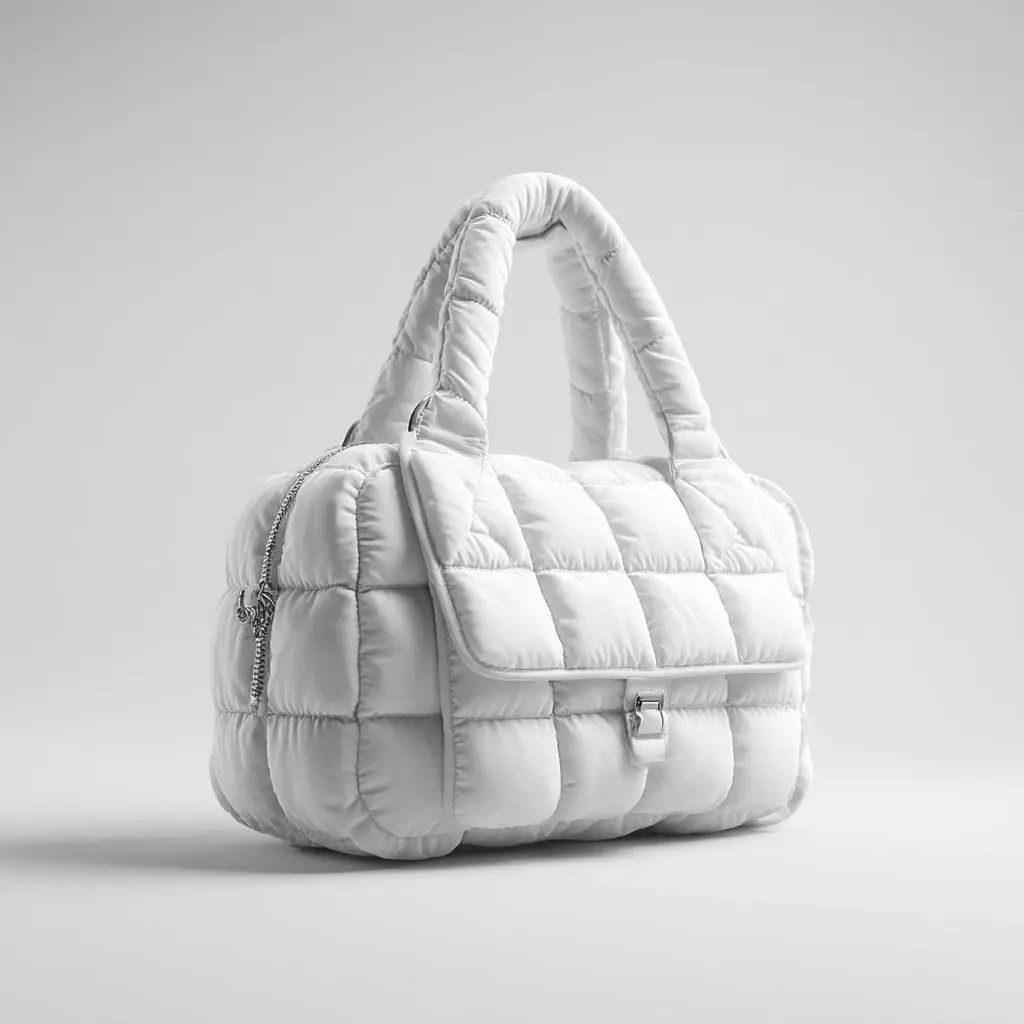
- What the Wear Position Decides Before Any Dimension
- How Much Volume Fits at Hip, Waist and Chest
- Which Body Dimensions Set the Footprint
- What Drop Range Clears a Winter Coat
- How Wide the Strap Should Be at Three Loads
- Where the Phone Pocket Belongs Inside 2.2 Litres
- Which Numbers Change for a Tall or Short Wearer
- How to Write Wear Position Into a Tech Pack
- What Fails First When the Drop Is Wrong
- Running a Five-Wearer Fit Panel
- From Drop to Strap: The Pattern Arithmetic
What dimensions should a crossbody bag be, and where should it actually sit on the body? The wear position decides the numbers, not the other way round. A bag carried at high hip wants a 480-540 mm strap drop, a 200-230 mm body width and a 60-75 mm gusset; the same body dropped to mid-thigh needs 560-600 mm of drop and reads about 15 per cent smaller in a listing photograph. Strap width then follows the load, at 20, 25 or 32 mm, and the interior follows the phone, at roughly 95 by 165 mm of pocket. This page works through the six questions a buyer actually faces in order, using AQL 2.5 inspection under ISO 2859-1 and a 6-10 working days of sampling window at MOQ 500 pcs per style / colourway.
The five numbers a crossbody brief is built from
What the Wear Position Decides Before Any Dimension
A crossbody bag lives in one of three zones, and each zone fixes a different set of numbers. At high hip the base of the body sits on the iliac crest, roughly 900-960 mm off the floor on an average adult. At mid hip it sits about 80 mm lower and starts to interfere with a swinging arm. At mid thigh the base drops to around 700-760 mm and the bag becomes a fashion statement rather than a commuting tool. Deciding the zone first is what stops a sampling round from becoming three sampling rounds.
The measurement that translates a zone into a number is the drop: the distance from the top of the strap, over the shoulder, to the point where the strap meets the body. A 1680 mm wearer with a high-hip intention needs 480-540 mm. Buyers who brief by body size alone almost always land short, because body length and torso length are not the same thing, and a 55 mm error puts the bag into the armpit where nobody wants it.
| Wear zone | Strap drop | Body width | Gusset | Usable volume |
|---|---|---|---|---|
| Chest or waist, sling style | 380-440 mm | 180-210 mm | 40-55 mm | 0.9-1.4 litres |
| High hip, everyday | 480-540 mm | 200-230 mm | 60-75 mm | 1.8-2.2 litres |
| Mid hip, commuting | 510-560 mm | 210-240 mm | 65-80 mm | 2.2-2.6 litres |
| Mid thigh, statement | 560-600 mm | 190-220 mm | 55-70 mm | 1.4-1.9 litres |
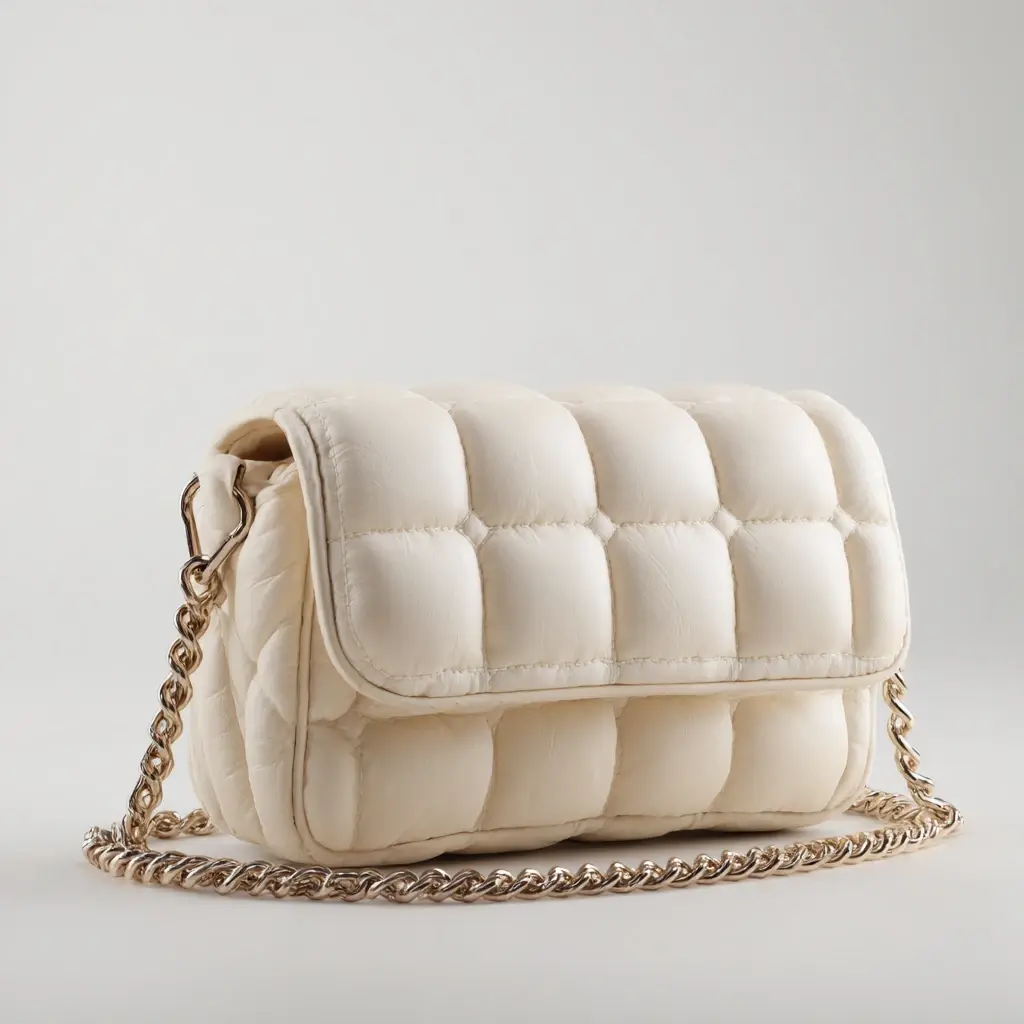
How Much Volume Fits at Hip, Waist and Chest
Nominal volume is a marketing number; usable volume is what a customer can actually put in the bag and still close it. On a lined crossbody with a structured base, roughly 12 to 15 per cent of the internal box is consumed by lining, interlining, pocket bags and the curve of the gusset. A body measuring 220 by 160 by 65 mm is nominally 2.29 litres and behaves like 1.95 litres. Writing the usable figure into the specification keeps the sampling room and the listing page telling the same story.
The practical bands are narrow because the contents are known. At chest or waist height, 0.9-1.4 litres carries a phone, a cardholder, keys and a folded scarf. At high hip, 1.8-2.2 litres adds a compact umbrella or a 350 ml bottle laid flat. Above 2.6 litres the bag stops behaving like a crossbody: the load shifts the strap across the chest and the wearer starts pushing it back every few steps, which is the single most common complaint in reviews of oversized compact bags.
Which Body Dimensions Set the Footprint
Three dimensions do most of the work: width, height and gusset. A width-to-height ratio near 1.35 to 1 reads as a crossbody rather than a small tote, and it also films better because the front panel holds a rectangular proportion inside a square frame. The gusset is the dimension buyers under-specify. At 45 mm the bag cannot take a phone in a case; at 60-75 mm it can, and the body still folds flat enough to pack 60 units per carton.
- Width: 200-230 mm at the opening, measured inside the seam, tolerance plus or minus 3 mm.
- Height: 145-175 mm on an everyday body, with the base panel excluded from the measurement.
- Gusset: 60-75 mm at the base, tapering no more than 8 mm toward the top so the zip does not pucker.
- Base: a 5 mm reinforced board or a 1.2 mm bonded leather base, because an unsupported base sags within a month.
- Front panel flat area: at least 120 by 80 mm if a logo is debossed, otherwise the mark distorts on the curve.
Tolerance language matters as much as the numbers. A body specified at 220 mm with no tolerance is a preference, and an inspector cannot fail a preference. The workable form is a nominal with a band and a measurement condition: 220 mm plus or minus 3 mm, measured across the opening seam on a unit relaxed for 24 hours at 23 degrees Celsius, using a steel rule rather than a tape. Leather that came off a cold container measures 1.5 to 2 per cent small until it relaxes, which on a 220 mm body is a 4 mm argument over nothing.
What Drop Range Clears a Winter Coat
A drop that works over a shirt fails over a coat, and half of all northern-hemisphere returns on crossbody styles trace back to that single omission. The correction is arithmetic: add 40-60 mm for a wool coat, 25-35 mm for a padded jacket, and 15 mm for a knit with a rolled collar. A 520 mm summer drop becomes 575 mm in February, so a fixed strap is a seasonal product whether the brand intended it or not.
Two mechanisms solve it without changing the pattern. The cheaper one is a slider with 300 mm of travel, which covers the coat band and costs very little in hardware. The stronger one is a 3-position stud or grommet set at 480, 520 and 570 mm, which holds a fixed silhouette at each setting and survives a 12 kg static pull far better than a slider at the same price. Both need the adjuster position written into the tech pack, including which edge the measurement is taken from.
How Wide the Strap Should Be at Three Loads
Strap width is a comfort decision expressed as a millimetre. Below 1.2 kg total carried weight, a 20 mm strap in 1.6 mm bridle leather is comfortable for two hours and disappears under a jacket. Between 1.2 and 2.0 kg, 25 mm is the practical floor, because a narrower strap concentrates the same load into a band that leaves a mark on the shoulder. Above 2.0 kg, 32 mm or a 38 mm webbing with a leather facing is the only version customers describe as comfortable after a full day.
Construction follows width. A 25 mm strap sewn with 10 mm stitch length, 1.0 mm bonded polyester thread and an 18 gauge needle holds its edge without puckering; the same settings on a 20 mm strap crowd the edge and cause the leather to cup. Edge treatment matters more than most buyers expect, because the strap edge is the part that rubs against a coat 8,000 times a year, and a painted edge that cracks at minus 5 degrees is a warranty claim with a photograph attached.
| Carried load | Strap width | Best material | Weak point |
|---|---|---|---|
| Under 1.2 kg | 20 mm | 1.6 mm bridle leather | Edge paint cracking in cold |
| 1.2-2.0 kg | 25 mm | 1.8 mm leather over 20 mm webbing | Stitch crowding at the curve |
| Over 2.0 kg | 32-38 mm | Webbing with leather facing | Hardware slot width under 34 mm |
| Adjustable version | 25 mm | Leather with a 300 mm slider | Slider body marking the strap face |
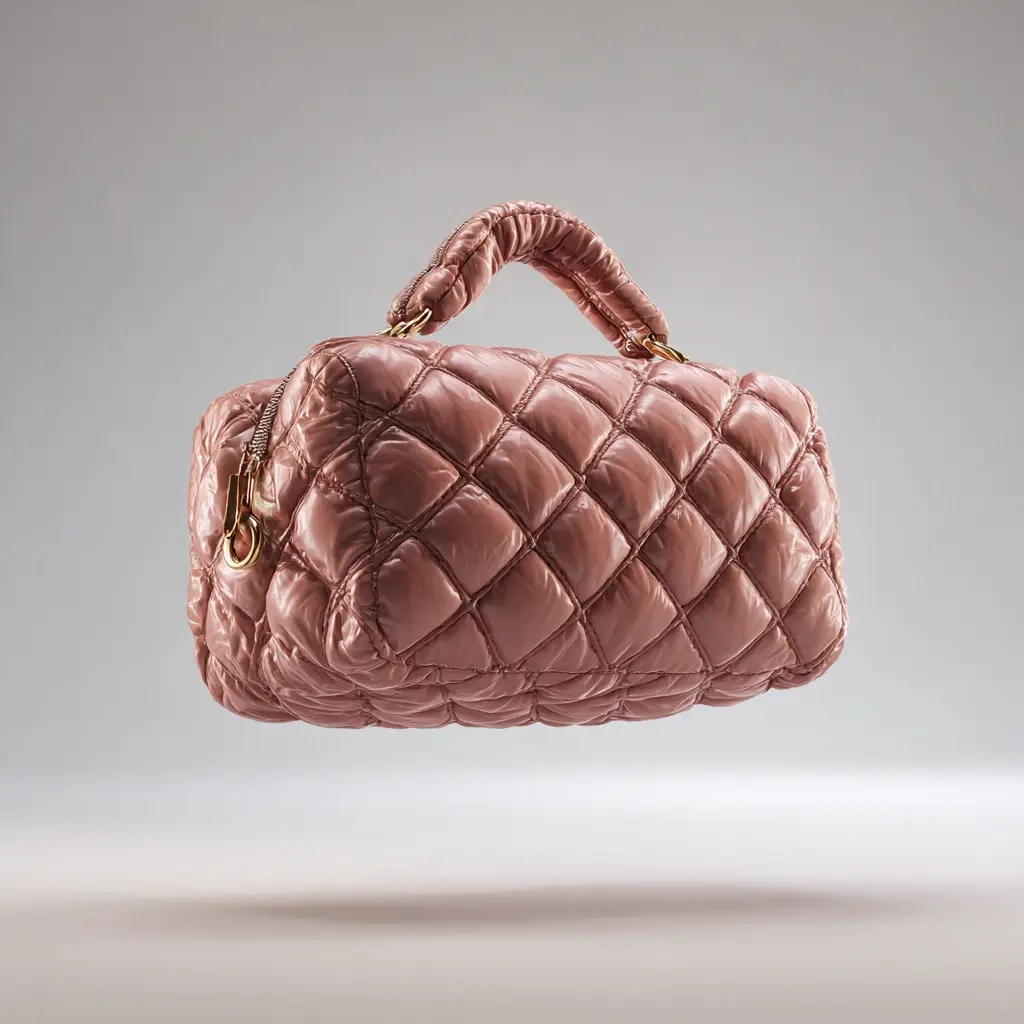
Where the Phone Pocket Belongs Inside 2.2 Litres
A phone pocket is a specification, not a feature bullet. The working dimensions are 95 by 165 mm for the pocket body plus 12 mm of depth allowance for a cased phone, which means the pocket panel is cut at 100 by 172 mm before seam allowance. Placing it on the back wall, 30 mm below the top edge, keeps the weight against the body and stops the bag from rotating forward when the wearer walks. On the front wall the same pocket pulls the silhouette out of shape within a season.
The pocket mouth needs 8 mm of clearance from the zip tape, or the phone catches every time the bag is opened one-handed, which is how most people open a crossbody. Lining choice affects it too: a 210D polyester lining slides and costs little, while a 1.0 mm microfibre holds the phone more securely and adds a softness that buyers notice in a showroom. Whichever is chosen, the pocket depth and position belong on the pattern drawing, not in a message thread.
Which Numbers Change for a Tall or Short Wearer
Body height moves the drop requirement by roughly 70-90 mm between a 1500 mm and an 1800 mm wearer, but torso proportion moves it further than height alone. A short-waisted wearer at 1700 mm can need the same drop as a long-waisted wearer at 1580 mm. That is why fit panels beat size charts: five wearers spanning 1520 to 1820 mm, each photographed front and side with the bag loaded to its rated weight, will settle a drop band faster than any spreadsheet.
The commercial answer is rarely more sizes. One body with an adjustable strap covers about 80 per cent of the adult population, and a second strap length in the same colourway covers the rest at minimal tooling cost, because only the strap is cut longer. Extending the strap by 60 mm adds roughly 0.4 square feet of material per unit and no new hardware, which is why it is the cheapest range extension available on an existing style.
How to Write Wear Position Into a Tech Pack
The tech pack needs five fields that most briefs leave out, and adding them takes about twenty minutes. Without them, the sampling room makes reasonable assumptions, and reasonable assumptions are what produce a third sample round after a 6-10 working day window has already been spent twice.
- Name the wear zone in words, not just millimetres: high hip, mid hip or mid thigh.
- State the drop at three points on the slider, for example 480, 520 and 570 mm, with a plus or minus 5 mm band.
- State the body base height from the floor for the reference wearer, because that is what the customer sees in a mirror.
- State the strap width, the thread size, the stitch length and the edge finish in one line so they are built together.
- State the acceptable load, in kilograms, and the static pull test that proves the attachment.
Then tie it to inspection. Under ISO 2859-1 General Inspection Level II, a 500-piece lot at AQL 2.5 means 80 units drawn and a decision at accept 5 and reject 6, with criticals held at accept zero. Drop and width should be measured on five units per lot with the tape relaxed, and photographed against a rule so the report carries evidence rather than an opinion. Buyers comparing categories often want the same rigour applied to the wider family, which is where the tote sizing tolerances that hold up in production become useful reading next to this page, and the leather handbag category reference carries the figure sets for the rest of the family.
What Fails First When the Drop Is Wrong
The first failure is not structural, it is behavioural. A bag that sits 40 mm too high gets pushed down constantly, and the friction lands on the strap edge and the side panel at the hip. Abrasion testing to ASTM D4966 at 3,000 cycles will show the difference between a coated edge and a burnished one before a customer does, and the cost difference between those two finishes is small compared with the cost of a returns rate that climbs from 4 to 9 per cent.
The second failure is hardware fatigue. A drop that is too long puts the adjuster at the shoulder rather than the chest, where it takes the full load and works loose; a drop that is too short puts the bag under the arm, where the zip pull abrades the sleeve lining. Both show up in the same place in an inspection report: hardware function and attachment integrity. The category-level view of why this shape dominates online sales sits in why crossbody styles keep winning ecommerce share, and the boundary between this shape and a sling is drawn in sling and crossbody compared as buying categories.
Accessories Council sourcing panels make the same point in a different vocabulary: fit problems are read by customers as quality problems. A bag that hangs wrong is described in reviews as flimsy, cheap or badly made, even when the leather, the stitching and the hardware all meet specification. Getting the drop right is therefore not a styling refinement; it is the cheapest quality improvement available before a single unit is cut.
Running a Five-Wearer Fit Panel
A size chart settles an argument between two people; a fit panel settles it against bodies. Five wearers spanning 1520 to 1820 mm, each photographed front and side with the bag loaded to its rated weight, will produce a drop band in an afternoon. The protocol is four steps, and the only equipment needed is a tape, a rule, a set of sample weights and a camera.
- Load the bag to its stated capacity. A crossbody rated for 2.0 kg should be tested loaded, because an empty bag hangs differently.
- Photograph front and side at each of the three slider positions, with a rule in frame and the tape relaxed.
- Record three readings per wearer: the drop used, the base height from the floor, and whether the wearer touched the bag during a two-minute walk.
- Take the band, not the average. The range between the shortest and tallest comfortable setting is the drop band to specify.
From Drop to Strap: The Pattern Arithmetic
The drop is a wearing measurement and the strap is a cut dimension, and the translation between them is where sampling rounds are lost. The cut length is not twice the drop: it also carries the hardware, the turn-back at each anchor and the adjustment range. State all four and the first sample lands inside tolerance.
| Component | Figure | Note |
|---|---|---|
| Drop, reference wearer | 520 mm | From the top edge to the apex, tape relaxed |
| Doubled drop | 1040 mm | The drop is a single-side measurement |
| Hardware allowance | 60-80 mm | Two rings or a slider body plus two attachment loops |
| Turn-back at each anchor | 25-30 mm each end | Stitched return inside the anchor |
| Adjustment range | 300 mm of slider travel | Covers the winter coat band |
| Cut strap length | about 1450-1480 mm | Sum of the above, plus or minus 3 mm |
Send the wear zone and the reference wearer height, and a written dimension set with tolerances comes back before sampling starts. Get a Quote → /contact-quote/
Frequently Asked Questions
What is the standard strap drop for a crossbody bag?
Between 480 and 540 mm for a bag worn at high hip on an average adult, and 560 to 600 mm when the body is meant to hang at mid thigh. The variable that actually decides it is torso length rather than total height, which is why a fit panel of five wearers settles the band faster than any size chart.
How do I convert a wear position into pattern dimensions?
Start from the height of the body base off the floor for the reference wearer, then work back over the shoulder to a drop figure. At high hip the base sits near 900-960 mm, which on a 1680 mm wearer resolves to roughly 500 mm of drop once shoulder width and body depth are accounted for.
How much should a crossbody bag hold in litres?
Between 1.8 and 2.2 litres of usable volume covers an everyday carry: phone, cardholder, keys, a compact umbrella or a 350 ml bottle laid flat. Chest-worn slings sit lower, at 0.9-1.4 litres. Above 2.6 litres the load starts shifting the strap across the chest and customers push the bag back constantly.
Why is usable volume smaller than the dimensions suggest?
Lining, interlining, pocket bags and the curve of the gusset consume roughly 12 to 15 per cent of the internal box on a structured body. A 220 by 160 by 65 mm interior calculates to 2.29 litres and behaves like 1.95 litres. Publishing the usable figure keeps the listing page and the sampling room consistent.
What gusset depth does a crossbody need for a phone?
A 60-75 mm gusset at the base is the practical range once the phone is in a case. At 45 mm the bag closes on the phone and the zip pulls at the seam tape; above 80 mm the body stops packing flat and the carton count per unit of freight rises noticeably.
Should the crossbody strap be adjustable?
Usually yes, and the reason is seasonal rather than anatomical. A fixed strap sized for summer clothing sits too high over a wool coat, so 300 mm of slider travel or three stud positions at 480, 520 and 570 mm converts one style into a year-round product without changing the pattern.
How wide should a crossbody strap be?
Twenty millimetres works below about 1.2 kg of carried weight, 25 mm covers 1.2 to 2.0 kg, and 32 to 38 mm is the comfortable choice above 2.0 kg. Width also changes construction: a 25 mm strap sewn at 10 mm stitch length keeps a clean edge, while a 20 mm strap with the same settings cups.
Where should the interior phone pocket sit?
On the back wall, about 30 mm below the top edge, with a mouth that clears the zip tape by 8 mm. That position keeps the phone's weight against the body so the bag does not rotate forward while walking, and the clearance is what allows one-handed access, which is how most people open a crossbody.
How much does a longer strap cost to add as a second option?
Very little. Extending a strap by 60 mm consumes roughly 0.4 square feet of additional material and introduces no new hardware or tooling. On a 500-piece run it is the cheapest range extension available, because the body, the lining and the closure all stay exactly as they are.
What tolerance should a crossbody dimension carry?
Plus or minus 3 mm on body width and height, plus or minus 5 mm on strap drop, and plus or minus 4 mm on handle height where one exists. Each band needs a measurement condition attached, typically 24 hours relaxed at 23 degrees Celsius, because leather off a cold container measures 1.5 to 2 per cent small.
What fails first when the drop is wrong?
Behaviour first, then materials. A bag hanging 40 mm too high is constantly pushed down, which abrades the strap edge and the hip-side panel; a bag hanging too low puts the adjuster at the shoulder where it takes full load and works loose. Both surface as hardware and attachment findings at inspection.
How is drop checked during a pre-shipment inspection?
Measure five units per lot with the strap relaxed and the bag unloaded, photograph each against a steel rule, and record the three slider positions separately. On a 500-piece lot under ISO 2859-1 Level II at AQL 2.5, 80 units are drawn for the general check, with criticals held at accept zero.
People Also Ask
Does a crossbody bag size depend on the wearer's height?
Partly. Height moves the drop requirement by about 70-90 mm between a 1500 mm and an 1800 mm wearer, but torso proportion moves it further. A short-waisted wearer at 1700 mm may need the same drop as a long-waisted wearer at 1580 mm, which is why fit panels of real wearers beat size charts.
What is the ideal crossbody bag width?
Two hundred to 230 mm across the opening for an everyday bag, paired with 145-175 mm of height. That ratio, close to 1.35 to 1, reads as a crossbody rather than a small tote and holds a rectangular front panel inside a square photograph, which is what makes the style easy to merchandise online.
Can one crossbody pattern serve both hip and thigh wear positions?
Yes, with an adjustable strap rather than two patterns. A single 25 mm strap with 300 mm of slider travel covers both bands, and a three-position stud set at 480, 520 and 570 mm holds a fixed silhouette at each setting. Only the strap is cut longer, so tooling and MOQ 500 pcs per colourway stay unchanged.
Why do customers describe a well-made bag as flimsy?
Usually because it hangs wrong. A bag that sits too high or swings too low is pushed, caught and dragged all day, and customers translate that behaviour into a judgement about construction. Fit problems get written up as quality problems even when leather thickness, stitching and hardware all meet the written specification.
Sources and further reading
Every figure on this page is either our own programme data or attributed below. Open the originals before you write them into a specification.
- SATRA — technical services for leather, footwear and accessoriesSATRA Independent leather, hardware and accessories testing protocols.
- Accessories Council — accessories industry bodyAccessories Council Accessories industry body tracking handbag category direction.
- World Intellectual Property OrganizationWIPO International trademark and design registration before tooling starts.