Bucket Bags: Sizing Styling and Buyer Expectations
Bucket bags sell when top diameter, base diameter and height are specified together - 22 cm / 18 cm / 26 cm is the combination most 2026 buyers call everyday size. At 500 pcs per style and colourway the same shape lands near USD 12.60 FOB Xiamen: 5.90 for leather and trim, 1.40 for hardware, 3.10 for cutting and closing, 1.10 for lining and packing, 1.10 for overhead and inspection. Sampling takes 6-10 working days, bulk production 35-50 days, and the shipment is released at AQL 2.5 (ISO 2859-1).
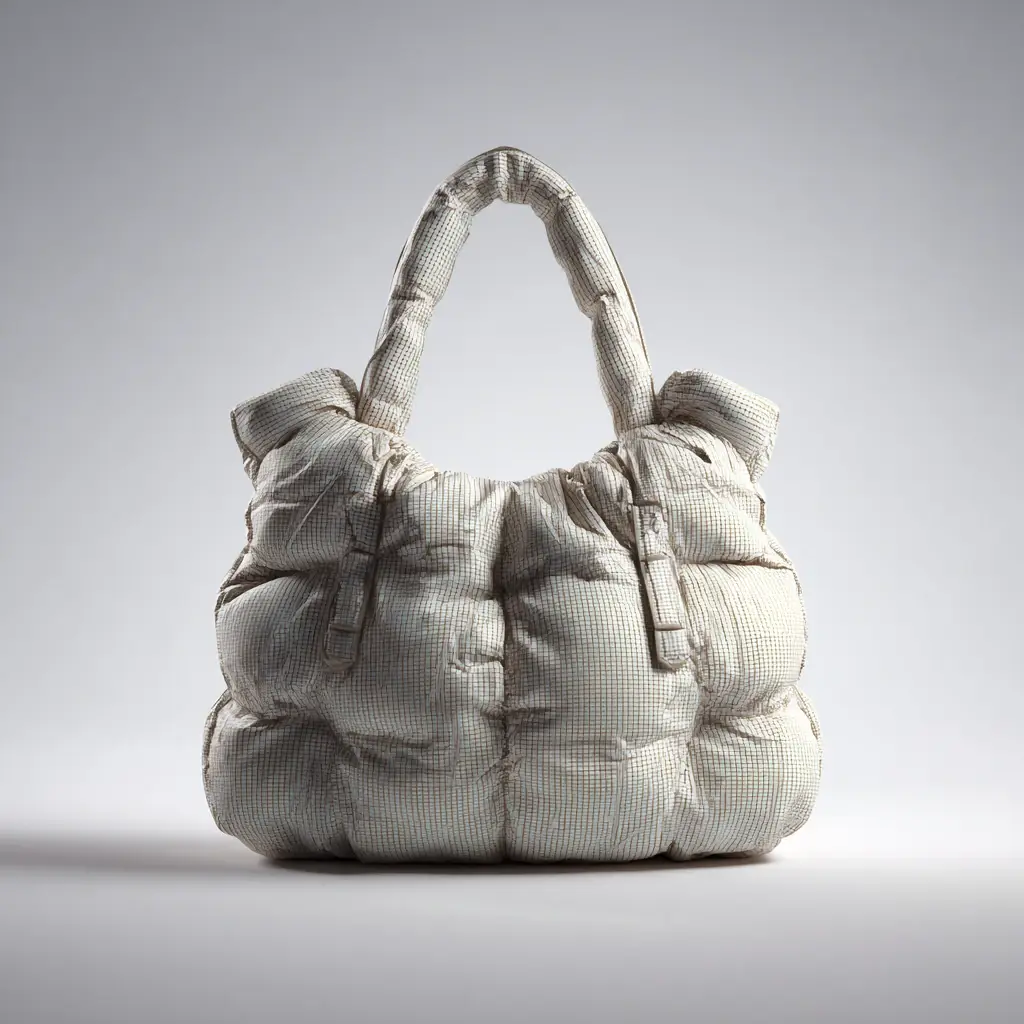
- Where a 500-piece bucket bag budget actually goes
- Drawstring, cinch or zip: what the closure adds
- The three diameters that decide everything else
- Base construction: flat, round or reinforced
- Drop length, strap width and the comfort band
- Lining, dust bag and the hidden per-unit costs
- Lead time arithmetic from sample to bulk
- Colourway splits and the 500-piece floor
- What buyers expect a bucket bag to hold
- Spec sheet fields to send before quoting
- Six Measurements to Read on the First Fifty Units
Bucket bags sell when top diameter, base diameter and height are specified together - 22 cm / 18 cm / 26 cm is the combination most 2026 buyers call everyday size. At 500 pcs per style and colourway the same shape lands near USD 12.60 FOB Xiamen: 5.90 for leather and trim, 1.40 for hardware, 3.10 for cutting and closing, 1.10 for lining and packing, 1.10 for overhead and inspection. Sampling takes 6-10 working days, bulk production 35-50 days, and the shipment is released at AQL 2.5 (ISO 2859-1).
Bucket bag programme at a glance
Where a 500-piece bucket bag budget actually goes
A bucket bag is one of the few silhouettes where geometry, not decoration, drives the price. The body is a single curved panel closed with one vertical seam, the bottom is a separate disc, and the mouth is finished with a tunnel and a drawstring. That is five operations instead of the twelve to fourteen a structured satchel needs, which is why the shape stays affordable even in full-grain leather. On a 500-piece run of a 22 cm top, 18 cm base and 26 cm height body cut from 0.9 mm full-grain cow leather with a 1.4 mm base panel, a production partner will typically quote the split below on FOB Xiamen terms. Treat it as a structure to negotiate against rather than as a published price list.
| Cost line | Per unit (USD) | What moves the number |
|---|---|---|
| Leather and trim | 5.90 | Panel yield, 0.9 mm versus 1.1 mm substance |
| Hardware | 1.40 | Grommet count, plating hours, salt spray class |
| Cutting and closing | 3.10 | Seam count, tunnel height, edge finish |
| Lining and packing | 1.10 | 210D versus 190T, dust bag, carton count |
| Overhead and inspection | 1.10 | AQL level, third-party visit, documentation |
Two lines react to design choices faster than the others. Leather moves with yield: a circular base disc and a tall curved body leave more off-cuts than a rectangular tote panel, so a bucket bag consumes roughly 8 to 12 percent more material at the same finished height. Hardware moves with grommet count and plating class, and that line is usually where a buyer can trade specification for margin without the customer noticing.
Drawstring, cinch or zip: what the closure adds
The mouth is the whole personality of a bucket bag. A drawstring reads relaxed and costs the least, a leather cinch with a sliding keeper reads more crafted, and a full zip reads secure but changes the silhouette enough that many buyers stop calling it a bucket bag at all. The cost difference between the first two is small; the difference in returned goods is not. An open drawstring mouth on a soft body lets contents spill in transit, and spillage is one of the quieter drivers of bad reviews on lightweight silhouettes.
- Drawstring with a 25 mm tunnel: cheapest to build, needs a 4 mm cord and a cord lock rated to 3,000 g pull to survive daily use.
- Leather cinch with a keeper: adds about 0.55 USD per unit, adds two operations, and gives the mouth a shape that photographs well.
- Full zip across the mouth: adds roughly 1.30 USD per unit and stiffens the top edge, which kills the slouch most buyers want.
- Magnetic tab over a drawstring: adds 0.40 USD, solves the gaping-mouth complaint, and keeps the soft top line intact.
The recommended build for a first order is a drawstring tunnel plus a magnetic tab. It keeps the relaxed top line that defines the category, costs around 0.40 USD more than a plain cord, and removes the single most common fit complaint. Hardware on that tab should be specified by plating class and by cycle count, not by colour name alone, because a tab that loses its plating in month three becomes a return rather than a review. A 24-hour salt spray floor is the sensible minimum for a bag in this price band, and the plating certificate should be attached to the sample approval form.
The three diameters that decide everything else
Sizing a bucket bag is a three-number problem, and most failed first orders get two of the three wrong. Top diameter sets how the mouth looks in a photograph. Base diameter sets whether the bag stands up on a shelf and how much it actually carries. Height sets whether the bag looks like a bucket or like a short tote. Quote all three in the tech pack and the sample comes back right the first time; quote only height and the sample will stand or slouch by accident.
| Use case | Top / base / height (cm) | Approx. volume | Strap drop |
|---|---|---|---|
| Compact city carry | 18 / 15 / 21 | 4.5 litres | 52 cm |
| Everyday default | 22 / 18 / 26 | 8.5 litres | 55 cm |
| Weekend and travel | 26 / 21 / 30 | 13 litres | 58 cm |
The everyday default at 22 / 18 / 26 is the size most private label programmes reorder, because it clears a 1-litre bottle, a large phone and a small leather goods case without looking oversized on a 165 cm frame. The compact size sells better in Japan and Korea and worse in the United States, where 18 cm reads as too small for daily use. The weekend size photographs well and ships badly, since a 26 cm top pushes the carton count down and lifts freight per unit.
Base construction: flat, round or reinforced
Ask three buyers what they dislike about bucket bags and at least one will say the base. A soft body with an unreinforced disc collapses into a puddle the moment it is set down, and a collapsed base is the most photographed defect in the category. The fix is cheap and it is specified in millimetres, not adjectives.
- Single leather disc at 1.4 mm: the lightest option, stands when full, slumps when half empty.
- Leather disc plus a 1.2 mm fibreboard insert: adds about 0.25 USD, holds shape empty, adds 60 g.
- Disc plus four metal feet: adds about 0.70 USD, protects the leather on wet surfaces, and reads premium in listing photography.
- Turned and stitched base seam with a 10 mm stitch length: distributes load and stops the seam creeping under weight.
For a bag in the USD 12.60 band, the fibreboard insert is the best value in the whole build. It costs a quarter of a dollar, holds the shape on an empty shelf, and prevents the returns that come from a bag arriving looking deflated. Feet are worth it only when the retail price clears roughly USD 89, because below that point the added hardware cost eats the margin that made the category attractive in the first place.
Drop length, strap width and the comfort band
Strap drop is the measurement buyers complain about most and specify least. A bucket bag sits at the hip, not under the arm, so the drop has to clear the widest point of the body plus the bag height itself. In practice that puts the usable band between 52 cm and 58 cm for an adjustable strap, with 55 cm as the default that fits the widest share of frames. A fixed strap at 50 cm looks tidy on a mannequin and is too short on a customer wearing a winter coat, which is why adjustable is worth the 0.35 USD it costs.
Strap width follows the load. A 12 mm strap on an 8.5-litre body digs in once the bag holds a bottle and a small leather goods case; a 20 mm strap spreads the same load and reads more casual. For the everyday default size, 15 mm is the balanced answer. Specify a two-ply construction with the seam 8 mm from the edge, 8 stitches per inch, and a pull test at 3,000 g on the attachment bar, which catches most failures before they reach the retail season.
Lining, dust bag and the hidden per-unit costs
Lining is where the cheap version of this bag quietly falls apart. An unlined bucket bag in full-grain leather is a legitimate and beautiful product, but the interior shows every seam allowance and every flesh-side scar. A 210D lining adds about 0.45 USD, hides the back of the leather, and gives a slip pocket somewhere to live. A 190T lining is roughly 0.20 USD cheaper and abrades visibly at the mouth within a season, which is a false economy on a bag that will be opened fifty times a day.
- 210D polyester lining with one slip pocket and one zip pocket: about 0.45 USD per unit.
- Non-woven dust bag with a drawstring and a printed logo: about 0.35 USD per unit.
- Individual polybag, barcode sticker and silica sachet: about 0.12 USD per unit.
- Export carton at 12 pieces per carton, 60 x 40 x 35 cm: about 0.18 USD per unit.
Packaging rarely appears in a first costing email and reliably appears in the second. On a 500-piece order the four lines above add 1.10 USD per unit, about 9 percent on the FOB price. Decide them before sampling, because a printed dust bag has its own 6-10 working day cycle and can push a launch past the planned date.
Lead time arithmetic from sample to bulk
The two numbers that decide whether a bucket bag makes the season are 6-10 working days for sampling and 35-50 days for bulk. Neither is negotiable in the middle of a programme; both are manageable if the sequence is respected. What actually delays launches is not the sewing, it is the loop between the first sample and the approved sample, and that loop is entirely under the buyer's control.
- Send a tech pack with all three diameters, the closure type, the lining and the strap drop. Half-finished packs add two rounds.
- Approve or reject the first sample in 48 hours. Silence for a week costs a week of the 35-50 day window.
- Lock the colour reference under a D65 light source and accept a delta E tolerance of 1.5 against the Pantone reference.
- Confirm the carton and the marking list at the same time as the bulk order, not after production starts.
- Book the inspection at AQL 2.5 (ISO 2859-1) before the goods are packed, so failures are found while the line is still warm.
Reading the calendar backwards is the practical habit. A retail launch in early spring needs goods on the water by late January, which means bulk must start by early December, which means the approved sample has to exist by mid November, which means the tech pack has to go out in the first week of November. Working forwards from a vague idea of spring is how programmes miss the window by a month and then blame the production calendar for a planning failure that happened three steps earlier.
Colourway splits and the 500-piece floor
The working minimum is 500 pcs per style and colourway, and that phrasing matters more than most first-time buyers expect. Two colourways of the same bucket bag is 1,000 pieces, not 500, because the cutting, the dye lot and the trimming are separate runs. A tannery will not break a dye lot for 250 pieces at a price that makes sense, and the colour difference between two small lots is visible enough to generate complaints when a customer sees both side by side in a store.
The workable pattern for a first order is 500 pieces in a single colourway, or 1,000 split 600 and 400 across two, where the smaller colour is the accent and the larger is the neutral. Twelve colourways at 500 each is a 6,000-piece commitment and is not a first order. Programmes that want range on a small budget do better with one shape and one material in three colours than with three shapes in one colour, because the tooling, the pattern and the photography all stay reusable across the second and third drop.
What buyers expect a bucket bag to hold
Expectations in 2026 are concrete and they are measurable. A bucket bag is judged on whether it carries a day's worth of things without becoming a shapeless sack, which means the buyer is mentally testing volume, opening width and internal organisation in that order. The full leather handbag programme view is that soft shapes need more internal discipline than structured ones, not less, because there is no frame doing the work.
- A 1-litre bottle standing upright, which needs a base diameter of at least 15 cm.
- A large phone in a dedicated slip pocket, because loose phones at the bottom of a soft bag are the top complaint.
- A small leather goods case with a zip, which is why one interior zip pocket is non-negotiable above USD 69 retail.
- Keys on an internal clip, because a key ring at the bottom of a bucket bag is the fastest route to a scratched lining.
Getting these four into an 8.5-litre body is a layout problem, not a size problem, and it is solved on the lining pattern rather than on the outer shell. Compare the result with the tote dimensions buyers reorder and the difference is instructive: a tote solves access with width, a bucket bag has to solve it with pockets, because the mouth is narrower than the body. Programmes that ignore this end up with a beautiful bag that photographs well and gets returned for being impractical.
Spec sheet fields to send before quoting
A costing request that arrives with numbers gets an answer in two days. A costing request that arrives with adjectives gets an answer in two weeks and it will be wrong. The fields below are the minimum that lets a handbag programme specialist quote a bucket bag without a second round of questions, and they are also the fields worth checking when comparing two quotations that look different only because they assumed different specifications.
- Top diameter, base diameter and height in centimetres, plus the target volume in litres.
- Leather substance: 0.9 mm body, 1.4 mm base, finish type and tannery reference.
- Closure type, tunnel height in millimetres, cord diameter and hardware plating class.
- Strap: width in millimetres, drop range in centimetres, adjustable or fixed, and pull test requirement.
- Lining denier, pocket count and pocket type, plus dust bag and carton specification.
- Quantity per colourway, target FOB price, and the required ship date.
Compliance sits alongside the spec sheet rather than after it. Leather from a Leather Working Group audited tannery answers the sourcing question European retailers ask, a REACH Annex XVII declaration covers restricted substances for that market, and California Prop 65 documentation is what United States marketplaces request before listing. GRS certification applies when the lining uses recycled content. Social compliance through BSCI or Sedex is requested by chain retailers at onboarding, so ask for the audit reference at quotation stage.
One habit separates smooth programmes from difficult ones: choosing categories by customer profile before choosing colours. A bucket bag aimed at a young urban commuter and the same bag aimed at a resort customer want different drops, closures and linings, and they are two different products wearing the same name. Decide the customer first, then let the three diameters follow.
Six Measurements to Read on the First Fifty Units
A three-diameter specification only works if it is read on a soft product that has been packed, shipped and unpacked. The six measurements below are the ones to put on the inspection checklist for this silhouette specifically, with the tolerance written rather than assumed and the instrument named. Each corresponds to a defect category that costs the same money whether it is caught at the line or in a returns queue, so the earlier the numbers are taken the cheaper they are.
| Dimension | Specified | Tolerance | Instrument | What it catches |
|---|---|---|---|---|
| Top diameter | 22 cm | plus or minus 3 mm | Steel rule across the mouth | A mouth that will not gather |
| Base diameter | 18 cm | plus or minus 2 mm | Rule across the disc | A bag that will not stand empty |
| Body height | 26 cm | plus or minus 3 mm | Rule at the side seam | Slouch into tote territory |
| Strap drop | 55 cm | plus or minus 5 mm | Rule from top edge to apex | The most returned single dimension |
| Usable cord length | 90 cm | plus or minus 10 mm | Tape after extraction from the channel | A full bag that cannot be closed |
| Base flatness | Flat to surface | No more than 2 mm rock at the rim | Feeler gauge on a surface plate | Listing photographs that read as damaged |
Send the six spec fields above and the target ship date to the private label coordinator, and a bucket bag costing comes back on FOB Xiamen terms with sampling at 6-10 working days and bulk at 35-50 days. Our validated partner factory Quanzhou Yingming Bags runs seven production lines at about 200,000 pcs per month, with inspection at AQL 2.5 (ISO 2859-1). Get a quote at /contact-quote/.
Frequently Asked Questions
What size should a bucket bag be for everyday use?
The everyday default is a 22 cm top diameter, an 18 cm base diameter and a 26 cm height, which gives roughly 8.5 litres. That clears a one litre bottle standing up, a large phone and a small leather goods case without looking oversized on a smaller frame. Compact city versions run 18 / 15 / 21 cm at about 4.5 litres, and weekend versions run 26 / 21 / 30 cm at about 13 litres.
How much does a 500-piece bucket bag order cost per unit?
A typical quotation lands near USD 12.60 per unit on FOB Xiamen terms. The split is about 5.90 for leather and trim, 1.40 for hardware, 3.10 for cutting and closing, 1.10 for lining and packing, and 1.10 for overhead and inspection. Panel yield and grommet count move the first two lines most, and packaging adds about 1.10 if it has not been counted already.
What is the minimum order for a bucket bag programme?
The working minimum is 500 pcs per style and colourway. Two colourways of one shape means 1,000 pieces, because cutting, dye lot and trimming are separate runs. A single colourway at 500 pieces is the safest first order, and a 600 and 400 split across two colours is the usual second step once the shape has proven itself in the market.
How long does bucket bag sampling take?
Sampling runs 6 to 10 working days for a standard drawstring bucket, and 12 to 15 working days when the build is complex, for example a reinforced base with metal feet or a printed logo dust bag. The larger risk is not the build time but the approval loop, so plan to review the first sample within 48 hours and return comments in one consolidated list rather than in several emails.
Which closure works best on a bucket bag?
A drawstring in a 25 mm tunnel plus a magnetic tab is the recommended build for a first order. It keeps the relaxed top line that defines the category, costs about 0.40 USD more than a plain cord, and removes the gaping mouth complaint that drives returns. A full zip adds about 1.30 USD and stiffens the top edge, which removes the slouch most buyers want.
Should a bucket bag have a flat or round base?
A round base is standard and the disc should be 1.4 mm leather over a 1.2 mm fibreboard insert. The insert costs about 0.25 USD, adds 60 grams, and holds the shape when the bag is empty, which matters for shelf and photography. Metal feet are worth adding only when the retail price clears about USD 89, since below that the hardware cost eats the margin.
What leather thickness does a bucket bag need?
Use 0.9 mm full-grain cow leather for the body and 1.4 mm for the base disc. The body needs to slouch, so going thicker makes the bag stand up and lose its defining line. The base needs to resist abrasion, so going thinner there produces wear through at the contact ring within a season of daily use on hard floors.
How many colourways can one bucket bag order cover?
Each colourway carries the 500-piece floor, so a first order realistically covers one colourway at 500 pieces or two at 1,000 split 600 and 400. Smaller splits per colour are possible but the tannery will not break a dye lot economically below 500, and two small lots can differ visibly under a D65 light source, which creates complaints when both are displayed together.
How is bucket bag quality inspected before shipment?
Shipments are released at AQL 2.5 under ISO 2859-1, which sets the sample size and the acceptable defect count for a given lot. Inspections cover seam alignment, tunnel height, grommet setting, plating condition, strap attachment pull tested to 3,000 grams, and colour checked under a D65 light source against the approved reference at a delta E tolerance of 1.5.
Can a bucket bag be lined and still stay soft?
Yes, and it should be. A 210D polyester lining adds about 0.45 USD, hides the flesh side of the leather and gives slip and zip pockets somewhere to live, without stiffening the body. A 190T lining is about 0.20 USD cheaper but abrades at the mouth within a season, which is a false economy on a bag opened many times daily.
What hardware specification suits a drawstring bucket bag?
Specify eight 12 mm grommets in a nickel finish rated for 24 hours of salt spray as the sensible floor, with a 4 mm cord and a cord lock rated to a 3,000 gram pull. Hardware should be specified by plating class and cycle count rather than by colour name alone, and the plating certificate belongs on the sample approval form so both sides are comparing the same thing.
People Also Ask
Are bucket bags still in style in 2026?
Yes, though the shape has shifted. Softer bodies with a reinforced base and a magnetic tab over the drawstring have replaced the fully collapsing versions, because buyers want the slouch without the shapeless look. Retail prices between USD 69 and USD 129 are the band where the category performs best.
What is the difference between a bucket bag and a tote?
A tote solves access with width and an open top; a bucket bag has a narrower mouth than its body and solves access with pockets. That is why bucket bags need at least one interior zip pocket while totes can often work with a single slip pocket and a key clip.
How do you pack a bucket bag for shipping?
Stuff the body lightly with tissue to hold the shape, fold the strap flat against the side, close the drawstring fully, then place it in a polybag with a silica sachet. Twelve pieces per export carton at 60 x 40 x 35 cm is typical for the everyday size.
What strap drop suits a bucket bag?
An adjustable strap covering 52 to 58 cm, with 55 cm as the default, fits the widest range of frames. A fixed 50 cm drop looks tidy on a mannequin but sits too high on a customer wearing a winter coat, which is why adjustable is worth the extra 0.35 USD.
Sources and further reading
Every figure on this page is either our own programme data or attributed below. Open the originals before you write them into a specification.
- Leather Working Group — environmental auditing for tanneriesLeather Working Group Environmental audit protocol for tanneries and leather traceability.
- SATRA — technical services for leather, footwear and accessoriesSATRA Independent leather, hardware and accessories testing protocols.
- REACH — chemical substances regulationEuropean Commission Annex XVII restricts the substances that may appear in finished leather and coatings.