Bucket Bag vs Hobo Bag: Silhouette and Use Case
Bucket or hobo? Choose the bucket when you need a shape that stands empty and costs less leather; choose the hobo when your customer carries real weight and expects the body to soften. Measured on the same tannery run, the bucket body consumes 1.28 sq ft against the hobo's 1.86 — a 45% difference that lands directly in FOB price. Both shapes clear MOQ 500 pcs per style/colourway, both sample in 6-10 working days, and both ship FOB Xiamen within 35-50 days. What separates them is base structure, strap width, and how often you will reorder each one.
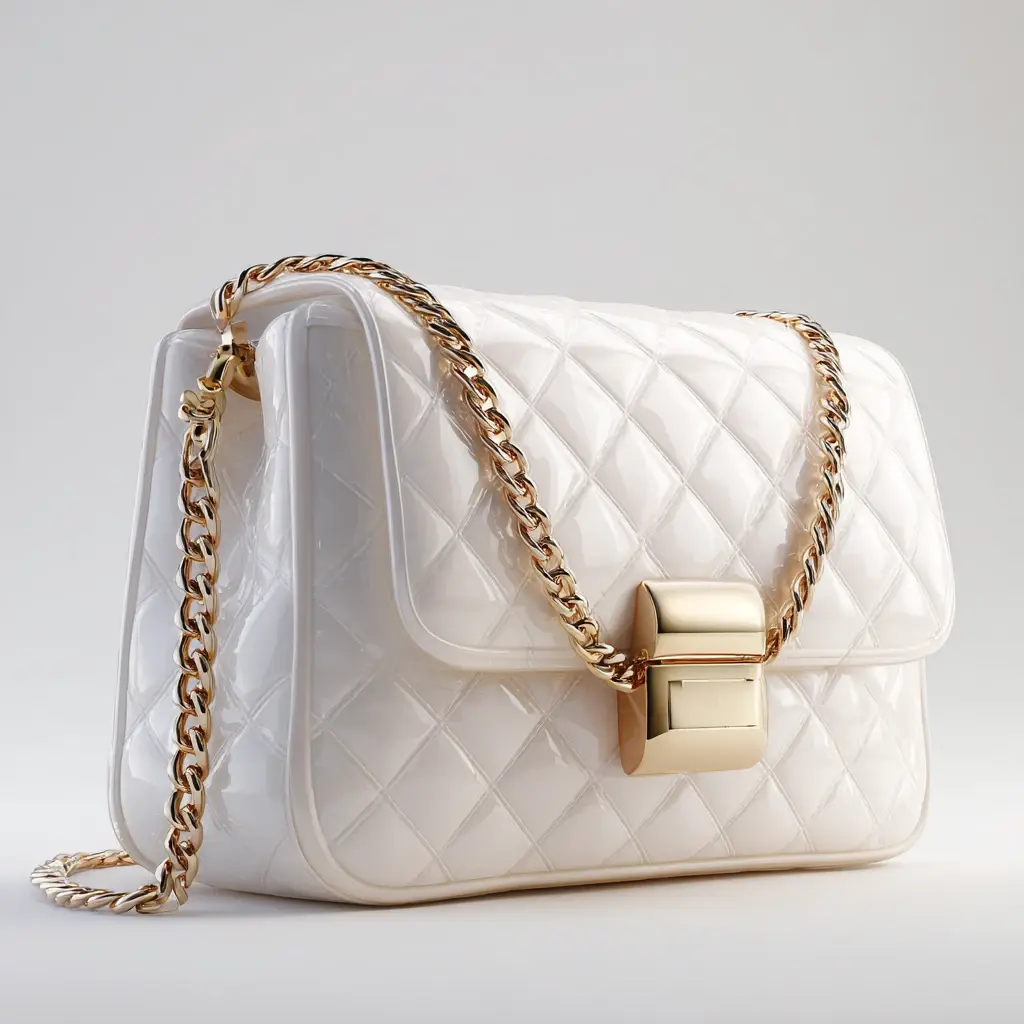
- Two boxes, one Tuesday: what actually happened in Lisbon
- The 190 mm base that keeps a bucket standing
- Why the hobo body decides to lean after three weeks
- Cutting yield: 1.28 sq ft against 1.86 sq ft
- Strap width is the whole argument
- Restocking: 40 days of cover versus 95 days
- Which channel each shape is actually built for
- A one-email brief that separates the two
- Where the two can share components without looking identical
- What Each Shape Costs to Sample
Bucket or hobo? Choose the bucket when you need a shape that stands empty and costs less leather; choose the hobo when your customer carries real weight and expects the body to soften. Measured on the same tannery run, the bucket body consumes 1.28 sq ft against the hobo's 1.86 — a 45% difference that lands directly in FOB price. Both shapes clear MOQ 500 pcs per style/colourway, both sample in 6-10 working days, and both ship FOB Xiamen within 35-50 days. What separates them is base structure, strap width, and how often you will reorder each one.
Bucket versus hobo on two matched 500-piece runs
Two boxes, one Tuesday: what actually happened in Lisbon
A label running eleven boutique doors in Lisbon placed two orders in March 2026: 500 bucket bags and 500 hobo bags, each across three colourways, each targeting under 19 USD landed per unit. Six cartons from each shape shipped together FOB Xiamen and arrived on the same Tuesday. Twelve weeks later the two shapes had behaved so differently that the team stopped treating them as alternatives and started treating them as two halves of one programme. That turn is worth retracing, because it is the fastest way to see what the comparison actually turns on.
- First-drop sell-through by week seven: 68% for the bucket, 41% for the hobo
- Return tickets over ninety days: 3.1% on the bucket, 6.8% on the hobo
- Top return reason recorded: strap bite on the loaded hobo, base crease on the bucket
- Repeat purchase timing: nine months for the hobo, five months for the second bucket colour
- Units per export carton: 12 for the bucket, 8 for the hobo
None of those numbers came from styling. They came from construction. The bucket photographs as a solid object, packs tighter, and arrives at the customer looking like the picture. The hobo photographs as drape, needs shaping before every shot, and wins later, the moment the wearer discovers it is comfortable under a genuinely heavy load. Reporting in Sourcing Journal has repeatedly tied soft-body returns to strap and handle failure rather than to leather failure, and the Lisbon ticket log matched that pattern almost line for line.
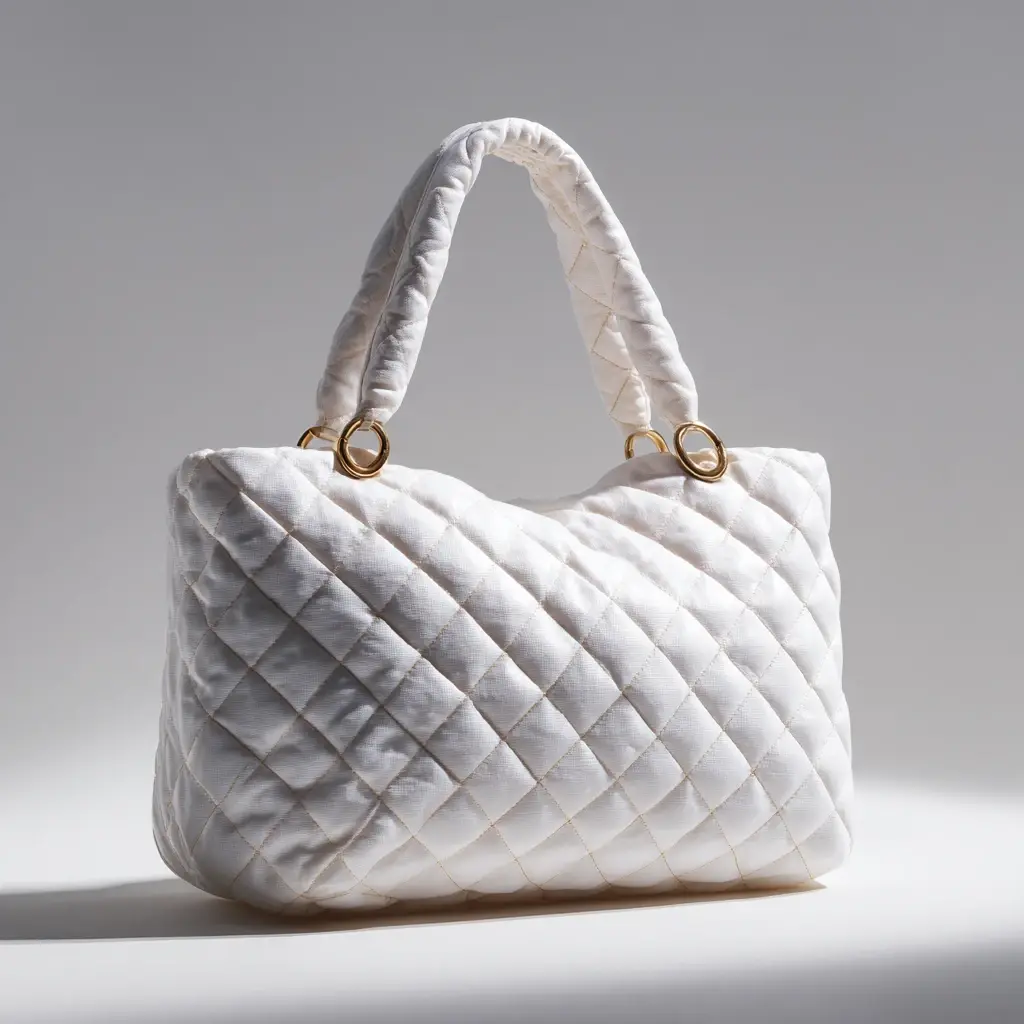
The 190 mm base that keeps a bucket standing
A bucket bag is a cylinder you have convinced to behave like a box. Three variables decide whether it does: the base diameter, the thickness of the base board inside it, and whether the side is cut as one continuous piece or as a four-panel ring. Get those three right and the body stands on a shelf with nothing inside it, which changes everything downstream — photography, packaging, and how the carton looks when it opens.
- Base diameter
- 190 mm round, four-panel side below it
- Base board
- 1.2 mm regenerated board, edge skived to 0.6 mm
- Drawstring channel
- 12 mm high, turned and topstitched twice
- Cord
- 4 mm polyester core with cotton braid
- Empty standing height
- 240 mm after 48 hours on the shelf
- Body weight before hardware
- 430 g
Those four numbers pay for themselves later. A body that stands empty needs no paper stuffing, tolerates two-high stacking inside a standard 60 x 40 x 40 cm export carton, and can be photographed without someone holding the back panel up from behind. In the Lisbon shipment the bucket packed at 12 units per carton against 8 for the hobo, which trimmed roughly a third off freight per piece. For a private label programme quoting FOB Xiamen, that difference often covers the whole cost of the base board.
Why the hobo body decides to lean after three weeks
The hobo has almost no base at all. Its identity is the crescent: a top curve cut measurably longer than the bottom curve, so the middle has somewhere to go. The question is never whether the body settles — it is how long settling takes and whether the strap goes down with it. In 1.0-1.1 mm full-grain, a single-panel crescent drops 18-25 mm in centre height across ten days of daily carry and then stabilises. That softening is the product. What turns it into a complaint is a strap root riding down with the body and pulling the top curve into a V.
- Keep the top curve overage between 60 and 75 mm on a 320 mm body — below that the crescent reads flat, above it reads collapsed
- Bind 6 mm woven tape into the seam allowance of the top curve rather than topstitching it onto the face
- Split the strap into two roots 110 mm apart so the load spreads along the curve instead of pulling one point down
- Expect those two fixes to add about 0.9 USD per piece at 500 pieces per colourway
- Specify both before sampling — retrofitting after confirmation costs another 6-10 working days
This is the point where structure quietly becomes money. Every one of those fixes protects the strap without hardening the silhouette, and none of them are visible from two metres away. That invisibility is also the risk: when a buyer asks for a cheaper version of the same hobo, the tape and the split root are the first two things to disappear, and the return tickets arrive about nine weeks after delivery, costing more than the tape ever did.
Cutting yield: 1.28 sq ft against 1.86 sq ft
Hide consumption is the least visible line in a quotation and the most reliable predictor of it. The hobo needs one large uninterrupted crescent with clean grain direction, which wastes more at the hide edges; the bucket's round base and four side panels nest tightly into offcuts. Comparing the two bodies at the same tannery, on the same leather, cut in the same week, is the cleanest cost comparison a buyer can ask for — and the answer does not move much between suppliers.
| Line item | Bucket body | Hobo body |
|---|---|---|
| Leather consumed | 1.28 sq ft | 1.86 sq ft |
| Leather at 2.40 USD per sq ft | 3.07 USD | 4.46 USD |
| Reinforcement tape | 0.10 USD | 0.34 USD |
| Base board insert | 0.28 USD | 0.00 USD |
| Sewing operations | 14 operations | 19 operations |
| Labour at 0.55 USD per operation | 7.70 USD | 10.45 USD |
| Hardware set | 1.15 USD | 1.60 USD |
| FOB Xiamen body cost | 12.30 USD | 16.85 USD |
The table above assumes leather audited to Leather Working Group environmental standards at a Gold-rated tannery, which in 2026 remains the fastest way to satisfy a European retailer's restricted-substance enquiry without commissioning a separate test report per colourway. REACH Annex XVII nickel release still governs every metal component that touches skin, and California Prop 65 governs the same components the moment the labels are sold into the US. Those obligations sit with the material rather than with the silhouette, which is exactly why they do not show up as a difference between the two columns.
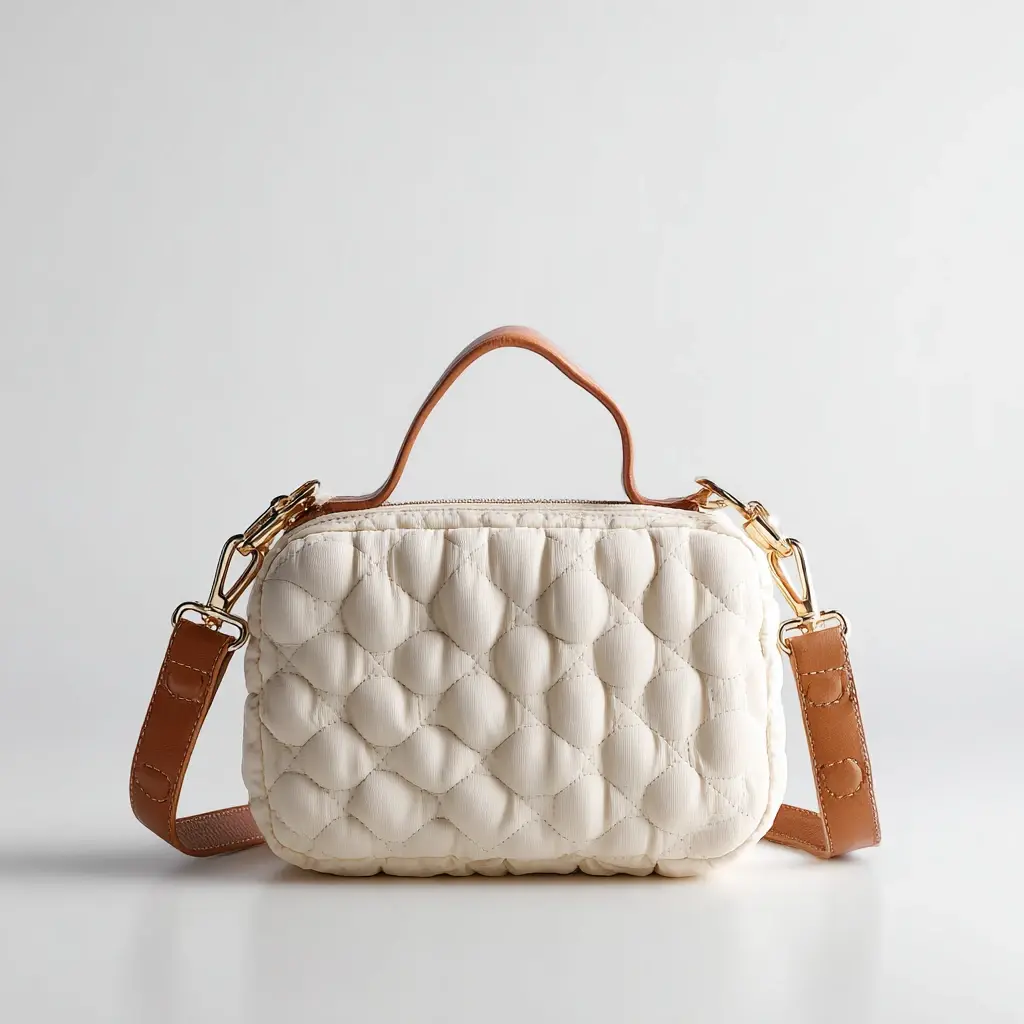
Strap width is the whole argument
Shoulder bags live or die on the strap, and these two shapes want opposite things. The bucket carries light — usually 1.5-2 kg — and looks wrong with a heavy strap hanging off it. The hobo invites over-filling because the shape never pushes back, so it regularly carries 3-4 kg and looks wrong with anything thin. Put a 12 mm strap on a hobo and you have specified a return into your own programme.
- Bucket strap: 12 mm wide, 0.9 mm leather with a folded edge, 550-600 mm drop
- Hobo strap: 22 mm minimum at 3 kg loaded — anything narrower cuts in and generates tickets
- Under a 2.5 kg load held for 30 minutes, a 12 mm strap elongates 6 mm; a 22 mm strap elongates 2 mm
- Adjustment: five holes at 25 mm spacing covers sizes XS to XL on the hobo; three suffice on the bucket
- Root reinforcing: box stitch 25 x 25 mm, nine stitches per inch in Tex 45 thread
The wider strap then changes every component hanging off it. A 22 mm strap needs slides and rings with 25 mm internal width, and those weigh 14 g against 6 g for the 12 mm set. Extra weight barely registers against freight, but it registers against the price band: the wider strap plus its larger hardware moves a finished hobo from a 59 EUR ticket to a 79 EUR ticket in most European doors, and customers accept the jump because width reads as quality on sight. The 4.55 USD body gap in the table above translates into twenty euros of retail tolerance.
Restocking: 40 days of cover versus 95 days
The strongest argument for carrying both shapes is not visual — it is temporal. A bucket sells in shallow, frequent waves because most owners treat it as one object in one colour. A hobo sells in one deep seasonal wave, because owners are replacing a worn favourite rather than adding a colour. Both behaviours are healthy, but they demand very different cash, and mixing them deliberately is how a small label keeps its reorder dates spread through the year.
| Measure | Bucket bag | Hobo bag |
|---|---|---|
| Cover held at reorder point | 40 days | 95 days |
| Typical reorder quantity | 150-250 pieces | 400-600 pieces |
| Seasonal peak | March to May, gift driven | September to November, wardrobe driven |
| Colour churn | Two new colours per season | One new leather finish per year |
| Stockout risk | Low, demand runs flat | High, single deep wave |
| Cash tied at reorder | 1,845 USD | 6,740 USD |
Read those last two rows together. Both shapes face the identical MOQ 500 pcs per style/colourway, so the real question is how many times a year you can comfortably meet that number. If working capital allows one deep purchase annually, the hobo rewards you with fewer purchase orders and fewer colour disruptions across the year. If it does not, the bucket is the safer partner: a shallow reorder every 40 days keeps the same minimum working without ever putting six months of stock on the rail, and a slow colour can be retired without writing off a season.
Which channel each shape is actually built for
Channel decides more than taste does. Online, the bucket wins the listing: it holds its outline in a packshot, has one obvious hero angle, and survives transit compression with fewer marks. In-store the hobo wins the rail, because a shopper can gather the crescent in one hand and feel the leather give. Both truths can be true at once for the same label, which is the practical case for running both rather than picking one.
- Own-site ecommerce: bucket, in three colourways, twelve images per SKU including one straight-down base shot
- Marketplaces that penalise returns: bucket, because compression marks are the top defect claim against soft bodies
- Boutiques with assisted selling: hobo, because a salesperson can shape it onto the shoulder within five seconds
- Department store concessions: both, but hold the hobo to one finish and two sizes rather than many colours
- Corporate gifting: bucket, because a centred logo sits on a firm base instead of distorting with the body
Two further reads help if the decision is still open. Our breakdown of starter categories sized to a 500-piece first order covers the quantity question sitting underneath this one, and how to read your own customer before choosing silhouettes goes deeper on why one household buys both shapes in different years. The leather handbag reference page holds the construction and grading detail, and balancing several bag types inside one collection pulls all four inputs into a single plan.
A one-email brief that separates the two
Most delay between a brand and a production partner happens at the briefing stage rather than the quoting stage. Both shapes can be quoted inside two working days if the following lines are present in the first email, and both will stall for a week and a half if they are missing. The list below is deliberately short — six lines that cover the variables which actually move price, tooling, and lead time.
- For the bucket: confirm base diameter, base board thickness, panel count, and drawstring channel height
- For the hobo: confirm top-curve overage, whether reinforcing tape is bound or faced, and the strap split distance
- For both: state target leather thickness — 1.1 mm holds either shape, 0.8 mm needs a backing on the hobo
- For both: send a physical chip alongside the reference number, because colour approved only on a screen drifts under D65 light
- For both: say whether every colourway shares one hardware finish, since separate plating lots each carry their own minimum charge
- For both: state pieces per colourway up front — below MOQ 500 pcs per style/colourway neither quotation holds
That fifth line is the one most often left out, and it explains most late price movement. A five-colourway bucket sharing one plating finish quotes cleanly and keeps its unit cost. The same five colours each carrying a different plating finish forces five separate hardware lots, each invoiced at its own minimum. Hold the finish constant and let the colour count rise instead: the unit price stays where the cost table above places it, and the range still reads as five distinct products on a rail.
Where the two can share components without looking identical
The last reason to run both shapes through one programme instead of two is component overlap. Roughly six items can be shared between a bucket and a hobo without either looking like the other's twin, and every shared item removes a minimum order quantity, a tooling charge, and a line from the incoming inspection worksheet. Sharing need not make the pair look matched — applying one finish across both does, and most buyers do not want that.
- Inner lining: one house colour in 210D polyester serves both bodies from a single purchase lot
- Dust bag and polybag: identical for both provided the base diameter stays under 220 mm
- Logo die or heat-transfer plate: one die serves both if placement stays within the top 80 mm
- Zip pullers and cord stoppers: one shape family, kept visually distinct by plating rather than by tooling
- Care card and barcode set: printed once for both drops, shipped in one lot
- Export carton: identical 60 x 40 x 40 cm specification, differing only in units per carton
What makes two shapes look related is not the components underneath but the finish chosen on the outside. A bucket carrying light gold hardware beside a hobo carrying antique brass, both cut from the same hide, reads as a considered range rather than a matching set — and that is usually what the buyer standing in front of the rail actually wants. Programmes that share too aggressively tend to collapse into one look; programmes that share components but vary finish tend to hold two separate price points at once.
What Each Shape Costs to Sample
The two shapes quote differently long before they price differently, because sampling is where a soft body reveals what a flat pattern hides. Both are built inside the same 6-10 working day window, but the probability of a second round is not the same, and a second round repeats the window plus three to five days of courier each way. Budget the rounds, not just the days.
| Line | Bucket bag | Hobo bag |
|---|---|---|
| Build window | 6-10 working days | 6-10 working days |
| Chance of a second round | About 1 in 4 | About 1 in 2 |
| Sample charge at 1.5-3x unit price | USD 28-48 per piece | USD 34-57 per piece |
| What the second round contains | Channel height, cord length, base board thickness | Top-curve overage, strap split distance, tape binding |
| Tooling required | None; a stock cord stopper | None, provided the tape is bound into the seam |
The row that should shape the brief is the second one. A hobo is roughly twice as likely to need a second round because drape is a fit variable rather than a dimension: the body has to be carried to be judged, and 18-25 mm of settling over ten days cannot be read from a spec sheet. Sending the top-curve overage, the strap split distance and the tape specification in the first email is what turns two rounds into one.
Bring one brief and price both shapes
Send base dimensions, target leather thickness, pieces per colourway and hardware finish, and receive two costed quotations plus a shared-component plan within three working days. Every quote is quoted FOB Xiamen with sampling at 6-10 working days, production at 35-50 days, and final inspection at AQL 2.5 (ISO 2859-1). Request a quotation.
Frequently Asked Questions
Is a bucket bag cheaper to produce than a hobo bag?
Yes, usually. Measured on one tannery run, the bucket body consumed 1.28 sq ft against the hobo's 1.86, and needed fourteen sewing operations against nineteen. That combination put the bucket at 12.30 USD and the hobo at 16.85 USD before packing, at the same leather grade and the same hardware source.
Can either shape be sampled inside two weeks?
Both shapes sample in 6 to 10 working days once the brief carries base diameter, target leather thickness, panel count and hardware finish. Complex versions with taped curves or two-tone bodies move into a 12 to 15 working day window. Sampling is the stage to specify reinforcement rather than retrofit it later.
How much does the hobo body settle after regular use?
A single-panel crescent cut from 1.0 to 1.1 mm full-grain typically drops 18 to 25 mm in centre height across ten days of daily carry, then stabilises. That movement is the product working as intended. The failure mode to guard against is a strap root riding down with the body and pulling the top curve into a V.
What strap width should a hobo bag carry?
Twenty-two millimetres minimum at a 3 kg load. Under a 2.5 kg load held for thirty minutes, a 12 mm strap elongates about 6 mm and cuts into the shoulder, while a 22 mm strap elongates only 2 mm. The wider strap also requires slides and rings with 25 mm internal width.
Do both shapes meet the 500-piece minimum?
Yes. Both are quoted at MOQ 500 pcs per style or colourway, and below that figure neither quotation holds, because the leather purchase lot and the hardware lot each carry their own minimum charge. Three colourways of one shape therefore totalling 1,500 pieces is the smallest clean first buy.
Which shape photographs better for online listings?
The bucket. It holds its outline without stuffing, has one obvious hero angle, and arrives with fewer compression marks after transit. Plan twelve images per SKU including one straight-down base shot. The hobo needs shaping before every frame and usually needs a second shot showing the drape on a shoulder.
What lining specification works across both shapes?
A 210D polyester in a single house colour serves both bodies from one purchase lot, which removes one minimum order quantity and one shade-control step. Two coated options exist if you want wipe-clean interiors, but they add cost to both shapes equally and do not change how either one behaves.
Can a bucket and a hobo share hardware tooling?
Partly. Zip pullers and cord stoppers can come from one shape family and be kept visually distinct through plating. Where the two genuinely diverge is strap width: the bucket's 12 mm strap and the hobo's 22 mm strap need different slides and rings, so those two sets are quoted separately.
How much colour drift should I expect between sample and bulk?
Send a physical chip alongside any reference code, and expect an acceptable delta E of 1.5 or tighter under D65 lighting. Colour approved only on a screen drifts noticeably between dye lots. At 500 pieces per colourway each colour runs as its own dye lot, so the standard chip is what holds all three together.
Which handbag shape should a first-time private label buyer start with?
Start with the bucket. It costs less per unit, packs twelve rather than eight to a carton, generates fewer return tickets, and reorders in shallow waves that are easier to fund. Add the hobo in the second season once there is evidence that the customer carries heavy loads and responds to drape.
People Also Ask
What is the real difference between a bucket bag and a hobo bag?
The difference is structure, not styling. A bucket uses a round base with a board insert and a drawstring channel, so it stands empty and costs 1.28 sq ft of leather. A hobo uses a crescent body with no meaningful base, consumes 1.86 sq ft, and relies on bound tape and split strap roots to hold its shape under load.
Why do hobo bags generate more returns than bucket bags?
Because of the strap. A crescent body invites over-filling, so loaded weight reaches 3 to 4 kg, and any strap narrower than 22 mm bites into the shoulder. In one eleven-door programme, ninety-day returns ran at 6.8% on the hobo against 3.1% on the bucket, with strap comfort the leading reason on the hobo.
How much leather does each handbag silhouette consume?
On one matched run the bucket consumed 1.28 sq ft per body against the hobo's 1.86 sq ft. That 45% gap exists because four side panels and a round base nest tightly into hide offcuts, whereas a single-piece crescent needs one large uninterrupted area with consistent grain direction and wastes more at the edges.
Should both shapes use the same hardware finish?
Share components, vary finish. Lining, dust bags, cartons and logo dies can all come from one lot across both shapes, but give the bucket light gold and the hobo antique brass so each carries its own price band. Five colourways sharing one plating finish quote far cleaner than five separate plating lots.
Sources and further reading
Every figure on this page is either our own programme data or attributed below. Open the originals before you write them into a specification.
- Leather Working Group — environmental auditing for tanneriesLeather Working Group Environmental audit protocol for tanneries and leather traceability.
- SATRA — technical services for leather, footwear and accessoriesSATRA Independent leather, hardware and accessories testing protocols.
- REACH — chemical substances regulationEuropean Commission Annex XVII restricts the substances that may appear in finished leather and coatings.