Best Wholesale Handbag Styles for Boutiques That Sell Fast
Which wholesale handbag styles sell fastest in a boutique? Tote and crossbody carry the volume, satchel and hobo carry the gift and resort occasions, bucket and backpack carry seasonality, and briefcase and luggage carry corporate programmes — but the ranking flips once you measure sell-through at eight and twelve weeks rather than units moved. A style that sells fast is one that clears 60% of its units inside twelve weeks with a return rate under 10%, not one with the largest opening weekend. Below: an eight-silhouette matrix scored on those two numbers, an assortment ratio table, and the one shape worth converting to a private label run at MOQ 500 pcs per style / colourway first.
- What Sells Fast Actually Measures
- The Eight-Silhouette Matrix
- Tote vs Crossbody: The Two Workhorses
- Where Satchel and Hobo Earn Their Space
- Bucket, Backpack and the Seasonal Lane
- Briefcase and Luggage: Corporate Programmes
- Assortment Ratios That Match the Matrix
- Which Shape to Convert to Private Label First
- Five Checks Before You Restock Any Style
- What Each Silhouette Costs to Move
- Where the Returns Come From, Shape by Shape
- The Markdown Calendar by Silhouette
Which wholesale handbag styles sell fastest in a boutique? Tote and crossbody carry the volume, satchel and hobo carry the gift and resort occasions, bucket and backpack carry seasonality, and briefcase and luggage carry corporate programmes — but the ranking flips once you measure sell-through at eight and twelve weeks rather than units moved. A style that sells fast is one that clears 60% of its units inside twelve weeks with a return rate under 10%, not one with the largest opening weekend. Below: an eight-silhouette matrix scored on those two numbers, an assortment ratio table, and the one shape worth converting to a private label run at MOQ 500 pcs per style / colourway first.
Assortment reference points
What Sells Fast Actually Measures
Units sold flatters the wrong styles. A heavy opening week on a novelty shape looks like velocity and is usually substitution — customers who would have bought something else in the same store. What predicts cash is sell-through within a fixed window at a given stock depth, measured alongside returns, because a style that sells and comes back has not actually sold.
Two numbers carry most of the signal: percentage of units sold by week twelve, and the return rate on those units. A healthy line clears roughly 60% by week twelve and returns under 10%; a line below 20% by week eight rarely reaches a maintained margin no matter how the season ends. Tracking both per style, not per category, is what turns a stockroom into usable evidence.
The Eight-Silhouette Matrix
Eight silhouettes cover almost everything a boutique can merchandise, and each carries a characteristic pair of numbers. Read the matrix as a planning tool rather than a ranking: the right answer depends on your door count, your price architecture and how much inventory you can finance, not on which shape is fashionable this quarter.
| Silhouette | Retail band | Sell-through driver | Principal risk |
|---|---|---|---|
| Tote | $89-$149 | Everyday utility; largest print area | Heavy competition; price-driven |
| Crossbody | $59-$119 | Hands-free; highest repeat purchase | Strap and hardware quality visible |
| Satchel | $129-$219 | Structure reads as premium; gifting | Operations heavy; slower turns |
| Hobo | $95-$159 | Soft drape; relaxed and resort | Temper mismatch looks wrong |
| Bucket | $79-$129 | Seasonal novelty; compact panels | Short season; markdown exposure |
| Backpack | $69-$139 | Commute and travel; capacity | Padding and webbing cost |
| Briefcase | $139-$249 | Corporate and gifting programmes | Lumpy demand; long gaps |
| Luggage | $159-$329 | Travel sets; seasonal peaks | Cube cost; freight economics |
Three of those eight deserve the majority of the open-to-buy, and two deserve almost none until velocity is proven. The middle cases are judgement calls that depend on your specific doors. What follows is the reasoning behind each row rather than a restatement of it.
Tote vs Crossbody: The Two Workhorses
These two generate most boutique bag revenue, and they behave differently enough that the split matters. A tote sells on capacity and on the visible panel — which is exactly why it is also the most competed-over shape in the category. A crossbody sells on convenience and converts repeatedly, because customers who own one often come back for a second in another colour or finish.
How Should a Boutique Weight Totes Against Crossbodies?
Tote
Larger panels, higher material consumption, and the strongest canvas for print or embossing. Turns reliably but rarely at premium pricing.
Crossbody
Smaller panels, better hide yield, and the highest repeat rate in most assortments. Hardware carries the brand here.
Which to fund
Fund crossbody for margin and repeat, totes for volume and merchandising presence. Most boutiques need both.
The practical split is roughly 60:40 in favour of whichever shape your doors already turn faster, adjusted for season. Totes dominate where customers buy for work and travel; crossbodies dominate in tourist and city-centre doors. Measuring eight weeks of both beats guessing for a year, and the evidence is usually unambiguous by week six when tracked by colourway rather than by category. See how a bulk buy behaves at different depths before setting the ratio.
Where the balance sits depends on your price architecture rather than on taste. A boutique working mostly below $99 usually finds crossbody the better earner per square foot of shelf, since consumption is lower and repeat purchase higher. A boutique with room for $149 and above can make the tote work, because the larger panel justifies both the price and a branded mark.
Which Two Shapes Deserve Most of the Budget?
Tote and crossbody, with satchel as a third where the gifting calendar supports it. Everything else earns its place through seasonality or a specific programme rather than through steady weekly turns, which is precisely why they should be bought shallow and reviewed often rather than funded deeply at the start of the season.
Where Satchel and Hobo Earn Their Space
Which Occasion Does Each Shape Serve?
Satchel and hobo occupy the same shelf space with opposite propositions. The satchel is structured: interlining, a stiffener, feet, usually a turn-lock or magnetic closure, and somewhere between 38 and 46 operations from cut to polybag. The hobo is soft, run in a temper that drapes, and sits nearer 19-24 operations in comparable leather.
That difference shows up in the numbers. The satchel carries more labour and hardware, so its cost structure rewards volume more and its price point supports a branded mark better, but it turns slower and misses more often. The hobo carries less labour, turns faster at lower ticket value, and forgives fewer material mistakes — a firm temper that should have been soft is visible from across the room.
For a boutique building a first line, one of each is usually correct: a structured piece to anchor the higher price band and a soft piece to keep the middle occupied. Where budget allows only one, choose based on your existing customer rather than on the list price, because the structure-versus-drape decision is ultimately about how your shoppers carry things. Where budget allows only one structured piece, choose the silhouette whose strap drop already matches how your customers carry a bag, since that single measurement drives both satisfaction and returns. Landed cost per unit then decides the rest, which is what tier pricing is for.
Bucket, Backpack and the Seasonal Lane
Bucket and backpack are the two silhouettes most often bought wrong, because both look like everyday items and behave like seasonal ones. A bucket has a short selling window and a strong novelty pull; a backpack has genuine everyday use but carries padding and webbing cost that erodes margin at lower price points.
- Bucket. Compact panels give good hide yield, so unit cost is attractive, but the season is short and demand is concentrated. Buy shallow and plan the exit early.
- Backpack. Genuine everyday utility, especially in commute and travel ranges, yet padding and webbing push material and trimming lines up. Works best above roughly $99 retail.
- Sling and side bags. Small, fast-moving, and useful as entry price points, though they rarely carry a premium mark.
- Seasonal sets. Bundling a small piece with a larger one lifts basket value without much additional merchandising labour.
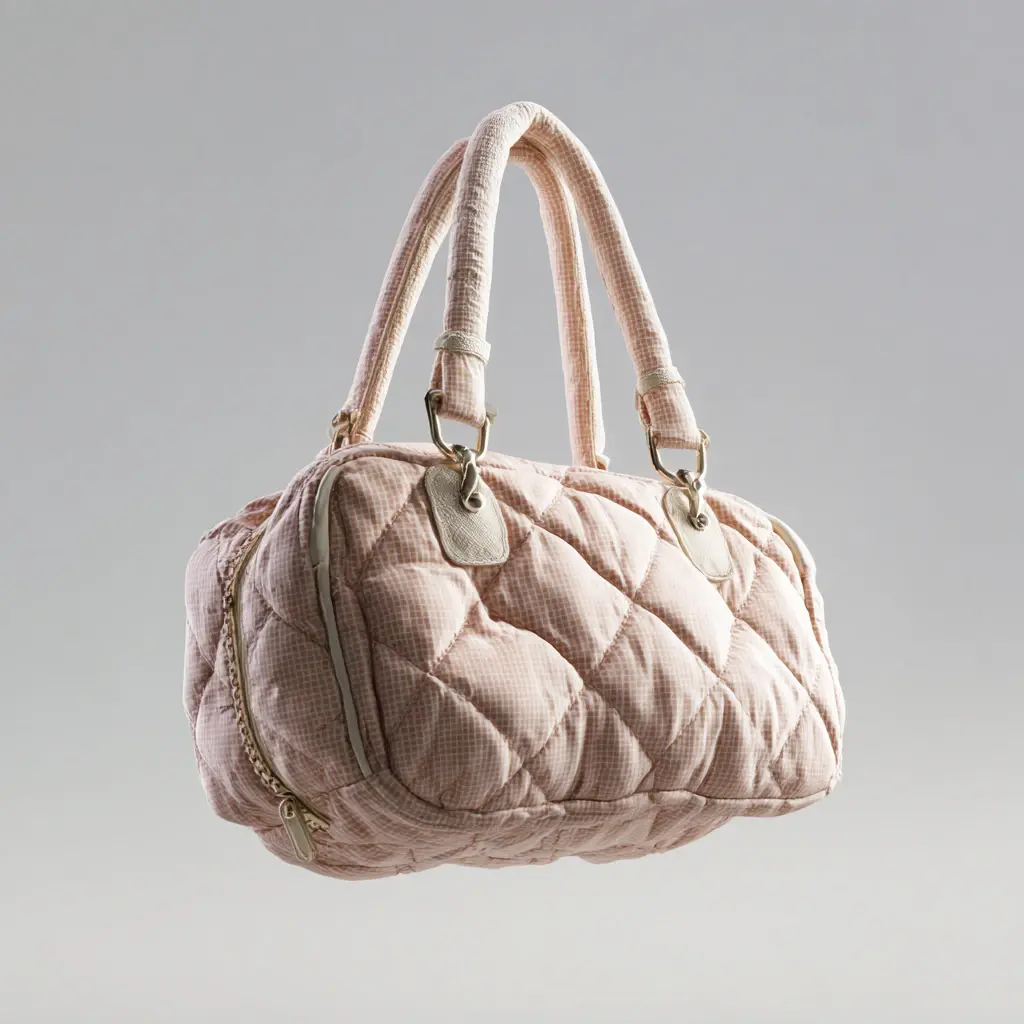
Both work better as a planned seasonal moment than as permanent shelf presence. Treat them like a campaign: an arrival date, a peak and a planned clearance, with the exit rule written before the buy. That framing keeps the working capital footprint small and makes the markdown a scheduled event rather than a surprise.
Briefcase and Luggage: Corporate Programmes
Briefcase and luggage rarely sell as impulse items and often sell in quantity when they sell at all. Corporate gifting, conference programmes and uniform refreshes create concentrated demand that a boutique can capture with advance notice, and the order sizes frequently justify moving the style to a made-to-order run.
The economics are different rather than better. Ticket value is high, so absolute margin per unit is attractive; turns are slow, so capital sits longer; and the buyer is an organisation rather than a shopper, which means the specification, packaging and delivery date matter more than merchandising. Where a boutique does carry these, it is usually as a display of range rather than as inventory to turn.
Assortment Ratios That Match the Matrix
One ratio table does more for profitability than any amount of style debate. The split below reflects how most single-door and small multi-door boutiques actually turn stock, and it should be adjusted for doors rather than adopted wholesale. Where a door skews to gifting, shift weight towards satchel; where it skews to tourism, shift towards crossbody.
| Silhouette | Share of units | Depth per SKU | Review cadence |
|---|---|---|---|
| Crossbody | 30-35% | Deepest; two colourways minimum | Weekly to week 8 |
| Tote | 25-30% | Deep in neutral, lighter in colour | Weekly to week 8 |
| Satchel | 10-15% | Shallow; gifting calendar | Monthly |
| Hobo | 8-12% | Shallow; season dependent | Monthly |
| Bucket | 5-8% | Very shallow | Every 2 weeks in season |
| Backpack | 5-8% | Shallow unless commute doors | Monthly |
| Briefcase | 3-5% | Shallow; programme driven | Per programme |
| Luggage | 2-4% | Very shallow; peak driven | Per peak |
Apply the ratios to units rather than to styles, because a style bought twice as deep is really two decisions in one. Then keep the review cadence, since the most common failure is not a bad ratio but a good ratio nobody revisits after the season starts. A monthly reallocation between the top two shapes routinely outperforms a better opening split.
Which Shape to Convert to Private Label First
Conversion should follow evidence rather than ambition. Take the shape with the strongest twelve-week sell-through and the lowest return rate, and make that the first own-brand version, because a made-to-order run multiplies commitment and only makes sense where demand has already been demonstrated. One proven shape beats three speculative ones.
- Confirm the numbers first. Twelve-week sell-through near 60% and returns under 10% indicate a shape worth owning.
- Lock the specification. Dimensions, strap drop, material and hardware get written, since private label rewards stability.
- Hold the colourway count. Two colours at 500 pcs each beat five colours at 200 pcs, which only creates guesses.
- Set the calendar honestly. Sampling 6-10 working days and bulk 35-50 days determine whether your launch date is real.
The comparison that matters is between leaving a proven shape on wholesale and converting it to private label. Wholesale keeps commitment low and differentiation nil, so pricing pressure arrives eventually. A made-to-order run lowers landed cost, supports a higher achievable price and records the specification so repeats match the first. What it costs is the MOQ at 500 pcs per style / colourway and the calendar discipline that comes with it.
Five Checks Before You Restock Any Style
Five checks, run in this order, each producing a number rather than an impression. They take about ten minutes per style and prevent most of the situations that turn a good season into a clearance. Run them before reordering rather than after the goods arrive, since reorders are cheaper than corrections every time.
- Twelve-week sell-through, computed per style and per colourway rather than per category.
- Return rate on those units, with the reason recorded, since defects and mismatches need different fixes.
- Weeks of cover at current velocity, including inbound, to decide whether to reorder or wait.
- Landed cost on the repeat, since freight and duty rarely land where the first order did.
- Availability of the same material lot, so the repeat matches what already sold.
Anything clearing those five is worth deeper funding; anything failing two or more is worth reducing before it becomes a clearance problem. Then feed the result back into the next buy and repeat, because the compound effect of two seasons of honest measurement exceeds the value of any single negotiation. Request wholesale tier pricing with your sell-through data attached and compare landed figures across three quantities. Keep the history beside the numbers, since a shape that turned slowly once may simply have been bought at the wrong depth.
What Each Silhouette Costs to Move
Freight is a per-silhouette cost rather than a shipment cost, and it is invisible in a price quoted FOB. A medium tote packs 24 to a 60 by 40 by 40 cm carton at 0.096 cubic metres, a crossbody 60 to the same carton, a satchel 10 because base feet stop stacking, and a bucket 36 when nested. Put 500 pieces of each on a 1,400 dollar part load and the freight runs 2.10 dollars a unit for the tote, 0.92 for the crossbody, 4.60 for the satchel and 1.40 for the bucket.
- Carton count. 500 totes is 21 cartons and 500 satchels is 50, which is a different receiving job as well as a different rate.
- Cube a unit. 0.004 cubic metres for a nested bucket against 0.019 for a boxed satchel with feet.
- Base feet. They prevent stacking, so a satchel pays for air on four sides of every carton in the load.
- Minimum charge. Below 1 cubic metre the LCL minimum applies, and the cheapest shape becomes the one that fills a carton.
Where the Returns Come From, Shape by Shape
A return rate under 10 per cent is the target, and the reasons behind it differ enough between shapes to change what a boutique should stock. Size and capacity complaints carry 34 per cent of tote returns, strap length 41 per cent of crossbody returns, closure difficulty 28 per cent of bucket returns, and structure or sag 22 per cent of hobo returns. Only about 18 per cent of all returns are a genuine defect, which means most of the rate is a specification and description problem.
| Silhouette | Leading reason | Share | Fix in the specification |
|---|---|---|---|
| Tote | Capacity not as imagined | 34 per cent | State litres as well as dimensions |
| Crossbody | Strap length and drop | 41 per cent | 110-130 cm adjustable, drop stated |
| Bucket | Closure needs two hands | 28 per cent | Drawcord that works one-handed loaded |
| Hobo | Body sags in use | 22 per cent | 1.0-1.2 mm soft temper, interlined base |
The Markdown Calendar by Silhouette
Different shapes need different exit dates, and one markdown schedule across the wall is how a good season ends in a single clearance. A bucket bought for a 14-week summer wants its first cut at week 8 and an exit by week 16; a satchel sold on gifting holds full price into week 12 and clears in January; a tote, which sells all year, should not be marked down before week 20. Getting the calendar wrong costs 8-12 points of realised margin on the units affected.
- Bucket. First cut at week 8 at 20 per cent, exit by week 16 at 50; a longer hold costs more than the discount does.
- Satchel. Full price to week 12, 25 per cent across the gifting fortnight, 40 per cent by week 18.
- Tote and crossbody. No markdown before week 20 unless cover passes 14 weeks at the observed rate.
- Backpack. Treat as a two-season shape: 15 per cent in week 10, then hold the balance into the commute window.
Build an assortment from your own sell-through data
Send your top styles, weekly sell-through and target cover weeks. A private label coordinator returns landed cost per unit, tier pricing at 500, 1,000 and 2,000 pcs, and which shape to convert first. Get a quote.
Frequently Asked Questions
Which wholesale handbag styles sell fastest in boutiques?
Tote and crossbody generate most volume, with crossbody showing the higher repeat rate and the tote winning on capacity and merchandising presence. Satchel and hobo anchor gifting and resort, while bucket and backpack sell in concentrated seasonal windows. Ranking depends on your doors, price architecture and how much inventory you can finance.
How should I measure whether a style sells fast?
Use sell-through percentage at eight and twelve weeks together with the return rate, not units alone. Roughly 60% of units by week twelve with returns under 10% indicates a healthy line; below 20% by week eight rarely recovers to a maintained margin regardless of how the season ends.
What assortment split should a boutique start with?
Around 30-35% crossbody, 25-30% tote, 10-15% satchel, 8-12% hobo, with bucket, backpack, briefcase and luggage sharing the remainder. Apply the ratios to units rather than styles, then review monthly and reallocate towards whichever two shapes are actually turning. Measure the figure by colourway rather than by category, since the ranking usually flips between them.
Which style should become a private label first?
The one with the strongest twelve-week sell-through and the lowest return rate. Conversion multiplies commitment through MOQ 500 pcs per style / colourway and a 35-50 day bulk window, so it belongs where demand has already been demonstrated rather than where ambition sits. Review the number weekly through week eight, because that is when the evidence usually becomes unambiguous.
Do backpacks sell year round?
Partly. Commute and travel ranges move steadily, while fashion backpacks concentrate into seasonal windows. Above roughly $99 retail the padding and webbing content is fundable; below it, material and trimming lines tend to erode margin before the style has proven itself. Record the figure for each style so the next buy is arithmetic rather than a debate about taste.
What retail band suits a boutique tote?
Roughly $89 to $149. Below that band the larger panel consumption is difficult to fund in decent material; above it, shoppers expect structure, lining and branded hardware that push operations well past the 30 mark. The band works because capacity is visible value. Measure the figure by colourway rather than by category, since the ranking usually flips between them.
How deep should a first buy be per colourway?
Meet the minimum rather than exceed it until velocity is proven. Two colourways at 500 pcs each is usually safer than one at 1,000, and five at 200 is rarely viable because each colour carries its own lot economics and demand guess. Review the number weekly through week eight, because that is when the evidence usually becomes unambiguous.
Which silhouettes carry the highest return risk?
Structured satchels and any style whose strap drop is poorly specified. Structure introduces hardware and closure defects; dimensional mismatch drives returns across every category, which is why measurements checked against physical samples reduce returns more cheaply than any inspection. Record the figure for each style so the next buy is arithmetic rather than a debate about taste.
Should a boutique buy luggage and briefcases?
Usually as programme-driven inventory rather than shelf stock, since demand arrives concentrated around corporate gifting and travel peaks. Where a boutique does carry them, shallow depth and a defined customer list prevent the slow-turning cube from absorbing disproportionate working capital. Measure the figure by colourway rather than by category, since the ranking usually flips between them.
Does the private label MOQ differ by style?
No. MOQ stays at 500 pcs per style / colourway regardless of silhouette, though material consumption differs considerably between shapes, so the total commitment per colourway varies with panel size and operations count rather than with the minimum itself. Review the number weekly through week eight, because that is when the evidence usually becomes unambiguous.
How do I test a new shape without overcommitting?
Buy shallow against a defined exit rule, review at week eight, and only deepen once sell-through has demonstrated itself. Testing with existing stock before commissioning a run keeps the evidence cheap, and the specification then gets engineered to a realistic retail ceiling. Record the figure for each style so the next buy is arithmetic rather than a debate about taste.
What is a reasonable private label calendar for a boutique?
Allow 55-80 days from signed brief to goods handed to the forwarder, adding 18-28 days ocean transit to the US West Coast or 30-38 days to Northern Europe. Sampling takes 6-10 working days, 12-15 for framed, woven or stacked work. Measure the figure by colourway rather than by category, since the ranking usually flips between them.
Which documents should a boutique request before buying?
A REACH test scope for the EU, a Proposition 65 review for California, CPSIA results where items target children, and a Global Recycled Standard certificate wherever recycled content is claimed. Each should be dated and issued in the buyer's name rather than merely shown. Review the number weekly through week eight, because that is when the evidence usually becomes unambiguous.
People Also Ask
Should a boutique stock many styles or few?
Fewer, deeper. Extra SKUs add listing, ticketing and merchandising labour and fragment the evidence, while concentrating depth in proven shapes turns faster and generally writes down less.
Is a novelty shape worth the risk?
Occasionally, as a planned seasonal moment with an exit rule written in advance. Treat it as a campaign with an arrival date, a peak and a clearance rather than as permanent shelf presence.
How often should I reallocate budget between styles?
Monthly during the first season and quarterly afterwards. Small reallocations towards the two fastest-turning shapes routinely outperform a better opening split.
Can small leather goods anchor an assortment?
They work well as entry price points and add-on items, though they rarely carry a premium mark on their own. Use them to lift basket value rather than as the core.
Sources and further reading
Every figure on this page is either our own programme data or attributed below. Open the originals before you write them into a specification.
- FashionUnited — fashion industry news and dataFashionUnited Industry news and company data for the fashion sector.
- Incoterms rulesICC The rules that decide where cost, risk and insurance transfer.
- SATRA — technical services for leather, footwear and accessoriesSATRA Independent leather, hardware and accessories testing protocols.