Best Marketing Channels for Handbag Brands on a Budget
Which marketing channel sells the first hundred handbags on a small budget? Not one channel, and not five equally. A USD 3,000 launch budget returns the first 100 sales fastest when about 45 per cent goes to paid social, 25 per cent to search, 15 per cent to content, 10 per cent to creator seeding and 5 per cent to email. Cost per sale ranges from USD 4 on an owned list to USD 31 on gifted creators, and the difference decides the order in which you spend. This page answers the budget questions in the sequence a founder actually faces them.

- How Far Does a USD 3,000 Launch Budget Really Go?
- Which Channel Sells the First 100 Bags?
- What Does One Sale Cost on Each Channel?
- Why Does Paid Social Work for One Bag and Fail for Another?
- How Much Should Go to Search and Email?
- What Do Photo and Video Assets Actually Cost?
- Where Do Community and Wholesale Fit?
- How Do You Allocate the Budget Across 90 Days?
- Which Channel Should Be Cut First?
- What the Product Page Needs Before Any Spend Starts
- The Second Hundred Units Cost Less Than the First
Which marketing channel sells the first hundred handbags on a small budget? Not one channel, and not five equally. A USD 3,000 launch budget returns the first 100 sales fastest when about 45 per cent goes to paid social, 25 per cent to search, 15 per cent to content, 10 per cent to creator seeding and 5 per cent to email. Cost per sale ranges from USD 4 on an owned list to USD 31 on gifted creators, and the difference decides the order in which you spend. This page answers the budget questions in the sequence a founder actually faces them.
The budget, before any of it is spent
How Far Does a USD 3,000 Launch Budget Really Go?
Three thousand dollars buys roughly 100 to 120 first sales for an USD 89 bag, provided it is spent in a deliberate order and not spread evenly to keep every channel alive. Spread evenly across five channels it buys 60 to 70, because each channel stays below the volume where its learning phase ends. The budget is not too small to work; it is too small to test everything at once.
The arithmetic starts with contribution, not with the budget. At USD 35.19 of contribution per bag, the ceiling for acquisition is about USD 28, which leaves a margin for the sales that never convert and for the fixed costs of running the store. Any channel that cannot reach a cost per sale under that ceiling is a channel to postpone, however good it looks in a case study written about a brand with a 40,000-unit run.
It also helps to separate the budget into two kinds of money. Learning money buys information, such as whether a creative angle resonates or whether a search term converts, and it is spent in small amounts on purpose. Scaling money buys volume once something is known to work. A launch budget of USD 3,000 is mostly learning money, and treating it as scaling money is the fastest way to spend it without learning anything. Sourcing Journal's coverage of accessory launches keeps returning to the same point from a different angle: the budget is rarely the constraint, the order in which it is spent is.
Which Channel Sells the First 100 Bags?
Trace the first hundred units on this budget and the mix looks uneven: 38 from paid social, 26 from search, 15 from email, 12 from creator seeding and 9 from organic and repeat. That distribution is not a target to hit exactly, it is what the cost per sale on each channel produces when the same budget is applied. Paid social carries the most units because it can create demand; search carries the cheapest units because it captures demand that already exists.
| Channel | Spend | Cost per sale | Units |
|---|---|---|---|
| Paid social | USD 1,350 | USD 24.50 | 38 |
| Search | USD 750 | USD 14.20 | 26 |
| USD 150 | USD 4.10 | 15 | |
| Creator seeding | USD 300 | USD 31.00 | 12 |
| Organic and repeat | USD 0 | USD 0 | 9 |
The email number deserves a caveat. Fifteen units at USD 4.10 assumes a list of about 1,000 people built from the content in the same 90 days, and a list of that size does not exist on day one. It is the cheapest channel per sale and the slowest to start, which is why it sits at 5 per cent of the budget rather than at the front of it.

What Does One Sale Cost on Each Channel?
Cost per sale is the only channel metric that compares cleanly, because it already includes the wasted spend. Paid social for a USD 89 bag lands between USD 20 and USD 28 at a 1.8 per cent site conversion rate; the same creative at 3 per cent conversion lands near USD 15. Search converts at 2.6 per cent and costs USD 12 to USD 18 because the intent is already there. A gifted creator costs the product plus postage, around USD 31 per first sale once the ones who never post are counted.
Marketplaces sit outside this comparison but belong in the same conversation. A 15 per cent referral fee on USD 89 is USD 13.35, cheaper than paid social on paper, but the platform owns the customer and the listing competes with a dozen near-identical bags. The trade-off between rented demand and owned demand is set out in the comparison of selling on Shopify, Amazon and TikTok Shop first, and it changes which channel deserves budget at all.
- Owned email at USD 4.10 per sale is the cheapest and the least available at launch, since the list has to be earned first.
- Search at USD 14.20 buys intent rather than attention, so it scales with the number of people already looking for the category.
- Paid social at USD 24.50 creates demand, which is why it takes the largest share of a first budget despite the higher cost.
- Creator seeding at USD 31.00 per first sale is content production with a sales side effect, and should be judged on assets as much as on units.
Why Does Paid Social Work for One Bag and Fail for Another?
Paid social rewards a bag that can be understood in one second of video. A structured tote with a visible clasp and a clear silhouette stops the scroll; a soft bag in a mid-tone colour photographs as a shape without a story, and the same spend produces twice the cost per sale. This is a product and content problem wearing a media label, and no amount of budget fixes it. WWD's reporting on accessories advertising has made a related point for years: the bags that scale in a feed are the ones that read as a single recognizable shape in the first frame.
The second variable is price band. Below USD 60 the impulse decision happens in the feed and paid social is efficient. Between USD 85 and USD 150 the buyer wants a reason, which usually means comparison, reviews or a second touch, and the channel mix shifts toward search and email. Above USD 200 the same budget is better spent on fewer, better assets and on the creator relationships that carry the reason.
Creative volume is the third. A USD 1,350 social budget split across four concepts gives each one about USD 340, which is enough to exit the learning phase and not much more. Three concepts tested properly beat eight concepts tested thinly, and the winning one usually needs a second round of variations rather than a new idea.
How Much Should Go to Search and Email?
Search takes about a quarter of the budget because it captures people who already know what they want. Brand-name search is nearly free and should always run. Category search on terms like leather shoulder bag is where the USD 750 goes, and it performs best once there is a review count and a clean product page rather than a launch-day placeholder. Accessories Council commentary on buying behaviour places the handbag above roughly USD 80 in the researched category, which is the band where search and email earn their share of a small budget.
Email takes 5 per cent in cash and far more in time. A welcome sequence of three messages, a launch announcement and one abandoned-cart reminder is enough to produce the USD 4.10 per sale figure, and the list it needs comes from the social and search traffic the rest of the budget buys. Email is the only channel here whose cost per sale falls as the business grows, which is why the 5 per cent is a seed rather than a limit.
| Channel | Minimum viable spend | Prerequisite |
|---|---|---|
| Paid social | USD 900 | Three concepts, six assets each |
| Search | USD 500 | Product page with 12 or more reviews |
| USD 100 | List of 400 or more, three-message sequence | |
| Creator seeding | USD 240 | Eight creators briefed, one page of guidance |
| Marketplace | USD 0 upfront | Listing with correct attributes and size data |
What Do Photo and Video Assets Actually Cost?
A half-day studio shoot with one model, one backdrop and 24 delivered assets runs USD 450 to USD 900 depending on the city, and it is the highest-leverage line in a small budget because every channel consumes the output. Twenty-four assets is roughly six stills per channel plus short vertical cuts, and it is enough to run paid social for 90 days without repeating the same frame twice a week.
The mistake is treating assets as a fixed cost to minimise. A USD 300 shoot that produces twelve flat-lay images costs less and returns less, because paid social needs motion and email needs a story. It is also worth shooting the detail that answers a question, such as the interior lining, the base studs and the strap attachment, since those frames reduce returns and returns are the most expensive form of marketing failure.
The brief matters more than the camera. Naming the six shots the channels need, in the order they will be used, keeps a shoot inside half a day. That discipline is the same one that keeps a launch on schedule from sampling at 6 to 10 working days through to the 35 to 50 day production window, and it is described in the six gates between pre-order and delivery.
Where Do Community and Wholesale Fit?
Community is not a channel with a cost per sale, and pretending otherwise leads to spending on it too early. What it does is lower the cost of every other channel: a group of 300 people who own the bag produces the reviews that make search work and the user content that makes paid social cheaper. Budget for it in time, not cash, and start it in the four weeks before launch rather than after.
Wholesale is the opposite: it produces cash without marketing spend but at a lower contribution per unit. A boutique order of 24 units at wholesale gives the brand volume and a physical presence, and the shop's own customers become a discovery channel the brand does not pay for. For a first range, ten small stockists can be worth more than an extra USD 1,000 of paid social, because the stock is paid for before it ships.
The two fit together better than either does alone. Wholesale pays for the second production run, community keeps the direct channel converting at a cost the brand can afford, and the direct channel provides the margin that makes wholesale pricing survivable. That is the structural argument in the comparison of business models for first-time founders, and it applies at any budget.
How Do You Allocate the Budget Across 90 Days?
The allocation is a schedule, not a pie chart. Weeks one to four take 20 per cent and buy content plus a small paid test. Weeks five to eight take 45 per cent and buy the scaling decision once a concept has proven its cost per sale. Weeks nine to thirteen take 35 per cent and buy the channels that measured well, plus the email flow that harvests the traffic already paid for.
- Weeks 1 to 4, USD 600: one shoot, three paid concepts at USD 100 each, creator outreach with no cash attached.
- Weeks 5 to 8, USD 1,350: scale the winning concept, start category search, launch the welcome email sequence.
- Weeks 9 to 13, USD 1,050: hold the two best channels, add retargeting, run the first restock announcement to the list.
The schedule leaves nothing for a channel that has not been tested, which is deliberate. A budget this size cannot afford a fourth experiment in week eleven, and the most common way to waste it is to add a new platform in the final month because the first two feel tired. If a channel is working, more of the same is the highest-return move available.
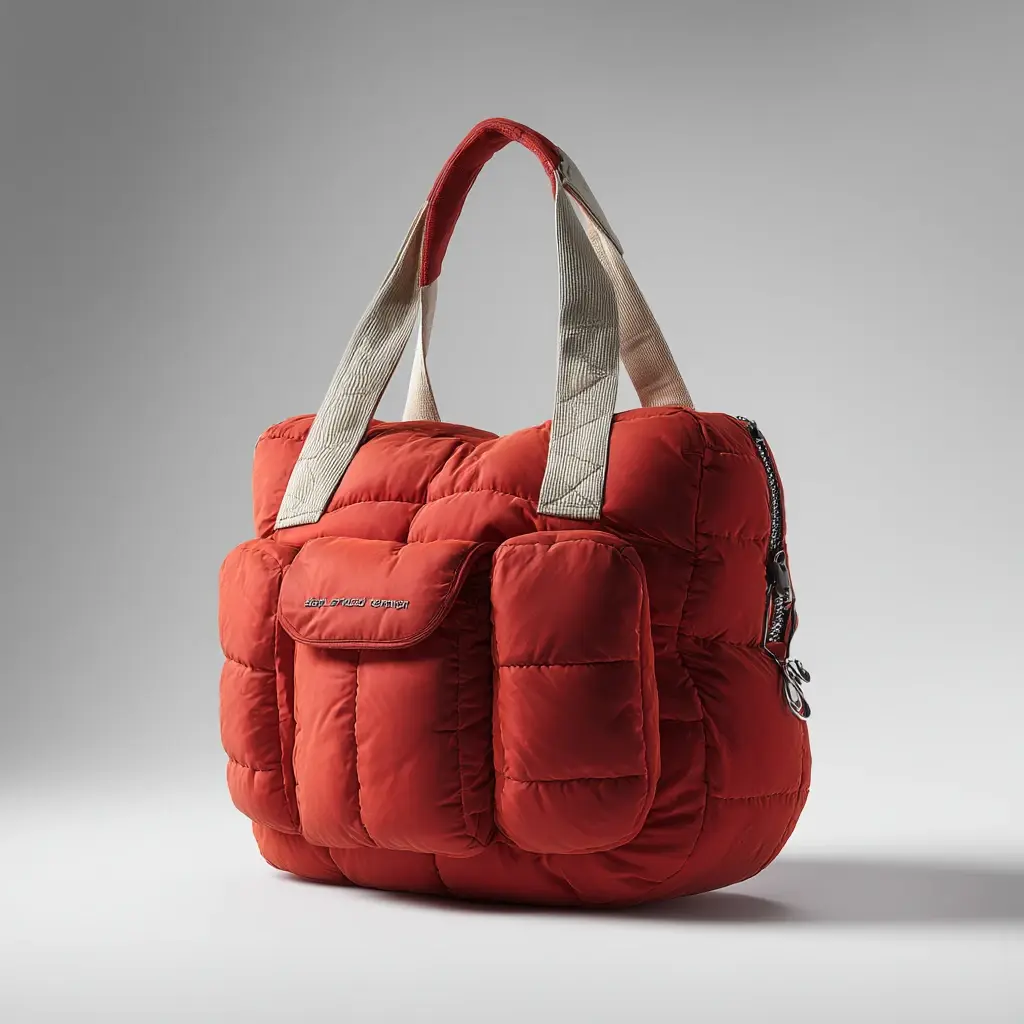
Which Channel Should Be Cut First?
Cut the channel with the highest cost per sale and no secondary benefit. Creator seeding at USD 31 is the usual candidate, unless the assets it produces are being reused in paid social, in which case it is content production with a subsidy. Cut paid social last, because it is the only channel in this budget that can create demand for a bag nobody is searching for yet.
There is a second rule that matters more than the first: cut a channel completely rather than thinning it. A budget of USD 300 spread across three platforms produces three inconclusive results, while USD 300 on one platform produces a number good enough to act on. Partial funding is how a small budget generates the feeling of activity without the evidence of progress.
Keep one number in front of every decision: the contribution per bag, USD 35.19 on this example, and the ceiling it sets for acquisition at around USD 28. Any channel above that ceiling is not a marketing problem to solve with more budget, it is a signal that the price, the product or the audience needs to change. The unit economics that produce that ceiling are worth recalculating before the next USD 500 is committed. Beyond media, the production calendar constrains what a campaign can promise, and the way a handbag range is organised end to end is the other half of the plan.
What the Product Page Needs Before Any Spend Starts
Channel efficiency is set before the budget is spent, on the page the traffic lands on. A paid social click costs the same whether the page converts at 0.8 per cent or at 2.0 per cent, which means the cheapest way to cut cost per sale is usually to fix the listing rather than to reallocate the media.
| Element | Figure | Effect |
|---|---|---|
| Images, including one in-hand scale shot | 6-8 per style | Conversion 1.2-2.4 per cent against 0.6-1.0 without |
| Dimensions and empty weight | Body in cm, drop in cm, weight in g | Size returns fall from 5-7 per cent to 2-3 per cent |
| Reviews on the page | 12 or more before paid scale | Lifts conversion and lowers search cost per click |
| Returns policy stated | 30 days, on the page not the footer | Conversion up 0.3-0.8 points |
| Delivery promise | A named window, not a range | Cart abandonment down 4-9 points |
At USD 89 with USD 35.19 of contribution, moving conversion from 1.0 to 1.8 per cent takes the paid social cost per sale from USD 24.50 to about USD 13.60 on the same spend, which is better than any reallocation of the budget achieves and costs one afternoon of photography rather than USD 1,350 of media.
The Second Hundred Units Cost Less Than the First
The first hundred units are bought with media; the second hundred are largely bought with the first. Five things change between the two, and all five move cost per sale downwards, which is why the 90-day allocation should be read as a ramp rather than as a pie chart.
- Repeat purchase. 12-22 per cent of first buyers buy again within six months, at an acquisition cost of nothing but an email.
- Email share. Owned email rises from 15 of the first 100 units to 30-40 per cent of sales, at USD 4-9 a sale against USD 24.50 cold.
- Retargeting. A warm audience returns 3.5-5x against 1.8-2.4x on cold traffic, which is where the second thousand dollars belongs.
- Wholesale. A 24-unit boutique order at USD 38-44 gives USD 12-18 a unit of contribution with no acquisition cost attached.
- The second run. At 60 per cent sold, 500 pieces take 35-50 days; funding it from the first margin rather than from new media is the cheapest growth available.
Tell us your retail price and launch date, and we will return a channel plan with cost-per-sale ranges, an asset list for one shoot and a 90-day spend schedule sized to your budget. Get a Quote → /contact-quote/
Frequently Asked Questions
What is the best marketing channel for a new handbag brand?
Paid social, for the first ninety days, because it can create demand for a bag nobody is searching for yet. It also costs the most per sale at about USD 24.50. Search becomes the better channel once reviews exist, and email becomes the cheapest over time as the list grows.
How much should a handbag brand spend on marketing at launch?
About 10 to 15 per cent of the landed value of the first order. On a 500-piece order at USD 29.45 landed, that is USD 1,470 to USD 2,200, or roughly USD 3,000 once content production is included. Spending under USD 1,000 rarely produces a conclusive result on any single channel.
What is a good cost per acquisition for an USD 89 handbag?
Under USD 28, which leaves USD 7 of contribution after acquisition on a USD 35.19 contribution margin. Paid social typically lands at USD 20 to USD 28, search at USD 12 to USD 18, and email at USD 4 to USD 6. Anything above USD 28 needs a higher price or a cheaper channel.
What ROAS do I need to break even on handbags?
About 1.8x, calculated as price divided by contribution before marketing, or 89 divided by 49.19. That is the floor, not the target. A ROAS of 3.0 leaves roughly USD 19 of contribution per order after acquisition, which is enough to cover fixed costs and fund the next production run.
Is TikTok or Instagram better for a small handbag budget?
Whichever one the content is already being made for. Both reward motion, a clear silhouette and a price under about USD 150. The practical answer for a USD 3,000 budget is one platform with three concepts rather than two platforms with one each, because a split test across platforms needs more spend than the budget allows.
How many creative assets does a launch need?
Twenty-four from one shoot: six stills for the product page and email, six vertical videos for social, six detail shots for objection handling, and six lifestyle frames for retargeting. That is enough for ninety days if the winner is refreshed with new variations rather than replaced by a new concept.
Should I pay influencers or gift them bags?
Gift first. Twelve micro-creators at product cost plus postage is about USD 300 and produces both content and a first-sale cost near USD 31. Paid placements make sense only after a gifted creator has already produced a post that performed, because the fee then buys distribution of something proven rather than a hope.
How long before launch should marketing start?
Four weeks, which is enough time to build a list of 400, shoot the content and brief creators. Starting eight weeks out is better if the community is being built from nothing. Starting on launch day means paying for every sale at the top of the cost range with no assets and no audience.
Does email marketing work for a brand with no list?
Not immediately, which is why it takes 5 per cent of the budget rather than 25. A list of 1,000 built from launch traffic returns about USD 4.10 per sale by day 90. The sequence that matters is three welcome messages, one launch announcement and one cart reminder.
When should a handbag brand start wholesale?
Once the direct channel proves a repeatable sale and the product page has reviews. Ten small stockists ordering 24 units each pay for a second production run before it ships, at a lower contribution per unit but with almost no acquisition cost. Wholesale before that point discounts stock nobody has asked for.
What should be cut when the budget runs short?
Creator seeding first, unless the assets are being reused, then search until the product page has reviews. Paid social should be the last line cut, because it is the only channel that creates demand. Cut whole channels rather than reducing every line, since partial budgets produce no usable evidence.
People Also Ask
How many sales will a USD 3,000 marketing budget produce?
About 100 to 120 first sales for an USD 89 bag, assuming the money is spent in sequence rather than spread evenly. The mix works out at roughly 38 units from paid social, 26 from search, 15 from email, 12 from creator seeding and 9 from organic traffic and repeats.
Is it better to spend on ads or on photography?
Both, in that order of priority but not of timing. Photography comes first because every channel consumes it, and a shoot at USD 450 to USD 900 produces the 24 assets that make paid social possible. Ads without assets waste money; assets without ads sit unused. A launch budget should fund the shoot before the first campaign.
Why is my cost per sale higher than the benchmarks?
Usually because the site converts below 2 per cent or because the creative is being tested at USD 100 per concept. Cost per sale is spend divided by sales, so a low conversion rate raises it on every channel. Fixing the product page, adding reviews and concentrating spend on fewer concepts moves the number faster than changing platforms.
Do marketplace fees count as marketing cost?
They behave like it. A 15 per cent referral fee on an USD 89 bag is USD 13.35 per sale, cheaper than paid social but with no customer data returned. The comparison is not fee against fee, it is fee against the lifetime value of a customer the brand can contact again at almost no cost.
Sources and further reading
Every figure on this page is either our own programme data or attributed below. Open the originals before you write them into a specification.
- FashionUnited — fashion industry news and dataFashionUnited Industry news and company data for the fashion sector.
- ITC Trade Map — import and export statisticsInternational Trade Centre Import and export statistics by HS code and destination market.
- Sourcing Journal — supply chain reportingSourcing Journal (WWD) Supply-chain reporting on sourcing shifts and compliance enforcement.