Best Leather Hardware Pairings for Premium Handbag Lines
Which hardware belongs on a premium leather line, and how do you decide before the samples come back? Walk five decisions in order — base metal, finishing stack, weight budget, whether the leather stack can carry the fitting, and where the wear actually happens — and the pairing stops being taste and becomes a specification. The decision that gets skipped is the fourth one: a heavy fitting on 1.2-1.4 mm leather will pull through long before it ever corrodes, so the leather stack governs the hardware, not the other way round. Read it as a tree rather than a list: each answer narrows the next question, and a line that answers all five ends up with far fewer plating colours and far fewer failures than one that starts from a sample card.
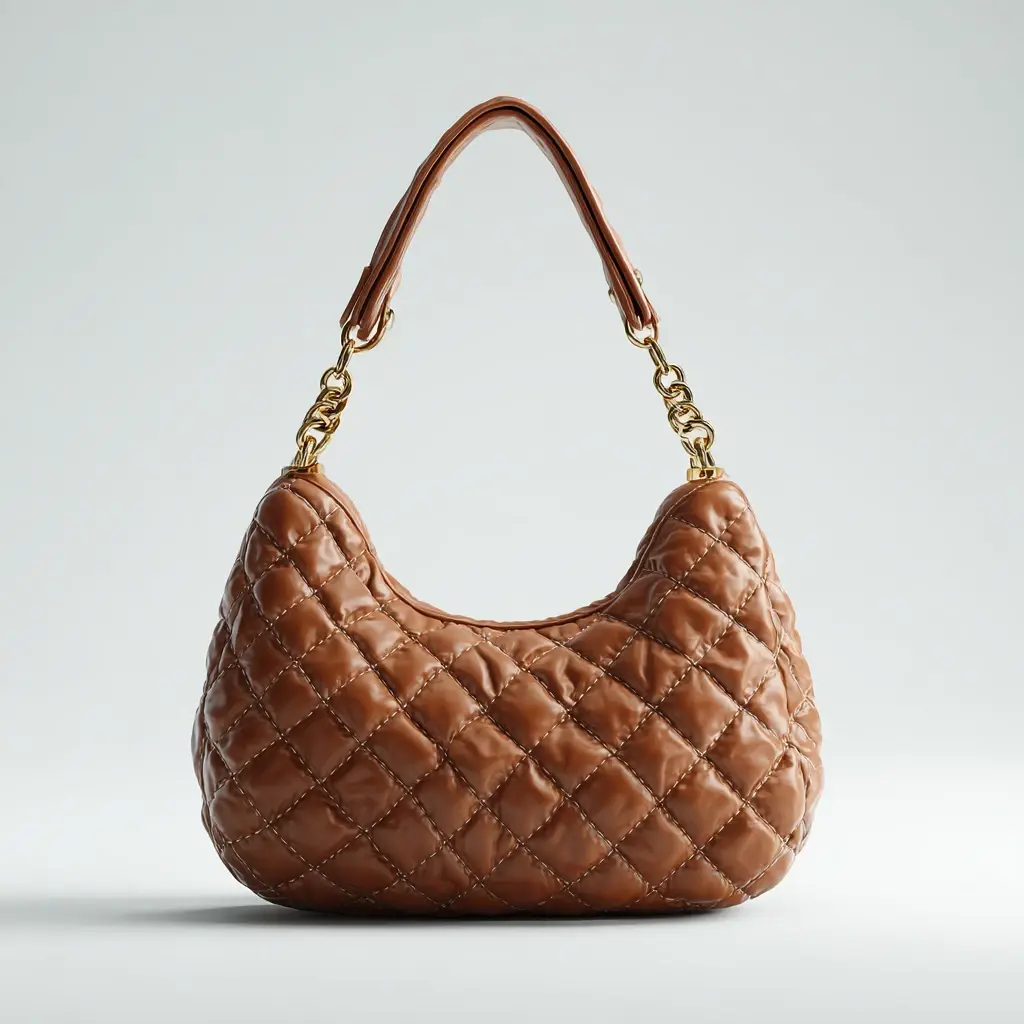
- Start at the Finish and Work Backwards
- Decision One: Base Metal — Zamak, Brass or Stainless
- Decision Two: The Plating Stack and How It Will Age
- Decision Three: The Weight Budget on a Bag You Carry
- Decision Four: Does the Leather Stack Hold the Fitting
- Decision Five: Where the Wear Actually Happens
- Pairing Matrix: Five Leathers Against Five Hardware Families
- Which Tests Prove a Pairing Before It Ships
- The Shortest Path Through the Tree
Which hardware belongs on a premium leather line, and how do you decide before the samples come back? Walk five decisions in order — base metal, finishing stack, weight budget, whether the leather stack can carry the fitting, and where the wear actually happens — and the pairing stops being taste and becomes a specification. The decision that gets skipped is the fourth one: a heavy fitting on 1.2-1.4 mm leather will pull through long before it ever corrodes, so the leather stack governs the hardware, not the other way round. Read it as a tree rather than a list: each answer narrows the next question, and a line that answers all five ends up with far fewer plating colours and far fewer failures than one that starts from a sample card.
Hardware decisions that narrow everything else
Start at the Finish and Work Backwards
A hardware decision made from a sample card is made in the wrong order, because a card shows how a fitting looks and nothing about how it behaves on leather that flexes 10,000 times a year. The tree starts from the finish the brand wants to be known for and works backwards through the constraints that finish imposes. Three questions sit above everything else, and together they eliminate most of the catalogue before a single sample is requested.
- What is the bag carried with, and how often? A daily carry bag worn over one shoulder puts a very different load through its strap fittings than an occasional hand-held shell, and the load answer decides base metal before aesthetics does.
- Will the surface be touched every day? Plating on a turn-lock or a magnetic tab gets handled dozens of times a day, so wear on the coating has to be tested; concealed fittings such as inner rivets do not need the same coating cost.
- How many plating colours will the line actually use? Each finish is its own plating bath with its own lot minimum, typically 500-1,000 pieces. Two finishes across a line almost always beat five, and one is cheaper still.
Answer those three and the tree opens with only two or three honest branches rather than dozens. From here on every decision has a test attached to it, which is what separates a hardware specification from a mood board. Where two aesthetically identical options remain, the tie-break is what the fitting does to the leather after a season of real use — and that is answerable with numbers rather than judgement.
Decision One: Base Metal — Zamak, Brass or Stainless
Base metal sets density, corrosion behaviour and price in one step, and it is the branch most often guessed. Zamak — the standard pressure die-cast zinc alloy used for most bag fittings — casts crisp detail cheaply and takes plating well, but it is brittle compared with brass and heavier than aluminium. Solid brass costs more per piece and has to be machined or cast to a simpler shape, and it develops a patina that either is the point or is not. Stainless steel is the strongest option and the least forgiving to finish.
| Base metal | Density (g/cm³) | Behaviour in service | Best pairing |
|---|---|---|---|
| Zamak (zinc alloy) | 6.6-6.7 | Crisp detail, brittle at thin sections, needs plating for colour | Structured totes and shoulder bags with moderate load |
| Solid brass | 8.4-8.7 | Work-hardens, patinas, holds a thread and a bearing for years | Turn-locks, feet and everyday carry bag fittings |
| Stainless steel | 7.9-8.0 | Strongest and most corrosion resistant, hardest to plate decoratively | Minimalist lines, PVD finishes, coastal markets |
| Aluminium | 2.7 | Very light, soft surface, anodises rather than plates | Large lightweight totes and travel pieces |
When Is Zamak the Right Answer?
Zamak is right when the fitting is decorative first and structural second: a branded plate, a ring that carries nothing heavier than a charm, a foot that sits under a reinforced base board. It is also right when the detail is complex — a filigree turn-lock or a shaped buckle simply cannot be machined from brass at the same cost. It becomes the wrong answer the moment the fitting carries an unpredictable load, because zinc alloys fail by cracking rather than bending, and a cracked D-ring on a strap is not something a customer can see coming.
The cost side follows the same logic. Because hardware and trim together carry 20-28 percent of landed cost on a leather programme, the base metal decision is one of the largest moves available after the hide itself — and it is reversible late, right up until the plating bath is booked. Changing metal after plating is a new tooling and a new lot; changing it before is a line on the specification.
Decision Two: The Plating Stack and How It Will Age
Once the base metal is chosen, the coating decides what the customer sees in month two. Decorative stacks on bag hardware typically run copper 5-8 µm, bright nickel 3-5 µm and a top coat, all of which is thin compared with bathroom or automotive hardware; that is why two visually identical fittings can differ by a factor of four in corrosion life. Physical vapour deposition sits in a different class entirely and is the only realistic option where coastal humidity or high perspiration contact is expected.
| Stack | Typical build | Hours to first corrosion | Pairs best with |
|---|---|---|---|
| Standard decorative nickel-chrome | Copper 5-8 µm + nickel 3-5 µm + chrome 0.1-0.3 µm | 24 hours | Corrected-grain and coated leathers, occasional use |
| Lacquer-sealed decorative | Nickel stack plus 8-12 µm topcoat | 48 hours | Full-grain day bags handled daily |
| PVD | Vapour-deposited layer 0.3-0.5 µm | 72-96 hours | Vegetable-tanned and pale leathers, coastal shipping |
| Solid brass, conversion coated | No plating, chemical passivation | 96 hours or better | Heritage lines where patina is accepted or wanted |
Chemistry follows the same decision, and it is not optional. Fittings in prolonged skin contact must meet the nickel release limit of 0.5 µg/cm² per week set under entry 27 of REACH Annex XVII, verified by the EN 1811 migration test — this is the clause that quietly removes cheap bright nickel from most European programmes. Where a bag is marketed to children, the total lead limit under CPSIA of 100 ppm applies to the metal and to any coating, and lead-bearing brass should be avoided or declared. California addenda review under Proposition 65 covers the same metals from the warning rather than the restriction side, so both belong on the same document request.
Decision Three: The Weight Budget on a Bag You Carry
Weight is the constraint that nobody complains about in writing and everybody notices first. The working rule on a carry bag is that hardware and trim should sit between 12 and 20 percent of the finished weight: below that the bag reads as under-specced, and above it the empty bag feels heavier than its contents. Translated into grams, that is roughly 60-110 g of hardware on an 18-24 cm crossbody, 90-150 g on a shoulder bag and 150-260 g on a 34-42 cm tote.
- Weight is density times volume. Moving from brass at 8.5 g/cm³ to aluminium at 2.7 g/cm³ on a set of rings removes about two thirds of that fitting's weight with no change to the drawing beyond the material call.
- Big over thick. A larger, thinner ring distributes load better and weighs less than a small chunky one, provided wall thickness stays above 2.5 mm at the bearing surface.
- Watch the chain. A 50 cm decorative chain in zamak adds 90-140 g on its own — more than most strap fittings combined, and the first place to find weight savings.
The budget also interacts with the leathers themselves. A soft hobo in 1.2 mm leather with 260 g of hardware will slump at the strap points in a season, whereas a structured tote in 1.4 mm leather carries the same weight without complaint. Pairing heavy fittings with soft, light leather is the most common silent mistake on premium lines, and it is caught by weighing the sample rather than by looking at it.
Decision Four: Does the Leather Stack Hold the Fitting
This is the branch most often skipped and the one that produces the worst failures, because a fitting pulling through leather is permanent. Every load-bearing fitting needs a stated total stack under it: the body panel plus a reinforcement patch, measured in millimetres with a tolerance. A turn-lock or a magnetic tab wants 2.2-2.6 mm of total thickness to sit properly, which means 1.2-1.4 mm body leather plus a 1.0-1.2 mm reinforcement patch bonded and stitched, never just the outer panel alone.
- Rivets and prongs. Prong length must exceed the total stack by 1.5-2.0 mm so it can be rolled, and the hole should be punched 0.2 mm smaller than the post so the fitting bites rather than spins.
- Reinforcement. A 35-45 mm square patch in 1.0-1.2 mm belly leather behind each strap point roughly doubles resistance to pull-through at almost no material cost.
- Stitch clearance. Keep the stitch line at least 4 mm clear of any fitting edge, otherwise the thread is abraded by the metal rather than by the world; Tex 40 thread at 7-9 stitches per inch with a 10 mm seam allowance is the baseline.
- Skiving. Where leather folds under a fitting, skive to 0.8-1.0 mm so the stack does not double and the fitting seats flush rather than proud.
None of this is visible in a photograph, which is why it belongs in the tech pack and not in the conversation. Two points decide whether it gets done: a written thickness measurement according to ISO 2589, taken after conditioning to ISO 2419, and a named tolerance of plus or minus 0.1 mm. Without those clauses the stack varies hide to hide, and the reinforcement stops being enough on the thinner ones.
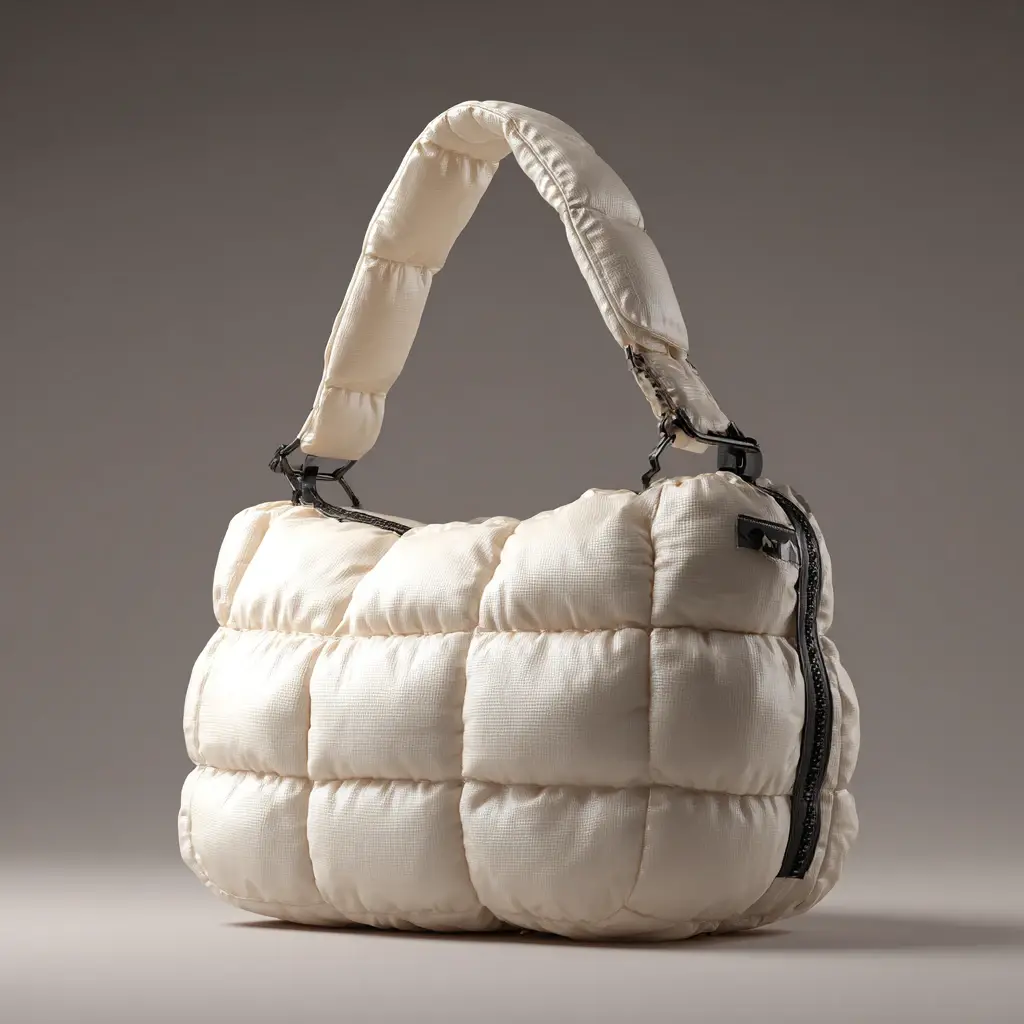
Decision Five: Where the Wear Actually Happens
Hardware failure is extremely predictable. Put the five highest-load locations into the specification with a number for each and most field returns disappear, because the pattern is the same on almost every silhouette and only the thresholds change.
| Location | Failure mode | Threshold to write in |
|---|---|---|
| Strap or handle D-ring | Ring deforms or pulls through | 250 N sustained for 10 seconds without deformation |
| Turn-lock and twist clasp | Lug loosens, plating wears at contact | 5,000 open-close cycles with no visible metal wear |
| Base feet | Stud shears or marks leather | 20 kg static load for 24 hours |
| Magnetic tab | Magnet pulls through or loses grip | 1.2-2.5 kgf pull force, sitting 25-35 mm inside the lining |
| Zipper top stop and slider | Slider spreads, teeth separate | 5,000 slider cycles on a #5 metal chain |
Note what those thresholds have in common: each is a number that can be re-tested after the fact. That is the real test of whether a specification exists — turn the requirement into something a stranger with a fixture can verify, and it survives contact with production; leave it as looks substantial and it does not. Fitting samples should also be evaluated after being cycled, not only when new, because plating wear is invisible on day one and obvious by month three.
Pairing Matrix: Five Leathers Against Five Hardware Families
With the five decisions answered, pairing becomes a matrix rather than a debate. Read across for the leather and down for the hardware family; the recommendation column is where most premium lines should land. The reasoning is mechanical rather than visual: heavy leathers tolerate heavy fittings, soft leathers need lighter ones, and pale leathers react badly to anything that can migrate metal ions into the surface.
| Leather | Recommended hardware | Avoid | Why |
|---|---|---|---|
| Full grain 1.2-1.4 mm | Solid brass or lacquer-sealed zamak | Unprotected bright nickel | Patina develops evenly; heavy metal ions can stain an unsealed surface |
| Vegetable tanned 1.6-2.0 mm | PVD stainless or untreated solid brass | Thin decorative stacks | Thick tannage accepts weight; pale surface shows every migration mark |
| Corrected grain or coated | Standard zamak nickel-chrome | Untreated brass | Coated surface resists staining, so a cheaper stack performs well here |
| Suede or brushed nap | Lightweight aluminium or thin-wall zamak | Heavy cast fittings | Nap leather has lower tear strength and slumps under weight |
| Embossed or printed | Colour-matched PVD | High-gloss chrome | PVD holds colour without transferring onto a patterned surface |
Notice how few finishes the matrix actually needs. A line running three leathers can usually standardise on two hardware families, which consolidates the plating bath, lowers the lot minimum exposure and makes the second order cheaper — the same logic that makes a single colourway easier than three. Where the leather handbag grading done before stitching already fixes tannage and thickness, half of this matrix is settled before it is read.
Which Tests Prove a Pairing Before It Ships
Four documents, requested at sample stage rather than after bulk, convert every claim above into something enforceable. They cost very little to produce and they are the difference between a hardware specification and a hardware preference.
- Salt spray report to ASTM B117, stating hours to first corrosion for the exact stack quoted, not for a generic one from the plating line.
- Nickel release to EN 1811, showing below 0.5 µg/cm² per week against entry 27 of REACH Annex XVII for any fitting touching skin repeatedly.
- Pull and cycle tests at the five locations in the table above, run on the finished bag rather than on the bare fitting, since leather contributes most of the result.
- Incoming inspection to ISO 2859-1 at AQL 2.5 for the hardware lot itself, counting plating defects, sharp edges and dimensional drift before assembly rather than after.
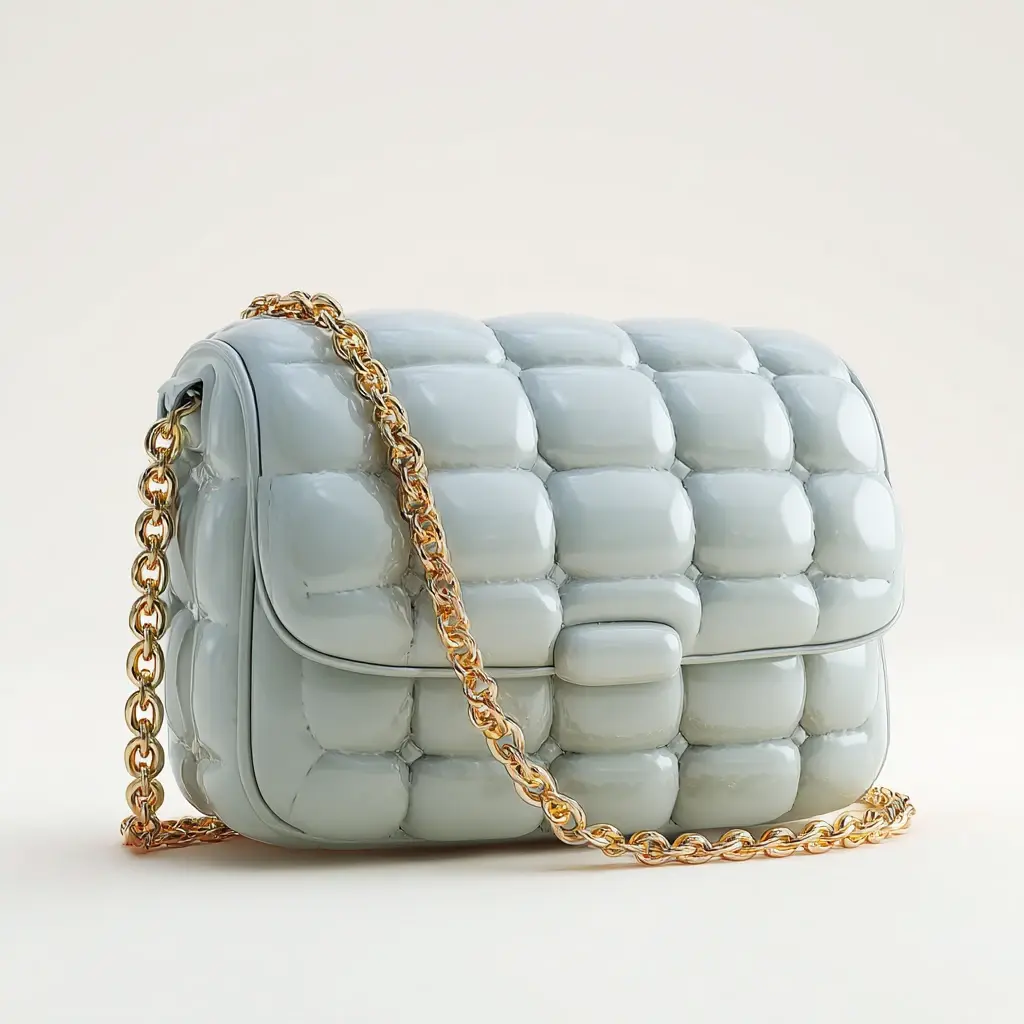
Ask for all four at once and in writing, with the method numbers included. A partner running a real process returns them in the same email as the quotation; a long silence followed by equivalent to usually means the stack will be whatever the plating line had that week. Where the destination is California or the EU, the chemical documents are not a nicety — REACH Annex XVII and Proposition 65 notices sit alongside CPSIA documentation where applicable, and customs questions do not wait for a second sample round.
The Shortest Path Through the Tree
If the line has to be specified this week, take the shortest route: pick base metal by load, restrict the line to one plating family, set the weight budget at 12-20 percent of finished bag weight, put reinforcement behind every load point, and write the five wear thresholds into the tech pack. Those five moves cover what most premium lines get wrong, and none of them requires additional design work — only a decision recorded before the tooling is cut.
The two adjacent references cover the rest. The leather handbags programme page sets out how tannage, thickness and finish interact with fittings on the rest of the bill, and the full buying guide to private label leather handbags widens the question from hardware to the whole grade ladder. For the leather itself, read how to source leather for private label programmes before locking a tannage, because what decides a fitting is the stack underneath it.
Send the silhouette and get a hardware specification back
Reply with your silhouettes, leathers and retail price band. A handbag programme specialist will return base metal, plating stack, weight budget, reinforcement thickness and the five wear thresholds in one specification sheet, alongside sampling at 6-10 working days, bulk at 35-50 days and inspection at AQL 2.5 under ISO 2859-1. Get a quote.
Frequently Asked Questions
Which hardware works best on a premium leather handbag?
Solid brass or lacquer-sealed zamak for full-grain bodies, and PVD-coated stainless where the leather is pale vegetable-tanned or the market is humid. Both are chosen for their load behaviour rather than for appearance: the fitting has to survive the strap load, the leather stack around it and several thousand open-close cycles before it matters what colour it is.
Is zamak good enough for a premium line?
Yes for decorative parts such as branded plates, feet and light rings, because it casts fine detail cheaply and plates well. It is the wrong choice where load is unpredictable, since zinc alloys crack rather than bend, so strap points and anything bearing weight should be brass or stainless steel instead.
How much should hardware weigh on a leather bag?
Plan for 12-20 percent of finished bag weight: roughly 60-110 g on an 18-24 cm crossbody, 90-150 g on a shoulder bag and 150-260 g on a 34-42 cm tote. Weight is density times volume, so switching from brass at 8.5 g/cm³ to aluminium at 2.7 g/cm³ removes about two thirds of a fitting's weight without altering the drawing.
What plating thickness should I ask for on bag hardware?
Decorative stacks typically run copper 5-8 µm, bright nickel 3-5 µm and a 0.1-0.3 µm chrome topcoat, sometimes sealed with an 8-12 µm lacquer. Thickness alone is meaningless without an outcome, so ask for hours to first corrosion to ASTM B117: 24 hours for a standard stack, around 48 sealed, and 72-96 for PVD.
Does hardware need to meet REACH or Proposition 65?
Yes. Any fitting in repeated skin contact must stay below the 0.5 µg/cm² per week nickel release limit in entry 27 of REACH Annex XVII, verified by the EN 1811 migration test. For California addenda, lead-bearing brass should be avoided or declared under Proposition 65, and children's items fall under the CPSIA total lead limit of 100 ppm.
How thick does leather need to be under a turn-lock?
Plan on 2.2-2.6 mm of total stack: 1.2-1.4 mm body leather plus a 1.0-1.2 mm reinforcement patch bonded and stitched behind it. Specify thickness to ISO 2589 after conditioning to ISO 2419 at plus or minus 0.1 mm, because a turn-lock set into a single outer panel will work loose long before the plating ever fails.
Why do strap D-rings pull through leather?
Usually because the fitting was specified against the outer panel rather than against the stack, so nothing spreads the load. Specify a 35-45 mm reinforcement patch behind each strap point, prong length 1.5-2.0 mm past total thickness, a hole punched 0.2 mm under the post diameter, and test to 250 N sustained for 10 seconds without deformation.
How many plating colours should a line use?
One if possible and two at most. Each finish is a separate plating bath with its own lot minimum, usually 500-1,000 pieces, so three finishes across three silhouettes multiplies exposure rather than adding choice. Consolidating finishes is also what makes the repeat order cheaper, because retained tooling and existing bath schedules carry over.
Which hardware suits vegetable-tanned leather?
Untreated solid brass or PVD-coated stainless steel. Vegetable tannage is usually thicker at 1.6-2.0 mm, so it carries heavier fittings comfortably, but its pale surface shows every migration mark, which rules out thin decorative stacks and high-gloss chrome. Pairing is mostly about preventing metal ions from reaching an unsealed surface.
Can painted or corrected-grain leather use cheaper hardware?
Very often yes. A coated or corrected surface resists staining, so a standard decorative nickel-chrome stack that would be marginal on pale full grain will perform well there, provided it meets the same nickel release and corrosion requirements. That trade is one of the few genuinely free cost reductions available on a premium line.
What tests should be requested on hardware samples?
Four documents: an ASTM B117 salt spray report for the exact stack quoted, an EN 1811 nickel release result, pull and cycle tests at the five failure locations run on the finished bag, and incoming inspection to ISO 2859-1 at AQL 2.5 for the hardware lot. Ask for all four with the quotation rather than after samples are approved.
How long do custom hardware and plating take?
Sampling takes 6-10 working days for a standard construction and 12-15 for complex work, but a custom die-cast fitting adds tooling and trial before that window opens, and a new plating bath adds screening. Bulk then runs 35-50 days once the slot is booked, so hardware decisions made late are usually what pushes a season past its launch date.
People Also Ask
Should hardware match the leather colour?
Matching helps cohesion, but consistency across the line matters more. One finish that agrees with every leather in the line is better than three finishes each perfectly matched to one bag, because the difference shows on a shelf and the cost shows in the plating lots.
Why does brass hardware darken unevenly?
Uneven patina comes from contact patterns, not from the metal. Areas handled daily stay bright while recesses darken, so either accept patina as part of the design or specify a lacquer at 8-12 µm to slow it down.
Is heavier hardware a sign of better quality?
Not necessarily. Weight signals density or volume, not strength, and a heavy fitting on light leather accelerates pull-through. Quality shows in how the fitting is attached and tested, which is why pull thresholds appear in every good specification.
Do magnetic closures cause problems on bags?
Only when placement is unplanned. Specify 1.2-2.5 kgf of pull force sitting 25-35 mm inside the lining so nothing prints through the surface, and check nothing sensitive sits directly against it in a pocket.
Sources and further reading
Every figure on this page is either our own programme data or attributed below. Open the originals before you write them into a specification.
- REACH — chemical substances regulationEuropean Commission Annex XVII restricts the substances that may appear in finished leather and coatings.
- SATRA — technical services for leather, footwear and accessoriesSATRA Independent leather, hardware and accessories testing protocols.
- Leather Working Group — environmental auditing for tanneriesLeather Working Group Environmental audit protocol for tanneries and leather traceability.