Full Grain vs Top Grain vs Genuine Leather Handbags Explained
What is the real difference between full grain, top grain and genuine leather handbags? It is a difference in how much of the hide surface survived, measured in microns of finish and newtons of tear strength rather than in adjectives. Full grain keeps the pore structure intact under a 15-25 micron aniline film and tears at 60 N or better; top grain is sanded flat under 30-50 microns and tears near 45 N; genuine leather is a finished split carrying a 60-120 micron film and tearing near 25 N — three materials that look identical in a photograph and behave nothing alike in the field. The case below follows one boutique programme through all three, and the numbers that decided it are the numbers set out in the tables that follow.
- The Return Rate That Started the Question
- What the Three Names Actually Mean
- Side by Side: Surface, Finish and Strength
- How Each Grade Ages in the Field
- Where Each Grade Belongs on a Silhouette
- The Tests That Separate the Three
- Writing the Comparison Into a Specification
- Which Grade the Case Ended With
- What Each Grade Does to Cutting Yield and Hide Cost
What is the real difference between full grain, top grain and genuine leather handbags? It is a difference in how much of the hide surface survived, measured in microns of finish and newtons of tear strength rather than in adjectives. Full grain keeps the pore structure intact under a 15-25 micron aniline film and tears at 60 N or better; top grain is sanded flat under 30-50 microns and tears near 45 N; genuine leather is a finished split carrying a 60-120 micron film and tearing near 25 N — three materials that look identical in a photograph and behave nothing alike in the field. The case below follows one boutique programme through all three, and the numbers that decided it are the numbers set out in the tables that follow.
The three grades at a glance
The Return Rate That Started the Question
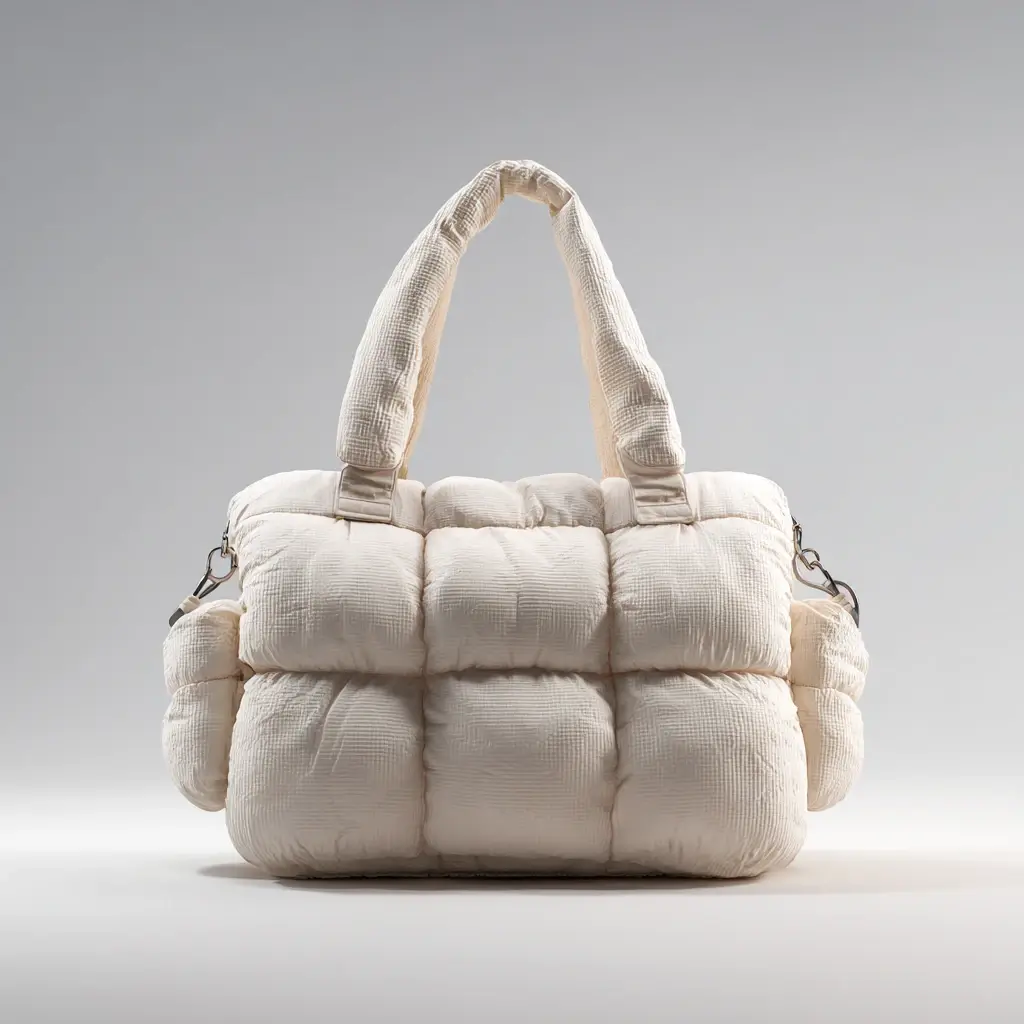
A boutique chain running twelve stores placed 1,200 totes in a single colourway, described on the hangtag as genuine leather and landed at a price that made the margin work. The bags looked right on the shelf and photographed beautifully. Eight months later the returns rate sat at 9%, and almost every returned unit failed in the same place: the film on the gusset corner had lifted along the fold, and the edge paint had cracked where the strap met the body.
The second run went out in top grain at a higher landed cost, and returns fell to 3%. The third decision was narrower: a hero SKU at 400 pieces in full grain, priced as the top of the range and sold with a patina story rather than a uniform one. Nothing about the silhouette changed between the three runs. The only variable was how much of the hide surface had survived into the finished panel, and that variable moved both the cost and the complaint rate.
- Run one, finished split. Landed cheapest, photographed best, failed at every fold within eight months, returns at 9%.
- Run two, top grain. Landed about 30% higher, held colour across the dye lot, returns fell to 3%.
- Run three, full grain. Landed highest of the three, sold at the top of the range, returns below 2% and a patina that generated reviews.
- The constant. Same pattern, same hardware, same 7-9 stitches per inch with Tex 40 thread and a 10 mm seam allowance.
The lesson is not that full grain is better. It is that the three names sit at three different points on a cost curve and three different points on a failure curve, and a programme is choosing both at once. The rest of this page sets out where those points are, in units that can be written into a specification and checked at incoming inspection.
What the Three Names Actually Mean
All three names are honest. None of them is a quality statement. Each one describes where a piece sits in the hide and what was done to its surface afterwards, and once that is understood the price ladder stops looking arbitrary.
A hide is split horizontally. Above the split sits the grain layer with the pore structure of the animal still in it; below sits the fibrous corium that becomes a split. Full grain takes the top of the grain layer and leaves it alone. Top grain takes the same layer and sands off the top of it to remove marks. Genuine leather, in trade usage, is a split that has been coated so that it can carry a grain pattern it did not grow.
- Full grain. Nothing is removed. Scars, insect bites and neck wrinkles stay visible, which is why visible panels need a 10-15% defect allowance and why no two bags are identical.
- Top grain. The surface is buffed just enough to remove those marks, then finished. The pore structure is partly flattened, so the material breathes less and marks less.
- Genuine leather. The split has no grain of its own, so one is embossed into a coating at a depth of 0.25-0.45 mm and then pigmented heavily enough to hide the seam between pattern and substrate.
The practical consequence is that the three can be told apart in about thirty seconds with the naked eye once you know what to look for: full grain shows irregular pore spacing that changes across the panel, top grain shows even pores with a faint buffed nap, and a finished split shows a pore pattern that repeats. Repetition is the tell, because nature does not stamp the same pore twice.
Side by Side: Surface, Finish and Strength
Three measurements separate the grades more reliably than any description: how thick the finish film is, how much force the material resists when torn, and how much of a hide is cuttable. The first decides how the bag ages, the second decides where it fails, and the third decides what it costs.
| Measurement | Full grain | Top grain | Genuine leather (finished split) |
|---|---|---|---|
| Finish film build | 15-25 microns aniline | 30-50 microns semi-aniline | 60-120 microns pigmented |
| Tear strength, ISO 3377-2 | 60 N or better | 45 N typical | 25 N typical |
| Usable area per hide | 85-90% | 90-94% | 95-98% |
| Typical thickness band | 1.4-1.8 mm | 1.2-1.4 mm | 0.9-1.1 mm |
| Colour fastness to perspiration, ISO 11641 | Grade 4-5 | Grade 4 | Grade 3-4 |
| Surface behaviour at a fold | Creases and darkens | Creases evenly | Film can craze or lift |
The column to read twice is the first one. A 15-25 micron aniline film is thin enough that the leather underneath still moves, absorbs and marks, which is exactly what produces a patina and exactly what produces a complaint in a uniform programme. A 60-120 micron pigmented film is thick enough to behave like a coating rather than a skin, which is why it survives a scuff and fails at a fold.
How Each Grade Ages in the Field
A handbag is a folding object. It folds at the gusset, at the flap hinge, at the strap attachment and at every point where a panel turns a corner, and the grade determines what those folds look like after a season of use. This is where the marketing language and the engineering language part company, because the property sold as character in one price band is sold as a defect in another.
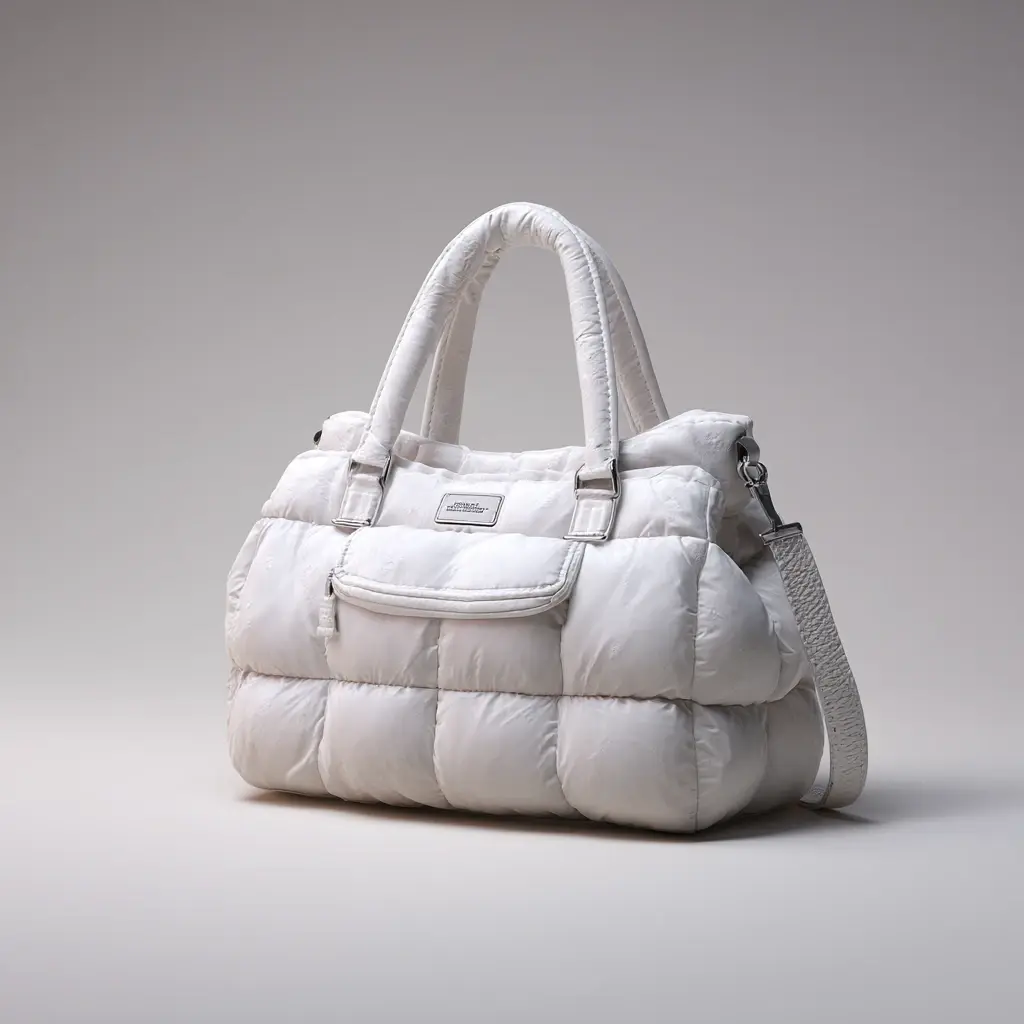
- Full grain darkens and marks. Oils from handling, sunlight and light abrasion all change the surface, unevenly. In a heritage line this is the selling point; in a uniform programme it is the complaint.
- Top grain holds its colour. The semi-aniline film slows absorption, so creasing is even and the panel stays closer to the approved swatch across the dye lot.
- A finished split stays flat until it fails. The coating resists scuffing for months and then cracks or lifts at the flex point with little warning, which is why the failure looks sudden to a customer.
- Edge paint behaves differently on each. At 0.9-1.1 mm the split flexes more per unit of load, so edge paint on a thin gusset cracks earlier than the same paint on 1.6 mm material.
One measurement predicts most of this: shrinkage temperature to ISO 3380, which should sit at 85 °C or above for any grade that will be folded in a hot climate. Below that, the collagen network has not been stabilised well enough and the panel will stiffen and then crack at the fold. It is a ten-minute test on a sample and it removes the largest single cause of the failure the boutique chain saw in run one.
Where Each Grade Belongs on a Silhouette
Grade and silhouette are a matched pair, and the wrong pairing costs more than either choice made alone. A structured satchel puts sustained load on the gable and the base; a soft hobo puts almost none. Matching the two is a table rather than a judgement.
| Silhouette | Grade that works | Thickness | Why |
|---|---|---|---|
| Structured satchel | Full grain or top grain | 1.6-1.8 mm | Sustained load on the gable needs tear strength above 45 N |
| Tote | Top grain, full grain on hero SKUs | 1.3-1.6 mm | Panel is the largest cut; yield and scuff resistance both matter |
| Shoulder | Top grain | 1.1-1.3 mm | Drapes at the flap without creasing permanently |
| Crossbody | Top grain or finished split | 1.0-1.2 mm | Weight across a 110-130 cm strap is the constraint |
| Hobo and sling | Finished split | 0.9-1.1 mm | Designed to slump, so film failure at a fold is not visible |
Where a programme runs two grades at once, keep them on different silhouettes rather than on different colourways of the same one. Customers compare colourways side by side and notice the difference; they rarely compare a tote with a crossbody. That is the arrangement the boutique chain settled on, and it is the one that keeps a price ladder readable on a shelf.
The Tests That Separate the Three
Every claim in the tables above can be tested on a sample before 500 pieces are cut, and every one of them maps to a published method. Naming the method is what turns a grade claim into something an inspector can accept or reject, and it costs nothing at brief stage.
- Tear strength to ISO 3377-2. Full grain should return 60 N or better, top grain near 45 N, and a finished split near 25 N. This is the single test that separates the three fastest.
- Rub fastness to ISO 11640. 500 cycles dry and 100 cycles wet for pigmented finishes; aniline full grain is often specified at 200 dry because a thin film cannot do more without being thickened.
- Colour fastness to perspiration to ISO 11641 at grade 4 or better, since a strap and a handle sit against skin and clothing all day.
- Shrinkage temperature to ISO 3380 at 85 °C or above, which predicts cracking at folds in hot climates better than any visual check.
- pH value to ISO 4045 between 3.5 and 6.0, a proxy for how well the tannage was neutralised and washed.
- Light fastness to ISO 105-B02 at grade 4 or better for anything sold from a window display.
Alongside the material tests sits the construction set that applies whichever grade is chosen: Tex 40 thread at 7-9 stitches per inch with a 10 mm seam allowance, zinc alloy hardware with plating thickness in microns and 24 hours to first corrosion tested to ASTM B117, and colour matched to a Pantone TCX reference at Delta E 2.0 or better against an approved swatch. The grade decides where a bag fails; the construction decides whether it fails early.
Writing the Comparison Into a Specification
A grade claim that exists only on a hangtag is an advertising risk. A grade claim that appears in the specification, in the tannery document and in the incoming inspection report is a defensible one, and the three should use the same words. The checklist below is what makes that possible, and it is the same list a retail buyer works through before a listing is approved.
- Name the grade and the thickness together, in millimetres with a tolerance of plus or minus 0.1 mm: full grain, 1.6 mm, plus or minus 0.1 mm.
- Name the finish and its film build, because aniline at 15-25 microns and pigmented at 60-120 microns are different products with the same grade name.
- Attach the test set: ISO 3377-2 tear, ISO 11640 rub, ISO 3380 shrinkage, ISO 4045 pH and ISO 11641 perspiration, each with a pass number.
- Attach the chemistry file: REACH Annex XVII covering chromium VI below 3 ppm, azo dyes, nickel release and phthalates; Proposition 65 for California; CPSIA where a bag is marketed to children.
- Attach traceability: a Leather Working Group tannery reference for the hides, plus BSCI (amfori) or Sedex / SMETA audit references and an ISO 9001 quality system reference.
- State the inspection standard: pre-shipment at AQL 2.5 under ISO 2859-1, with the written report issued to you.
Both BSCI and Sedex audit references, together with the ISO 9001 quality system reference, can be supplied for our validated partner factory Quanzhou Yingming Bags, and third-party inspection by SGS can be booked alongside the pre-shipment report. Assembly of that file takes a few days before the deposit moves and weeks after it, which is the only argument needed for doing it early.
Which Grade the Case Ended With
The boutique chain kept all three, on different silhouettes and different price bands: full grain on the hero satchel at the top of the range, top grain across the tote and shoulder programme that carries the volume, and a finished split on the sling that sits at the entry price. Returns across the whole programme settled below 3%, and the material ladder became readable on the shelf instead of invisible on a hangtag.
What made it work was not choosing the best grade. It was choosing three grades deliberately, each with a specification behind it, each tested before cutting, and each placed on a silhouette whose load it could carry. That is the decision a handbag programme specialist can price in one pass: send the silhouettes, the grade direction and a target retail price, and the comparison comes back as numbers per SKU rather than as adjectives.
Two further pieces carry the detail: the full grade buying guide prices all four grades against a 500-piece tote programme, and the cost-per-piece breakdown by hide grade shows where the material line sits inside a landed figure. For silhouettes, materials and the full calendar, the leather handbags reference sets it out in one place.
What Each Grade Does to Cutting Yield and Hide Cost
Grade is a cost line before it is a marketing line, and the mechanism is cutting yield. A hide averages 18-22 sq ft, but only part of it reaches a face panel: usable area after nesting runs 55-70%, and the defect allowance on the visible surface differs sharply by grade because full grain keeps the marks that top grain sands away. Those two numbers, not the price per foot, are what move the material line.
| Grade | Usable area per hide | Consumption per tote | Defect allowance | Cost per sq ft | Material per piece |
|---|---|---|---|---|---|
| Full grain | 55-65% | 1.4-1.9 sq ft | 10-15% | USD 2.80-4.60 | USD 3.92-8.74 |
| Top grain | 60-70% | 1.3-1.7 sq ft | 5-8% | USD 2.20-3.40 | USD 2.86-5.78 |
| Finished split | 68-75% | 1.2-1.5 sq ft | 2-4% | USD 1.10-1.90 | USD 1.32-2.85 |
Read the last column against the return rates at the top of this page and the ladder becomes a decision rather than a preference. The finished split lands at roughly a third of the full-grain material cost and carried a 9% return rate; top grain sat in the middle and returned at 3%. On a 500-piece run, one point of return rate costs five units plus their handling, so the cheap panel is only cheap while it stays on the shelf. The cost per piece by hide grade puts the same lines inside a landed figure.
Compare three grades on your own silhouettes
Send the silhouettes, a grade direction and a target retail price per SKU. A private label coordinator will return tear strength, film build and a landed band for each grade at FOB Xiamen, with sampling at 6-10 working days, bulk at 35-50 days and inspection at AQL 2.5 under ISO 2859-1. Get a quote.
Frequently Asked Questions
What is the difference between full grain and top grain leather?
Full grain leaves the outermost layer unsanded, so the pore structure and any natural marks survive under a 15-25 micron aniline film and the material tears at 60 N or better. Top grain is the same layer buffed flat to remove those marks, then finished at 30-50 microns, tearing near 45 N and holding colour more evenly.
Is genuine leather the lowest grade?
In trade usage, yes: it is a finished split taken from below the grain layer, embossed with a pore pattern at 0.25-0.45 mm depth and coated with a 60-120 micron pigmented film. It is real hide and legal to name that way, but it sits one rung below corrected grain and tears near 25 N rather than near 60 N.
Which grade lasts longest on a handbag?
Full grain, because the fibre structure below the surface is undamaged and the finish is thin enough to move with it. It tears at 60 N or better and it creases rather than cracking. That said, longevity is only part of the decision: a finished split on a soft hobo that was designed to slump can outlast a full grain panel used at the wrong thickness.
How can a buyer tell the three grades apart by eye?
Look at the pore pattern. Full grain shows irregular pores that change spacing across a panel; top grain shows even pores with a faint buffed nap; a finished split shows a pattern that visibly repeats, because it was stamped rather than grown. Repetition is the tell, and it takes about thirty seconds to spot on a flat panel.
What does finish film build actually change?
Thickness of the coating decides whether the material behaves like a skin or like a paint film. At 15-25 microns the leather still absorbs, marks and darkens, producing patina. At 60-120 microns the coating resists scuffs for months and then cracks or lifts at a fold with little warning, which is why failures on coated splits look sudden.
Which test separates the three grades fastest?
Tear strength to ISO 3377-2, which returns 60 N or better on full grain, about 45 N on top grain and about 25 N on a finished split. It is quick, it is unambiguous and it correlates closely with how a bag behaves at a loaded fold such as a strap attachment or a gusset corner.
Why did the returns rate change between the three runs?
Because the failure moved. The finished split failed at every fold as the film lifted, the top grain creased evenly and held its colour, and the full grain darkened into a patina that customers read as character. The silhouette, hardware and stitch count were identical across all three runs.
Can two grades be used in one programme?
Yes, and it usually works better on different silhouettes rather than on different colourways of the same one. Customers compare colourways side by side and notice the difference; they rarely compare a tote with a crossbody. Keep each grade on a silhouette whose load it can carry and the price ladder stays readable.
What shrinkage temperature should be specified for leather?
85 °C or above to ISO 3380. The figure indicates how well the collagen network has been stabilised during tannage, and below that threshold panels stiffen and then crack at folds, particularly in hot climates or in a container that has sat in the sun. It is a ten-minute test on a sample.
Does the grade affect the production calendar?
No. Sampling is 6-10 working days and bulk is 35-50 days whichever grade is chosen, since the grade changes the material buy rather than the process. Material confirmation at 2-4 days can stretch slightly on full grain, because the hide has to be graded and approved against a physical swatch before cutting.
What compliance documents cover a leather grade claim?
A test report per material lot against REACH Annex XVII covering chromium VI below 3 ppm, azo dyes, nickel release and phthalates, a Proposition 65 review of hardware and coated trim for California, CPSIA documentation where a bag is marketed to children, and a Leather Working Group tannery reference for traceability.
What is the minimum order when comparing grades?
500 pcs per style / colourway, and each colourway counts separately because it is its own dye lot. Where three grades are used across three silhouettes that is 1,500 pieces in total. Above roughly 5,000 pieces across a season, capacity on 7 production lines can be reserved and a price held for the season.
People Also Ask
Is top grain leather worth the premium over genuine leather?
On any silhouette that folds under load, yes. Top grain tears near 45 N against 25 N, and the failure mode changes from a coating that lifts at the fold to a surface that creases evenly. On a soft hobo designed to slump, the premium buys very little.
Which grade should a first leather programme use?
Top grain. It sits at the point where colour holds across a dye lot, tear strength is adequate at 45 N, and the landed cost still fits a mid-market retail band. Move to full grain on a hero SKU once sell-through data justifies the top of the range.
Does a thicker finish film make a bag more durable?
It makes it more scuff resistant and less durable at the fold. A 60-120 micron film resists abrasion for months and then cracks or lifts with little warning, whereas a 15-25 micron film moves with the leather and marks instead of failing.
How do I verify the grade after the goods arrive?
Check the pore pattern for repetition, measure thickness at three points against the plus or minus 0.1 mm tolerance, and match the material lot number to the tear strength and shrinkage reports issued before cutting. Those three checks settle most disputes in minutes.
Sources and further reading
Every figure on this page is either our own programme data or attributed below. Open the originals before you write them into a specification.
- Leather Working Group — environmental auditing for tanneriesLeather Working Group Environmental audit protocol for tanneries and leather traceability.
- SATRA — technical services for leather, footwear and accessoriesSATRA Independent leather, hardware and accessories testing protocols.
- REACH — chemical substances regulationEuropean Commission Annex XVII restricts the substances that may appear in finished leather and coatings.