Best Handbag Types for Wholesale Reorders 2026
Which handbag types actually reorder well in 2026? The ones that clear five gates in order, and the order matters more than the answer. First, will the silhouette still read as current next spring? Second, can the pattern be cut again without re-grading? Third, is the hardware still in production in twelve months? Fourth, does the style carry at least a 2.4x repeat multiple on the first buy? Fifth, can the colourway be re-cut at 500 pcs? Styles that pass all five reorder at 55 days of cover; styles that fail one usually die at full price after a 62 per cent sell-through. This page walks the tree gate by gate, with the numbers behind each branch, AQL 2.5 inspection under ISO 2859-1, and a 35-50 day production window that sets the reorder trigger.
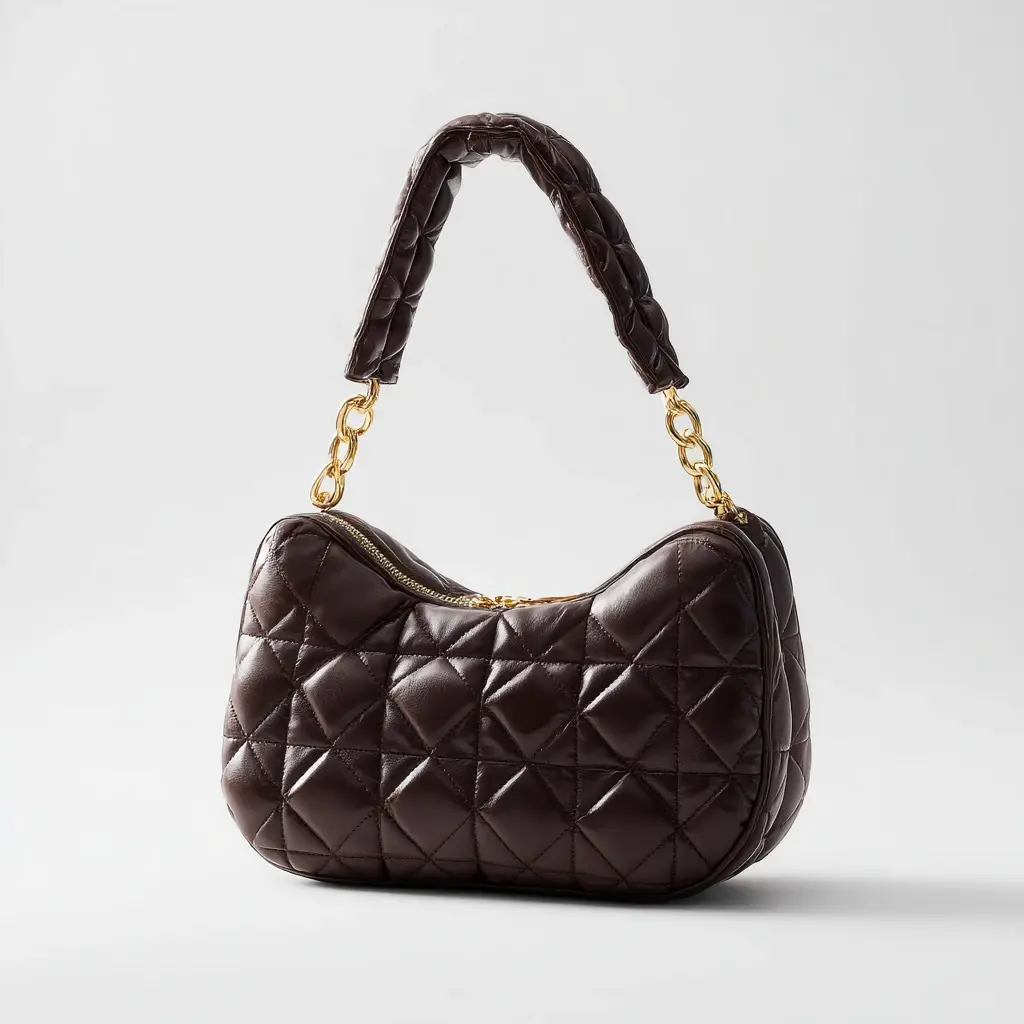
- First Question: Will This Shape Come Back Next Spring
- Second Gate: Does the Pattern Survive a Second Cut
- Third Gate: Is the Hardware Still Tooled in 12 Months
- Fourth Gate: Which Styles Carry a 2.4x Multiple
- Fifth Gate: Can the Colourway Be Re-Cut at 500
- Scoring Five Gates Without Averaging Away Risk
- Where Tote, Shoulder and Crossbody Branch
- What a Dead Reorder Costs Against 35-50 Days
- Walking the Tree for a 3,000-Piece Season
- The Reorder Trigger: Run Rate, Cover and the Date to Press
- Extending a Core Style: Second Size, Second Colour, Second Season
- What Run Two Should Change, Read From Returns Data
Which handbag types actually reorder well in 2026? The ones that clear five gates in order, and the order matters more than the answer. First, will the silhouette still read as current next spring? Second, can the pattern be cut again without re-grading? Third, is the hardware still in production in twelve months? Fourth, does the style carry at least a 2.4x repeat multiple on the first buy? Fifth, can the colourway be re-cut at 500 pcs? Styles that pass all five reorder at 55 days of cover; styles that fail one usually die at full price after a 62 per cent sell-through. This page walks the tree gate by gate, with the numbers behind each branch, AQL 2.5 inspection under ISO 2859-1, and a 35-50 day production window that sets the reorder trigger.
The reorder arithmetic, in one block
First Question: Will This Shape Come Back Next Spring
Ask this before anything else, because a shape that cannot be sold twice is a one-season purchase dressed up as a core style. The test is not whether the design is good, it is whether the design is describable in one sentence a buyer can repeat to a customer six months later. A structured tote with a flat base and a 240 mm opening is describable. A crescent body with a chrome ring and an angled gusset is not, and the second order never arrives because nobody can explain what to buy again.
If the answer is no, stop and treat the style as a drop: buy 500 pcs, plan no repeat, and price it to sell through at full margin inside twelve weeks. If the answer is yes, move to gate two. What kills brands is not picking the wrong shape, it is buying a one-season shape at core-style depth and then holding 240 units into a markdown. The category-level view of which silhouettes behave this way is in how the boutique top-seller list reads in 2026.
Second Gate: Does the Pattern Survive a Second Cut
A pattern that was tuned to one sampling round and never documented will not repeat cleanly. The question to ask is whether the pattern carries a revision number, a full component list and a marker that a cutting room can lay out without a conversation. If yes, the second cut is a scheduling exercise. If no, the second cut is a redevelopment, and a redevelopment at 6-10 working days for sampling plus 35-50 days for bulk quietly turns an eight-week reorder into a fourteen-week one.
Panel count is the cheap proxy. A tote built from five panels and two gussets repeats predictably, because there are few places for a 2 mm drift to hide. A slouchy hobo built from nine panels with a curved gusset repeats only if every panel carries a notch and a grain direction mark. Nothing here is about quality; it is about whether the same bag can be made twice, which is the entire premise of a reorder.
- Revision in force: the pattern number and revision must appear on the cutting ticket, not on a folder cover.
- Notch and grain marks: every panel needs both, or the second cut will mirror a panel that was never meant to mirror.
- Consumption per unit: recorded in square feet, because a 6 per cent drift on a 1.9 square foot body wipes out the repeat margin.
- Interlining spec: weight in grams per square metre, since a substitution here changes the hand feel more than any leather change.
- Assembly sequence: written, because the order of operations decides where the topstitch lands at the gusset.
Third Gate: Is the Hardware Still Tooled in 12 Months
Hardware is the most common reason a good style stops repeating. A custom cast ring, a branded zip pull, a die-cast lock plate: each is made against a tool, and tools get retired, re-quoted or absorbed into another project. Ask for the tooling status in writing, including the minimum order quantity the hardware itself carries, because a 500-piece bag run can require 520 pieces of hardware and a hardware minimum of 1,000.
The safer branch is to design around stock hardware where the style allows it, and to reserve custom tooling for the one element that carries the brand. Then hold 5 per cent spare hardware against the run: 25 sets on a 500-piece order. That spare box is what allows a repair programme, and a repair programme is what keeps a repeat customer from returning a two-year-old bag instead of buying a new one.
| Hardware choice | Tooling exposure | Repeat risk | Field failure mode |
|---|---|---|---|
| Stock zinc-alloy ring, 24 h salt spray | None | Low | Plating wear at the strap slot |
| Custom cast ring with logo | One die, 1,000 pc minimum | Medium | Die retired between seasons |
| Branded zip pull, #5 nylon | Sliders and pulls separate | Low | Pull detaching at the split ring |
| Die-cast turn lock | Two dies, tight tolerance | High | Spring fatigue after 9,000 cycles |
| Stock magnetic snap, 4 kg pull | None | Low | Lining creeping into the magnet pocket |
Fourth Gate: Which Styles Carry a 2.4x Multiple
The repeat multiple is the number that pays for the calendar. On a 500-piece first buy, a style that sells 62 per cent in six weeks supports a second order of roughly 1,200 pieces, which is the 2.4x figure worth building a season around. A style selling 40 per cent in the same window supports a top-up of 200 pieces at best, and a top-up that small rarely clears a 500-piece minimum per colourway, so the style simply stops.
That is why the multiple is a gate rather than a metric to admire afterwards. It also explains why the tote keeps winning: a 500-piece tote buy at a 62 per cent six-week sell-through produces a repeat that clears MOQ on the same colourway, while a novelty shape at the same sell-through produces a repeat that has to change colour to hit 500, which resets the customer's recognition of the style. The economics behind that pattern are worked through in why a tote is usually the first profitable category.
Sourcing Journal has reported for several seasons that replenishment speed has become a bigger driver of full-price sell-through than initial assortment breadth, which matches what the multiples show: the second order, not the first, is where margin is made. A brand that cannot repeat inside eight weeks is effectively selling a different business model from one that can.
Fifth Gate: Can the Colourway Be Re-Cut at 500
Colour is where repeats quietly fail. Hides arrive in dye lots, and a second run three months later lands on a different lot with a visible shift at around 1.5 units of Delta E, which is enough to look like a different product on a shelf but not enough to fail a visual check under office lighting. The test is whether the colour sits on a base material with repeatable supply: a standard tannage in a core colour, or a coated textile from a continuous production programme.
If the answer is no, the branch is to convert the style into a seasonal colour drop and accept that each drop is a new SKU with its own 500-piece minimum. That is a legitimate strategy, and it is the one most accessory brands actually run. It just has to be chosen on purpose, because a brand that plans a repeat and then changes the colour has paid for the tooling and lost the recognition.
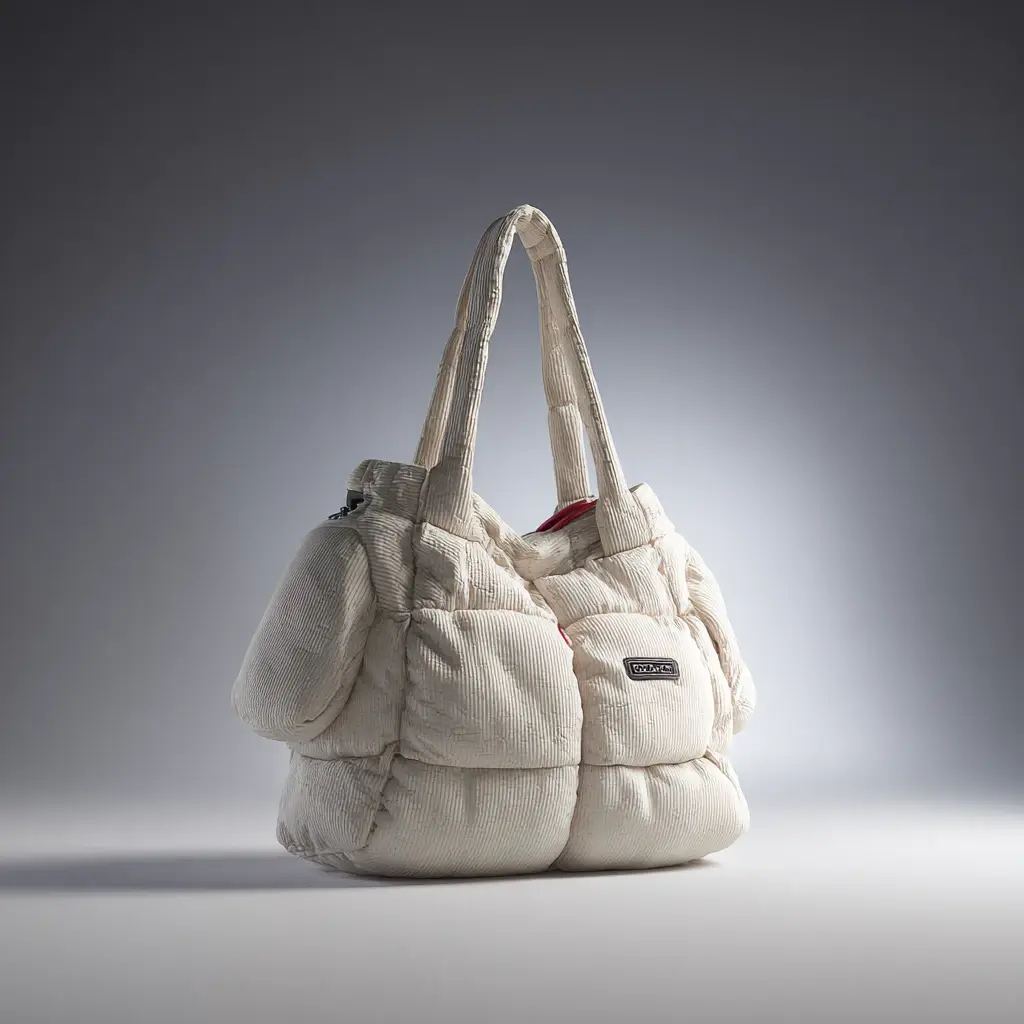
Scoring Five Gates Without Averaging Away Risk
A weighted score is useful only if a fail anywhere is still visible at the end. Score each gate from 1 to 5, weight shape longevity and colour repeatability at 25 per cent each, pattern repeatability at 20, hardware continuity at 20, and multiple at 10. Then apply one hard rule: any gate scoring 1 or 2 blocks the style regardless of the total. Without that rule, a 4.6 average hides a hardware gate at 2, and the second order stalls in month five.
- Score shape longevity by asking whether a buyer can describe the style in one sentence without pointing at it.
- Score pattern repeatability by whether the cutting ticket can be issued from the file with no conversation.
- Score hardware continuity by the written tooling status, not by whether the sample still exists.
- Score colour repeatability by the base material, not by the colour card.
- Score the multiple from last season's sell-through curve at week six, not from the buy plan.
Run the score before the range review, not after it. The output is three lists: core styles that repeat on the same colourway, seasonal styles that repeat as colour drops, and one-shot styles that should be bought shallow. That structure is the same one described in mixing bag types into a balanced collection, applied at the level of a single style rather than a whole range.
Where Tote, Shoulder and Crossbody Branch
The tree resolves differently by silhouette. A tote usually passes gates one, two and five comfortably, and its risk sits at gate three if the handle attachment uses a custom plate. A shoulder bag passes gate one most seasons and stumbles at gate two when the strap is anchored into a curved gusset, because the second cut drifts at the anchor. A crossbody passes gate four easily and gate five less often, since compact bodies get bought in fashion colours that do not repeat.
The practical consequence is a split in buy depth. Totes justify 500 pieces per colourway across two core colours. Shoulder bags justify 500 in one core colour plus 300 in a seasonal shade as a test. Crossbody styles justify 500 in one colour and should be treated as drops unless the colour is black, tan or a coated neutral. Those proportions are the difference between a range that repeats and a range that looks new every quarter and never compounds.
What a Dead Reorder Costs Against 35-50 Days
When a reorder fails, the cost is not the unsold units alone. It is the units plus the tooling already amortised into the first buy plus the shelf space that a competitor fills while the brand waits. A 500-piece style bought at a landed cost of 18.40 and marked down from 78 to 46 at 35 per cent remaining inventory loses roughly 11.20 per unit on the residual 175 pieces, which is close to 2,000 in cash and a season of category credibility.
Set against that, the protection is cheap: one inline visit during the first production run, at 15 to 30 per cent completion, at a third-party man-day cost of roughly 220-320, plus a final pre-shipment check under ISO 2859-1 at AQL 2.5. Those two gates are what stop the first run from teaching the customer that the style is unreliable, which is the fastest way to make a repeat impossible.
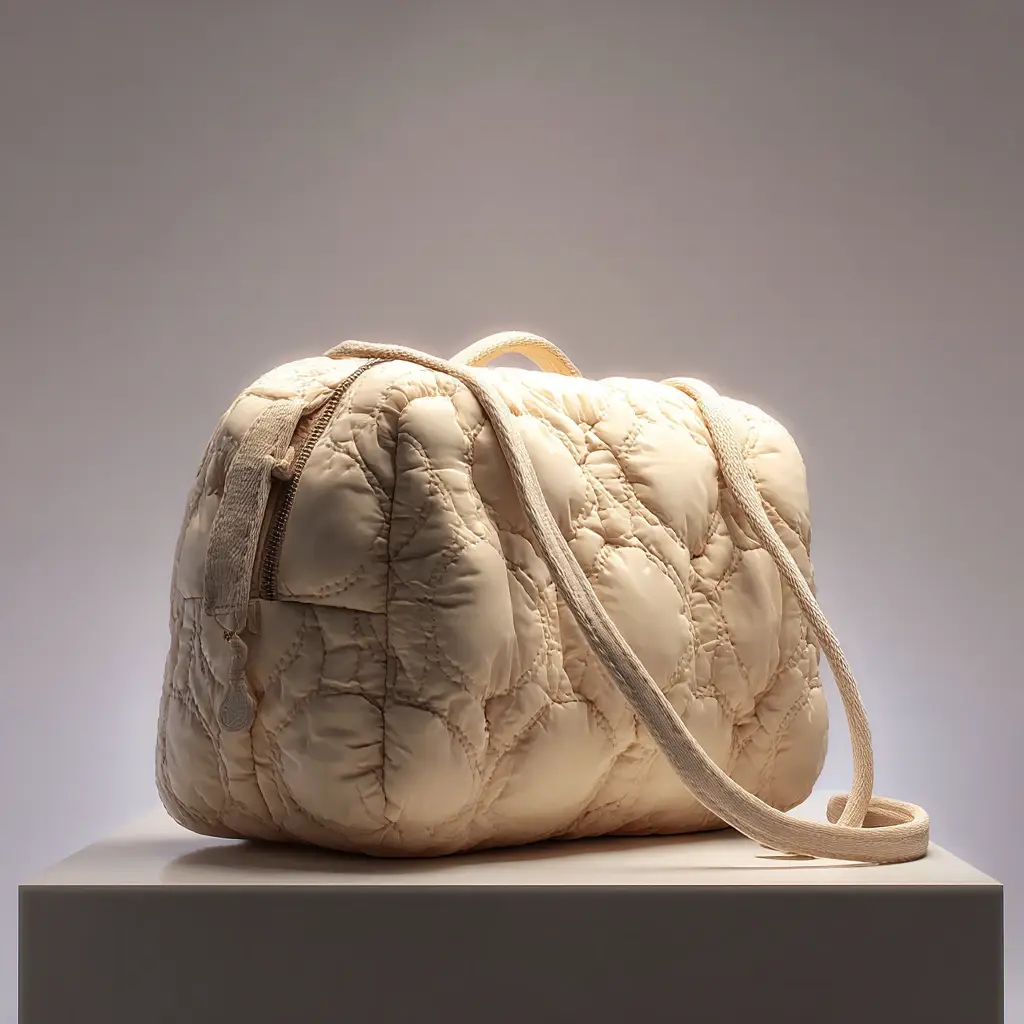
Walking the Tree for a 3,000-Piece Season
A 3,000-piece season across four styles is a realistic first programme: two core styles at 1,000 pieces each across two colourways, one shoulder style at 500 in a single core colour, and one crossbody at 500 as a drop. Place the order so that the two core styles land first, because they are the ones that will generate the week-six sell-through reading that decides the repeat.
Then put the calendar in writing. Sampling at 6-10 working days, bulk at 35-50 days, one inspection gate at AQL 2.5, and a reorder trigger fixed at 62 per cent sell-through inside six weeks rather than at the end of the quarter. The full category picture sits in the leather handbag reference, and the buying logic that precedes this page is covered in choosing bag types against a target customer.
The Reorder Trigger: Run Rate, Cover and the Date to Press
A reorder is a date rather than a feeling. The trigger is where three numbers meet: the weekly run rate, the weeks of cover left in the warehouse, and the 56 to 71 days a repeat takes to arrive once the order is placed. Press late and the gap shows on the shelf; press early and the cash sits in cartons through two quarters of a season.
| Weekly units | Weeks 500 pcs lasts | Reorder placed at | Cover left when it lands |
|---|---|---|---|
| 40 | 12.5 | Week 5 | About 5 weeks, comfortable |
| 70 | 7.1 | Week 3 | About 3 weeks, thin but workable |
| 100 | 5.0 | Week 2 | Under 2 weeks, needs a split shipment |
| 150 | 3.3 | Week 1 | Stock out before arrival, so reorder 1,000 |
| 200 | 2.5 | Before launch | Only viable on a standing reorder programme |
Extending a Core Style: Second Size, Second Colour, Second Season
The cheapest growth on a reorder is not a new style, it is a second version of one that already sells. A smaller body at 80 per cent of the linear dimensions reuses the pattern logic, the hardware set and most of the panel nesting, so sampling is shorter and the risk is smaller than a fresh silhouette carries. The saving disappears once the change stops being a scale.
- Second size. Scale the body by 15 to 20 per cent, keep the hardware identical, and expect sampling at 6 to 10 working days rather than 12 to 15.
- Second colourway. A second dye lot with its own 500 piece minimum; keep the base colour constant and rotate only the accent.
- Second season. Re cut against the retained dye lot reference and the sealed sample, and re issue the cutting ticket with the pattern revision on it.
- Shared tooling. One branded puller and one logo plate across both sizes amortise USD 350 to 900 of tooling across twice the units.
- Where it stops. A third size usually needs a new pattern rather than a scale, and at that point the saving is gone.
What Run Two Should Change, Read From Returns Data
Returns are the only specification feedback a brand gets from a stranger, and they usually arrive after the reorder decision has been made. Reading them before the second run is placed is the cheapest improvement available, because the change costs nothing at sampling and a great deal once 500 units are cut. Rank the reasons and change the top two only.
| Return reason | Typical share | Change on run two | Expected effect |
|---|---|---|---|
| Strap slides or digs in | 18 to 25 per cent | Widen the strap to 32 mm and add 5 mm of foam | Fewer comfort complaints at almost no cost |
| Colour differs from the screen | 15 to 20 per cent | Re shoot on a calibrated set up and state Delta E 2.0 | Removes the largest single return cause |
| Lining tears at the key pocket | 8 to 12 per cent | Move from plain taffeta to 210D ripstop at 60 to 70 gsm | A season of life in the highest abrasion corner |
| Hardware marks or dulls | 6 to 10 per cent | Raise the nickel undercoat to 6 to 8 microns with 24 hour salt spray | No corrosion complaints inside six months |
Send the styles you are considering for a repeat, and the tooling status and colour repeatability come back in writing before the buy is placed. Get a Quote → /contact-quote/
Frequently Asked Questions
Which handbag types reorder best in 2026?
Structured totes and simple shoulder bags with stock hardware and core colours repeat most reliably, because they pass all five gates: describable shape, documented pattern, live tooling, a 2.4x multiple and a re-cuttable colour. Compact crossbody styles repeat well only when bought in a coated neutral rather than a fashion shade.
What repeat multiple should a brand plan for?
Plan for 2.4x the first buy on a style that sells 62 per cent inside six weeks. On a 500-piece first order that supports a repeat near 1,200 pieces, which clears the 500-piece minimum on the same colourway. Below about 45 per cent sell-through at week six, the top-up is usually too small to clear MOQ.
Why does hardware stop a reorder more often than leather does?
Because hardware is made against a tool, and tools get retired or re-quoted between seasons. A custom ring can carry its own minimum of 1,000 pieces against a 500-piece bag run, and if the die is retired the style cannot repeat without a redesign. Stock hardware removes that exposure entirely.
How long does a reorder take from decision to delivery?
Roughly eight to ten weeks if a repeat sample is waived, since bulk alone runs 35-50 days plus transit. If a new sample round is needed, add 6-10 working days, and add 12-15 for a complex build. That is why the reorder decision belongs at week six of the first season, not at the end of it.
How much of a first order should be core versus seasonal?
A workable split for a new brand is 70 per cent core and 30 per cent seasonal. Core styles carry the repeat programme at 500 pieces per colourway in two colours; seasonal styles are bought shallow in one colour and treated as drops. The split protects cash while still giving the range a reason to be photographed.
What is a dead reorder worth in cash terms?
On a 500-piece style landed at 18.40 and marked down from 78 to 46 with 35 per cent inventory left, the residual loss runs near 2,000 plus the tooling already amortised into the first buy. That is roughly ten times the cost of one inline inspection visit and one pre-shipment check.
Should every colourway be reordered separately?
Yes, because each colourway is its own dye lot and its own 500-piece minimum. Treating two colours as one lot hides a single-colour problem and usually forces a compromise where the weaker colour rides on the stronger one's volume. Separate lines also make the sell-through curve readable per colour, which is what the gate score needs.
How do you keep a repeat looking identical to the first run?
Freeze a sealed golden sample from the first approved round, record the dye lot and the material lot against carton numbers, and keep the pattern revision on the cutting ticket. Colour should be checked under a D65 source against a numeric tolerance, since Delta E above 1.5 between two units on one shelf reads as a different product.
What inspection standard applies to a repeat order?
The same one as the first order: AQL 2.5 under ISO 2859-1, General Inspection Level II, which on a 501-1,200 piece lot means an 80-unit sample with accept 5 and reject 6. Criticals stay at accept zero. Repeat orders are where standards tend to slip, and where a drift becomes a customer complaint two seasons later.
Can a style repeat if the pattern was never documented?
Not cleanly. Without a revision number, a component list and a marker, the second cut becomes a redevelopment wearing a repeat's clothes. That adds 6-10 working days of sampling and pushes the whole cycle past the point where the sell-through data is still useful, which usually means the repeat is abandoned for calendar reasons rather than commercial ones.
How many styles should a 3,000-piece season carry?
Four is a realistic number for a first programme: two core styles at 1,000 pieces across two colourways, one shoulder style at 500 in a single colour, and one crossbody at 500 as a drop. More styles at smaller depth per style is the most common way brands lose the repeat multiple entirely.
What does an inline visit add to a repeat order?
It is the only check that can still change the lot. At 15-30 per cent completion a third-party visit costs roughly 220-320 for a man-day and catches drift in panel alignment, hardware setting or edge finish while units are unfinished. On a repeat, that visit protects the recognition the first order paid for.
People Also Ask
Do totes really reorder better than fashion shapes?
In most programmes, yes, because the tote passes the pattern and colour gates without special effort. A five-panel body with stock hardware repeats predictably, and a core colour can be re-cut on the same tannage. Fashion shapes can repeat, but usually only as colour drops, which resets the recognition each season.
How early should a brand commit to a reorder?
At week six of the selling season, once the sell-through curve is readable. Bulk production runs 35-50 days and transit follows, so a decision taken at week ten lands the repeat after the peak has passed. The 62 per cent threshold at week six is what makes that timing decision objective rather than an argument.
What is the biggest hidden cost of a failed reorder?
The shelf space and the customer relationship, not the units. Markdown cash on a residual 175 pieces runs near 2,000, but the larger loss is that the style never earns a second season, so the brand restarts its range from scratch each year and never compounds a following around a shape.
Can a brand reorder a style in a different colour to hit MOQ?
It can, but it should count the cost. A colour change keeps the pattern and the tooling, so the second run is cheaper to make, yet it resets recognition: customers who bought the first colour do not see the new one as the same product. That is a legitimate drop strategy, not a repeat strategy.
Sources and further reading
Every figure on this page is either our own programme data or attributed below. Open the originals before you write them into a specification.
- SATRA — technical services for leather, footwear and accessoriesSATRA Independent leather, hardware and accessories testing protocols.
- Leather Working Group — environmental auditing for tanneriesLeather Working Group Environmental audit protocol for tanneries and leather traceability.
- Accessories Council — accessories industry bodyAccessories Council Accessories industry body tracking handbag category direction.