Work in Progress Checks: Monitoring Handbag Bulk Production
How do you monitor a handbag bulk order while it is still on the line? Four work-in-progress gates, set before the deposit moves: a panel audit at 3 percent of the cut, a first-off sign-off at 30 finished pieces, a mid-run audit at 40 percent completion, and a pre-finish review at 85 percent. A bulk run is not one event inspected at the end; it is four events inspected while change is still cheap, because the cost of the same correction rises roughly tenfold between the cutting table and the carton. Each gate carries a number rather than an opinion — 7-9 stitches per inch, 10 mm seam allowance, 0.18-0.25 mm per edge-paint coat, 24 hours to first corrosion on hardware — and each one produces a written record that can be read again six months later.
- Three Ways to Monitor a Bulk Run
- Gate One: Cutting and Panel Audit
- Gate Two: First-Off Assembly Sign-Off
- Gate Three: Mid-Run at 40 Percent
- Gate Four: Finishing and Packing Readiness
- The Numbers Worth Watching at Each Gate
- On-Site Visits Versus Third-Party Inline Inspection
- What a WIP Report Should Contain
- Escalation: What Happens When a Gate Fails
- The Measurement Kit Behind Every Gate
- What a Hold Costs, by the Day
- Drawing the Sample: How Units Are Selected So the Check Means Something
How do you monitor a handbag bulk order while it is still on the line? Four work-in-progress gates, set before the deposit moves: a panel audit at 3 percent of the cut, a first-off sign-off at 30 finished pieces, a mid-run audit at 40 percent completion, and a pre-finish review at 85 percent. A bulk run is not one event inspected at the end; it is four events inspected while change is still cheap, because the cost of the same correction rises roughly tenfold between the cutting table and the carton. Each gate carries a number rather than an opinion — 7-9 stitches per inch, 10 mm seam allowance, 0.18-0.25 mm per edge-paint coat, 24 hours to first corrosion on hardware — and each one produces a written record that can be read again six months later.
The four gates at a glance
Three Ways to Monitor a Bulk Run
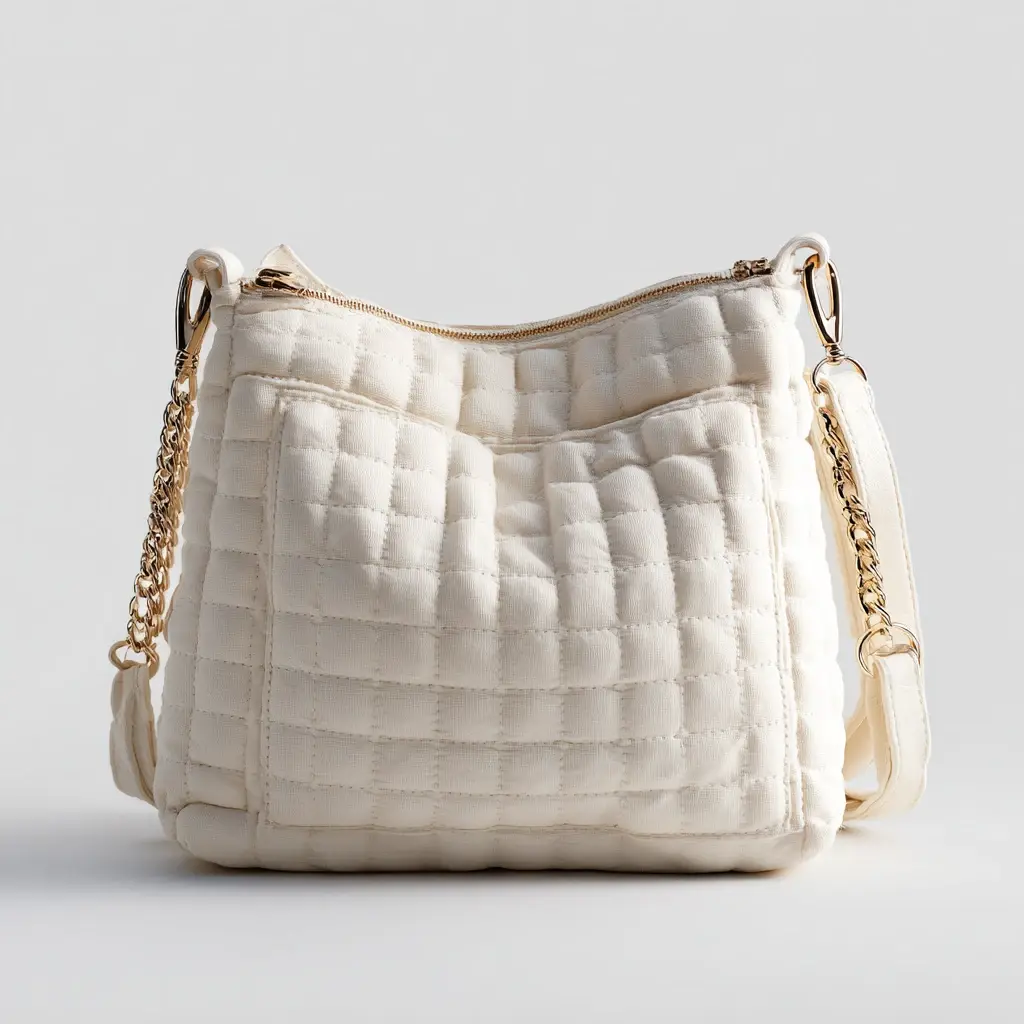
Monitoring a bulk handbag order arrives in one of three shapes, and the differences between them are less about cost than about who decides and how fast a correction reaches the line. A brand-side visit puts your own eyes on the line but spends travel days and depends on how well the visitor reads a bag. A third-party inline inspection brings a standard and a written report but works to a scheduled visit rather than to the moment something drifts. A structured reporting rhythm — counts, measurements and photographs sent at agreed points — is continuous and cheap, and it is only as good as the numbers it contains. Most programmes above 2,000 pcs use the third as the default and add one of the other two at the gate where the money actually sits.
- Brand-side visit. Best at gate two, when the first 30 pieces exist and the line has not yet built momentum. The travel cost is real; the value is that a decision about the first-off piece cannot be deferred to an email.
- Third-party inline inspection. Best at gate three, where an independent count of 50 units under AQL 2.5 turns a discussion about quality into a number on a report.
- Structured reporting rhythm. Best every day in between: cut counts, daily assembly output, rejection numbers and photographs of any recurring fault.
- Scheduled video walk-through. A call held over the cutting table and the finishing bench covers most of what a visit covers, at none of the travel cost and none of the delay.
Gate One: Cutting and Panel Audit
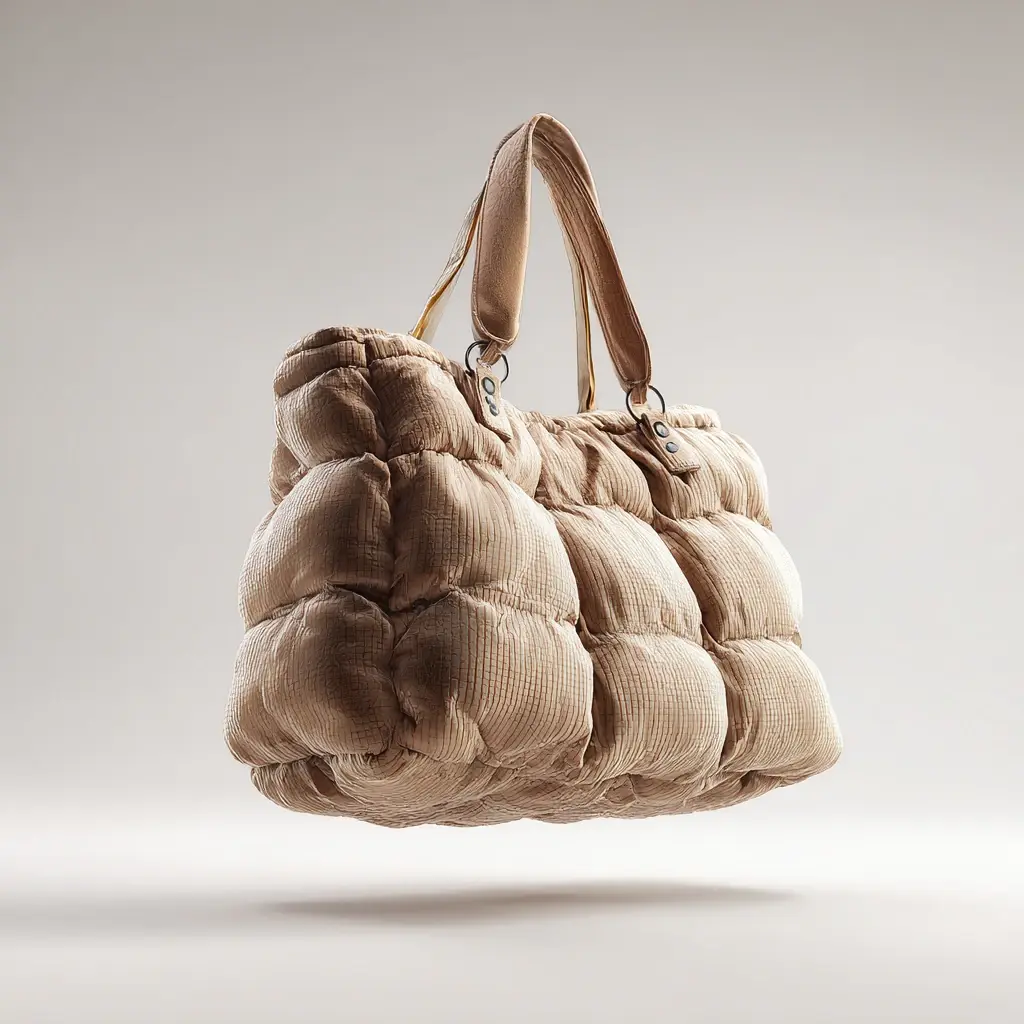
Gate one falls in the first two or three days of the bulk window and is the cheapest place to find a problem, because nothing has been sewn yet. Three percent of the cut panels are measured against the pattern, and every dimension on the sheet carries a tolerance of plus or minus 3 mm. Where a hide is used, the audit also records whether panels were cut from the selected grade and whether the grain direction holds across the run, since a tote cut with the grain running two ways will show it in how the bag slumps after a week on a shelf.
How Many Panels Should Be Measured?
Three percent is enough to catch a pattern error and not enough to slow the line: on a 500-piece tote with nine panels per unit, that is roughly 135 panels measured in about ninety minutes. What matters more than the percentage is that the measurement is written against a dimension list rather than judged by eye. A panel that is 4 mm out will still sew, which is exactly why it survives to the finishing bench and comes back to you as a return rather than as a line item on a correction sheet.
Gate Two: First-Off Assembly Sign-Off
The first-off gate is the single highest-value checkpoint in the whole run. Thirty pieces are built by the full line rather than by a sample room, and that is what exposes the difference between a bag that can be made once and a bag that can be made 500 times. One piece is then signed off as the reference unit and kept on the bench for the rest of the run, so that a question on day 26 is answered by holding two objects next to each other instead of by comparing two memories.
| Check | Specification | How it is measured | Fail action |
|---|---|---|---|
| Stitch density | 7-9 stitches per inch | Counted over 25 mm at three seams | Re-set the machine, re-run 10 pieces |
| Seam allowance | 10 mm ± 1 mm | Gauge at the gusset and the strap join | Re-cut panels if under 8 mm |
| Edge paint | 2 coats plus 1 touch-up at 0.18-0.25 mm | Micrometer on a finished edge | Strip and repaint the batch |
| Strap attachment | 25 kg static pull held 60 seconds | Spring scale on a fixed jig | Add reinforcement, re-test 5 units |
| Hardware alignment | Centred within 1.5 mm of datum | Template placed on the front panel | Re-set the jig, quarantine units |
| Colour | Delta E 2.0 or better to the approved swatch | Spectrophotometer under D65 | Hold the lot, re-dye |
The reason this gate works is timing rather than thoroughness. A correction made at piece 30 costs a few hours and a handful of units; the same correction made at piece 400 costs a re-sort of everything already built, and a re-sort is the most expensive operation in the building because it is unplanned labour applied to finished goods. Programmes that skip gate two do not save the two hours — they move the cost to the one place where it can no longer be absorbed.
Gate Three: Mid-Run at 40 Percent
By 40 percent the line has settled and the drift shows: needles dull, operators rotate, and the second shift does not sew exactly like the first. This is the gate where a third-party inline inspection earns its fee, because an independent count of 50 units against AQL 2.5 is directly comparable to the count taken at pre-shipment, and the comparison between the two is the evidence needed if the final report surprises anybody.
- Stitch skipping and thread breakage. A dull size 18 needle on coated material is the usual cause; needles are changed on a fixed schedule, not when they break.
- Edge-paint texture. Temperature and humidity shift the finish across a working day; a sample taken at 08:00 is not the sample taken at 18:00.
- Hardware torque. Screw-in feet and rivets loosen as a driver bit wears, which is a tooling issue rather than an operator issue.
- Shade banding. Units built in the morning and units built after a material top-up can differ by Delta E 1.5 with nobody at fault.
Gate Four: Finishing and Packing Readiness
Gate four is where the order stops being a bag and becomes a shipment. At 85 percent completion the packing line is checked rather than the assembly line: dust bag, tissue, hangtag placement, barcode symbology and scan rate, carton marks, carton count and the position of the polybag vent holes. A bag that passes every construction check and arrives with an unreadable barcode is a bag that fails at the distribution centre, and that failure is charged back to the brand rather than to the freight.
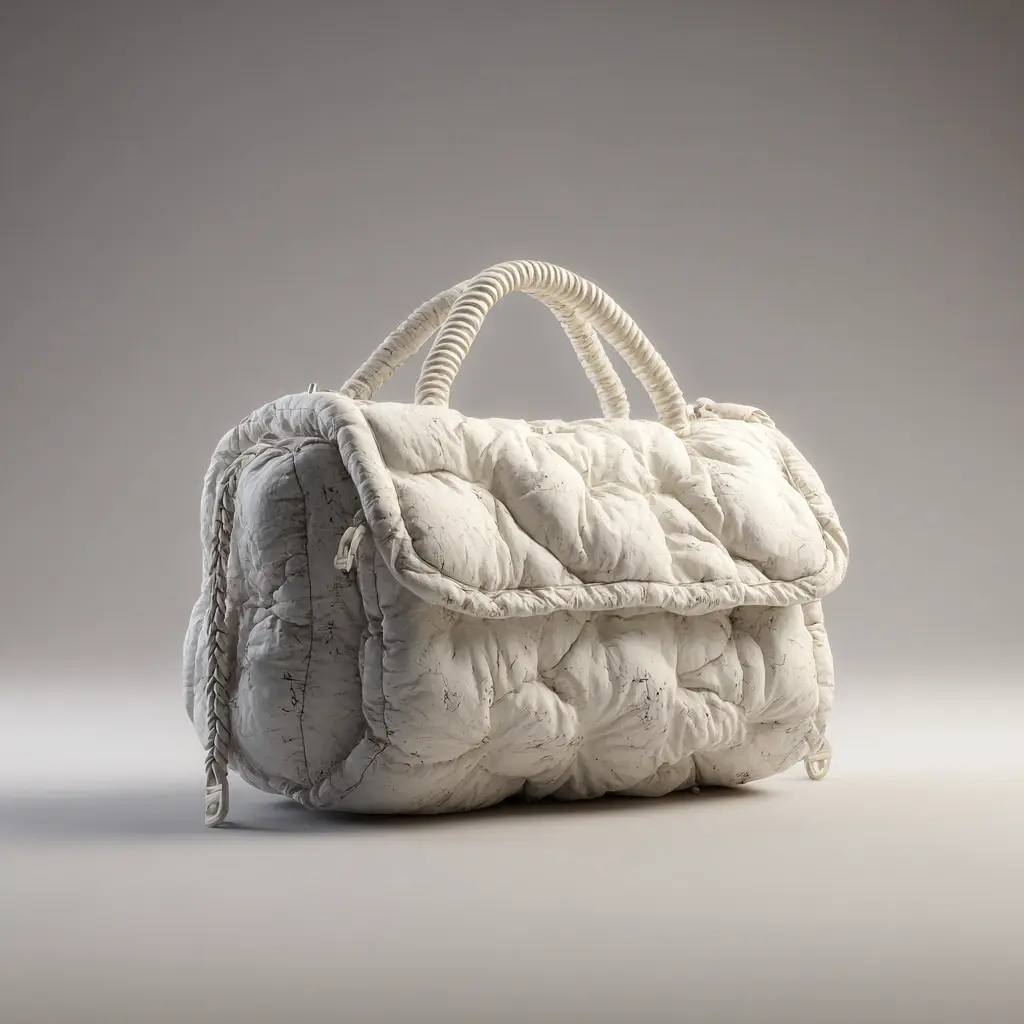
One number decides whether this gate is quick or painful, and it is the carton count. Twenty-five units per carton with a tolerance of zero is worth more than any amount of care applied later, because a short carton discovered at the destination becomes a claim, and a claim takes longer to settle than the run took to make. The same logic applies to the marks: a carton printed with the wrong purchase order number is a carton that has to be opened, re-marked and re-taped.
The Numbers Worth Watching at Each Gate
| Gate | Timing in a 35-50 day run | Sample measured | Decision it produces |
|---|---|---|---|
| 1 · Cutting | Day 2-3 | 3 percent of all panels | Release the cut or re-cut it |
| 2 · First-off | Day 4-6 | 30 units, 1 signed reference | Release the line or hold it |
| 3 · Mid-run | Day 14-20 | 50 units drawn inline | Continue, re-work, or re-sort |
| 4 · Pre-finish | Day 30-42 | Full packing check | Book inspection or hold |
| Final · Pre-shipment | Day 45-50 | Per ISO 2859-1 lot size | Ship, re-work, or reject |
Read as a schedule, the four gates occupy about five working days of the 35-50 day bulk window and remove the two outcomes nobody plans for: a discovery at the inspection table that could have been made at the cutting table, and a re-sort that costs more than the margin on the order. Neither is a quality failure in the usual sense. Both are scheduling failures that present themselves as quality failures, which is why they are best handled with a calendar rather than with an inspection.
On-Site Visits Versus Third-Party Inline Inspection
The comparison is usually framed as cost, but the more useful frame is decision speed. A visit decides in minutes and costs days of travel. A third-party inspection decides in about a day and costs a fee per man-day. Reporting decides in hours and costs nothing incremental, but only if the numbers in the report were agreed in advance rather than invented at the point of sending.
Which Method Fits Which Order Size?
At 500 pcs per style / colourway, one scheduled video walk-through at gate two plus the final pre-shipment inspection is proportionate; a standing inline programme would cost more than it protects. Between 2,000 and 10,000 pcs across a season, an inline audit at gate three pays for itself the first time it prevents a re-sort. Above that, capacity on 7 production lines is reserved and a daily reporting rhythm becomes the default, because the volume of decisions is too large to route through travel. Matching the method to the size is what keeps monitoring a cost rather than a habit.
What a WIP Report Should Contain
- The date and the line, so a photograph taken on day 12 can be compared like for like with one taken on day 26.
- Cut count and assembly count, which together show whether the run is tracking to the 35-50 day window.
- Rejection count by fault category, because a rising number in one category is a signal and a flat number is noise.
- Photographs of any recurring fault taken against a ruler or the reference unit, never a close-up without scale.
- The measurement list for the gate: stitch count, seam allowance, edge thickness and hardware position.
- One decision line stating what happens next and by when, so a report cannot be closed without an action attached.
A report without the last item is a photograph album. The test is simple: if the report cannot be read six months later to answer why a particular fault appeared, then it was not a record, it was an update, and updates do not survive a dispute. Records do, which is the entire reason for writing them while the run is still moving and the people who made the decision are still on the floor.
Escalation: What Happens When a Gate Fails
Agree the escalation before the run starts, because the argument at the gate is always about who pays. Three outcomes exist and each has a cost attached: re-work on the line, which is measured in hours; re-sort of finished goods, which is measured in days and unplanned labour; or rejection of the lot, which restarts the 35-50 day window entirely. Writing the trigger for each one into the purchase order converts a negotiation into a rule, and a rule is what gets applied at 17:00 on a Friday.
The escalation rule worth writing in
- A
- g
- a
- t
- e
- f
- a
- i
- l
- s
- w
- h
- e
- n
- t
- h
- e
- m
- e
- a
- s
- u
- r
- e
- m
- e
- n
- t
- f
- a
- l
- l
- s
- o
- u
- t
- s
- i
- d
- e
- t
- h
- e
- s
- t
- a
- t
- e
- d
- t
- o
- l
- e
- r
- a
- n
- c
- e
- o
- n
- m
- o
- r
- e
- t
- h
- a
- n
- t
- h
- e
- p
- e
- r
- m
- i
- t
- t
- e
- d
- n
- u
- m
- b
- e
- r
- o
- f
- u
- n
- i
- t
- s
- .
- B
- e
- l
- o
- w
- t
- h
- a
- t
- t
- h
- r
- e
- s
- h
- o
- l
- d
- t
- h
- e
- l
- i
- n
- e
- c
- o
- n
- t
- i
- n
- u
- e
- s
- w
- i
- t
- h
- a
- c
- o
- r
- r
- e
- c
- t
- i
- o
- n
- ;
- a
- b
- o
- v
- e
- i
- t
- t
- h
- e
- l
- i
- n
- e
- s
- t
- o
- p
- s
- ,
- t
- h
- e
- c
- a
- u
- s
- e
- i
- s
- i
- d
- e
- n
- t
- i
- f
- i
- e
- d
- i
- n
- w
- r
- i
- t
- i
- n
- g
- ,
- a
- n
- d
- t
- h
- e
- c
- o
- s
- t
- o
- f
- t
- h
- e
- c
- o
- r
- r
- e
- c
- t
- i
- o
- n
- i
- s
- a
- l
- l
- o
- c
- a
- t
- e
- d
- b
- e
- f
- o
- r
- e
- w
- o
- r
- k
- r
- e
- s
- u
- m
- e
- s
- .
- *
- *
- A
- g
- a
- t
- e
- w
- i
- t
- h
- n
- o
- s
- t
- o
- p
- c
- o
- n
- d
- i
- t
- i
- o
- n
- a
- t
- t
- a
- c
- h
- e
- d
- i
- s
- a
- c
- h
- e
- c
- k
- p
- o
- i
- n
- t
- i
- n
- n
- a
- m
- e
- o
- n
- l
- y
- ,
- a
- n
- d
- t
- h
- e
- n
- a
- m
- e
- i
- s
- w
- h
- a
- t
- g
- e
- t
- s
- i
- n
- v
- o
- i
- c
- e
- d
- l
- a
- t
- e
- r
- .
- *
- *
These four gates sit inside a larger flow. The handbag manufacturing process reference sets out the full sequence from cut to carton, what happens after sample approval covers the handover into the bulk window, and how defect counts are judged at AQL 2.5 explains the arithmetic behind the final report.
The Measurement Kit Behind Every Gate
A gate is only as good as the instrument behind it, and most arguments at a gate are really arguments about the tool. Five instruments cover everything the four gates measure, and each one has to be more accurate than the tolerance it is checking. Ask what was used before you dispute a result, and ask when it was last calibrated.
| Instrument | Range and accuracy | What it settles |
|---|---|---|
| Vernier caliper, 150 mm | 0.02 mm resolution | Panel dimensions and the 3 mm cutting tolerance |
| Seam gauge | 0.5 mm graduations over 25 mm | Stitch density at 7 to 9 per inch |
| Micrometer, 0 to 25 mm | 0.01 mm resolution | Edge paint at 0.18 to 0.25 mm and skive thickness |
| Spring scale, 0 to 50 kg | 0.2 kg graduations | The 25 kg strap pull held for 60 seconds |
| Spectrophotometer | Delta E to 0.1 under D65 | Shade banding against the approved swatch at Delta E 2.0 |
What a Hold Costs, by the Day
A failed gate stops the line, and the cost of the stop is the one thing nobody has written down in advance. It has three parts: the units already built, the production slot that moves, and the inspection that has to be run again. Knowing the daily figure turns an escalation from an argument about blame into a decision about money, which is settled in minutes.
| Gate held | Units affected | Cost of the hold | Decision deadline |
|---|---|---|---|
| 1, cutting | All panels cut so far | Low, a re cut is hours rather than days | Same day |
| 2, first off | 30 units plus the line | Moderate, the slot is not yet committed | Within 24 hours |
| 3, mid run | 180 to 220 units | Higher, the second operation is booked | Within 24 hours |
| 4, pre finish | 420 to 450 units | Highest, inspection and vessel are both booked | Same day, before the booking closes |
| Final, pre shipment | The whole lot | Storage, re inspection and a missed vessel | Within one working day |
Drawing the Sample: How Units Are Selected So the Check Means Something
An inspection result is only as honest as the way the units were pulled. Units taken from the top carton, from a single shift or from the first pallet will always look better than the lot they came from, and that difference is invisible in the report itself. Five rules make the draw defensible and none of them slows the line down.
- Draw across cartons, not from one. On a 50 unit draw from a 500 piece lot, take units from at least eight cartons spread through the stack.
- Stratify by shift. Units built on the second shift should appear in the sample in proportion to their share of the run.
- Randomise the carton choice. Pick the carton numbers from a list before the warehouse opens, so the selection cannot be prepared.
- Keep the draw intact. Never return a unit and replace it; a replaced unit is a second sample carrying the first one's number.
- Record the carton numbers. A shading or hardware fault should then be traceable to four cartons rather than to a re sort of 500.
Put four gates into your next purchase order
Send the silhouettes, quantities and launch date. A private label coordinator will return a gate schedule with the measurement list attached: sampling at 6-10 working days, bulk at 35-50 days, inspection at AQL 2.5 under ISO 2859-1. Get a quote.
Frequently Asked Questions
What is a work in progress check in handbag production?
A work in progress check is a scheduled inspection held while the bulk run is still on the line, at a defined percentage of completion, rather than after the goods are packed. Each check measures a fixed list — panel dimensions, stitch density, seam allowance, edge thickness, hardware position — against the specification and produces a written record. Its purpose is to make a correction while it still costs hours instead of a re-sort.
How many WIP checks should a bulk handbag order have?
Four is the practical number for a private label programme: a cutting and panel audit, a first-off assembly sign-off at 30 pieces, a mid-run audit at 40 percent completion, and a pre-finish packing review at 85 percent. Together they occupy about five working days of the 35-50 day bulk window and cover the four points where a fault is still cheap to correct.
What is measured at the first-off sign-off?
Stitch density at 7-9 stitches per inch, seam allowance at 10 mm plus or minus 1 mm, two edge-paint coats plus a touch-up at 0.18-0.25 mm each, strap attachment against a 25 kg static pull held for 60 seconds, hardware centred within 1.5 mm of datum, and colour within Delta E 2.0 of the approved swatch under D65 light.
Why is the mid-run gate set at 40 percent completion?
By 40 percent the line has settled and the drift that does not exist in the first 30 pieces has appeared: needles have dulled, operators have rotated and a material top-up has entered the run. A 50-unit inline audit at that point is also directly comparable to the pre-shipment count, so the two reports together show whether the run improved or deteriorated.
What percentage of cut panels should be measured?
Three percent is the working figure. On a 500-piece tote with nine panels per unit that is roughly 135 panels measured in about ninety minutes, which is enough to catch a pattern error without slowing the cut. Every dimension on the measurement sheet should carry a tolerance of plus or minus 3 mm, and the result should be written down rather than judged by eye.
Who pays when a WIP gate fails?
Whoever the purchase order says pays, which is the reason to settle it before the deposit moves. The three outcomes are re-work on the line measured in hours, re-sort of finished goods measured in days, and rejection of the lot, which restarts the 35-50 day window. Agreeing the trigger for each one in writing converts a negotiation into a rule.
What should a WIP report contain?
The date and the line, the cut count and the assembly count, the rejection count broken down by fault category, photographs of any recurring fault taken against a ruler or the reference unit, the measurement list for that gate, and one decision line stating what happens next and by when. Without the decision line it is an update rather than a record.
How does a WIP check differ from the final pre-shipment inspection?
A WIP check happens on goods that are still in process, so a fault found there can be corrected on the line before more units inherit it. The pre-shipment inspection happens on packed cartons under ISO 2859-1 at AQL 2.5, and its only options are ship, re-work or reject. The first prevents the cost; the second measures what is left of it.
Can a WIP check be done without travelling?
Yes. A scheduled video walk-through over the cutting table and the finishing bench covers most of what a visit covers, and a structured reporting rhythm — counts, measurements and scaled photographs sent at agreed points — works every day in between. A third-party inline inspection at gate three adds an independent 50-unit count when an outside number is what the file needs.
Does a WIP check add time to the bulk production window?
About five working days across the whole 35-50 day run, and most of that is parallel rather than serial: the cutting audit happens while the next operation is being set. The time saved is on the other side of the ledger, because a re-sort of finished goods typically costs more days than all four gates put together.
What stitch density should be specified for a bulk handbag order?
Seven to nine stitches per inch with a 10 mm seam allowance is the range that balances strength against speed on a coated or leather body. It is the first thing an inspector counts, and it is also a cost variable: moving from 7 to 9 stitches per inch adds measurable sewing time on every unit of the run, so the number belongs in the tech pack rather than in a conversation.
People Also Ask
Are four gates too many for a 500-piece order?
Four is the right number at 500 pcs, but the delivery method should be lighter: a scheduled video walk-through at gate two plus the final pre-shipment inspection, with the cutting and pre-finish checks handled by a reporting rhythm rather than by a visit. What scales down is the attendance, not the measurement.
Which single WIP check carries the most value?
The first-off sign-off at 30 pieces. It is the only gate where a correction costs a few hours and a handful of units, and it is the gate that produces the reference unit every later question is answered against. Skipping it moves the same cost to a re-sort of finished goods.
Should a third-party inspector attend every gate?
No. An independent 50-unit count at gate three plus the pre-shipment inspection is the proportionate arrangement for most private label programmes. Attending all four adds cost without adding decisions, since the cutting audit and the packing review are counting exercises that a reporting rhythm handles well.
What tolerance is realistic on a handbag panel?
Plus or minus 3 mm on every stated dimension, written into the tech pack before sampling begins. Tighter than that is achievable on cut panels but rarely survives assembly, and looser than that is how a 4 mm discrepancy reaches the finishing bench and returns as a complaint about the bag rather than as a note on a correction sheet.
Sources and further reading
Every figure on this page is either our own programme data or attributed below. Open the originals before you write them into a specification.
- SATRA — technical services for leather, footwear and accessoriesSATRA Independent leather, hardware and accessories testing protocols.
- World Intellectual Property OrganizationWIPO International trademark and design registration before tooling starts.
- National Institute of Standards and TechnologyNIST Measurement standards and reference materials behind calibrated testing.