Where to Source Wholesale Handbags That Are Not on Every Marketplace
Where do you source wholesale handbags that are not already on every marketplace? There are four channels and only one of them gives you real separation: a private label run at MOQ 500 pcs per style / colourway, where the base pattern may be shared but the material, colour, hardware, logo and packaging are yours, and where a territory or period exclusivity can be agreed on top. Open marketplace wholesale, trade-directory stock and full development are the other three, and each fails on a different variable — the first on differentiation, the second on the same item appearing under dozens of other listings, the third on cost and calendar. This guide works through six questions in order: what separation actually means, why saturation happens, what the four channels deliver, what exclusivity costs, how to verify a claim of it, and what happens when the term runs out. Sampling stays at 6-10 working days and bulk at 35-50 days on the private label route.
- Question 1: What Does Separation Actually Mean?
- Question 2: Why Does Saturation Happen?
- The Compounding Cost of Being Compared
- Question 3: What Do the Four Channels Deliver?
- Question 4: What Does Exclusivity Cost?
- Question 5: How Do You Verify the Claim?
- What Specification Buys That a Clause Cannot
- Question 6: What Happens When It Ends?
- The Sourcing Shortlist in Practice
- What Separation Costs on the Invoice: Seven Levers at 500 Pieces
- The Listing and Photography Assets That Do the Separating
- The Volume at Which Private Label Beats Directory Stock
- Packaging and Inserts: The Separation a Competitor Cannot Copy
Sourcing route reference points
Question 1: What Does Separation Actually Mean?
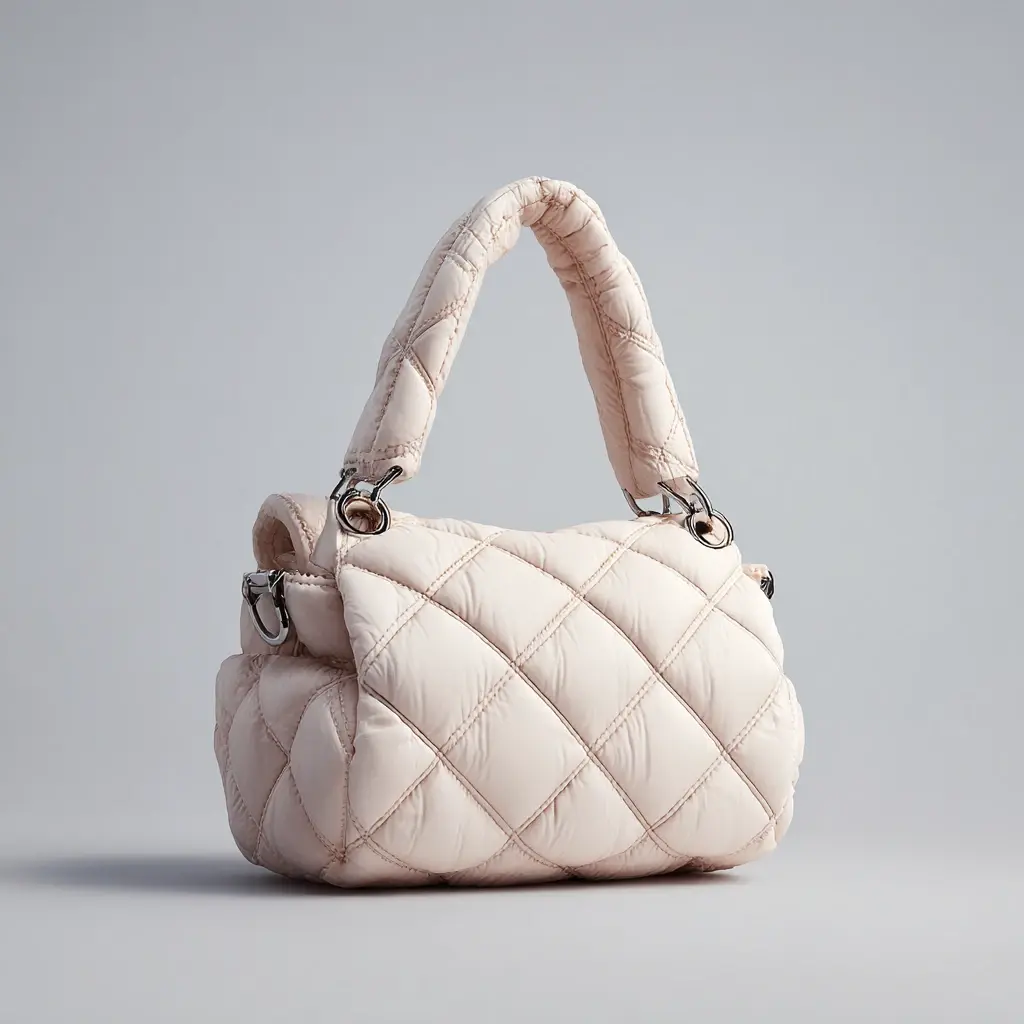
Buyers ask for a bag that is not on every marketplace and usually mean one of three different things, and the difference determines which channel can deliver it. The first meaning is visual separation: nobody else is selling something that looks like this. The second is listing separation: the same physical bag is not appearing under forty other storefronts at a lower price. The third is legal separation: a written undertaking that the goods will not be sold to another buyer in your territory for a defined period.
Only the third is enforceable, and only the first two are visible to a customer. That gap is where most sourcing disappointment lives. A buyer can achieve visual separation and still be undercut on price by someone selling the same base pattern with cheaper hardware, and can achieve listing separation for six months and lose it in month seven. Decide which of the three you are actually buying before you ask for it, and write that one into the agreement rather than all three vaguely.
For most resellers and small brands, the honest target is the first and second: a bag that looks and lists distinctly, achieved through specification rather than through contract. That is available at MOQ 500 pcs per style / colourway. The third — contractual exclusivity — is available too, but it carries a premium and a volume commitment, and it is usually only worth buying once the style has proven demand. The wholesale handbag programme guide sets out where each sits.
Question 2: Why Does Saturation Happen?
Because an open wholesale listing is a photocopy business. A stock bag listed on a large platform is photographed once and re-listed by every buyer who purchases it, so a single popular tote pattern can appear under dozens of storefronts within a season, differentiated only by price. The buyer who photographed it best is not the winner; the buyer with the thinnest margin is. That is a race with one finishing position, and it is the structural reason stock wholesale compresses retail margin.
How saturation compounds in search
Saturation is also self-reinforcing in a way that is worth understanding. Listings with the same photography and the same title text get grouped by search and by recommendation systems, and grouping pushes price comparison to the front of the customer's decision. Once that happens, the only defensible position is a product the comparison cannot be made against — which is precisely what a specified private label run produces. A different lining colour, a different hardware finish and a branded hang tag are enough to break the comparison, even though the underlying silhouette is shared.
The Compounding Cost of Being Compared
Saturation does not only compress margin; it changes what the customer is buying. When four listings show the same bag, the decision collapses into price and delivery, and every other attribute the buyer worked on — material quality, hardware finish, lining — stops being part of the choice. That is the expensive part, because those attributes are exactly what a specification investment is meant to communicate. A bag that cannot be compared on price is a bag that can be sold on its attributes, and that is the whole commercial argument for sourcing on specification.
There is a second compounding effect on advertising. On a fee-per-click channel, a listing competing against identical goods needs more spend to hold position, and the spend is recovered from a margin that the competition has already compressed. A distinct specification reduces the number of direct comparisons and therefore the cost of defending the position. Buyers often notice this first in their advertising costs rather than in their unit economics, which is a useful early signal that a sourcing route is failing.
Question 3: What Do the Four Channels Deliver?
| Channel | Separation achieved | Cost position | Calendar | Best for |
|---|---|---|---|---|
| Open marketplace wholesale | None; identical goods re-listed by many buyers | Lowest unit price, weakest margin | Days to weeks | Testing a price point only |
| Trade directory or show stock | Low; shared patterns across many buyers | Low-mid, competitive on price | Weeks | Filling a gap in a range |
| Private label at 500 pcs | High visual and listing separation; exclusivity negotiable | Mid; best margin defence | 6-10 working days of sampling, 35-50 days bulk | First branded season |
| Full development | Complete; new pattern and tooling | Highest; tooling amortised over volume | Longest, with tooling lead time | Mature brand with proven volume |
The middle two rows are where the decision usually lands. Directory stock is faster and cheaper per piece and gives you nothing to defend. A private label run costs more per piece and gives you a specification that cannot be price-compared directly, which is why the retail margin on it survives even when the unit price is higher. The comparison is laid out in more detail in private label versus blank stock, and the channel question for marketplace sellers is covered in whether private label handbags sell on Shopify and Amazon.
Question 4: What Does Exclusivity Cost?
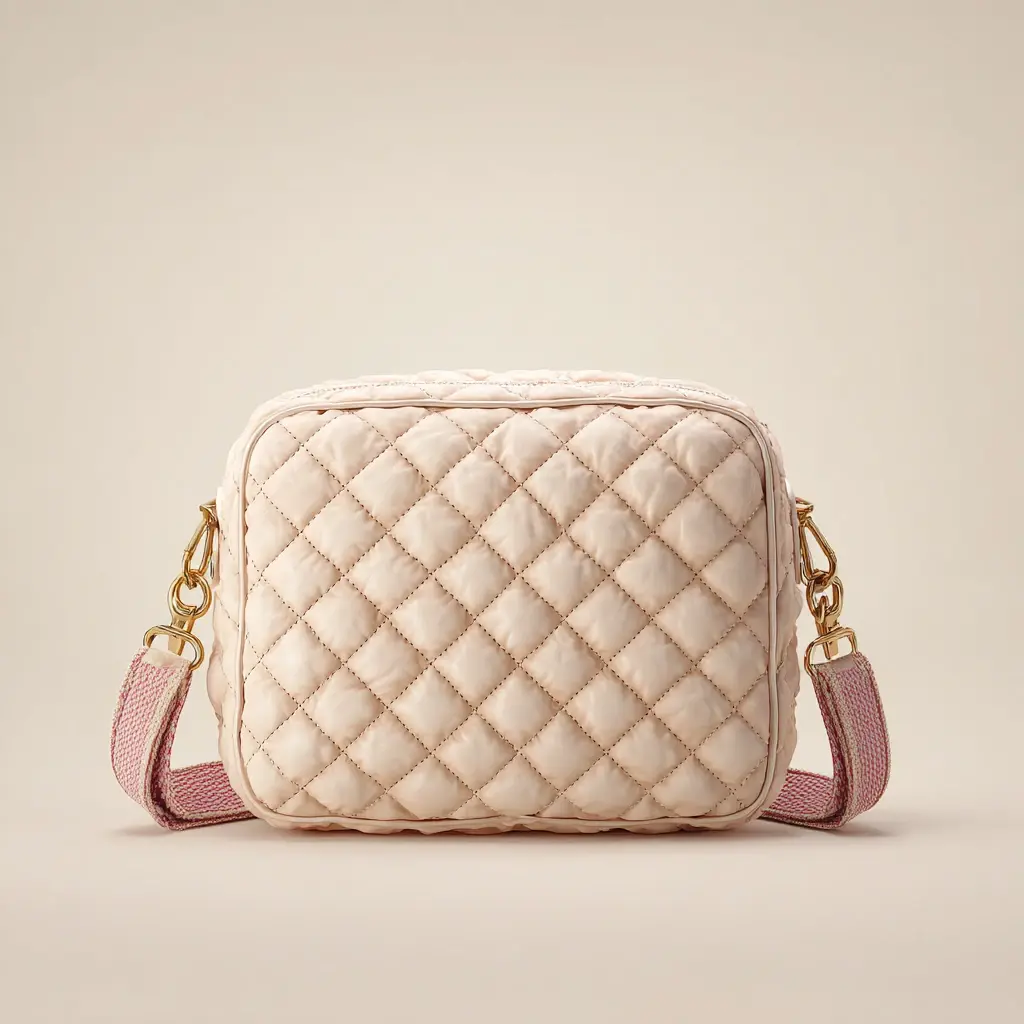
Contractual exclusivity is a trade, not a gift, and it is priced in one of two ways. The first is a premium on the unit price, typically 4-9%, in exchange for an undertaking not to sell the specified style to another buyer in a named territory for a named period — commonly six or twelve months. The second is a volume commitment: taking 2,000 pieces rather than 500, or committing to two drops within the term, in exchange for the same undertaking at no premium. Both are negotiable, and both should be written into the pro forma invoice rather than into an email.
Two clauses decide whether the exclusivity is worth anything. The first is scope: exclusivity on a style, on a colourway, or on a specification. Exclusivity on a base pattern is nearly worthless, because the same pattern in a different colour and hardware is still the same bag to a customer. Exclusivity on the combination — silhouette, material, colourway, hardware finish and logo treatment — is what actually protects a listing. The second clause is remedy: what happens if the undertaking is breached, and the only meaningful answers are a refund of the premium or a credit against the next order.
Question 5: How Do You Verify the Claim?
The verification checks that actually work
Verification is unglamorous and it takes an afternoon. Reverse-search the product photography before you commit, and again three months into the term; if the same images appear under other storefronts, the exclusivity is not being honoured or was never real. Ask for the style code and check whether the same code appears in other buyers' catalogues. Ask for the material booking reference on any custom-dyed colourway, because a colour that exists only for you is verifiable in a way a stock colour is not.
- Reverse-search the product photography before committing, and re-check quarterly during the term.
- Ask for the internal style code and confirm it does not appear in other buyers' published catalogues.
- Request the material booking reference for any custom-dyed colourway; a stock colour cannot be exclusive.
- Specify a custom hardware finish or a logo plate, which creates a physical marker of the arrangement.
- Put the remedy in writing: refund of the exclusivity premium, or credit against the following order.
The checks that matter most are the physical ones, because they cannot be undone by a change of listing. A custom plating colour, a debossed logo plate, a contrast lining in a colour you specified and a branded hang tag together make the bag recognisable and make copying it a project rather than a screenshot. That is why specification is a stronger protection than contract at this level of volume, and it costs nothing beyond the tooling for the plate.
What Specification Buys That a Clause Cannot
A specification is self-enforcing in a way a contract is not. If the bag carries a debossed logo plate, a lining in a colour you chose, a hardware finish that was plated to your reference and a hang tag in your card stock, then copying it requires tooling, a dye lot and a plate — a project measured in weeks and thousands of pieces rather than an afternoon with a screenshot. That gap is the real protection at this volume, and it costs a one-off tooling charge rather than an ongoing premium on every unit.
Specification also produces something a clause cannot: a reason for the customer to come back. A buyer who recognises a lining colour, a hardware tone or a hang tag has a relationship with the product rather than with a price, and that relationship survives the arrival of a cheaper copy. This is why the money is better spent on the bag than on the exclusivity term for a first or second season, and why the specification should be treated as the brand asset rather than as a set of production instructions.
Question 6: What Happens When It Ends?
Plan the end at the start. A twelve-month exclusivity term does not end with the bag disappearing; it ends with the same specification becoming available to someone else, usually at a price set by their volume rather than yours. The defences are the ones built during the term: reviews, a recognisable name, a customer list, and a second specification already in development. A buyer who has spent the exclusivity year building recognition is in a different position from one who spent it competing on price against nobody.
In practice most terms are simply renewed, because a buyer who reorders is more valuable than a new one and the renewal costs nothing to agree. The negotiation leverage sits with whoever has the volume history, so treat the first year as building that history rather than as defending a position. If the style has worked, the second term is easier to obtain and usually cheaper; if it has not, letting it lapse costs nothing.
The Sourcing Shortlist in Practice
Three entries and a decision rule
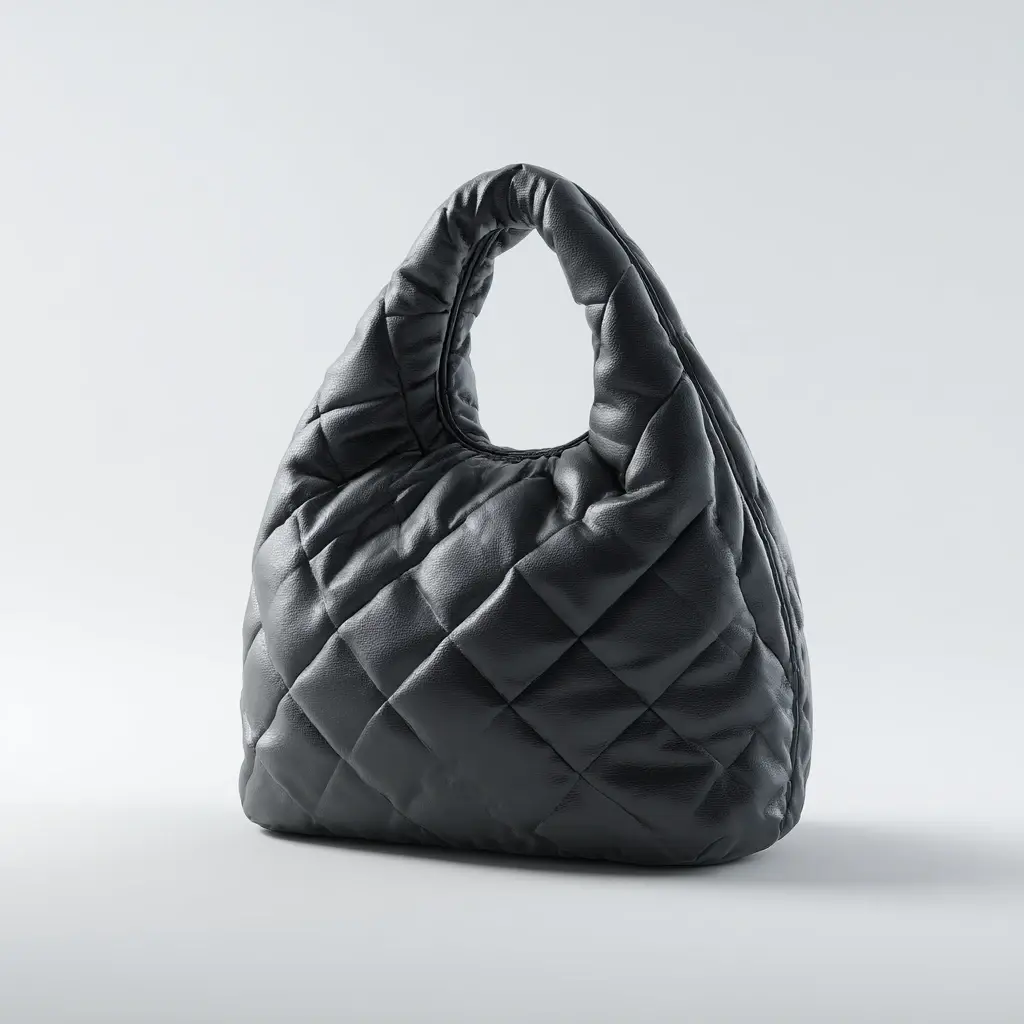
A workable shortlist has three entries and a decision rule. Take directory stock only for a gap you need filled in weeks. Take a private label run at 500 pcs per style / colourway as the default for anything you intend to build a name on, with the specification carrying the separation and contractual exclusivity added only once demand is proven. Reserve full development for a style you have already sold in a shared pattern and can now justify owning outright. Anything that promises exclusivity at a low minimum with no specification attached is selling a clause rather than a product.
Due diligence is the same whichever route you take. Ask for the audit references — BSCI or Sedex for labour standards, the Leather Working Group audit protocol for any tannery in the chain, a Global Recycled Standard transaction certificate where recycled content is claimed — and ask for a REACH declaration against Annex XVII for the EU plus a Prop 65 assessment for California. Ask how long the export track record runs; a programme with export experience since 2014, seven production lines and roughly 200,000 pcs of monthly capacity can absorb a reorder without renegotiating the calendar. Regional specialisation matters too, and the Xiamen versus Guangzhou comparison explains why.
Send the silhouette, the territory you sell into and the volume you can realistically move in a year, and a private label coordinator will tell you which channel fits and what the exclusivity terms would be at your quantity. Get a quote.
What Separation Costs on the Invoice: Seven Levers at 500 Pieces
Separation is bought, not wished for, and every lever has a price and a lead time effect. The cheapest two cost nothing per unit and the dearest two are worth it only above a certain volume, so the useful exercise is to rank them by cost against how hard each one is for a competitor to copy from a photograph.
| Lever | Cost at 500 pcs | Lead time effect | Hard to copy? |
|---|---|---|---|
| Custom lining colour | USD 0.20 to 0.60 per unit | Adds 4 to 7 days for the dye lot | Yes, a physical marker inside the bag |
| Branded zip puller | USD 0.35 to 0.90 per unit | Adds 7 to 10 days for tooling | Yes, visible in every listing photograph |
| Debossed or embossed mark | USD 0.15 to 0.45 per unit | Adds 3 to 5 days for the die | Yes, and it is permanent |
| Custom plating finish | USD 0.30 to 0.80 per unit | Adds 7 to 14 days for the bath | Moderate, a stock colour can be matched |
| Metal logo plate | USD 350 to 900 tooling plus 0.40 per unit | Adds 10 to 14 days | Yes, the die belongs to the programme |
| Bespoke dust bag and insert | USD 0.60 to 2.40 per unit | Adds 7 to 10 days | Moderate, copyable but slow to copy |
| Contractual exclusivity clause | 4 to 9 per cent on the unit price | None | Only as good as its remedy clause |
The Listing and Photography Assets That Do the Separating
Two buyers can hold the same bag and still not compete, because what a customer compares is the listing rather than the goods. Photography is the asset that opens that gap and it is made once, not per unit. Six to eight frames per colourway, shot on the same set up across the range, is enough to stop a listing from being read as a re listed stock shot.
- Frame count. Six to eight per colourway: front, back, base, interior, a detail at 200 mm and one worn shot.
- Resolution. 2,000 pixels on the long edge minimum, so a marketplace zoom does not dissolve the grain and the stitch line.
- Detail frames. One at 200 mm on the stitch line, the edge paint and the hardware, which is what buyers zoom into first.
- Scale. One frame with a reference object beside the bag, because a bag photographed with nothing near it returns on size.
- Consistency. The same light temperature and the same set of angles across every colourway, so the range reads as one brand.
- Ownership. Files shot for the programme belong to it and can be reused; a supplied frame can be withdrawn without notice.
The Volume at Which Private Label Beats Directory Stock
Directory stock is cheaper per piece and private label is cheaper per sale, and the crossover is a volume rather than a feeling. Below it, the tooling and the dye lot minimums are not carried by the units sold; above it, the margin and the repeat purchase pay for them twice over. Work the crossover from your own monthly units, not from the unit price on a quotation.
| Monthly units | Directory stock | Private label at 500 pcs | Better route |
|---|---|---|---|
| Under 60 | Lower cash at risk and no minimum to meet | Two months of cover sits in the warehouse | Directory stock |
| 60 to 150 | Margin compresses as others list the same bag | One hero style clears in 8 to 14 weeks | Private label on one style |
| 150 to 400 | Price competition erodes the listing daily | Tooling amortised, reorder at 35 to 50 days | Private label, two colourways |
| Above 400 | Separation impossible at any discount depth | Custom hardware and a second size pay back | Full development |
| Seasonal only | Fine where the style is a one season drop | The minimum is the whole risk | Directory stock, priced as a drop |
Packaging and Inserts: The Separation a Competitor Cannot Copy
Everything inside the parcel is separation that a competing listing cannot photograph and cannot match without placing an order first. A dust bag, a care card and a barcode label cost a fraction of the unit price and they are what the customer touches before the bag. Specify them at quotation rather than after the run is booked, when the carton is already packed.
- Dust bag. Non woven at 70 to 90 gsm or cotton at 120 to 140 gsm, about 30 by 40 cm for a tote, printed one colour.
- Care card. 300 gsm board at 90 by 55 mm, carrying the material, the country of origin and a repair note.
- Hangtag. 350 gsm art card with a 3 mm brass eyelet, which is the part a customer remembers untying.
- Barcode label. Printed in the symbology the channel requires, with a GS1 number where a marketplace insists on one.
- Carton marks. Your artwork and your SKU code, so a warehouse receiving the goods sees one brand rather than a generic carton.
Source on specification, not on a promise
MOQ 500 pcs per style / colourway, sampling in 6-10 working days, bulk in 35-50 days, inspection at AQL 2.5 to ISO 2859-1, release FOB Xiamen. Send the silhouette and territory and the channel answer comes back with terms. Get a quote.
Frequently Asked Questions
Where can I source wholesale handbags that are not on every marketplace?
The private label route is the practical answer. At MOQ 500 pcs per style / colourway the base pattern may be shared but the material, colour, hardware, logo and packaging are yours, which produces visual and listing separation that a price comparison cannot break. Contractual exclusivity can be added on top, usually for a 4-9% premium.
Can I get exclusive rights to a handbag style?
Yes, usually as a territory and period exclusivity of six or twelve months, priced either as a 4-9% premium on the unit price or as a volume commitment. Insist that it covers the specification combination — silhouette, material, colourway, hardware and logo — rather than the base pattern alone.
Why do the same wholesale handbags appear on so many listings?
Because an open wholesale listing is a photocopy business: the stock bag is photographed once and re-listed by every buyer who purchases it. A single popular tote pattern can appear under dozens of storefronts within a season, and search grouping then pushes price comparison to the front of the customer's decision.
How do I check whether a supplier's exclusivity claim is real?
Reverse-search the product photography before committing and again quarterly, ask for the internal style code and check it against other published catalogues, and request the material booking reference for any custom-dyed colourway. A stock colour cannot be exclusive, so a booking reference is the real evidence.
Is contractual exclusivity worth paying for on a first order?
Usually not. At 500 pieces the premium buys a clause that is hard to police, while the same money spent on a custom hardware finish, a debossed logo plate and a contrast lining creates separation that is visible and permanent. Add contractual exclusivity once demand is proven.
What is the difference between private label and full development?
Private label adapts an existing pattern with your material, colour, hardware and branding, sampling in 6-10 working days. Full development creates a new pattern and usually new tooling, which is slower and more expensive but gives complete ownership. Development is justified by proven volume, not by a launch.
How much does exclusivity usually cost?
Typically 4-9% on the unit price for a six or twelve month territory exclusivity, or alternatively a volume commitment such as 2,000 pieces or two drops within the term. Both forms are negotiable and both belong in the pro forma invoice rather than in an email thread.
What should the exclusivity agreement cover?
The specification combination rather than the base pattern, the named territory, the period, and a remedy for breach that is worth something — a refund of the exclusivity premium or a credit against the following order. An exclusivity clause with no stated remedy is close to unenforceable in practice.
What happens when the exclusivity term expires?
The specification becomes available to other buyers, usually at a price set by their volume. The defences built during the term — reviews, a recognisable name, a customer list and a second specification in development — are what carry the product through, which is why the term should be used to build recognition.
Which audit references should I ask a sourcing partner for?
A BSCI or Sedex reference for labour standards, the Leather Working Group audit protocol for any tannery in the supply chain, a Global Recycled Standard transaction certificate where recycled content is claimed, and a REACH declaration against Annex XVII plus a Prop 65 assessment for the destination market.
Does a shared base pattern matter if the execution is mine?
Less than buyers expect. Customers compare what they can see: material, colour, hardware, branding and packaging. A shared silhouette executed in a specified colourway with a custom finish and a branded hang tag cannot be price-compared directly against the stock version.
How long does the private label route take compared with buying stock?
Longer, and deliberately so. Stock ships in days to weeks with no sampling, while a private label run takes 6-10 working days of sampling plus 35-50 days of bulk before transit. The extra weeks buy the specification that protects the retail margin.
People Also Ask
Is buying from an open marketplace ever the right sourcing move?
Only for learning. It is the cheapest way to test whether a price point or a silhouette gets a response, but the goods are identical to everyone else's, so it cannot support a margin and it produces nothing that transfers into a second order.
Can I register a design to stop copying?
Registration protects a genuinely new shape, not an existing pattern with a new colour, and it is slow and territorial. For most buyers at this volume, a distinctive specification plus reviews is a faster and cheaper defence than a registration.
How many pieces do I need before exclusivity is worth negotiating?
Around 2,000 per year on a single style. Below that the premium usually exceeds the commercial value of the protection, because the main risk at low volume is unsold stock rather than a competitor.
Does territory exclusivity cover online sales?
It must say so explicitly. A territory clause written without referencing e-commerce often fails to cover cross-border online sales, so name the platforms or state that the territory includes online channels serving it.
Sources and further reading
Every figure on this page is either our own programme data or attributed below. Open the originals before you write them into a specification.
- SATRA — technical services for leather, footwear and accessoriesSATRA Independent leather, hardware and accessories testing protocols.
- REACH — chemical substances regulationEuropean Commission Annex XVII restricts the substances that may appear in finished leather and coatings.
- FashionUnited — fashion industry news and dataFashionUnited Industry news and company data for the fashion sector.