What Is the Difference Between Top Coat and Semi Aniline Bag Leather
What is the difference between top coat and semi aniline bag leather? It is a film thickness, a hide grade and a price: a top coat carries 25-40 microns of pigmented finish over a corrected grain, while a semi aniline carries 8-15 microns of translucent finish over a full grain hide that has almost no defects to hide. The finish you choose is really a decision about which imperfections you are willing to pay to remove — a top coat buys uniformity by covering the hide, a semi aniline buys character by selecting it, and the second costs roughly 60-80% more per square foot because the raw material has to be better before anything is applied. Both are legitimate, and the wrong one is chosen whenever the decision is made on price alone.
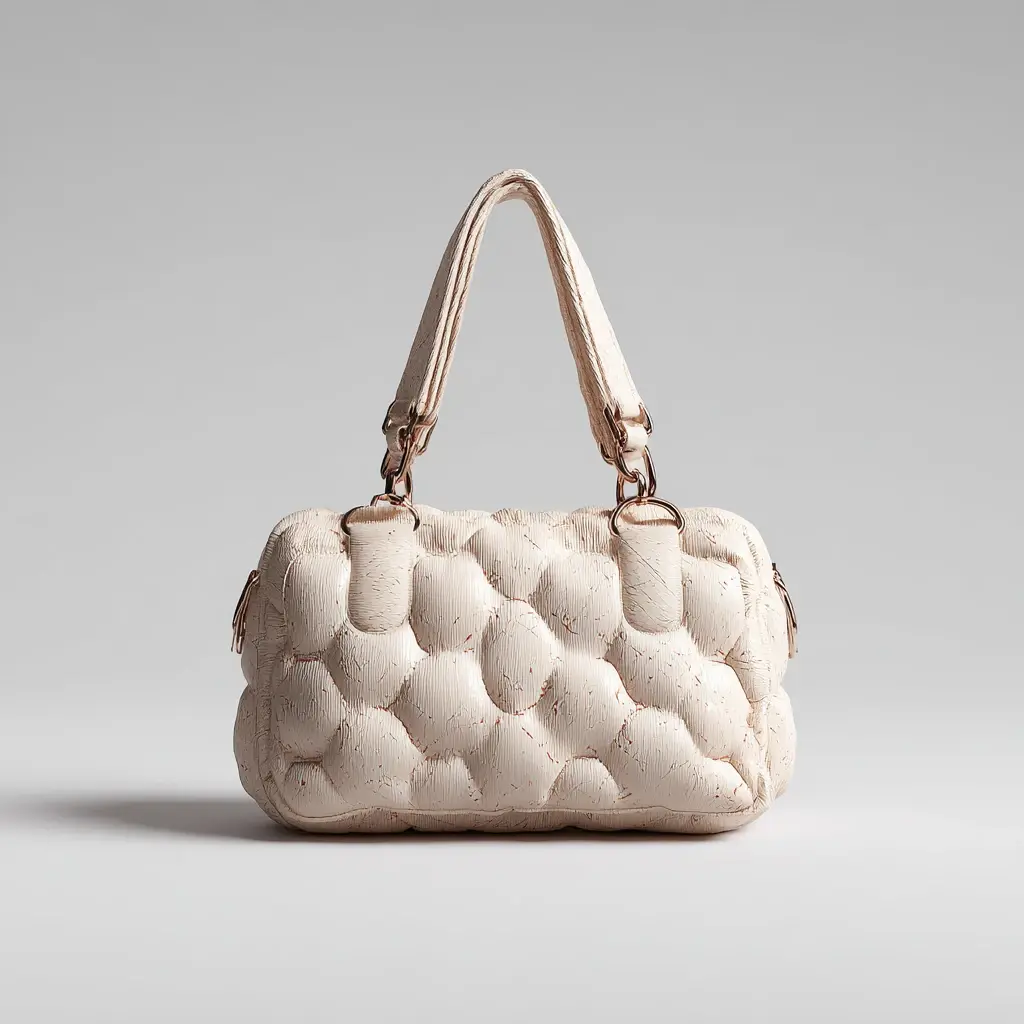
- The Numbers That Separate Two Finishes
- What a Top Coat Is Measured In: Microns and Cycles
- Semi Aniline: Thinner Film, Higher Hide Grade
- Rub, Light and Hydrolysis: The Three Test Numbers
- What Each Finish Costs Per Square Foot and Why
- Which Silhouettes Suit Which Finish
- How the Choice Shows Up in Returns Data
- Specifying the Finish on the Purchase Order
- How Each Finish Behaves on the Cutting Table
- Edge, Skive and Stitch: Where Film Thickness Changes the Build
What is the difference between top coat and semi aniline bag leather? It is a film thickness, a hide grade and a price: a top coat carries 25-40 microns of pigmented finish over a corrected grain, while a semi aniline carries 8-15 microns of translucent finish over a full grain hide that has almost no defects to hide. The finish you choose is really a decision about which imperfections you are willing to pay to remove — a top coat buys uniformity by covering the hide, a semi aniline buys character by selecting it, and the second costs roughly 60-80% more per square foot because the raw material has to be better before anything is applied. Both are legitimate, and the wrong one is chosen whenever the decision is made on price alone.
Two finishes, side by side
The Numbers That Separate Two Finishes
Start with four figures, because everything else follows from them. Film thickness in microns, the grade of the hide underneath it, the price per square foot, and the yield. A buyer who knows those four can predict the cost of a body panel, the way it will wear, and what it will do to the unit economics of a bag priced at a given retail point.
| Figure | Top coat (pigmented) | Semi aniline | Why it differs |
|---|---|---|---|
| Film thickness | 25-40 microns | 8-15 microns | Pigment has to hide; translucency only has to protect |
| Hide grade | Corrected grain, buffed | Full grain, lightly selected | A thinner film shows whatever is underneath it |
| Price per sq ft | 1.85 to 2.60 | 3.20 to 4.75 | Selection cost, not process cost |
| Yield per hide | Higher; defects are covered | Lower; defects are cut around | The same hide produces fewer usable panels |
The yield line is the one that catches people out. A semi aniline hide might cost 70% more per square foot, but the usable yield from it can be 15-25% lower, because a panel that would be acceptable under pigment has to be discarded when the finish is translucent. On a 34 cm tote needing 1.4-1.9 square feet of body panel, that difference lands directly on the unit price.
What a Top Coat Is Measured In: Microns and Cycles
A pigmented top coat is a multi-layer system applied over a hide that has been buffed to remove surface defects: a base or adhesion coat, a pigmented colour coat, and a protective top coat carrying the sheen and the feel. Its job is uniformity. Two hides from different animals, different regions and different seasons come out of the process looking like the same material, which is exactly what a programme running 500 pieces across three colourways needs.
- Film thickness. 25-40 microns, measured as total dry film over the corrected surface.
- Adhesion. A cross-hatch tape test on the finish, because a film that lifts at a fold is worse than no film at all.
- Flex resistance. 20,000 flexes without cracking is a common commercial figure for a bag leather; a finish that cracks at the fold will crack at the mouth of a tote first.
- Rub fastness. ISO 11640 with a grey scale rating of 4 or better after 500 dry cycles and 250 wet cycles.
- Consistency. Delta E 2.0 or better between lots, which a pigmented system achieves far more easily than a translucent one.
The honest weakness of a top coat is repairability and breathability. Scratch through 30 microns of pigment and the damage is visible and permanent, because the colour is in the film rather than in the hide. In a bag that will be carried daily and brushed against door frames, car doors and desk edges, that is the trade being made for uniformity.
Semi Aniline: Thinner Film, Higher Hide Grade
A semi aniline finish carries a small amount of pigment — enough for shade consistency, not enough to conceal — plus a protective top coat, over a full grain hide that was selected for having very few defects in the first place. The result is a leather that still shows pore structure, grain variation and the small marks an animal acquires during its life, and that develops a patina rather than wearing out.
- Selection happens before finishing. Only hides with few enough defects to be seen are eligible, and that selection is most of the cost.
- The film is thin. 8-15 microns, which is why the hand and the temperature of the leather come through rather than the finish.
- Shade tolerance is wider. Natural variation means Delta E 2.0 is very hard to hold; Delta E 3.0 is a realistic commercial tolerance.
- It needs protection. A semi aniline leather without a protective top coat absorbs water and marks; the top coat is what makes it viable on a bag at all.
- It ages. Where a pigmented finish wears to a lighter patch, a semi aniline one darkens and burnishes at the contact points.
The practical warning for a private label programme is consistency across a lot of 500 pieces. A semi aniline hide varies within itself, so a tote cut from the flank and one cut from the shoulder of the same hide will look different in a side-by-side photograph. Where a marketplace listing shows a single product image and the customer receives a bag with visible variation, the result is a return coded as not as described rather than as a leather characteristic.
Rub, Light and Hydrolysis: The Three Test Numbers
Three tests decide whether either finish will survive a season, and all three have published methods that should be named on the specification rather than implied by the word quality. They measure different failure modes and a leather can pass two and fail the third, which is why specifying only one of them is a mistake.
| Test | Method | Commercial pass figure | What its failure looks like |
|---|---|---|---|
| Rub fastness | ISO 11640 | Grey scale 4, 500 dry and 250 wet cycles | Colour transferring onto light clothing |
| Light fastness | ISO 105-B02 | Rating 4 minimum for dyed leather | Fading on the panel that faces a window |
| Flex resistance | ISO 5402 | 20,000 flexes without finish cracking | Crazing at the mouth of a tote or bucket |
| Thickness | ISO 2589 | 1.2-1.4 mm, plus or minus 0.1 mm | Panels that do not match at the seam |
| Tear strength | ISO 3377-2 | Minimum force stated in newtons | A strap joint that tears rather than stretches |
Hydrolysis deserves a mention even though it has no single universal pass figure, because it is the failure that arrives after a bag has been stored. A finish with a polyester-based binder can break down in a humid warehouse over one to two years, producing a tacky surface and a peeling film. Where a programme ships into a humid market or holds inventory through a wet season, ask for a hydrolysis resistance result of at least two years at 70 degrees and 75% relative humidity.
The Leather Working Group environmental audit protocol covers the tannery rather than the finish, and a tannery rated under it is the one most likely to hold credible test data for all three numbers. Where hides are sourced through that route, the audit reference belongs in the compliance file alongside the REACH declaration and the Proposition 65 review.
What Each Finish Costs Per Square Foot and Why
The price gap between the two finishes is not a process gap. Applying 8-15 microns instead of 25-40 microns actually uses less material. The gap is a selection gap: a semi aniline programme buys only the hides that can be shown, and it pays for the ones it rejects. That is why the premium holds at every quantity and why it does not shrink with volume in the way a processing cost would.
- Raw hide selection. The dominant cost driver, and the reason the premium does not disappear at 5,000 pieces.
- Lower yield per hide. Defects are cut around rather than covered, removing 15-25% of usable area.
- Slower finishing. More handling, more inspection between coats, and a higher rejection rate after finishing.
- Colour matching labour. Natural variation means more time at the shade-matching bench to assemble a consistent lot.
- Conservative cutting. Panels are nested to avoid the visible marks, which uses more hide per bag.
Worked through on a real bag: a 34 cm tote taking 1.6 square feet of body panel costs roughly 3.00 to 4.16 in top coat at 1.85 to 2.60 per square foot, and roughly 5.12 to 7.60 in semi aniline at 3.20 to 4.75. On a bag with a target retail price of 89, that difference is between 2 and 4 percent of retail at typical markup — which is precisely why the decision belongs to the brand's positioning rather than to the sourcing team alone.
Which Silhouettes Suit Which Finish
The finish and the shape have to agree, and they agree for mechanical reasons rather than aesthetic ones. A shape with a large flat panel shows every grain variation and needs uniformity; a shape with soft folds and a small visible area rewards the leather that ages. Mixing them up is the most common specification error in this category.
- Structured tote and satchel. Large flat panels, few folds. Top coat, for uniformity across the panel and across the lot.
- Briefcase and work bag. Flat panels plus high abrasion on the base. Top coat, with a reinforced base.
- Soft hobo and slouch. Folds and movement reward a leather that burnishes. Semi aniline, where the budget allows.
- Bucket. A cylindrical body flexes constantly at the mouth. Semi aniline with a high flex rating, or a top coat tested to 20,000 flexes.
- Crossbody. Small panels, high contact, low material use per bag. Semi aniline is affordable here because so little hide is needed.
The crossbody point is worth emphasising, because it is the cheapest way to put a better leather on a line. A crossbody at 18-26 cm uses perhaps 0.5-0.7 square feet of body panel, so the semi aniline premium on it may be under a dollar per unit, while the same premium on a 34 cm tote is several dollars. Many programmes run semi aniline on the small shapes and top coat on the large ones, and no customer ever notices.
How the Choice Shows Up in Returns Data
Returns are where a finish decision gets audited, and the two finishes fail in different columns. Neither is better in absolute terms; each produces a different complaint profile, and knowing the profile in advance is what lets a brand write product copy and set expectations that reduce the return rate rather than merely explaining it.
| Finish | Typical complaint | Usual cause | Copy and specification response |
|---|---|---|---|
| Top coat | Scratched, looks worn | Film abraded through at a corner | Reinforce contact points; photograph texture honestly |
| Top coat | Feels synthetic | Heavy film suppresses the hand | Specify a softer handle finish, or reduce film thickness |
| Semi aniline | Not as described | Natural variation against a single listing image | Show three units in the listing; widen the Delta E tolerance |
| Semi aniline | Water marked | Insufficient protective top coat | Specify a water-repellent top coat and test it |
| Either | Colour transferred | Rub fastness below grey scale 4 | Test to ISO 11640 and reject below the threshold |
Specifying the Finish on the Purchase Order
Six lines carry the whole decision, and all six are free to write. Give the finish type and film thickness, the hide grade, the thickness and tolerance measured per ISO 2589, the three test methods with their pass figures, the shade tolerance, and the tannery traceability requirement. Anything less and the finish is whatever the cutting table happened to have that week.
- Finish type
- Pigmented top coat or semi aniline, named
- Film thickness
- 25-40 microns or 8-15 microns respectively
- Hide grade
- Corrected grain or full grain, named
- Substance
- 1.2-1.4 mm plus or minus 0.1 mm, ISO 2589
- Rub fastness
- ISO 11640, grey scale 4 or better
- Light fastness
- ISO 105-B02, rating 4 minimum
- Flex resistance
- ISO 5402, 20,000 flexes without cracking
- Shade tolerance
- Delta E 2.0 pigmented, Delta E 3.0 semi aniline
- Traceability
- Tannery named; LWG rating where applicable
- Inspection
- AQL 2.5 under ISO 2859-1; FOB Xiamen
Two further readings close the gap between this page and a full material decision. The buyer's guide comparing PU with genuine leather covers the choice one level up, and the durability-on-a-budget ranking puts both finishes into a cost-of-ownership table. The materials reference holds the whole library.
Programmes have been running through our validated partner factory Quanzhou Yingming Bags since 2014, across 7 production lines with capacity of about 200,000 pcs per month, with Leather Working Group tannery traceability available and export documentation covering REACH, Proposition 65, CPSIA, BSCI and Sedex.
How Each Finish Behaves on the Cutting Table
Finish thickness is quoted as a wear property and behaves as a cutting property too. A pigmented film stiffens the surface it sits on, which changes how a panel nests, how it skives and how it takes a fold, and those three decisions are made on the table rather than in the specification.
- Nesting. A corrected grain with a 25-40 micron film is uniform enough that panels can be nested tightly, so usable yield runs high. A semi aniline hide has to be nested around every visible mark, removing 15-25% of the area.
- Skiving. Both finish at roughly 0.6 mm at a fold, but a heavy film resists the skive and tends to tear at the feather edge, so a top coat needs a wider skive than a semi aniline on the same panel.
- Clicking. A stiff film holds its shape under the clicker blade; a softer translucent finish can drag, which is why blade sharpness and pressure are checked more often on semi aniline lots.
- Thickness measurement. 1.2-1.4 mm measured per ISO 2589 at three points per hide, plus or minus 0.1 mm, catches the flank-to-shoulder variation that a single reading hides.
Edge, Skive and Stitch: Where Film Thickness Changes the Build
The finish is the surface, and the surface is what the edge paint, the needle and the fold all have to work with. Two finishes of the same substance produce different edges from the same specification, and the differences are measurable rather than a matter of taste.
| Decision | Top coat, 25-40 microns | Semi aniline, 8-15 microns | What goes wrong if ignored |
|---|---|---|---|
| Edge paint build | Three coats at 1.0-1.2 mm total | Three thin coats; the first is absorbed | A heavy first coat telegraphs fibre through the second |
| Needle size | 90/14 on a single pass | 90/14, or 100/16 on a folded seam | A skipping needle leaves a visible missed stitch on a soft finish |
| Fold and crease | Creases to a lighter line at the fold | Burnishes and darkens at the fold | A finish chosen against the silhouette fails at the mouth first |
| Press temperature | Lower; a heavy film marks above about 70 degrees | Higher; the hide tolerates more heat | Glazing on a pigmented panel is permanent |
Choose the finish, get the panel costed
Send your silhouettes, panel dimensions and target retail price and a handbag programme specialist will return a costed comparison of top coat against semi aniline for your specific bag, with sampling at 6-10 working days and bulk at 35-50 days. Get a quote.
Frequently Asked Questions
What is the difference between top coat and semi aniline leather?
It is film thickness, hide grade and cost. A pigmented top coat applies 25-40 microns of finish over a corrected grain, hiding defects and producing uniformity. A semi aniline finish applies 8-15 microns of translucent finish over a selected full grain hide, showing the grain and ageing rather than wearing out, at roughly 60-80% more per square foot.
Which leather finish is more durable for a handbag?
A pigmented top coat resists scratching, marking and water better, because the film takes the abuse instead of the hide. A semi aniline finish resists cracking and ageing better, because a thin film flexes with the leather rather than against it. For a bag carried daily against door frames and desk edges, pigmented usually wins on appearance retention.
Why is semi aniline leather more expensive?
Because of hide selection rather than processing. Only hides with few enough defects to be visible through a translucent film are eligible, so the tannery buys more hides to get fewer, and the yield per hide drops by 15-25% because defects are cut around rather than covered. Applying less finish actually costs less; selecting better hides costs more.
What is aniline leather and how does it differ from semi aniline?
Full aniline is dyed through with no pigment layer and essentially no protective film, which makes it beautiful and impractical for a bag that will be handled daily. Semi aniline adds a small amount of pigment for shade consistency plus a protective top coat, which is why it is the version used on commercial handbag programmes at scale.
How thick should the finish be on bag leather?
Twenty-five to forty microns of dry film for a pigmented top coat and eight to fifteen microns for a semi aniline finish. Thickness is only meaningful with the hide grade stated alongside it, because a thin film over a corrected grain behaves very differently from a thin film over a selected full grain.
What rub fastness should I specify for bag leather?
ISO 11640 with a grey scale rating of 4 or better after 500 dry cycles and 250 wet cycles. This is the test that prevents the most damaging complaint in the category, which is colour transferring onto light clothing. It should be specified alongside ISO 105-B02 light fastness at rating 4 minimum and ISO 5402 flex resistance at 20,000 flexes.
Does semi aniline leather vary too much for a 500 piece order?
It varies within a hide as well as between hides, which is the real risk. A realistic commercial tolerance is Delta E 3.0 rather than the Delta E 2.0 a pigmented finish achieves, and the practical mitigation is to photograph three units together in the listing so that natural variation reads as a characteristic rather than as a fault.
Which finish suits a structured tote and which suits a soft hobo?
A structured tote or satchel has large flat panels that show every variation, so a pigmented top coat is usually right. A soft hobo or slouch has folds and movement that reward a leather which burnishes, so semi aniline suits it where the budget allows. A bucket flexes constantly at the mouth and needs a high flex rating in either finish.
Can I mix finishes across one handbag line?
Yes, and it is often the smartest move. A crossbody at 18-26 cm uses only about 0.5-0.7 square feet of body panel, so the semi aniline premium on it can be under a dollar per unit, while the same premium on a 34 cm tote using 1.4-1.9 square feet is several dollars. The small shapes carry the premium leather and the large ones carry the value.
What is hydrolysis and why does it matter for stored bags?
Hydrolysis is the breakdown of a finish binder under heat and humidity, producing a tacky surface and a peeling film after storage. It matters wherever inventory is held through a wet season or shipped to a humid market. Ask for a hydrolysis resistance result of at least two years at 70 degrees and 75% relative humidity for any programme that holds stock.
How do I verify the leather grade I ordered?
Name the grade on the purchase order — corrected grain or full grain — and ask for the tannery reference and its Leather Working Group rating where hides are sourced that way. Then verify against physical standards: substance per ISO 2589, tear strength per ISO 3377-2, and the three finish tests, all tied to a dated report for the lot.
How much hide does one tote body use?
A 34 cm tote with a 10 cm gusset typically uses 1.4-1.9 square feet of body panel, depending on how the panels are nested and whether the gusset is cut from the same hide. That figure is what converts a price per square foot into a cost per bag, and it is the number to ask for when comparing two hides quoted in different units.
People Also Ask
Is a thicker finish always better?
No. Thick film resists marking and scratches, but it suppresses the hand and the grain, cracks earlier at a fold, and makes the leather read as synthetic. The right thickness depends on whether the bag needs uniformity or character.
Which finish photographs better for a marketplace listing?
A pigmented top coat, because it is uniform and predictable under studio light. A semi aniline finish photographs beautifully but needs several units in the frame, or the customer's unit will differ from the image and the return will be coded as not as described.
Should the tannery be named on the specification?
Yes. A named tannery with a Leather Working Group rating is what makes the test data credible, because it ties the results to an audited process rather than to a catalogue page. It also makes the second lot match the first.
Can a semi aniline bag be made water resistant?
Partly. A protective top coat plus a water-repellent treatment gives shower resistance, but a translucent finish will still mark under sustained wetting. If water resistance is a headline feature, a pigmented finish is the safer specification.
Sources and further reading
Every figure on this page is either our own programme data or attributed below. Open the originals before you write them into a specification.
- Leather Working Group — environmental auditing for tanneriesLeather Working Group Environmental audit protocol for tanneries and leather traceability.
- SATRA — technical services for leather, footwear and accessoriesSATRA Independent leather, hardware and accessories testing protocols.
- FashionUnited — fashion industry news and dataFashionUnited Industry news and company data for the fashion sector.