The Handbag Inspection Checklist Every Buyer Should Download
What belongs on a handbag inspection checklist? Twelve stations, walked in the same order every time: carton and packing, silhouette, material and colour, measurement, stitching, hardware, zipper function, strap attachment, interior, edge finish, branding, then cleanliness and documentation. A checklist is not a longer inspection — it is the same inspection done in a fixed order, so that the defect you forget to look for is the same one every time rather than a different one every shipment. Each station below carries a number an inspector can record: 15 kg on the strap for 60 seconds, 500 zipper cycles, ferrous detection at 1.0 mm, colour within Delta E 2.0 of the approved swatch under D65. The list came out of a 1,500 piece order that passed inspection and still came back from a warehouse in Manchester with a complaint the checklist had not asked about.
- A 1,500 Piece Order That Passed and Still Came Back
- How to Run the Checklist Without Slowing the Line
- Packing, Silhouette, Material and Measurement
- Stitching, Hardware, Zipper and Attachment
- Interior, Edge Finish, Branding and Cleanliness
- The Function Tests Worth Doing on the Day
- What to Do When a Defect Shows Up at Station Six
- Turning the Checklist Into a Reusable Spec Sheet
- Tightened and Reduced Inspection Under ISO 2859-1
What belongs on a handbag inspection checklist? Twelve stations, walked in the same order every time: carton and packing, silhouette, material and colour, measurement, stitching, hardware, zipper function, strap attachment, interior, edge finish, branding, then cleanliness and documentation. A checklist is not a longer inspection — it is the same inspection done in a fixed order, so that the defect you forget to look for is the same one every time rather than a different one every shipment. Each station below carries a number an inspector can record: 15 kg on the strap for 60 seconds, 500 zipper cycles, ferrous detection at 1.0 mm, colour within Delta E 2.0 of the approved swatch under D65. The list came out of a 1,500 piece order that passed inspection and still came back from a warehouse in Manchester with a complaint the checklist had not asked about.
The twelve stations, and the number each one records
A 1,500 Piece Order That Passed and Still Came Back
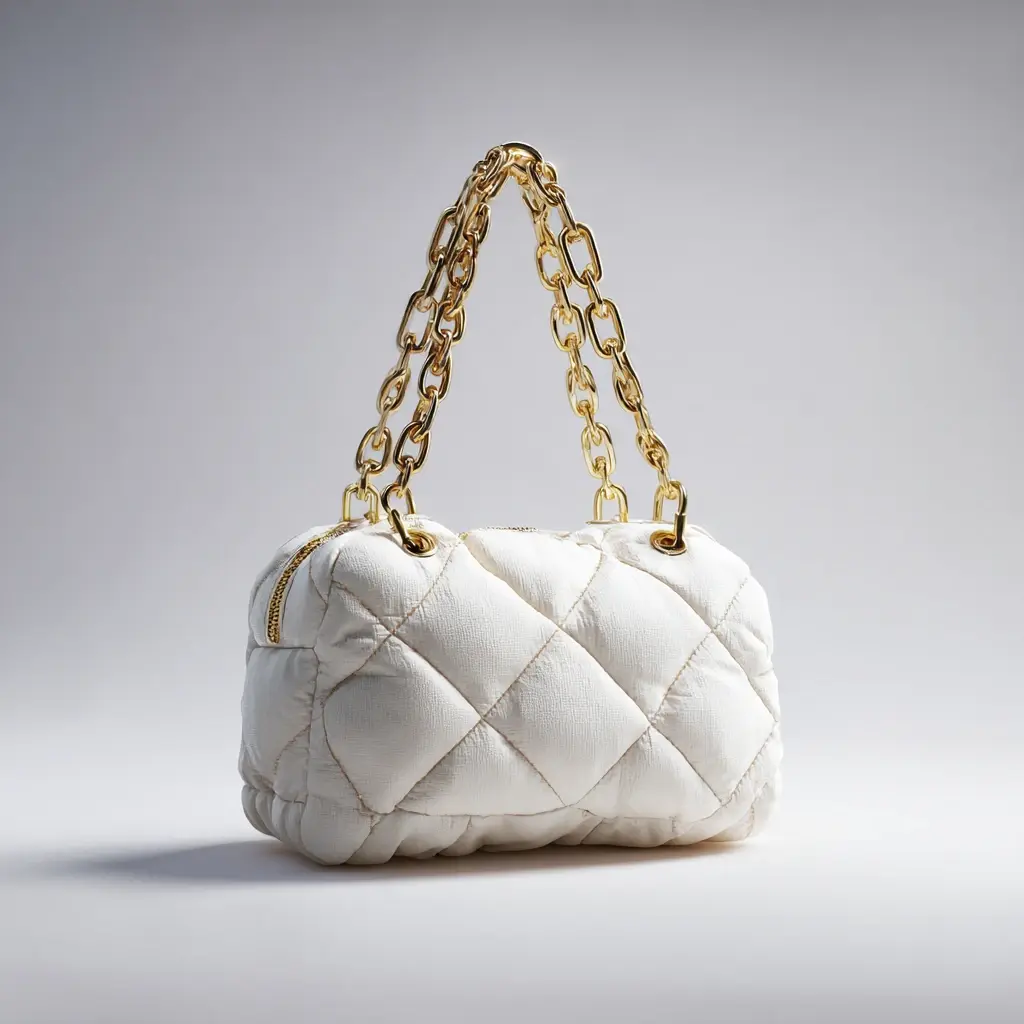
The order was a structured crossbody, 1,500 pieces in two colourways, shipped to a third-party logistics warehouse outside Manchester. Pre-shipment inspection ran at AQL 2.5 under ISO 2859-1, General Level II: 125 units drawn from the 1,500 piece lot, accept 7 and reject 8 on majors. The report came back clean — two majors, five minors, both colourways measured inside tolerance, all hardware present. The goods shipped and arrived on schedule.
Three weeks later the returns started, and they were not about any of the things the report had recorded. Sixty-one units out of 1,500 carried a faint solvent smell that became obvious once the bag had been sealed in its polybag and shipped in a closed container. The smell was not a defect class anybody had written down. It was not visible in a photograph, it did not appear at the inspection table under open air, and it was not in the specification. The buyer paid for a deodorising treatment at the warehouse and wrote the number into the next order.
That is the case for a checklist rather than a standard. AQL 2.5 tells you how many units to draw and how many defects fail the lot; it says nothing about which twelve things to look at, and it says nothing about the one that costs you 61 returns because nobody thought to open a bag and smell it. The list below is ordered so that the invisible checks happen last, after the bag has been closed for a while, and so that the destructive or time-consuming tests happen on a subset rather than on every unit.

How to Run the Checklist Without Slowing the Line
The most common objection to a twelve-station list is that it takes too long. It does not, if the order of work is right. A handbag inspection at this depth runs at roughly 8-12 minutes per unit once the inspector is set up, which means 80 units is a working day with the report written in the same session. What costs time is not the number of stations but the setup that was not done: no approved swatch on the table, no steel rule, no carton count, no camera.
- Lay the references out first: approved swatch or golden sample, signed specification, steel rule, tape, calliper, magnet test, camera with a scale, and the defect log sheet.
- Count the cartons before opening any and record the count, the marks and the gross weight of one full carton.
- Walk every unit through stations one to five, which are visual and take seconds each.
- Measure station four on every unit in the sample, because measurement drift is the defect that shows up as a pattern rather than as a one-off.
- Run the function tests on a subset — five units per colourway is normally enough for cycles and load tests.
- Finish with the closed-bag checks: odour, metal detection and packing, in that order, after the bags have been shut.
- Write the log as you go, not at the end. A defect written down at midnight is a defect remembered wrongly.
Packing, Silhouette, Material and Measurement
The first four stations are the ones that catch the defects a customer notices within ten seconds of opening the box. They are also the stations where a systematic error shows up as a pattern across the whole sample rather than as an isolated bad unit, which is why they are recorded as ranges and not just as pass or fail.
| Station | What is checked | The number recorded | Fail condition |
|---|---|---|---|
| 1. Packing | Carton count, marks, gross weight, polybag, desiccant, silica quantity | Cartons offered, cartons opened, kg per carton | Gross weight above 15 kg, illegible marks, missing desiccant |
| 2. Silhouette | Symmetry, stand, panel alignment, gusset shape | Left to right deviation in mm | Asymmetry above 4 mm on a structured body |
| 3. Material and colour | Grain, hand feel, coating, shade against approved swatch | Delta E under D65 light | Delta E above 2.0 against the approved reference |
| 4. Measurement | Body width, height, gusset depth, strap drop, handle length | Each dimension in mm against the specification | Any dimension outside the stated tolerance band |
Measurement deserves one more note because it is the station most often done with the wrong tool. A soft tape measure stretches and reads 1-2 mm long on a curved gusset; a steel rule does not. Where the specification is written in millimetres, measure with steel, on a flat surface, with the bag empty and resting rather than stuffed or held. Conditioning matters too: material cut and measured at 20 degrees Celsius and 65 per cent relative humidity per ISO 139 gives a repeatable figure, while a hide that arrived damp from a container reads differently the next morning.
Stitching, Hardware, Zipper and Attachment
Stations five to eight are where the bag fails in the field rather than in the box. Everything here is load-bearing or cycled in use, and everything here has a number. The detail that separates a useful checklist from a vague one is that each station names the tool and the threshold, not the intention.
- Station five, stitching. Count stitches per inch over a 25 mm run on a load-bearing seam; 7-9 SPI with Tex 40 bonded nylon is the working band, and a seam allowance under 10 mm on a structured body is a major. Look for skipped stitches, loose tension on the underside and thread tails over 3 mm.
- Station six, hardware. Check plating under a lamp for haze and flaking, verify colour consistency across fittings on the same bag, and pull each rivet and ring by hand. Salt spray to ASTM B117 for 24 hours is the laboratory version; on the bench, look at the edge of a plated fitting where the coating is thinnest.
- Station seven, zipper function. Run the slider through 500 open and close cycles on a test unit and check for jam, slider slip and tape fray at the stop. A metal zipper that grates on the first pull will grate worse after a month of use.
- Station eight, attachment. This is the joint that fails first. A strap attachment should carry a reinforcement bar-tack of roughly 28 stitches over a 12 mm width, and the assembly should hold 15 kg static load for 60 seconds with no stitch creep and no tearing at the needle holes.
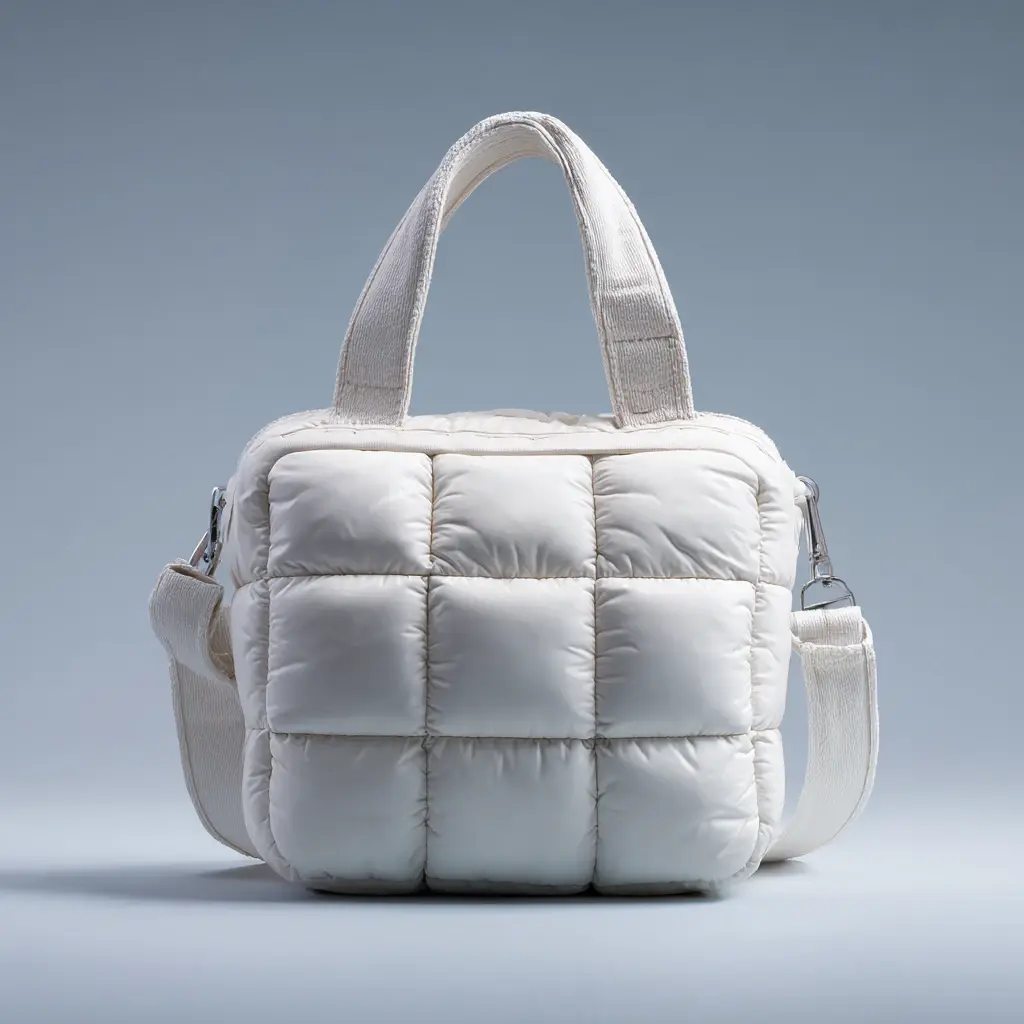
Hardware also carries the regulated chemistry. Nickel release above 0.5 micrograms per square centimetre per week is restricted under REACH Annex XVII, and a coated or plated trim sold into California carries a Proposition 65 review. Where an item is marketed to children, CPSIA sets a 90 ppm limit on lead in coatings and substrates. These are document checks rather than bench checks — ask for the report, file it with the inspection report, and record the report number on the checklist so the next order can reference it.
Interior, Edge Finish, Branding and Cleanliness
The last four stations are the ones that get skipped when time runs short, and they are the ones that generate the complaints nobody can diagnose afterwards. Lining, edge paint, branding position and cleanliness do not affect whether the bag holds together; they affect whether a customer believes it was worth the price.
- Station nine, interior. Lining must be smooth with no pucker over 2 mm, pockets sewn square and aligned, and no raw edge showing inside. Check the lining weight against the specification — 210D polyester behaves very differently from a 420D — and confirm that any interlining is bonded rather than floating.
- Station ten, edge finish. Edge paint should be even in width, with no drag marks, no bubbles and no tackiness. Run a fingernail along the edge: paint that lifts or transfers is a major, because it will transfer onto clothing in the first week.
- Station eleven, branding. Position measured in millimetres from a stated datum edge, depth of embossing consistent across units, woven label straight and centred, and no ghosting of the mark through the panel. A logo 3 mm off on 1,500 units is 1,500 units that look wrong next to each other on a shelf.
- Station twelve, cleanliness. Metal detection on every unit at ferrous 1.0 mm, non-ferrous 1.2 mm and stainless 1.5 mm sensitivity; then odour, rated on a 5 point scale after the closed bag has rested 24 hours, with 2 or below the pass mark. This is the station the Manchester order did not have.
The Function Tests Worth Doing on the Day
Five tests cover most of what actually fails in use, and none of them needs a laboratory. They are run on a subset — five units per colourway is normal — because they take time and because a systematic failure shows up in five units just as clearly as in fifty.
| Test | Method | Pass threshold | Units tested |
|---|---|---|---|
| Strap static load | 15 kg hung from the strap, bag suspended | 60 seconds, no stitch creep or tear at the needle holes | 5 per colourway |
| Zipper cycling | Slider run open and closed by hand or jig | 500 cycles, no jam, no slider slip, no tape fray | 5 per colourway |
| Closure pull-off | Magnetic snap or turn-lock pulled perpendicular to the panel | 1.5-3.0 kgf, and no panel distortion on release | 5 per colourway |
| Stand and fill | Bag filled to its stated litre capacity and set down | Stands square, no panel collapse, base studs all touching | 3 per colourway |
| Metal detection | Conveyor needle detector at set sensitivity | No alarm at ferrous 1.0 mm equivalent | Every unit in the sample |
Where a programme is shipping at volume, one of these becomes a laboratory test rather than a bench test. Salt spray to ASTM B117 for 24 hours is the one most often outsourced, because plated hardware is the first thing a customer notices going dull, and because the threshold — no base-metal corrosion at 24 hours for a decorative finish — needs a cabinet rather than a lamp. Carton performance is the other: ISTA 1A or 2A drop and vibration sequences are worth running once per carton specification rather than once per shipment.
What to Do When a Defect Shows Up at Station Six
Finding a defect is not the hard part; deciding what it means is. The rule that keeps the decision objective is to classify before counting. Write the defect into its class using the definitions in the specification, photograph it against a scale, then count. If the count reaches the reject number for that class, the lot fails, and the next question is what happens next rather than whether it should have passed.
- If the defect is systematic, stop and inspect the whole lot. A measurement drift or a shade shift affects every unit, and sampling will understate it.
- If the defect is sporadic, finish the sample and let the arithmetic decide. Sporadic defects are exactly what AQL sampling is built to measure.
- If the defect is cosmetic and at the minor threshold, consider an allowance with a price adjustment rather than a re-sort, and record it in writing.
- If the defect is a critical, stop the inspection. One broken attachment or one needle fragment ends the discussion and starts a re-sort.
Whatever the outcome, the defect log is the asset. It tells the production side which operation to fix, it sets the starting point for the next inspection, and it is the document that makes the second order cheaper. A handbag programme specialist who files defect Pareto by station can tell you, before the next run starts, which of the twelve stations is likely to produce the next failure.
Turning the Checklist Into a Reusable Spec Sheet
The checklist should end up as one page attached to the purchase order, with the numbers for this style filled in rather than left as ranges. That page is what makes the second order repeatable: the same twelve stations, the same thresholds, the same tools, and a reference to the golden sample that was approved the first time around.
- Fix the tolerances in millimetres for every dimension, including strap drop and handle length.
- State the stitch specification: thread ticket, stitches per inch, seam allowance, bar-tack stitch count.
- Name the hardware finish and its test: plated alloy, thickness, salt spray hours, pull-off force.
- Name the colour reference: a Pantone TCX code plus the approved physical swatch and the Delta E limit.
- Set the packing rules: pieces per carton, desiccant weight, carton specification, gross weight ceiling, marks.
- Attach the defect class definitions with handbag-specific examples for each station.
- File the golden sample reference and its retention period, so the repeat order starts from the same object.
From there the arithmetic of sampling takes over: the AQL 2.5 inspection explained in numbers sets out how many units get drawn and what the accept row says, and the comparison between AQL 2.5 and AQL 4.0 shows what a looser bar costs. The handbag quality control reference places the checklist between sampling approval and pre-shipment sign-off.
Tightened and Reduced Inspection Under ISO 2859-1
AQL 2.5 is a starting condition rather than a fixed setting. ISO 2859-1 carries switching rules that move the sample size after the history of the lots: down after a clean run, up after failures, and back again. Each change alters how many units are drawn and therefore how many inspector hours an inspection costs, which is why locking the twelve stations to an inline gate as well as the final one shortens every subsequent visit.
| State | When it applies | Sample size and time budget |
|---|---|---|
| Normal | The default on a first lot | Code H at 500 pcs: 50 units drawn, about 5-7 inspector hours |
| Tightened | Two of five consecutive lots rejected | Sample rises about 60 percent; allow 8-11 hours |
| Reduced | Ten consecutive lots accepted at a steady rate | Sample falls roughly 40 percent, saving 2-3 hours |
| Back to normal | One lot rejected under reduced, or irregular production | Full general level II sample reinstated |
Get the checklist filled in for your style
Send the silhouette, material direction and quantity, and a private label coordinator will return the twelve stations with your tolerances filled in, ready to attach to the purchase order. Sampling 6-10 working days, bulk 35-50 days, inspection at AQL 2.5 under ISO 2859-1. Get a quote.
Frequently Asked Questions
How many items should a handbag inspection checklist contain?
Twelve stations is workable: packing, silhouette, material and colour, measurement, stitching, hardware, zipper, attachment, interior, edge finish, branding, and cleanliness with documentation. Fewer misses the invisible defects; more tends to be skipped once the inspector is past the twentieth unit.
How long does a full checklist inspection take per unit?
Around 8-12 minutes per unit once the references are laid out, which puts 80 sampled units inside one working day including the report. What slows an inspection down is missing setup rather than the number of stations: no approved swatch, no steel rule, no camera with a scale.
Should every unit be metal detected?
Yes, every unit in the sample, at ferrous 1.0 millimetre sensitivity, with non-ferrous at 1.2 millimetres and stainless at 1.5 millimetres. A broken needle fragment is a critical defect, and a subset test cannot demonstrate the absence of something that occurs in one unit out of a thousand.
What strap load test is realistic for a handbag?
Fifteen kilograms applied statically to the strap with the bag suspended, held for 60 seconds, with no stitch creep and no tearing at the needle holes. That is well above what a filled bag weighs, which is the point: the margin covers a customer who loads the bag heavily and swings it.
How is colour deviation measured at the inspection table?
By comparing the production unit against an approved physical swatch and recording Delta E under a defined light source, usually D65. A Delta E of 2.0 or better is a working limit for a private label programme; above 3.0 the difference is visible to most people on a shelf.
What is a bar-tack and how many stitches should it have?
A bar-tack is the dense zigzag reinforcement sewn at a stress point, typically where a strap meets the body. On a handbag strap attachment, roughly 28 stitches across a 12 millimetre width is a sound specification, and an under-sewn bar-tack is a major defect because that joint carries the whole load.
How do I check edge paint quality on leather?
Look for even width, no bubbles, no drag marks and no tackiness, then run a fingernail along the edge. Paint that lifts or transfers is a major defect, because it will transfer onto clothing in the first week of use and generate a return that looks nothing like the original fault.
Should the checklist cover odour?
Yes. Rate odour on a 5 point scale after the closed bag has rested 24 hours in its polybag, with 2 or below as the pass mark. Solvent and adhesive odour is invisible at an open bench and obvious inside a sealed container, which is why it escapes inspection and shows up as returns.
How many cartons should be opened during inspection?
The usual field method is the square root of the total carton count plus one, rounded up, with units drawn evenly across the cartons opened. On 60 cartons that is roughly nine opened, and it prevents a result that reflects one packing shift rather than the whole order.
What documents should be filed with the inspection report?
Material test reports against REACH Annex XVII, a Proposition 65 review where goods go to California, CPSIA documentation for children's items, the salt spray result for plated hardware to ASTM B117, the carton specification and the defect log with photographs against a scale.
Can the same checklist be used for a tote and a backpack?
The twelve stations are the same, but the numbers differ. A tote is measured on body width and gusset depth with a strap drop test; a backpack adds harness attachment, back panel and load distribution, so the spec sheet carries style-specific tolerances under a shared station structure.
What should happen to the checklist after the first order?
It becomes the specification page attached to the repeat order, with the golden sample reference retained alongside it. Where the specification is unchanged the repeat can skip sampling entirely, which removes 6-10 working days from the calendar and starts bulk inside the 35-50 day window sooner.
People Also Ask
Why run the checks in a fixed order rather than at random?
A fixed order makes the missed defect predictable and therefore fixable. If the same station is skipped every time, the defect log shows it and the list can be corrected; if stations are skipped at random, the gap in coverage is invisible.
Do function tests need to run on every sampled unit?
No. Five units per colourway is normally enough for cycling and load tests, because a systematic failure appears within five units just as clearly as within fifty. Metal detection is the exception and runs on every unit.
Is a steel rule really necessary for measurement?
Yes, where the specification is written in millimetres. A soft tape stretches and reads 1-2 millimetres long on a curved gusset, which is enough to turn an in-tolerance bag into a false failure or, worse, a real defect into a pass.
What makes a checklist reusable across suppliers of inspection service?
Numbers rather than adjectives. Fifteen kilograms for 60 seconds, 500 cycles, Delta E 2.0 and ferrous 1.0 millimetre mean the same thing to any inspector, whereas good stitching and clean finish do not.
Sources and further reading
Every figure on this page is either our own programme data or attributed below. Open the originals before you write them into a specification.
- REACH — chemical substances regulationEuropean Commission Annex XVII restricts the substances that may appear in finished leather and coatings.
- Consumer Product Safety Improvement Act of 2008 (full text)U.S. Congress / GovInfo The statute behind childrens-product limits and tracking labels.
- SATRA — technical services for leather, footwear and accessoriesSATRA Independent leather, hardware and accessories testing protocols.