Handbag Production Capacity: Monthly Output for Private Label Runs
How much handbag capacity can a private label brand actually reserve? In the case below, a Rotterdam direct-to-consumer label needed 6,000 pieces across four styles in six weeks and was told yes by one partner and no by another for the same month. Capacity is not one number, it is three: about 200,000 pcs per month in total, 950-1,400 pcs per line per day depending on how many operations the pattern needs, and the 60-70% of that month which is usually already committed to standing programmes. A monthly figure answers whether a programme fits the year; a daily figure answers whether it fits the month; and only a reservation answers whether it fits your launch date. Ask all three, in that order, and ask four to six weeks ahead.
- The Question a Rotterdam Buyer Asked in June
- What a Line Actually Produces in a Day
- Why 500 Pieces Takes Half a Day or More
- How Much of the Month Is Already Gone
- Reserving Capacity: The Four to Six Week Rule
- When One Style Runs Across Two Lines
- Peak Months and the Chinese New Year Gap
- Reading a Capacity Answer Like a Professional
- What to Send When You Ask About Capacity
- The Monthly Line-Day Ledger
- What Overtime and a Second Shift Actually Add
- Where the Container Runs Out Before the Line Does
How much handbag capacity can a private label brand actually reserve? In the case below, a Rotterdam direct-to-consumer label needed 6,000 pieces across four styles in six weeks and was told yes by one partner and no by another for the same month. Capacity is not one number, it is three: about 200,000 pcs per month in total, 950-1,400 pcs per line per day depending on how many operations the pattern needs, and the 60-70% of that month which is usually already committed to standing programmes. A monthly figure answers whether a programme fits the year; a daily figure answers whether it fits the month; and only a reservation answers whether it fits your launch date. Ask all three, in that order, and ask four to six weeks ahead.
The three capacity numbers
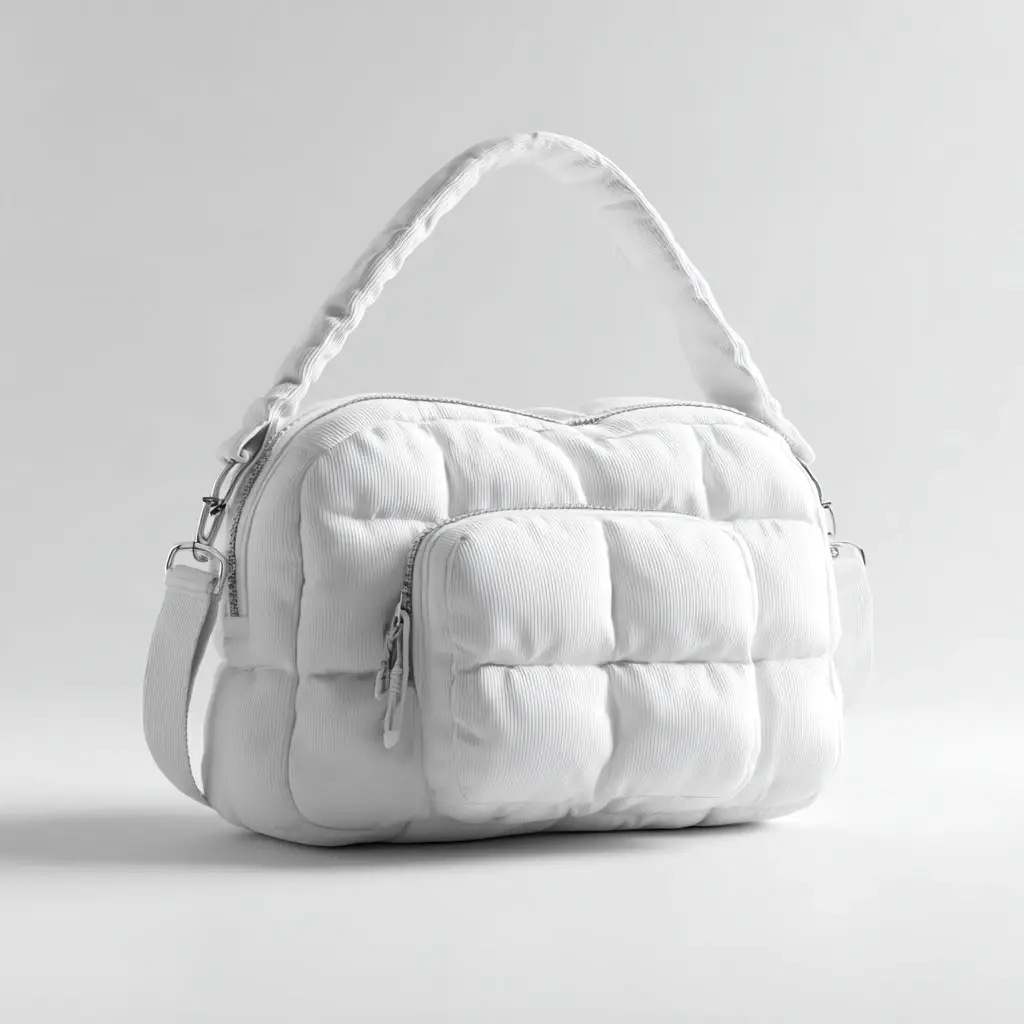
The Question a Rotterdam Buyer Asked in June
A direct-to-consumer label in Rotterdam had run two seasons through a marketplace and wanted to stop buying stock. The plan was four styles, one colourway each, 1,500 pieces per style, on shelf by the first week of September. Sampling had already started elsewhere; what the founder needed to know was whether 6,000 pieces could be cut, sewn, inspected and shipped inside six weeks from a finished sample. The first answer was yes, immediately, with no questions asked. The second answer was yes, but only if two of the four styles moved to a second line and only if the hardware was approved within five working days. Only the second answer survived contact with the calendar.
The difference between the two is the whole subject of this article. The first was a monthly figure quoted as if it were a promise. The second was a daily figure, multiplied by the number of lines that could actually be freed, minus the changeover time, minus the share of the month already committed. Six thousand pieces at 1,100 per line per day is 5.5 line-days of pure sewing, which sounds comfortable against 7 lines and 26 working days. Add 4-6 hours of changeover per style, subtract the two lines already running a standing programme, and the comfortable number becomes a scheduling problem that has to be solved in week one rather than discovered in week five.
What a Line Actually Produces in a Day
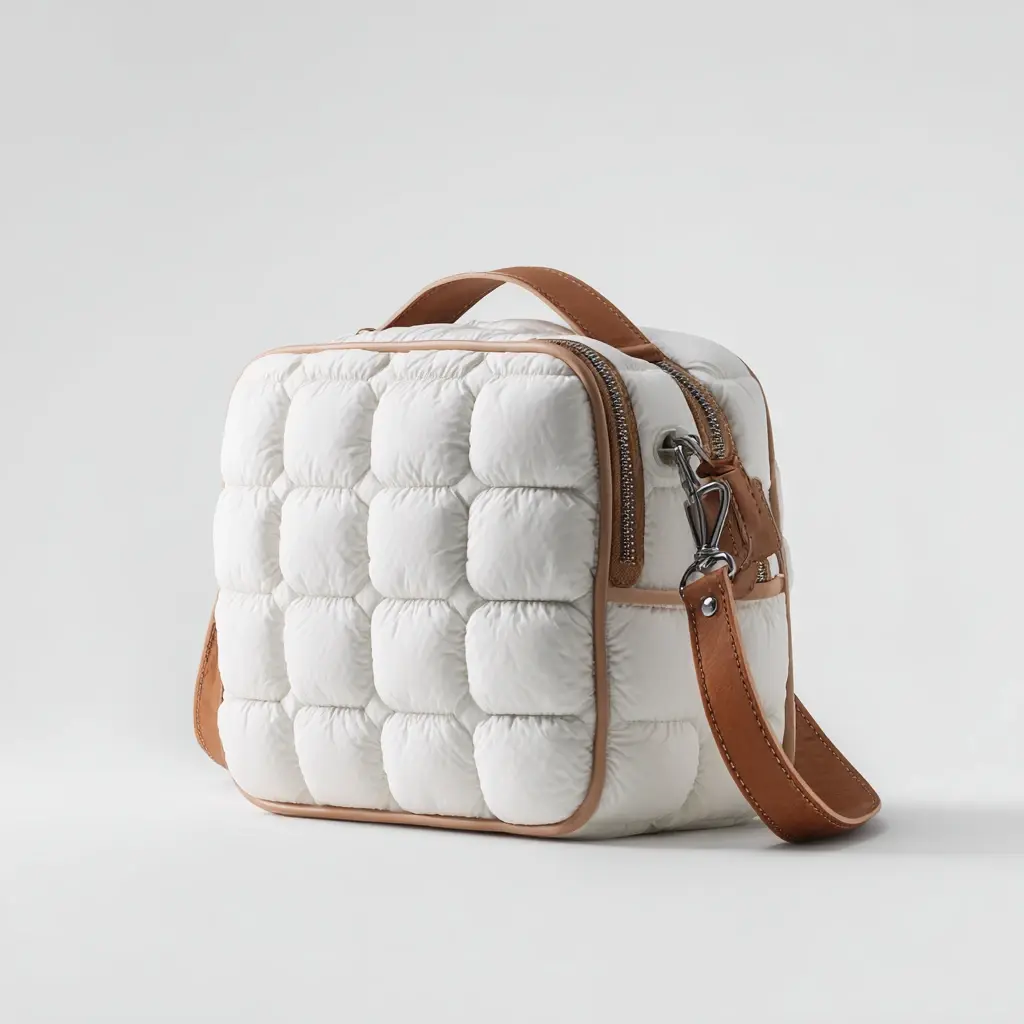
A line is a sequence of workstations, and its output is set by the slowest station, not by the fastest. A plain tote at 24-30 operations with a takt of 25-40 seconds produces at the top of the range, roughly 1,200-1,400 pieces in a shift. A framed satchel at 38-52 operations, with hand-work stages such as edge painting and adhesive setting that cannot be rushed, produces 950-1,100. That is the entire explanation for the 950-1,400 range: it is not a measure of effort, it is a measure of how many times each unit is handled. A specification that reduces the operations count is a specification that buys capacity.
- Ask what daily rate the pattern is expected to run at, not what the monthly total is.
- Ask which station is the constraint; that is the only number that responds to a specification change.
- Ask how much of the pattern is hand work, because hand work does not scale with overtime in the same way.
- Ask what happens to the rate in the first two days of a run, when the line is still settling.
Why 500 Pieces Takes Half a Day or More
Five hundred pieces per style per colourway is the standard minimum, and on a line running at 1,100 per day it is about half a day of sewing. It is never half a day of calendar. Before the first unit, the line has to be set: patterns issued, cutting done for the whole quantity, thread and needle sizes changed, fittings and linings brought to the station, and a first-piece check signed. That setup is 4-6 hours, and it is charged against the run whether the run is 500 or 5,000 pieces. After the last unit, the quantity has to be inspected at AQL 2.5 under ISO 2859-1 and packed. A 500-piece style therefore occupies roughly one to one and a half days of a line, of which only half is sewing.
| Quantity | Sewing time | Setup and changeover | Inspection and packing | Line-days occupied |
|---|---|---|---|---|
| 500 pcs, plain tote | 0.5 day | 4-6 hours | 0.5 day | 1.0-1.5 |
| 1,000 pcs, plain tote | 1 day | 4-6 hours | 0.5-1 day | 1.8-2.4 |
| 1,500 pcs, shoulder | 1.5-2 days | 4-6 hours | 1 day | 2.8-3.6 |
| 1,500 pcs, framed satchel | 2-2.5 days | 6 hours | 1 day | 3.4-4.0 |
| 3,000 pcs, plain tote | 3 days | 4-6 hours | 1.5 days | 4.8-5.6 |
How Much of the Month Is Already Gone
The number that surprises buyers is not the total, it is the committed share. In a typical month, 60-70% of capacity is already held by standing programmes: repeat styles with reserved slots, seasonal runs booked months earlier, and the tail of orders that slipped from the month before. What remains is genuinely available, but it is a slice rather than a reservoir, and it is allocated in the order requests arrive. This is why two enquiries for the same month get two different answers, and why the answer that arrives with a question about your specification is usually the one that holds.
Read the committed share as a reason to plan in seasons rather than in orders. A brand that commits to 5,000 pieces across a season and reserves the slots up front is buying a different product from a brand that orders 500 pieces four times: the first gets a held rate, a held slot and priority when the month tightens; the second gets whatever is left. Neither is wrong, but they are not the same purchase, and the price difference between them is larger than any discount negotiated order by order.
Reserving Capacity: The Four to Six Week Rule
Four to six weeks is the practical reservation lead for a first order, and it is shorter than most founders assume because the reservation is not a production start. It covers three things: the material call-off, which for leather is 15-25 days; the plating slot for hardware, which is booked with the deposit; and the position on the line, which is held against a start date. Reserve later than four weeks and you are asking for a position that has to be carved out of someone else's run, which is where the 10-21 day slips before Chinese New Year come from.
- Send quantities per style and colourway with the target delivery week, not just a total.
- Ask for a start date and a finish date in writing, and check both against the material lead times.
- Pay the deposit and take the slot in the same step; a reservation without a deposit is a conversation.
- Reserve the repeat while the first run is still on the line, which costs nothing and saves the whole calendar next season.
- Re-confirm the slot two weeks out, because a silent change is cheaper to catch early.
When One Style Runs Across Two Lines
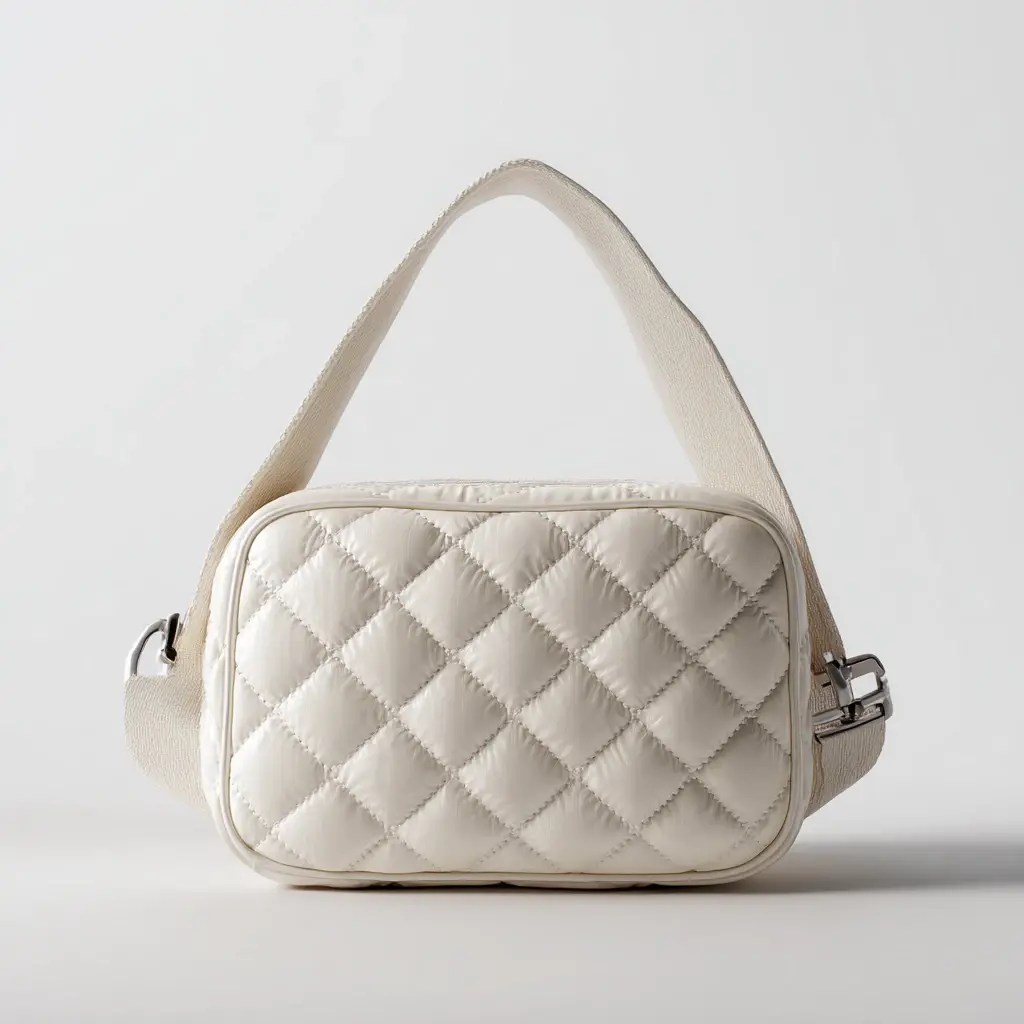
Splitting a style across two lines is the standard answer to a tight date, and it works better than buyers expect when the specification is stable. Two lines running the same pattern need two cutting sets, two sets of fittings at the stations and two first-piece checks, and the second line typically starts one to two days behind the first. The cost is a small duplication of setup, 4-6 hours on each line, and the benefit is nearly halving the calendar. What does not work is splitting a style whose specification is still moving: a revision issued on day three has to be issued twice, and the two halves drift apart in ways that show up at inspection as shade or construction variance.
- Split quantities, not specifications. Both lines must build to the same frozen document.
- Approve hardware before the split, so both lines draw from one lot with one finish.
- Ask for a single inspection lot, so the AQL 2.5 sample is drawn once under ISO 2859-1.
- Expect the second line to start a day later and plan the packing date from the later one.
Peak Months and the Chinese New Year Gap
Capacity is seasonal even when the headcount is not. The autumn shipping rush from September to November fills lines and vessels together, and the weeks before Chinese New Year in mid-February 2026 fill early because nobody wants a run half-finished over a 15-21 day shutdown. The mirror of that is the quiet period immediately after the shutdown, when lines restart progressively and effective output in the first two weeks back is closer to 60-70% of normal. A brand that plans around these two features of the year gets a faster answer than one that plans around its own launch date alone.
| Period | Availability | What to do |
|---|---|---|
| January to mid-February | Tight, then closed | Finish and ship; do not start new runs after mid-January |
| Chinese New Year shutdown | 15-21 days closed | Restart only after the ramp-up, and expect 60-70% output for two weeks |
| March to May | Open | Best window for a first order and for sampling |
| June to August | Open, warming | Reserve autumn capacity now, at four to six weeks' lead |
| September to November | Tight | Book vessels early; expect 4-10 day booking delays |
| December | Tight then open | Use for next-year sampling and tooling, not for bulk |
Reading a Capacity Answer Like a Professional
Capacity answers arrive in three shapes. A total monthly figure with no daily rate and no committed share is a marketing number; it tells you nothing about your date. A daily rate with a start date is a real answer. A daily rate with a start date, a finish date and an inspection date is a commitment. Judge the answer by which of the three it is, and note that the partner who asks about your specification before answering is usually the one who will still be answering in week five. ISO 9001 quality system documentation and a BSCI or Sedex audit reference are the two documents that separate a process from a promise.
Two more questions complete the picture. Ask what share of the month is committed, because honest partners will say 60-70% and the number itself is a signal of good reporting. And ask what happens if the run overruns: which line absorbs it, and whether the inspection date moves with it. A programme that ships through our validated partner factory Quanzhou Yingming Bags runs across 7 production lines at about 200,000 pcs per month, with export experience since 2014 and inspection at AQL 2.5 under ISO 2859-1.
What to Send When You Ask About Capacity
The capacity question is answered faster than any other, provided the enquiry contains four things: quantities per style and colourway, the number of operations or a reference photograph, the target delivery week, and whether this is a first run or a repeat. A fifth item helps: the target retail price, because it tells the coordinator which construction band to quote within. Without the operations count the answer is a guess, and a guess is what produces the comfortable yes that collapses in week five.
- Quantities per style and colourway, remembering that 500 pcs is per style and per colourway.
- Reference photographs or a tech pack with dimensions, strap drop and pocket layout.
- Target delivery week, expressed as a week and a year, not as a season.
- First run or repeat, because a repeat with retained tooling needs no sampling window.
- Destination and term: FOB Xiamen, CIF or DDP, which affects when the goods leave the line.
Two neighbours cover the adjacent questions. The production schedule built around a launch date works the calendar backwards from the drop, and the seasonal drop schedule for 2026 maps the four windows against the shutdown. For the underlying stages, the handbag production process reference sets out where each day is spent.
The Monthly Line-Day Ledger
Capacity can be counted in line-days rather than in pieces, and that unit makes the arithmetic obvious. Seven lines across a 26-day month is 182 line-days. Take away the 60-70 per cent already committed and roughly 55-73 remain, then take away changeover time at 4-6 hours each and the month is smaller still.
| Line item | Line-days | Note |
|---|---|---|
| Gross capacity | 182 | 7 lines x 26 working days |
| Already committed | 109-127 | 60-70 per cent of the month |
| Changeovers absorbed | 6-9 | 4-6 hours each, roughly two per style |
| Available for new bookings | 46-67 | The number buyers are competing for |
That last row is why the booking cut-off matters more than the monthly total. A 3,000-piece order needs about five line-days of throughput, and whether it ships in November depends on how many of the 46-67 are left when the deposit clears. The ledger also explains why a large order is not automatically a late one: it consumes more line-days, but it is scheduled rather than fitted into a gap.
What Overtime and a Second Shift Actually Add
When a month is tight, the first lever is hours rather than lines. Extra hours add output, but not proportionally, because yield dips, supervision thins and labour cost rises. Understanding the exchange rate is what makes a rush decision rational rather than hopeful.
- Extended hours. Two extra hours a day typically adds 18-22 per cent output, at time-and-a-half on those hours.
- Weekend shift. Roughly 15-20 per cent more output across the month, at a premium of 30-50 per cent on those units.
- A second full shift. Up to 80-90 per cent additional capacity, but it needs its own supervision and its own inline check.
- Where it stops. Below about 80 per cent first-pass yield, extra hours produce rework rather than units.
- What it costs. The premium usually lands between 6 and 14 per cent of the unit price on the affected units, which is far cheaper than an air-freight rescue and far dearer than an early booking.
Where the Container Runs Out Before the Line Does
Monthly output is not the only ceiling. Container cube is the other one, and on light soft bags it binds first. A 40-foot high-cube container holds roughly 65-67 cubic metres, and a 600 x 400 x 400 mm carton is 0.096 cubic metres, so a full container takes around 680 cartons before any packing inefficiency is counted.
- Soft totes, flat-packed. About 30 per carton, so roughly 20,000 pieces fill a container.
- Structured satchels, boxed. About 12-16 per carton, so around 8,000-11,000 pieces.
- Hardware-heavy builds. The carton gets heavier before it gets fuller; 18 kg is the practical ceiling per carton.
- The consequence. A 500-piece run uses 2-4 per cent of a container, which is why early orders travel less-than-container-load at a higher rate per carton.
- The planning point. Consolidating several styles into one shipment is the cheapest fix, and it is far easier to arrange when the slot was booked early.
Ask for a start date, not a monthly total
Send quantities per style and colourway with your target delivery week. A private label coordinator will answer with a daily rate, a start date and a finish date, plus the inspection date at AQL 2.5. Get a quote.
Frequently Asked Questions
How many bags can a production partner make in a month?
About 200,000 pcs per month across 7 production lines, at 26 working days. The number that matters for your order is the daily rate per line, 950-1,400 pcs, which is set by how many operations the pattern needs: 24-30 for a plain tote, 38-52 for a framed satchel.
Why is the daily rate a range rather than a number?
Because it is set by the slowest workstation on the line and by how much of the pattern is hand work. A tote at 24-30 operations with a takt of 25-40 seconds runs at 1,200-1,400 per day; a satchel with edge painting and adhesive setting that cannot be rushed runs at 950-1,100.
How long does 500 pieces take on a line?
About half a day of sewing at 1,100 per day, but roughly one to one and a half days of calendar once setup, cutting, the first-piece check, inspection at AQL 2.5 and packing are counted. The 4-6 hour setup is charged whether the run is 500 or 5,000 pieces.
How much of a month's capacity is usually already booked?
Typically 60-70% is committed to standing programmes, repeat styles with reserved slots and the tail of orders that slipped from the previous month. That is why two enquiries for the same month can receive two different answers, and why reserving four to six weeks ahead matters.
How far ahead should I reserve production capacity?
Four to six weeks for a first order. That covers the 15-25 day leather call-off, the plating slot booked with the deposit, and the position on the line. Reserve later and you are asking for a position carved out of another run, which is where 10-21 day slips appear.
Can one style be split across two lines to hit a date?
Yes, and it nearly halves the calendar. It costs a duplicated 4-6 hour setup and the second line starts one to two days behind. It only works with a frozen specification: a revision issued on day three has to be issued twice and the halves drift apart in shade or construction.
Does capacity change during the year?
Yes. September to November is tight because lines and vessels fill together, and the weeks before Chinese New Year fill early because nobody wants a run half-finished over a 15-21 day shutdown. After the shutdown, effective output is 60-70% of normal for about two weeks.
What should I send when I ask about capacity?
Quantities per style and colourway, reference photographs or a tech pack, the target delivery week as a week and a year, whether this is a first run or a repeat, and the destination and term. Adding a target retail price helps the coordinator quote within the right construction band.
Is a monthly capacity figure enough to plan a launch?
No. A monthly figure tells you whether a programme fits the year; a daily rate tells you whether it fits the month; only a reservation with a start date, a finish date and an inspection date tells you whether it fits your launch date. Ask for all three.
How do repeat orders affect capacity planning?
They reserve capacity cheaply. A repeat with retained tooling and a stored specification needs no 6-10 working days of sampling window and can be slotted while the previous run is still on the line, which is the least expensive capacity a brand will ever buy.
What documents confirm that a capacity claim is real?
An ISO 9001 quality system reference, a BSCI or Sedex audit reference for the validated partner factory, and an inspection report at AQL 2.5 under ISO 2859-1 from a recent shipment. A monthly total offered with no daily rate and no committed share is a marketing number.
People Also Ask
Is 200,000 pcs per month available to a new brand?
The total is real but the available slice is smaller, because 60-70% of any month is committed to standing programmes. A first order books from the remainder, which is why a four to six week reservation lead is the practical rule.
Does a larger order get priority on the line?
Quantity helps, but a reservation helps more. A 5,000-piece seasonal commitment with reserved slots gets a held rate and priority when the month tightens; four separate 500-piece orders get whatever is left, even though the annual volume is similar.
Can capacity be increased at short notice?
Only within the 30-40% not already committed, and only by running a second line or overtime. In the weeks before Chinese New Year or during the autumn peak there is usually nothing left to increase into.
Why did one partner say yes and another say no for the same month?
Because one quoted a monthly total and the other quoted a daily rate against lines it could actually free. The yes that arrives without a question about your specification or operations count is usually the one that collapses later.
Sources and further reading
Every figure on this page is either our own programme data or attributed below. Open the originals before you write them into a specification.
- FashionUnited — fashion industry news and dataFashionUnited Industry news and company data for the fashion sector.
- China Briefing trade and manufacturing analysisChina Briefing Trade, tax and compliance analysis for sourcing from China.
- SATRA — technical services for leather, footwear and accessoriesSATRA Independent leather, hardware and accessories testing protocols.