Best Zipper Pull and Hardware Combos for Modern Tote Bags
Which zipper pull and hardware combination works best on a modern tote bag? For a tote retailing between 79 and 249 USD, the combination that survives both the review section and the returns department is a #5 chain with a cast zinc-alloy puller of at least 0.9 mm tab thickness, 8-12 microns of plating that holds 24 hours of neutral salt spray under ASTM B117, and a puller that takes 5 kg of static pull without opening up. The puller is the only hardware part a customer handles every single time they open the bag, and it fails in the hand long before the chain fails at the seam. Everything below compares four real combos on the five numbers that decide whether a tote still looks good on day 400, with the sampling and bulk consequences of each choice spelled out in days.
- The Four Hardware Families on a Modern Tote
- Combo A Versus B: Cast Puller or Stamped Puller
- Combo C Versus D: Webbing Pull or Leather Pull
- Five Numbers That Separate a Combo From a Look
- How Plating Thickness Changes What the Combo Costs
- Weight and Balance: The Line Most Briefs Forget
- What Each Combo Does to the Sampling Calendar
- Matching the Combo to the Job the Tote Has to Do
- The Decision Rule Before the Leather Is Chosen
- How Each Combo Fails in the Field, and What the Return Tells You
Which zipper pull and hardware combination works best on a modern tote bag? For a tote retailing between 79 and 249 USD, the combination that survives both the review section and the returns department is a #5 chain with a cast zinc-alloy puller of at least 0.9 mm tab thickness, 8-12 microns of plating that holds 24 hours of neutral salt spray under ASTM B117, and a puller that takes 5 kg of static pull without opening up. The puller is the only hardware part a customer handles every single time they open the bag, and it fails in the hand long before the chain fails at the seam. Everything below compares four real combos on the five numbers that decide whether a tote still looks good on day 400, with the sampling and bulk consequences of each choice spelled out in days.
What the four combos are measured on
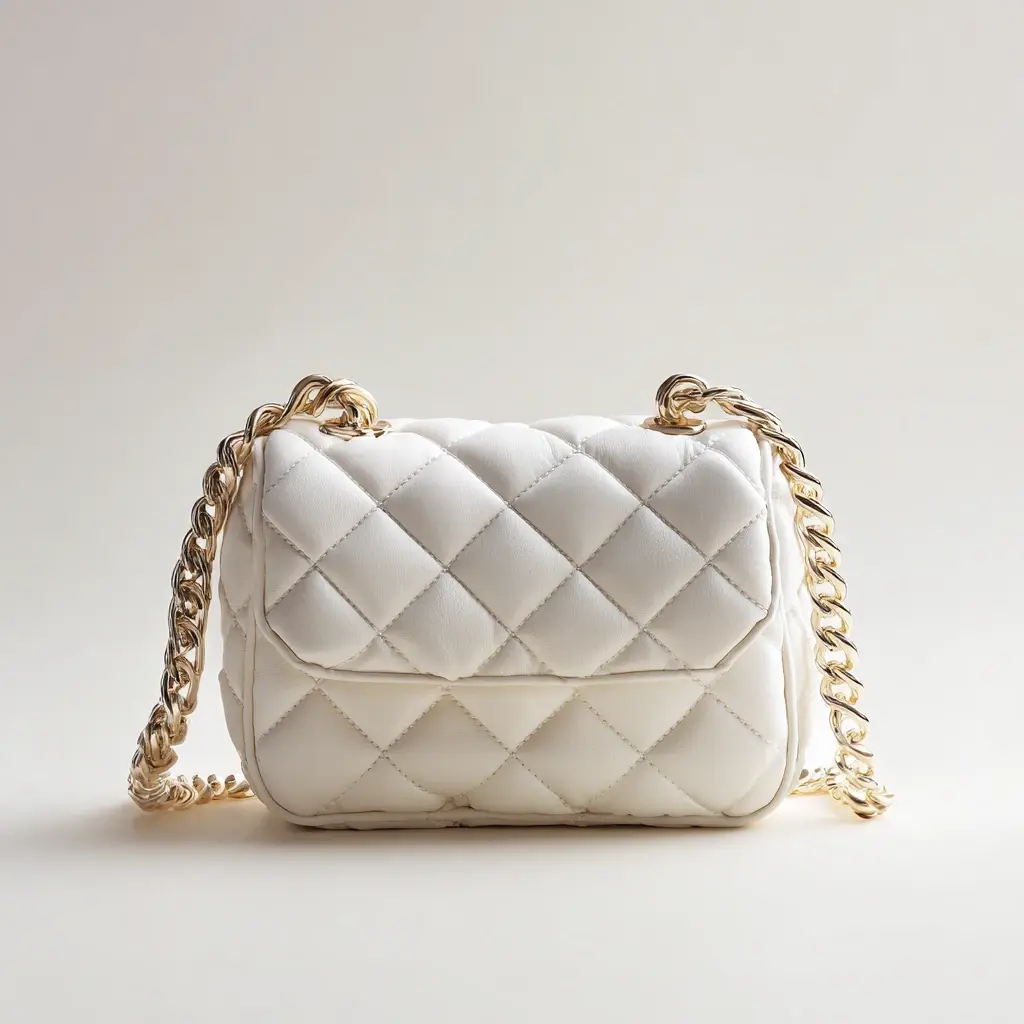
The Four Hardware Families on a Modern Tote
A tote carries four hardware families at once, and a brief that specifies only one of them is the usual reason a sample looks right and a production run looks cheap. The closure is the family everyone specifies: a zipper chain, a magnetic snap or a turn lock. The second family is the puller, which is a separate part with its own tooling and its own plating bath. The third is the load hardware, meaning rings, sliders, D-rings and strap adjusters, and the fourth is the base hardware, meaning feet and bottom studs. On a modern tote the first two families are visible in every product photograph, which is why they absorb most of the hardware budget and most of the complaints.
The practical consequence is that a combo is a decision about two families at once. Choosing a #5 metal chain and then pairing it with a 0.4 mm stamped puller produces a bag where the closure outlives the handle by two years, and the handle is the part the customer touches. Choosing a lightweight coil chain with a heavy cast puller produces the opposite problem: the puller drags the slider so that the chain wears at the bottom stop. Combos should be specified as a pair, with both part numbers written into the tech pack, because a production partner will otherwise substitute whichever puller is already on the shelf.

There is also a naming problem worth settling early. In the trade, chain gauge is quoted as a number: #3 is fine and light, #5 is the tote and shoulder standard, #8 and #10 are luggage and outdoors territory. The number refers to the approximate width of the closed coil in millimetres, so #5 sits near 6.5 mm across the teeth. A brief that says heavy duty zipper without a gauge will be filled with whatever the line has, and it will differ between the sample and the bulk run.
Combo A Versus B: Cast Puller or Stamped Puller
The first fork is manufacturing method, and it is the one that decides both the price and the perceived value. A cast puller is poured into a mould; a stamped puller is cut and bent from flat sheet. Cast parts hold three-dimensional detail, take a deeper logo and weigh roughly 2.5 to 3.5 g at tote scale. Stamped parts weigh 1.0 to 1.6 g, have a flat face and a visible edge where the sheet was cut. On a shelf the difference reads as solid versus hollow, and customers report it in reviews as cheap-feeling without being able to say why.
| Attribute | Cast zinc-alloy puller | Stamped sheet puller |
|---|---|---|
| Tab thickness | 0.9-1.4 mm | 0.4-0.6 mm |
| Unit weight | 2.5-3.5 g | 1.0-1.6 g |
| Logo depth | 0.3-0.5 mm relief | Flat etch or none |
| Tooling | Mould required, 12-18 days | Die only, 5-8 days |
| Plating adhesion | Good on a dense casting | Edge chipping at the cut |
| Field failure | Rare before 24 months | Bending at the crimp from 9 months |
The trade-off is tooling and calendar. A cast puller needs a mould, which is a real asset with a real lead time, and on a first line that mould should be owned by the brand and stored against the second order. A stamped puller can be cut from a die in days, which makes it attractive when the launch date is fixed and the artwork is still moving. The compromise most totes land on is a cast puller from a shared mould with a branded insert or an engraved face, which keeps the weight and the relief without funding a bespoke tool on a 500-piece run.
Whatever the method, the puller must be specified with its attachment: the bail or the link that joins it to the slider. A cast puller on a thin wire bail is a broken-bail waiting to happen, and bail wire under 0.8 mm diameter is the most common cause of a puller arriving in the returns box still attached to nothing. Ask for the bail gauge in the specification alongside the puller gauge, and ask for the pull test to be run on the assembled puller and bail rather than on the part alone.
Combo C Versus D: Webbing Pull or Leather Pull
The second fork is material, and it is where a modern tote either looks designed or looks assembled. A webbing pull is a flat tape loop, usually 10 to 20 mm wide, folded through the slider and bar-tacked; a leather or PU pull is a strip of the body material, often 8 to 12 mm wide and 1.2 to 1.6 mm thick, riveted or stitched to a small metal end. Webbing reads casual and technical, costs almost nothing and wears at the fold. A material pull reads considered, matches the body, and costs one extra operation plus one extra trim item.
- Webbing pull, 16 mm tape. Around 0.9 g of added weight, no plating to fail, and the wear point is the bar-tack: specify 42 stitches or a box tack, not a single pass.
- Leather pull, 10 mm by 1.4 mm. Around 3.2 g, matches the body dye lot, and the wear point is the rivet: specify a 4 mm cap rivet with a washer behind the leather.
- PU pull, 10 mm by 1.2 mm. Around 2.4 g, cheaper than leather, and the failure mode is edge cracking after roughly 12 months where the coating is thin.
- Webbing with a moulded end. Around 2.0 g, gives a branded surface without a metal tool, and the moulded tip is the part that separates under a hard pull.
On a tote, the pull has a second job that a shoulder bag does not impose: it hangs. Because the opening runs 30 to 40 cm across, the puller sits at the centre of the front-facing silhouette and swings with the bag. A puller weighing more than about 4 g on a #3 chain will visibly drag the opening downward over time, so the heavier cast and leather options should be paired with a #5 chain and a reinforced top edge. That top edge is the other specification people forget: a 0.8 mm facing strip or a turned-and-stitched top keeps the opening from bowing under the weight of the pull.
Five Numbers That Separate a Combo From a Look
A mood board can specify a look. Only a specification can specify a combo, and a specification is five numbers. Write these five into the tech pack and the sample will come back the same as the bulk run, which is the only outcome that matters on a 500-piece order where nobody will sort 500 bags by hand.
- Chain gauge
- #5, coil width approximately 6.5 mm, tape 30 mm
- Puller tab thickness
- 0.9 mm minimum for cast; 0.5 mm minimum for stamped
- Plating thickness
- 8-12 microns, measured by X-ray fluorescence on a flat area
- Corrosion resistance
- 24 hours to first white rust, ASTM B117 neutral salt spray
- Static pull
- 5 kg on the assembled puller and bail, 60 seconds, no permanent set
- Cycle life
- 5,000 open and close cycles with no tooth skip at the bottom stop
- Colour match
- Plating tone to a Pantone Metallic reference, Delta E 2.0 or better
Of these, the two that get skipped most often are cycle life and colour match. Cycle life is cheap to test and brutal in the field: a slider that skips at the bottom stop is a bag that cannot be closed, and it happens after roughly 3,000 cycles when the slider body is undersized for the chain gauge. Colour match matters because plating tone drifts between baths, and a gunmetal puller on the sample that arrives as near-black on the bulk run is a visible difference on a product page where the two photographs sit side by side.
How Plating Thickness Changes What the Combo Costs
Plating is sold by the bath, not by the piece, and that is why hardware cost behaves strangely at low volume. A bath costs roughly the same whether 300 or 3,000 parts go through it, so at 500 pieces the plating is a fixed cost spread across a small number, and a thicker plate costs more because it sits in the tank longer rather than because it uses much more metal. Going from 5 microns to 10 microns typically adds a small amount per part but doubles the salt-spray life, which is the best value in the whole specification.
The finishes behave differently. Chrome and nickel over a copper strike hold 24 hours with ease and are the default for gunmetal and silver tones. Light gold and rose gold are thinner systems and are the ones that show wear at the contact points first, so they should be specified at the top of the range rather than the bottom. Antique brass and brushed finishes hide wear better than mirror finishes, and a brushed surface hides the handling marks that accumulate in transit, which matters when 500 units are packed 20 to a carton.
Chemistry runs alongside plating. Hardware is the part of a bag most likely to trigger a compliance question, because plating baths and coatings are where restricted substances hide. A specification should require REACH Annex XVII conformance on nickel release and cadmium, a Proposition 65 review for California-bound goods, and CPSIA documentation where a tote is marketed to children. Those three are the ones retail buyers ask for first, and a production partner should return them as documents rather than as assurances.
Weight and Balance: The Line Most Briefs Forget
Hardware weight is a design variable, not a footnote. A modern tote at 34 to 42 cm wide typically carries between 90 and 160 g of hardware across the chain, puller, rings, feet and magnetic closure. Moving from stamped to cast, or adding four base studs at 2.4 g each, can add 40 g to a bag that weighed 620 g, which is a 6 percent change the customer notices as the bag suddenly feeling substantial. The same change on a lightweight nylon tote at 380 g is 10 percent and reads as heavy.
Balance matters as much as total. Hardware concentrated at the base lowers the perceived weight and helps the bag stand; hardware concentrated at the opening drags the mouth of the bag and makes it slump on the shoulder. The rule of thumb that holds across most tote programmes is that base hardware should exceed closure hardware in weight by roughly 1.5 to 1, which is also the ratio that keeps an empty tote standing upright on a shelf. Four base studs and two feet hit that ratio on a 38 cm tote weighing 650 g.
What Each Combo Does to the Sampling Calendar
Sampling is quoted at 6-10 working days, and that window assumes the hardware exists. A stock #5 chain with a stock puller fits the window comfortably. A cast puller from a new mould adds 12-15 working days because the mould has to be cut, tried and corrected before the first sample can be assembled, and a bespoke plated finish adds a further 4-7 days for the bath. A brand planning a spring launch should therefore decide the combo before the material, not after it, because hardware tooling is the longest pole in the calendar.
| Combo | Sampling | What adds days | Repeat order |
|---|---|---|---|
| Stock chain, stock stamped puller | 6-10 working days | Nothing | Sampling can be skipped |
| Stock chain, stock cast puller | 6-10 working days | Plating tone approval, 2-3 days | Sampling can be skipped |
| Stock chain, new cast puller | 12-15 working days | Mould cut and trial | Mould retained, sampling skipped |
| Bespoke chain, bespoke plated finish | 15-22 working days | Chain dye lot plus bath | Mould and bath recipe retained |
The repeat order is where the tooling decision pays. Where the mould and the plating recipe are retained against the style, the second run can go straight to bulk and remove the sampling window entirely, which is worth 6-10 working days on a calendar that is already 35-50 days of production 35-50 days of transit. That is the argument for owning the tooling on the first line rather than renting it in the unit price.
Matching the Combo to the Job the Tote Has to Do
Not every tote wants the same combo, and the job decides it. A work tote that carries a laptop and opens 20 times a day wants a #5 metal chain, a cast puller and a reinforced top edge, because cycle life is the constraint. A beach or market tote that opens twice a day and gets wet wants a coil chain with a moulded or webbing pull, because corrosion and weight are the constraints and a metal puller on a wet bag is a rust mark waiting to happen. A lightweight packable tote wants a #3 coil with a webbing pull and no metal at all above the base.
- Work and commute, 14-inch laptop. #5 metal chain, cast puller at 1.0 mm, gunmetal at 10 microns, 5,000-cycle slider.
- Weekend and market. #5 coil chain, 16 mm webbing pull with a box tack, nickel-free plating, four base studs.
- Packable and travel. #3 coil chain, 10 mm webbing pull, no plated closure, base studs omitted to save 18 g.
- Premium leather tote. #5 metal chain, 1.4 mm leather pull on a 4 mm rivet, light gold at 12 microns, edge-painted pull edges.
Notice that the premium option is not simply the heaviest option. It is the one where the pull material matches the body material, and where the pull edge is finished rather than cut. That single detail, a 1.4 mm leather pull with an edge-painted rather than a raw edge, is the difference between a pull that looks like a component and a pull that looks like part of the bag. It costs one operation and roughly two days, and it is the cheapest perceived-value upgrade available on a tote.
The Decision Rule Before the Leather Is Chosen
The order of decisions is what makes a tote programme cheap or expensive, and the correct order is job, then combo, then material. Choosing the leather first and then hunting for a puller to suit it produces a substituted part and a delay; choosing the combo first lets the material be selected around a known opening, a known weight and a known calendar. In practice this means the tech pack carries the chain gauge and the puller part number on page one, above the hide specification.
The rule that follows from everything above is short: specify the puller as a separate part with a gauge, a plating thickness and a pull test, and pair it with a chain gauge appropriate to the opening width, before any material decision is made. A combo specified this way survives the sample, the bulk run and the review section. A combo chosen from a photograph survives none of them. The hardware finishes that change perceived value and the zipper trade-offs between branded and standard chain each cover one half of this decision in more depth.
Two adjacent specifications are worth reading alongside this one. The full component breakdown for zinc alloy, iron and alloy parts explains what each base metal can and cannot do, and the thread and edge paint specifications buyers notice explains how the top edge around the opening should be finished so the chain has something to sit against. The handbag materials reference sets out where hardware sits in the wider material decision.
How Each Combo Fails in the Field, and What the Return Tells You
A specification is written before the bag exists and judged nine months later, usually from a returned unit with a note attached. Reading that unit correctly is how the second brief gets sharper than the first, and the four signatures below account for most of what comes back. Two of the families appear far more often than the rest, which is where the testing money should go. The full catalogue of hardware faults is set out in the defects that trigger QC failures.
| Failure signature | Typical onset | Wrong line on the brief |
|---|---|---|
| Plating worn through where the thumb rests on the puller | Nine to fourteen months | Plating quoted as a colour rather than as eight to twelve microns over a named under-layer |
| Slider skips at the bottom stop and the bag will not close | Around 3,000-4,000 cycles | Slider body chosen for looks with no cycle life stated for the chain gauge |
| Webbing pull unstitched at the fold above the bail | Twelve to eighteen months | A single pass specified where a box tack with roughly forty-two stitches belongs |
| Top edge collapse along the opening under the chain | Six to ten months | No reinforcement specified for known panel weight at the mouth |
| Magnet closure no longer holding a loaded flap shut | Eighteen to thirty months | Retention force not stated for the weight it has to carry |
Send the tote brief with the combo already decided
Reply with the opening width, the job the tote has to do and the finish direction. A private label coordinator will return a chain gauge, a puller specification with plating thickness and pull test, and a sampling window of 6-10 working days against MOQ 500 pcs per style / colourway. Get a quote.
Frequently Asked Questions
Which zipper gauge should a modern tote bag use?
A #5 chain is the standard for a tote with an opening of 30 cm or more, because the coil is roughly 6.5 mm wide and carries the load of a daily bag without bowing the top edge. A #3 chain is fine for a packable or lightweight tote under 400 g, and #8 belongs to luggage rather than to a handbag.
What is the difference between a cast and a stamped zipper puller?
A cast puller is poured into a mould and measures 0.9 to 1.4 mm thick at 2.5 to 3.5 g, holding a logo in 0.3 to 0.5 mm relief. A stamped puller is cut from flat sheet at 0.4 to 0.6 mm and 1.0 to 1.6 g, with a flat face and a visible cut edge that chips at the plating.
How thick should hardware plating be on a tote bag?
Eight to twelve microns measured by X-ray fluorescence on a flat area is the working range for zinc alloy parts. Below 5 microns the plate wears through at contact points within months; above 12 microns the cost rises without a matching gain in field life.
What salt spray standard should hardware be tested against?
Twenty-four hours of neutral salt spray to first white rust, tested under ASTM B117, is the line worth writing into a specification. It is a comparative test rather than a lifetime prediction, and it separates a plated part from a sprayed part quickly and cheaply.
How much weight should a zipper puller hold?
Five kilograms of static pull applied to the assembled puller and bail for 60 seconds, with no permanent deformation afterwards. Testing the puller alone misses the most common failure, which is the bail wire opening up rather than the puller itself bending.
Should a tote use a webbing pull or a leather pull?
A 16 mm webbing pull weighs about 0.9 g, costs almost nothing and wears at the bar-tack, so it suits casual and packable totes. A 10 mm by 1.4 mm leather pull weighs about 3.2 g, matches the body dye lot and reads as designed, so it suits premium leather totes.
How much hardware weight is normal on a modern tote?
Between 90 and 160 g across the chain, puller, rings, closure and base studs on a tote that weighs 600 to 700 g. Base hardware should outweigh closure hardware by roughly 1.5 to 1 so the empty bag stands upright and does not drag at the opening.
Does a custom zipper puller delay sampling?
Yes, when a new mould is involved. Sampling is 6-10 working days with stock hardware, 12-15 with a newly cut cast mould, and 15-22 where a bespoke plated finish also has to be run. Retaining the mould means the repeat order can skip sampling entirely.
Which compliance documents cover bag hardware?
Request REACH Annex XVII conformance covering nickel release and cadmium, a Proposition 65 review for hardware and coated trim bound for California, and CPSIA documentation where a bag is marketed to children. Plating baths and coatings are where restricted substances are most often found.
Can the zipper pull colour be matched to the body material?
Yes, and it should be matched to a Pantone Metallic reference at Delta E 2.0 or better against an approved swatch under a defined light source. Plating tone drifts between baths, so the approved bulk sample is the reference that governs the run rather than the first prototype.
What is the minimum order for a custom hardware combo?
MOQ is 500 pcs per style / colourway, and hardware is a reason for that figure: plating baths, trim lots and line changeover each carry a minimum that costs the same at 300 pieces as at 3,000. Each colourway is a separate run, so two colours of one style is 1,000 pieces.
People Also Ask
Why does the zipper puller fail before the zipper chain?
Because the puller is handled every time the bag is opened, while the chain only carries load along its seam. The failure is usually the bail wire at under 0.8 mm diameter, or the crimp on a stamped part, and both show up well before the teeth do.
Is a heavier puller always better on a tote bag?
No. Above roughly 4 g on a #3 chain the puller drags the opening downward over time and the slider wears at the bottom stop. Heavy cast or leather pulls need a #5 chain and a reinforced top edge to carry them.
What is the cheapest way to make a tote look more expensive?
Match the pull material to the body material and finish the pull edge rather than cutting it. A 1.4 mm leather pull with an edge-painted edge costs one operation and reads as designed rather than assembled.
Should hardware be decided before or after the leather?
Before. Hardware tooling is the longest pole in the calendar at 12-15 working days for a new mould, so deciding the combo first lets the material be chosen around a known opening, weight and sampling window.
Sources and further reading
Every figure on this page is either our own programme data or attributed below. Open the originals before you write them into a specification.
- REACH — chemical substances regulationEuropean Commission Annex XVII restricts the substances that may appear in finished leather and coatings.
- SATRA — technical services for leather, footwear and accessoriesSATRA Independent leather, hardware and accessories testing protocols.
- FashionUnited — fashion industry news and dataFashionUnited Industry news and company data for the fashion sector.