Best Selling Private Label Leather Tote Bags for Boutiques
Which private label leather tote bags actually sell in boutiques? Five shapes carry most of the volume, and they are separated less by styling than by six measurable decisions: body width at 34-42 cm, gusset depth at 8-14 cm, strap drop at 22-28 cm, closure type, leather thickness at 1.3-1.6 mm and branding position. Two of the five shapes typically account for 60-70% of a boutique reorder, which is why the first assortment should be three silhouettes in one colourway rather than five — 1,500 pieces at 500 pcs per style, one material buy and one set of tooling. The decision tree below takes the six branch points in order, and the tables that follow price each branch against a retail band.
- The Decision Tree: Six Branch Points
- What Boutique Buyers Actually Reorder
- Five Tote Shapes That Carry Boutique Volume
- Sizing: The Numbers That Decide Whether It Sells
- Hardware and Closure Choices on a Tote
- Branding Positions That Survive a Boutique Rack
- Price Bands and the Margin Ladder
- Building the First Tote Assortment
- Hide Consumption and Yield on a Tote
- The Leather Specification Behind the Price Band
- What 1,500 Totes Cost to Hold and Move
Which private label leather tote bags actually sell in boutiques? Five shapes carry most of the volume, and they are separated less by styling than by six measurable decisions: body width at 34-42 cm, gusset depth at 8-14 cm, strap drop at 22-28 cm, closure type, leather thickness at 1.3-1.6 mm and branding position. Two of the five shapes typically account for 60-70% of a boutique reorder, which is why the first assortment should be three silhouettes in one colourway rather than five — 1,500 pieces at 500 pcs per style, one material buy and one set of tooling. The decision tree below takes the six branch points in order, and the tables that follow price each branch against a retail band.
The tote brief in numbers
The Decision Tree: Six Branch Points
A tote looks simple and is not. Six decisions made in the wrong order produce a bag that photographs well, sits badly on a shoulder and reorders once. Taken in this order, each one narrows the next, and the assortment is settled in a single pass rather than across three sample rounds.
- Retail band first. The ceiling decides the material budget, and the material budget decides everything downstream. At $149-229 retail the leather budget is roughly $22-40 per bag; below $109 it is closer to $12-20.
- Body width second. 34-42 cm covers the range that boutiques reorder. Below 34 cm it reads as a shopper and above 42 cm it stops fitting under an arm.
- Gusset depth third. 8-14 cm, and this is the decision customers feel: under 8 cm the bag will not hold a laptop sleeve, over 14 cm it stops reading as a tote.
- Strap drop fourth. 22-28 cm from the top edge to the handle crown. Below 22 cm it will not go over a coat, above 28 cm it swings.
- Closure fifth. Open top, magnetic, or a full zip. This is the largest single hardware line and the most visible difference on a rack.
- Branding position sixth, once the shape is fixed, because the position is measured from a datum edge on the finished panel rather than from a drawing.
The order matters because the first three are irreversible once a pattern is cut, while the last three can be changed between seasons without touching the pattern. Programmes that start with branding and work backwards usually pay for two pattern sets.
What Boutique Buyers Actually Reorder
Boutique reorder behaviour is concentrated, and it is concentrated on function rather than on styling. Two of five shapes typically take 60-70% of a reorder, and the two that win are almost always the ones that solve a specific carrying problem rather than the ones that looked best in the lookbook.
- The everyday size wins. A 36-38 cm body with a 10-12 cm gusset takes a laptop sleeve, a water bottle and a small pouch, and it is the size that reorders.
- The lightweight version wins in warm climates. Under 750 g empty, because a leather tote at 950 g is returned as too heavy more often than it is praised for being substantial.
- Neutral shades take 65-75% of volume. Black, tan, cognac and deep navy across a boutique rack; seasonal colours sell once and reorders rarely.
- A closure is expected above $149 retail. Below it, an open top is accepted; above it, customers look for a zip or a magnetic closure and say so in reviews.
- Handles are the first failure point. A 2.0-3.0 mm handle carrying a 15-25 kg static load test is the specification that keeps the reorders coming.
So the assortment question is not which styles look best. It is which two of the five solve a carrying problem for the widest slice of a boutique's customers, and then which third one gives the rack enough variety to read as a collection rather than as a single bag in three colours.
Five Tote Shapes That Carry Boutique Volume
These five shapes account for most boutique tote programmes. Each is defined by dimensions rather than by name, because the same name covers a dozen patterns and the dimensions are what the customer experiences.
| Shape | Body and gusset | Strap drop | Empty weight | Best retail band |
|---|---|---|---|---|
| Everyday shopper | 36 x 30 x 10 cm | 24-26 cm | 620-780 g | $129-199 |
| Laptop carrier | 38 x 32 x 12 cm | 26-28 cm | 780-950 g | $189-279 |
| Soft slouch tote | 40 x 34 x 14 cm | 22-24 cm | 700-880 g | $149-229 |
| Structured city tote | 34 x 28 x 9 cm | 24-26 cm | 600-760 g | $199-299 |
| Reversible or convertible | 34 x 30 x 11 cm | 22-28 cm adjustable | 680-850 g | $179-259 |
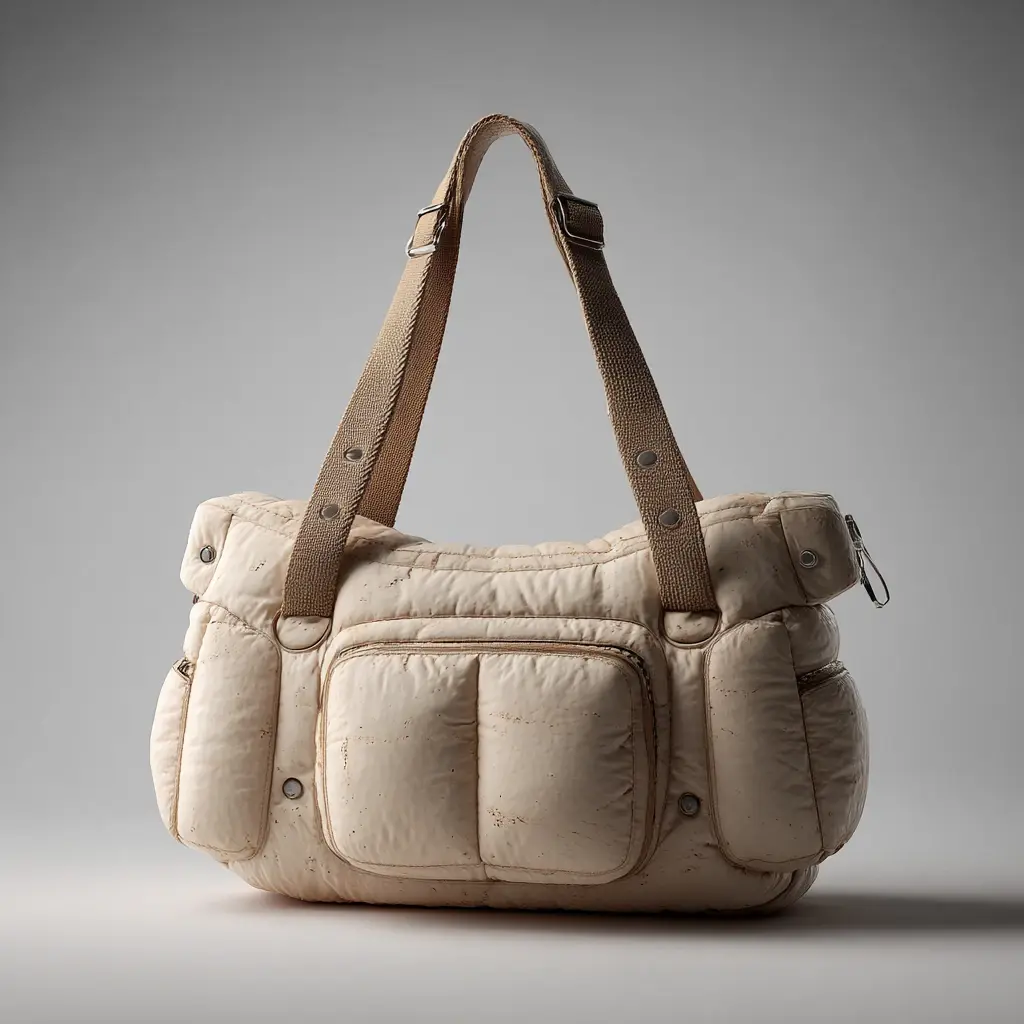
Of the five, the everyday shopper and the laptop carrier are the pair that most often take 60-70% of a reorder. The structured city tote is the usual third, because it photographs as a distinct silhouette on a rack while sharing most of its pattern with the shopper.
Sizing: The Numbers That Decide Whether It Sells
Four measurements decide whether a tote gets carried or returned, and all four belong in the tech pack in millimetres with a tolerance. A drawing without them is a picture, and a picture is not a specification. The interior deserves the same treatment: one 18-20 cm zip pocket and two slip pockets cover what a boutique customer expects, and a lining at 190T or 210T polyester in the 60-80 gsm range keeps the weight budget intact without feeling thin.
- Body width and height, at plus or minus 3 mm. A 36 cm tote that arrives at 37.5 cm does not fit the laptop sleeve it was designed for.
- Gusset depth at 8-14 cm, plus or minus 2 mm, measured at the base rather than at the mouth, because a tapered gusset is the most common silent change on a repeat order.
- Strap drop at 22-28 cm, plus or minus 3 mm, measured from the top edge of the body to the crown of the handle under a 2 kg load.
- Handle width at 1.2-2.0 cm and handle substance at 2.0-3.0 mm, because a handle that is too narrow cuts into a shoulder and one that is too thin stretches over a season.
Weight is the fifth measurement and the one most briefs omit. A leather tote at 600-780 g empty gets carried daily; the same bag at 950 g gets returned as too heavy. Weight is controlled by substance, lining gsm and hardware count, and it is easier to design for at brief stage than to fix after a sample round. A useful rule of thumb on a 36 cm body: every 0.1 mm of substance across the panels adds roughly 40-60 g, so moving from 1.6 mm to 1.3 mm buys back about 150 g of carrying comfort.
The same arithmetic applies to the base. A structured tote needs a reinforced base board at 1.5-2.0 mm and four feet, which adds 80-140 g and is usually worth it; a soft slouch tote needs neither and should not carry them. Choosing the reinforcement to match the shape rather than applying it by default is the cheapest weight decision available.
Hardware and Closure Choices on a Tote
Hardware is the second-largest line on a tote costing sheet at 8-14% of the landed figure, and it is the part customers touch first and judge fastest. Three decisions cover almost all of it.
| Option | Indicative unit cost | What it signals | Where it belongs |
|---|---|---|---|
| Open top, no closure | Zero | Softness and simplicity | Below $129 retail, warm-climate programmes |
| Magnetic closure, 18-22 mm | $0.12-0.25 | Everyday practicality | $129-229 retail |
| Number 5 metal top zip | $0.35-0.60 | Security and structure | $199 and above, laptop carriers |
| Base feet, four or six | $0.05-0.10 each | Care for the bag | Structured shapes that stand |
| Interior zip pocket, 18-20 cm | $0.30-0.55 | Function | Every band above $129 |
Whatever is chosen, the hardware specification is the same: zinc alloy with plating thickness stated in microns, 24 hours to first corrosion tested to ASTM B117, and a Proposition 65 review of coated trim for California. A plated part that dulls in six weeks ruins a bag that cost three times as much to make.
Branding Positions That Survive a Boutique Rack
A boutique rack is viewed from about a metre away and from slightly above. Branding that reads on a product page often disappears there, and branding that is too large stops the bag being carried at all. Four positions work, and each is specified in millimetres from a stated datum edge rather than from a description.
- Blind emboss on the centre front panel, 25-40 mm wide, positioned 30-45 mm above the base edge. Readable from a metre, invisible from three.
- A small embossed leather patch at 35 x 18 mm, stitched to the front panel seam. The most reordered option in boutique programmes.
- A branded zip puller on metal, 18-25 mm long. Costs a tooling charge and reads at the point of use.
- A woven label inside the pocket facing, 45 x 15 mm. Cheap, durable and never competes with the design.
Whichever position is chosen, state it in millimetres from a datum edge, state whether the tooling is owned and stored, and approve an embossing strike-off before bulk. Embossing depth behaves differently on an aniline surface than on a pigmented one, and a strike-off is a day's work against a season of disappointment.
Price Bands and the Margin Ladder
Boutiques work on a retail multiple of roughly 2.8-3.6 times the landed cost, so the retail band sets the material budget rather than the other way round. The table sets out what each band actually affords, which is the fastest way to settle an argument about grade.
| Retail band | Landed budget per bag | Material budget | Grade that fits |
|---|---|---|---|
| $89-129 | $25-42 | $12-20 | Finished split or corrected grain |
| $149-229 | $42-76 | $22-40 | Top grain, full grain on hero SKUs |
| $249-399 | $70-142 | $38-78 | Full grain, vegetable tanned options |
| $400 and above | $112-160 | $60-95 | Full grain with a traceability claim |
Two things follow. A tote programme that wants full grain has to be priced above about $149 retail, and one priced below $109 should not pretend to it on the hangtag. The leather versus PU comparison sets out what happens to the margin when the material is swapped instead of the price.
Building the First Tote Assortment
Three silhouettes in one colourway is the assortment that reads as a collection without multiplying setups: 1,500 pieces at 500 pcs per style / colourway, three SKUs, one material buy and one set of branding tooling. Five silhouettes means five pattern setups, five sampling rounds and a warehouse problem, and it rarely improves conversion.
- Pick the everyday size first at 36-38 cm with a 10-12 cm gusset, in the neutral that takes 65-75% of a boutique rack.
- Add the function shape second, usually a laptop carrier at 38 x 32 x 12 cm with a top zip.
- Add the silhouette third, usually a structured city tote at 34 x 28 x 9 cm, chosen because it photographs differently while sharing panels.
- Hold one colourway. Each colourway is its own dye lot at 500 pcs, so a second colour doubles the material buy before it doubles sales.
- Specify the four measurements — body, gusset, strap drop and handle substance — in millimetres with tolerances.
- Book the slot at deposit, not at sample approval, because slots tighten before Chinese New Year and in the autumn rush.
One habit protects the second season. Record the approved pattern, the retained tooling, the hide lot reference and the signed swatch card at the end of the first run, and the repeat can skip sampling entirely where the specification is unchanged. That removes 6-10 working days from the calendar and amortises the tooling a second time, which is the difference between buying totes and running a tote programme.
From there the calendar is fixed: sampling at 6-10 working days, bulk at 35-50 days, inspection at AQL 2.5 under ISO 2859-1, and 55-80 days from signed brief to goods handed to a forwarder. Related detail sits in the cost-per-piece breakdown by hide grade, and the full programme is set out in the leather handbags reference.
Hide Consumption and Yield on a Tote
Leather is sold by the hide and consumed by the pattern, and the gap between the two is the largest variable in the material budget. An everyday shopper at 36 x 30 x 10 cm with a 55-65 cm handle pair consumes 9.5-11 sq ft of hide once the handles, the facing and the pocket are nested. A full hide of 45-55 sq ft yields 80-88 per cent usable area after scars and the belly are excluded, so one hide produces four to five totes.
- Hides per run. Five hundred totes at 4-5 per hide calls for 105-125 hides, and every hide is a separate colour decision the shade band has to cover.
- Marker yield. 78-86 per cent is the working band; a pattern that drops below 75 per cent is paying for leather that leaves as offcut.
- Where the offcut goes. 12-22 per cent of each hide becomes patches, pocket facings, hangtag ties and zip pulls, which is the difference between waste and a trim cost.
- The handle claim. Handles are cut from the prime back panel because they carry the load; a pattern that takes them from the belly fails the 15-25 kg static test.
The arithmetic changes with size more than with styling. Moving from a 36 cm body to a 40 cm one adds 1.4-2.1 sq ft a unit, which is 700-1,050 sq ft across 500 pieces, or 15-23 hides, or roughly 6-9 per cent on the material line before the grade is discussed at all.
The Leather Specification Behind the Price Band
Two totes can carry the same dimensions and the same grade name and behave completely differently on a rack, because grade is only one of six lines on a leather specification. The other five are substance, temper, finish build, colour fastness and chemistry, and every one of them can be written as a number or a test method.
| Line | Figure or method | Why it matters |
|---|---|---|
| Substance | 1.3-1.6 mm body, 2.0-3.0 mm handles | Below 1.2 mm the body slumps; above 1.8 mm it will not turn cleanly |
| Grade | Full grain, top grain or corrected grain | Decides which retail band the bag can sit in honestly |
| Temper | Soft, medium or firm against a retained sample | A soft temper ruins a structured city tote and suits a slouch shape |
| Finish build | 0.05-0.12 mm total topcoat | A heavy build masks the grain and cracks at the fold |
| Colour fastness | ISO 105-X12 grade 4 dry, 3-4 wet; ISO 11640 at 500 dry revolutions | Colour transfer onto clothing is the most common return reason above USD 149 |
| Chemistry | Chromium VI below 3 mg per kg under ISO 17075 | REACH Annex XVII entry 47 applies to leather sold into the EU |
The temper line is the one boutique buyers skip and the one that generates the most second-season disappointment, because temper is not visible on a swatch card the way thickness is. Hold a retained sample from the approved hide and specify temper against that physical reference rather than against a word.
What 1,500 Totes Cost to Hold and Move
A three-silhouette assortment at 500 pcs per style is 1,500 units, and the cost of holding it is a line most boutiques never put on the buy. At a landed cost of USD 42-76 the inventory is worth USD 63,000-114,000 before a single bag sells, and stock that does not turn is money on a shelf rather than money in a bank.
| Measure | Figure | Consequence |
|---|---|---|
| Cartons at 20 units | 75 cartons | Three to four pallets at 20-25 cartons per pallet |
| Cube | 7.2 cbm | About a quarter of a 20GP, or 7.2 cbm of warehouse volume |
| Weight at 620-780 g empty | 930-1,170 kg | Floor loading and any last-mile carton rate |
| Inventory value | USD 63,000-114,000 | The number the reserve is sized against |
| Carrying cost at 18-24 per cent a year | USD 945-2,280 a month | Roughly 12 units of contribution a week absorbed |
| Cargo and stock insurance at 0.3-0.5 per cent | USD 190-570 a year | Cheap against a single water-damaged pallet |
Set against a contribution of USD 34.15, a month of carrying cost is the equivalent of 28-67 units that never needed to sell. That is the argument for staging the second and third silhouettes rather than landing all 1,500 pieces in one week: the third shape can arrive after the first has proven its weekly rate, and the carrying cost goes with it.
Build the three-SKU tote assortment
Send two or three target sizes, a grade direction and a retail band. A private label coordinator will return consumption per bag, a landed figure at FOB Xiamen and a sampling plan, with 6-10 working days of sampling, 35-50 day bulk and inspection at AQL 2.5 under ISO 2859-1. Get a quote.
Frequently Asked Questions
What size leather tote sells best in boutiques?
A 36-38 cm body with a 10-12 cm gusset and a 24-26 cm strap drop, weighing 620-780 g empty. That size takes a laptop sleeve, a water bottle and a small pouch, which is the carrying problem most boutique customers actually have, and it is the shape that reorders most consistently.
How many tote silhouettes should a first assortment include?
Three, in one colourway. That is 1,500 pieces at 500 pcs per style / colourway, three SKUs, one material buy and one set of branding tooling. Five silhouettes means five pattern setups and five sampling rounds, and it rarely improves conversion on a boutique rack.
What strap drop works on a leather tote?
22-28 cm, measured from the top edge of the body to the crown of the handle under a 2 kg load, with a tolerance of plus or minus 3 mm. Below 22 cm it will not go over a winter coat and above 28 cm the bag swings away from the body when carried.
How thick should tote leather be?
1.3-1.6 mm on the body and 2.0-3.0 mm on the handles, with a tolerance of plus or minus 0.1 mm. Handles are the first failure point on a tote, so they carry a heavier substance and should be specified against a 15-25 kg static load test.
Should a boutique tote have a closure?
Above about $149 retail, yes. Below that, an open top is accepted; above it, customers look for a magnetic closure at 18-22 mm or a number 5 metal top zip and say so in reviews. The closure is the largest single hardware line on a tote costing sheet.
How much should a leather tote weigh?
Between 600 and 780 g empty for a daily carrier. Weight is controlled by leather substance, lining weight in gsm and hardware count, and above roughly 950 g a leather tote is returned as too heavy more often than it is praised for being substantial.
What colours reorder best in boutiques?
Black, tan, cognac and deep navy, which together take 65-75% of boutique volume. Seasonal shades sell once and reorder rarely, so a second colourway should follow sell-through data rather than lead it, especially at 500 pcs per colourway.
Where should branding go on a leather tote?
A blind emboss 25-40 mm wide positioned 30-45 mm above the base edge, or an embossed leather patch at 35 x 18 mm stitched to the front panel seam. State the position in millimetres from a datum edge and approve a strike-off, because embossing depth varies by finish.
What retail multiple do boutiques work on?
Roughly 2.8-3.6 times the landed cost. That multiple is what sets the material budget: at $149-229 retail the landed budget is $42-76 and the leather budget $22-40, which is top grain territory rather than full grain.
Which grade fits a $199 retail leather tote?
Top grain, with full grain possible on a hero SKU. At $199 retail the landed budget is about $56-71 and the leather budget $29-42, which comfortably covers top grain at 1.2-1.4 mm and leaves room for a magnetic closure and a lined interior.
How many pieces are needed for a tote programme?
500 pcs per style / colourway, and each colourway counts separately because it is its own dye lot. Three silhouettes in one colourway is therefore 1,500 pieces. Above roughly 5,000 pieces across a season, capacity can be reserved and a price held for the season.
How long does a first tote order take?
Plan 55-80 days from signed brief to goods handed to a forwarder: 1-3 days for quotation, 2-4 for material confirmation, 6-10 working days for sampling, 3-6 for review, 35-50 for bulk and 1-2 for inspection at AQL 2.5 under ISO 2859-1, plus transit.
People Also Ask
Why do two of five tote shapes take most of a reorder?
Because boutique customers buy to solve a carrying problem. The shapes that reorder are the ones that fit a laptop sleeve and a daily load at a weight under 780 g, and that functional fit matters more on a reorder than styling does.
Should the first assortment include a second colourway?
No. At 500 pcs per colourway a second colour doubles the material buy before it doubles sales, and neutrals already take 65-75% of volume. Add the second colour on the repeat once sell-through data shows which silhouette earned it.
What is the most common silent change on a repeat tote order?
Gusset depth. A tapered gusset measured at the mouth rather than at the base reads 2-3 cm smaller in use, and unless the specification states where it is measured the repeat will differ from the approved sample without anyone deciding to change it.
Is a branded zip puller worth the tooling charge?
Above $199 retail, usually yes, because it is touched every time the bag is opened and read at the point of use. Below that, a blind emboss or an embossed leather patch delivers most of the recognition without a hardware mould.
Sources and further reading
Every figure on this page is either our own programme data or attributed below. Open the originals before you write them into a specification.
- Leather Working Group — environmental auditing for tanneriesLeather Working Group Environmental audit protocol for tanneries and leather traceability.
- SATRA — technical services for leather, footwear and accessoriesSATRA Independent leather, hardware and accessories testing protocols.
- FashionUnited — fashion industry news and dataFashionUnited Industry news and company data for the fashion sector.