Bag Hardware Plating: Gold Silver Gunmetal Wear Patterns
How do gold, silver and gunmetal plating wear on a bag? Every plated finish wears in the same places, in this order: the zip puller, the strap slider, the turn lock face and the base studs — and what differs is how the wear looks when it arrives. A 0.15 micron gold flash wears to brassy yellow at the contact point within three to six months of daily carrying, while the same component at 0.5 micron holds its shade for years, which means the plating thickness you specify is a decision about how the bag looks at month nine rather than at handover. Gunmetal hides wear best and shows scratches most; silver sits between them and is the easiest to match across two production lots.
- A Returned Tote From Denver Told the Whole Story
- Three Plating Families and Their Failure Shapes
- Gold: Warm Shade, Thin Film, Honest Wear
- Silver and Nickel: Neutral Shade, Repairable Surface
- Gunmetal: The Forgiving Finish and Its Limits
- Wear Patterns by Body Contact Point
- Matching Plating to Leather Finish and Lining
- How to Test Plating Before You Commit 500 Units
- What Plating Thickness Costs Per Component
- Matching Plating Across Two Production Lots
How do gold, silver and gunmetal plating wear on a bag? Every plated finish wears in the same places, in this order: the zip puller, the strap slider, the turn lock face and the base studs — and what differs is how the wear looks when it arrives. A 0.15 micron gold flash wears to brassy yellow at the contact point within three to six months of daily carrying, while the same component at 0.5 micron holds its shade for years, which means the plating thickness you specify is a decision about how the bag looks at month nine rather than at handover. Gunmetal hides wear best and shows scratches most; silver sits between them and is the easiest to match across two production lots.
Three finishes in six numbers
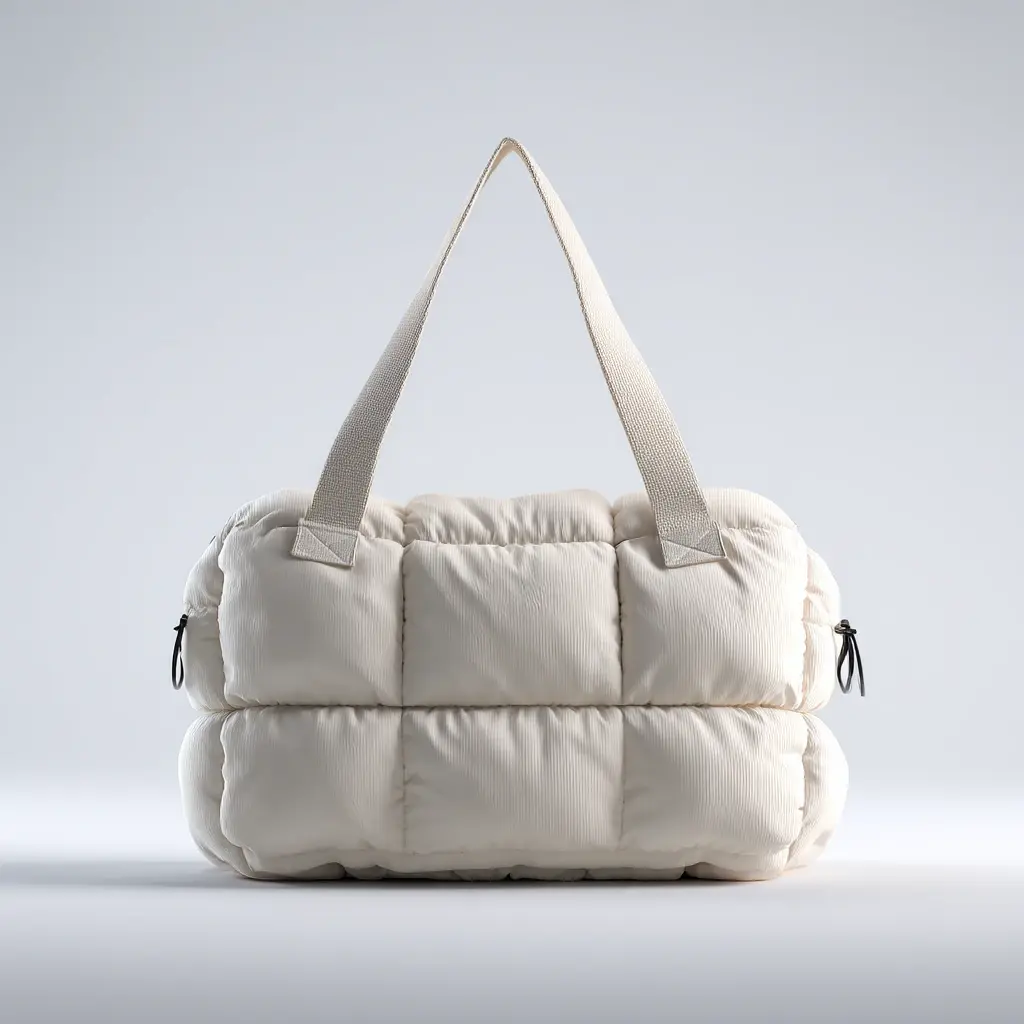
A Returned Tote From Denver Told the Whole Story
A catalogue brand selling a 34 cm tote at 79 received 34 returns in one quarter, almost all of them in the same week, and almost all of them mentioning the same word: tarnished. The hardware was a light gold finish on a zinc alloy turn lock and zip puller, specified as light gold and nothing more. There was no thickness figure, no corrosion test, and no retained reference component anywhere in the file.
The investigation took an afternoon. The plating measured 0.12 micron at the puller and 0.18 micron at the lock, which is a decorative flash rather than a finish, and the cross-hatch adhesion test lifted at three of nine squares. The dry climate and the altitude had nothing to do with it; a hand touching a puller eight or ten times a day will cut through a tenth of a micron in a few months anywhere on earth. What the brand had bought was a photograph, and the photograph had been accurate.
The fix cost 0.11 per unit. Plating moved to a copper-nickel-gold stack at 0.40 micron with a clear electrophoretic lacquer over the colour layer, a retained reference chip was signed and filed, and the specification gained two lines: 24 hours to first corrosion under ASTM B117 and a wear check at 200 cycles under 10x magnification. Returns on the next 2,000 units ran at four, and the unit price moved by less than one percent of retail.
Three Plating Families and Their Failure Shapes
Gold, silver and gunmetal are shade names, not processes. Underneath all three sits the same copper and nickel stack, and the colour layer on top is what differs. Once that is understood, wear becomes predictable: the underlying nickel is silvery, the copper beneath it is pink, and the base alloy is grey, so every worn component reveals those layers in that order regardless of which shade was specified.
| Finish | Colour layer | How wear looks | Best use |
|---|---|---|---|
| Light gold | Gold alloy over nickel | Goes brassy, then silvery at the contact point | Warm leather, tan and cognac bodies |
| Silver or nickel | Nickel, sometimes chrome | Goes dull rather than a different colour | Black, navy and grey bodies |
| Gunmetal | Black nickel or tin-nickel | Goes lighter grey in a rubbed patch | Technical fabrics, olive and charcoal |
| Antique brass | Brass tone with a dark relief | Wears to bright brass at the high points | Heritage shapes, brown and oxblood |
| PVD | Vacuum-deposited hard coating | Almost no visible wear; fails by chipping if struck | Premium lines, high-contact parts |
That table hides a useful generalisation: the darker the finish, the more visible the wear. A pale gold wearing to a slightly paler gold at the puller is barely noticed; a gunmetal wearing to grey at the same spot reads as damage, because the contrast between the worn patch and the surrounding finish is higher. This is the reason gunmetal is described below as forgiving of fine scratches and unforgiving of heavy ones.
Gold: Warm Shade, Thin Film, Honest Wear
Gold is the most requested finish in this trade and the one most often under-specified, because it is the shade that most often appears at the low end of the market and therefore the one most often quoted as a flash. A gold colour layer over nickel is only a few tenths of a micron thick in a decorative build; the wear path runs from gold to brassy yellow to the silvery nickel beneath, and it happens fastest at the point a thumb rests.
- Specify thickness, not shade. Light gold says nothing measurable; 0.40 micron of gold over 3-5 microns of nickel does.
- Ask for a lacquer. A clear electrophoretic lacquer over the colour layer roughly doubles the wear life of a pale gold.
- Watch the shade against the leather. A yellow gold against an oxblood body reads warmer than intended; a champagne gold is often the better match.
- Test the puller separately. It wears first and hardest, and it is the part a customer looks at every time the bag is opened.
- Expect honest wear. Gold does not fail invisibly. Decide whether that patina suits the brand before specifying it.
There is a premium alternative worth knowing where a programme cannot accept visible wear: physical vapour deposition, which lays a hard ceramic-metal coating at 0.3-0.5 micron in a vacuum chamber. It resists wear several times better than electroplated gold and costs roughly two to three times as much per component. On a zip puller, where the wear is concentrated and the part is small, the absolute cost is usually acceptable.
Silver and Nickel: Neutral Shade, Repairable Surface
Silver-toned hardware is the most forgiving of the three in wear terms, because the colour layer and the layer beneath it are nearly the same colour. A worn nickel surface goes dull rather than changing hue, and a dull surface reads as used rather than as broken. It also matches more easily across production lots, which matters enormously for a programme that reorders.
- Wear reads as dulling. The customer sees a slightly matt patch, not a colour change, and rarely reports it.
- Lot matching is easier. A nickel bath is more repeatable than a gold one, holding Delta E 1.5 with a retained chip.
- Two sub-shades exist. Bright nickel is cool and mirror-like; brushed or satin nickel is softer and hides fingerprints.
- Chrome is harder and cooler. It resists wear better than nickel and reads slightly bluer, which can clash with warm leather.
- Watch the nickel release limit. EN 1811 at 0.5 micrograms per square centimetre per week applies most directly to nickel finishes.
One caution specific to this family: bright nickel shows fingerprints. On a bag photographed for a marketplace listing, a mirror finish picks up handling marks at the studio stage, and those marks are visible in the product photography. Satin nickel avoids it and is usually the better choice for an e-commerce brand, even where bright nickel looks better in the hand.
Gunmetal: The Forgiving Finish and Its Limits
Gunmetal covers two different processes that look similar and behave differently. Black nickel is an electroplated alloy that is dark, warm and relatively soft; tin-nickel is harder, slightly cooler, and more resistant to both wear and corrosion. Both hide fine scratches well, because a shallow scratch in a dark finish reflects less light than the same scratch in a pale one.
- Fine scratches disappear. This is the real advantage, and it is why gunmetal dominates on backpacks and slings that get rough handling.
- Heavy wear shows as a grey patch. Dark over grey is a high-contrast reveal, so deep wear reads as damage rather than patina.
- It is harder to match between lots. Two black nickel baths can differ noticeably; a retained reference chip is essential.
- It suits cool palettes. Charcoal, olive, black and technical fabrics; it can look muddy against tan and cognac leather.
- It hides plating defects. Which cuts both ways: a component that would be rejected in gold may pass in gunmetal and fail later.
That last point is the one to watch when sourcing. A dark finish is genuinely more forgiving at the inspection table, which means a component with marginal plating can pass visual inspection in gunmetal and then fail in the field. The corrosion test and the thickness figure matter more here, not less, precisely because the eye cannot catch the problem at handover.
Wear Patterns by Body Contact Point
Wear is not distributed evenly across a bag. It concentrates at four points, in a consistent order, and the order is the same whether the finish is gold, silver or gunmetal. Knowing it lets a brand spend its plating budget where it does something rather than spreading it evenly across every component on the bill of materials.
| Contact point | Touches per day | Specification response |
|---|---|---|
| Zip puller | 8 to 15 | 0.50 micron plus lacquer, or PVD |
| Strap slider | 3 to 8 | 0.40 micron plus lacquer |
| Turn lock face | 2 to 6 | 0.30 to 0.40 micron |
| Base studs | Contact with surfaces, not hands | Harder base alloy rather than thicker plating |
| D-ring and strap end | 1 to 3 | 0.30 micron is sufficient |
Spending unevenly is the lesson. Putting 0.5 micron and a lacquer on the puller and the slider, and 0.3 micron on the rings and strap ends, costs less than specifying 0.5 micron across every component and performs nearly as well, because the rings simply do not get touched enough to wear. That is a five-minute conversation with a sourcing partner and it is rarely had.
Matching Plating to Leather Finish and Lining
Hardware shade does not sit in isolation; it sits next to a body material and a lining, and the three have to agree. The rule that rarely fails is temperature matching: warm leather with warm hardware, cool fabric with cool hardware. A mismatch at this level is one of those things a customer cannot name but registers as something being slightly off about the bag.
- Tan, cognac and oxblood leather. Light gold, champagne gold or antique brass. Gunmetal reads muddy against these.
- Black and charcoal bodies. Silver, satin nickel or gunmetal. Bright gold against black can look costume-like.
- Navy and deep green. Champagne gold or brushed nickel; both sit well, and either can be taken warmer or cooler.
- Technical nylon and recycled PET. Gunmetal or satin nickel, which match the matte surface better than a mirror finish does.
- Contrast linings. A bright lining inside a dark body is a deliberate design move; the hardware should match the body, not the lining.
Sheen matters as much as hue. A gloss hardware finish on a matte body creates a mismatch that customers read as cheapness even when the colours match perfectly, and a satin finish on a high-gloss patent body reads as an unfinished pairing. Name the sheen alongside the shade on the specification, and keep a reference chip that shows both.
How to Test Plating Before You Commit 500 Units
Four tests predict almost everything, and all four can be run on sample components before a bulk slot is booked. They take about a week in total, cost very little relative to a 500-piece order, and they are the difference between discovering a plating problem at sample stage and discovering it in a quarter of returns.
- Thickness. Measured by X-ray fluorescence on the contact face, not on a flat area. Ask for the figure in microns at the highest point and at the thinnest.
- Corrosion. 24 hours to first white corrosion under ASTM B117 as the commercial threshold; 48 hours for contact points and humid markets.
- Adhesion. ASTM B571 bend and tape testing on a plated sample, because a finish that lifts at a fold will lift at the corner of a bag.
- Wear. 200 open-and-close cycles by hand on three units, then inspection at 10x magnification on the contact face.
- Abrasion of the lacquer. ASTM D4060 Taber abrasion where a lacquer is specified, since the lacquer is what carries the extra life.
Alongside the tests, request the two documents that belong in the compliance file: a REACH declaration covering nickel release under EN 1811, and a Proposition 65 review of plated components where California is a destination. Both are routine to produce at sample stage and awkward to produce at inspection. The handbag materials reference holds the finish and hardware library behind this page, the guide to how hardware finish shapes perceived value explains why the puller matters more than the base stud, and the overview of zinc alloy, iron and alloy components covers which base metal takes which finish best.
Programmes have been running through our validated partner factory Quanzhou Yingming Bags since 2014, across 7 production lines with capacity of about 200,000 pcs per month, with pre-shipment inspection at AQL 2.5 under ISO 2859-1 and audit references under BSCI (amfori) and Sedex / SMETA.
What Plating Thickness Costs Per Component
Thickness is bought in microns and billed per component, and the difference between a flash and a premium build is smaller on a small part than most buyers assume. Because wear concentrates at four contact points, the budget goes further when it is spent unevenly rather than across every part on the bill of materials.
| Component | Build | Added cost per unit |
|---|---|---|
| Zip puller | 0.50 micron plus lacquer | USD 0.06-0.12 |
| Strap slider | 0.40 micron plus lacquer | USD 0.04-0.08 |
| Turn lock face | 0.30-0.40 micron | USD 0.03-0.06 |
| D-rings and strap ends | 0.30 micron | USD 0.02-0.04 |
| PVD on the puller only | 0.3-0.5 micron vacuum coating | USD 0.25-0.60 |
Matching Plating Across Two Production Lots
The second lot is where a plating specification is really tested, because the bath is made again and the eye cannot compare across a season. Two documents make the match checkable: a retained reference component signed at approval, and a bath record naming the chemistry that was used.
- Retained reference. One component per part, signed, dated and stored away from the light.
- Delta E 1.5 on metal. Measured against the reference chip under the same light source used for the leather check.
- Bath record. Chemistry, temperature and duration logged per lot, so a drift has a traceable cause.
- Pre-plate inspection. Castings checked before they enter the bath, since porosity cannot be plated over.
- A shade band, not a single chip. Two chips bracketing the acceptable range stop a good lot being rejected for a defensible difference.
Pick a finish, then test it before bulk
Send your silhouettes, hardware positions and finish direction with your target retail price. A handbag programme specialist will return a plating specification with thickness, corrosion and wear figures, sampling at 6-10 working days and bulk at 35-50 days. Get a quote.
Frequently Asked Questions
Which bag hardware plating lasts longest?
Physical vapour deposition lasts longest, laying a hard ceramic-metal coating at 0.3-0.5 micron that resists wear several times better than electroplated gold, at roughly two to three times the component cost. Among electroplated finishes, thickness decides: 0.50 micron with a clear lacquer outlasts 0.15 micron by years, and satin nickel outlasts black nickel because wear dulls it rather than changing its colour.
Why does gold hardware turn brassy?
Because the gold colour layer is very thin and the nickel beneath it is silvery. A 0.15 micron flash worn through at a contact point exposes first a brassy intermediate tone and then the silver nickel, so the visible change happens in months. Specifying 0.40 micron or more over a proper nickel barrier, plus a clear electrophoretic lacquer, moves that timeline out by years.
What plating thickness should I specify for bag hardware?
About 0.30 micron for low-contact components such as D-rings and strap ends, 0.40 micron for turn lock faces and strap sliders, and 0.50 micron with a lacquer on a zip puller, which typically receives eight to fifteen touches a day. Spending unevenly costs less than specifying the thickest build everywhere and performs almost as well.
Is gunmetal hardware more durable than gold?
It hides fine scratches better, because a shallow scratch in a dark finish reflects less light than the same scratch in a pale one, but heavy wear shows as a high-contrast grey patch that reads as damage. It is also more forgiving at inspection, which means a marginal component can pass in gunmetal and fail later, so the corrosion test matters more rather than less.
What is the difference between black nickel and tin-nickel gunmetal?
Black nickel is an electroplated alloy that is dark, warm and relatively soft, while tin-nickel is harder, slightly cooler in tone and more resistant to both wear and corrosion. Both are called gunmetal in the trade, so the specification should name the process rather than the shade, along with a retained reference chip for lot matching.
How is plating tested before a bulk order?
Four tests: thickness by X-ray fluorescence measured on the contact face rather than a flat area, corrosion at 24 hours to first white corrosion under ASTM B117, adhesion by bend and tape testing under ASTM B571, and a wear check of 200 open-and-close cycles inspected at 10x magnification. Where a lacquer is specified, add ASTM D4060 Taber abrasion.
Which hardware finish matches a tan or cognac leather body?
Light gold, champagne gold or antique brass. Gunmetal tends to read muddy against warm browns, and bright silver can look cold. Champagne gold is usually the safest of the three because it is warm without being yellow, and it photographs well against both tan and oxblood without dominating the frame.
Should hardware be bright or satin for e-commerce photography?
Satin, in most cases. A mirror finish picks up fingerprints during studio handling and those marks are visible in product photography, which costs more in retouching than the brighter finish gains. Satin nickel in particular hides handling marks and still reads as a quality surface in a listing image.
What is EN 1811 and does it apply to bag hardware?
EN 1811 is the test method for nickel release from items in prolonged contact with skin, with a limit of 0.5 micrograms per square centimetre per week under the REACH Annex XVII restriction. It applies most directly to nickel and silver finishes, and it measures migration rather than corrosion, so a component can pass salt spray and still fail this test.
Can two production lots of the same hardware finish be matched?
Yes, with a retained reference component signed off at approval and a stated tolerance of Delta E 1.5 for nickel or Delta E 2.0 for gold and gunmetal. Black nickel and gunmetal are the hardest to repeat, because two baths can differ visibly, and without a physical reference a second lot can arrive a shade different while still conforming to a written specification.
Where does hardware wear first on a handbag?
At the zip puller, which receives roughly eight to fifteen touches a day, then at the strap slider, then the turn lock face, then the base studs. Rings and strap ends receive one to three touches a day and rarely show wear at all, which is why plating thickness should be specified unevenly across the component list rather than uniformly.
Is PVD worth the extra cost on bag hardware?
On high-contact parts, often yes. PVD lays 0.3-0.5 micron of a hard ceramic-metal coating that resists wear several times better than electroplating, and on a small component such as a zip puller the absolute cost difference is small even at two to three times the plating price. On low-contact rings and strap ends it is rarely worth paying for.
People Also Ask
Does a lacquer change how plating wears?
Yes, and favourably. A clear electrophoretic lacquer over the colour layer roughly doubles the wear life of a pale gold finish by taking the abrasion instead of the metal, and it can be tested separately with ASTM D4060 Taber abrasion.
Why does dark hardware fail at inspection less often?
Because a dark finish conceals shallow plating defects that would be rejected in a pale shade. That is a reason to rely on the corrosion and thickness tests rather than on visual inspection when gunmetal or black nickel is specified.
Should the sheen be written on the specification?
Yes. A gloss finish on a matte body reads as a mismatch even when the colours match, and the reverse is equally true. Name the hue and the sheen, and keep a reference chip showing both.
How many cycles should a wear test run?
Two hundred open-and-close cycles by hand on three sample units, followed by inspection at 10x magnification on the contact face, is a practical pre-production check that predicts most field complaints and takes about an hour.
Sources and further reading
Every figure on this page is either our own programme data or attributed below. Open the originals before you write them into a specification.
- SATRA — technical services for leather, footwear and accessoriesSATRA Independent leather, hardware and accessories testing protocols.
- REACH — chemical substances regulationEuropean Commission Annex XVII restricts the substances that may appear in finished leather and coatings.
- FashionUnited — fashion industry news and dataFashionUnited Industry news and company data for the fashion sector.