7 Questions to Ask Before Private Labeling Your First Handbag Line
What should you ask before private labeling your first handbag line? Seven questions, in this order: can you sell 500 pcs of one colourway, which silhouette has already proven itself, what standard will the shipment be measured against, who owns the tooling, what happens on the second order, what the calendar really is, and what you send tomorrow. Six of the seven questions are about documents rather than design, because the failure mode of a first line is not a bad bag — it is a bag that arrives late, unmeasured and branded with tooling somebody else owns. Each answer below is a number or a document, and a handbag programme specialist who runs a real process can answer all seven in one email with the paperwork attached.
- Why These Seven and Not Twenty
- Question One: Can You Sell 500 Pieces of One Colourway?
- Question Two: Which Silhouette Has Already Proven Itself?
- Question Three: What Standard Is the Shipment Measured Against?
- Question Four: Who Owns the Tooling You Are About to Pay For?
- Question Five: What Happens on the Second Order?
- Question Six: What Does the Calendar Actually Look Like?
- Question Seven: What Do You Send Tomorrow?
- How to Score the Seven Answers
- The One Answer That Predicts the Whole Programme
- The Second-Season Version of the Same Seven
- Testing the Price Ceiling Before Asking Question One
- What Each Unanswered Question Costs
- The Record That Makes Season Two Cheaper
What should you ask before private labeling your first handbag line? Seven questions, in this order: can you sell 500 pcs of one colourway, which silhouette has already proven itself, what standard will the shipment be measured against, who owns the tooling, what happens on the second order, what the calendar really is, and what you send tomorrow. Six of the seven questions are about documents rather than design, because the failure mode of a first line is not a bad bag — it is a bag that arrives late, unmeasured and branded with tooling somebody else owns. Each answer below is a number or a document, and a handbag programme specialist who runs a real process can answer all seven in one email with the paperwork attached.
What the seven questions settle
Why These Seven and Not Twenty
Why Do Questions One and Two Come First?
Due-diligence lists in this trade run to twenty items and get read once. These seven survived because each one has a document attached to its answer and each one, unanswered, produces a specific cost. They are also ordered: the first is a filter that can end the conversation, and the last is the only one that generates a price.
- Questions one and two filter. If 500 pieces of one colourway will not sell, or no silhouette has proven itself, the correct move is a market test rather than a quotation.
- Questions three and four allocate risk. An inspection standard and a tooling clause decide who pays when something goes wrong.
- Questions five and six price the future. The second order and the calendar are where a programme becomes cheaper or becomes a one-off.
- Question seven generates the number. Everything before it changes what that number means.
Question One: Can You Sell 500 Pieces of One Colourway?
Start here, because if the answer is no the rest of the conversation is premature. MOQ 500 pcs per style / colourway is not a negotiating position: it is roughly where four upstream minimums stop dominating the unit price. Each colourway is its own dye lot or coating run, so two colours of one style is 1,000 pieces, not 500 split in half.
- The hide or coating lot. A dye lot has a production minimum regardless of how many bags are cut from it.
- Trimming and hardware lots. Zipper chain, webbing, closures and plated parts arrive in set lot sizes.
- The plating bath. A run costs the same for 300 or 3,000 pieces, which is why branded hardware is costly at low volume.
- The line changeover. Setting the line for a pattern is priced into the run and spread across the units made.
If 500 of one colourway is too many, the answer is not a smaller run at a worse price. It is a market test with stock, followed by a return at 500 pcs with evidence of what actually sold. The MOQ ladder at 500 and 2,000 pieces sets out what improves at each tier.
Question Two: Which Silhouette Has Already Proven Itself?
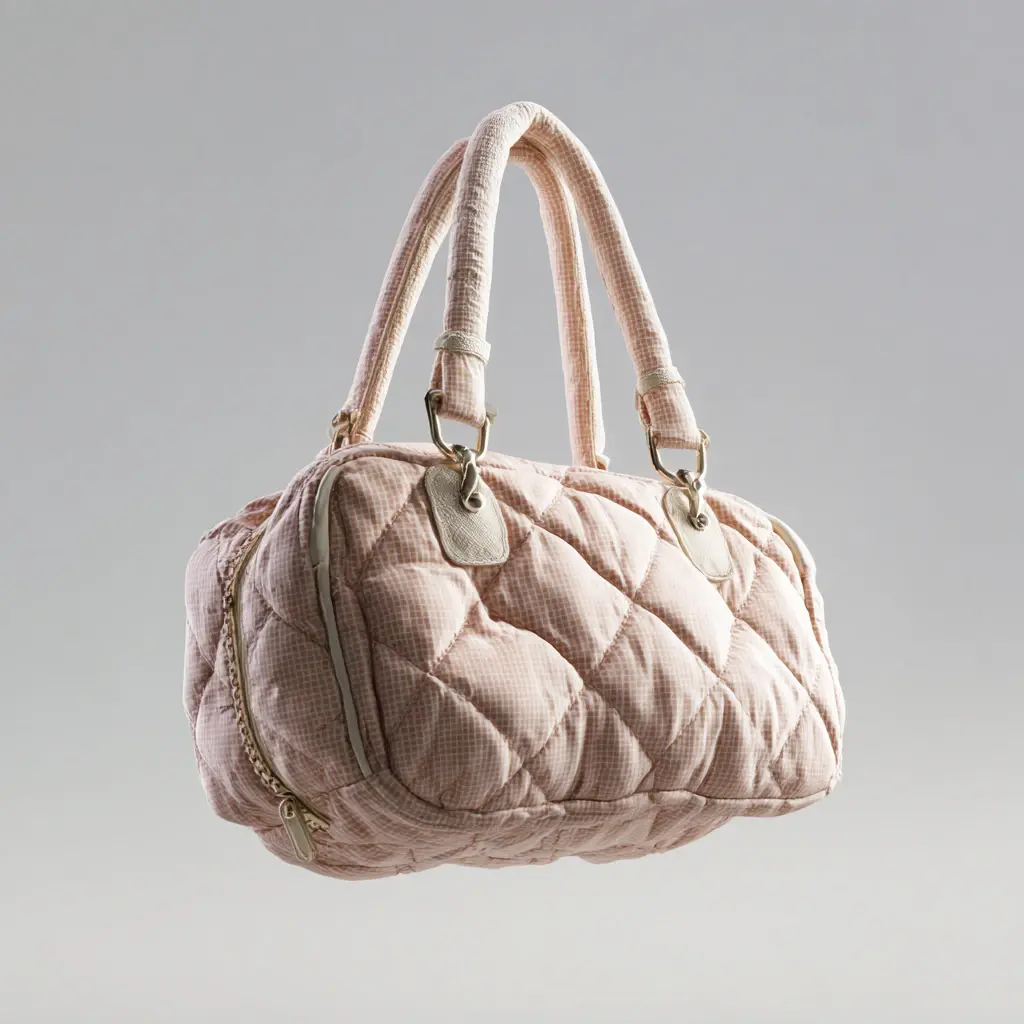
The second question is about pattern familiarity, and it is the one that decides how many sample rounds a first line needs. A silhouette that has been run many times has known yield, known stress points and known operations; a novel one does not, and the difference shows up as revisions rather than as creativity.
| Silhouette | Typical size | Specification focus | Branding position |
|---|---|---|---|
| Tote | 34-42 cm wide, 8-12 cm gusset | Panel yield; 1.4-1.9 sq ft of hide | Centre front panel |
| Crossbody | 18-26 cm wide, 110-130 cm strap | Slider and buckle quality | Zip puller, embossed patch |
| Shoulder | 26-34 cm wide, 22-30 cm drop | Strap attachment reinforcement | Flap edge or leather patch |
| Bucket | 20-28 cm diameter | Reinforced base and drawcord channel | Drawcord toggle, base panel |
How Many Silhouettes Should the First Line Carry?
Three, in one colourway, is the shape that reads as a line without multiplying setups: 1,500 pieces, three SKUs, one material buy and one set of branding tooling. Add the second colourway on the repeat once sell-through data exists. Eight silhouettes means eight pattern setups and a warehouse problem, and it rarely improves conversion. Whichever three are chosen, the specification should state body width, gusset depth and strap drop in millimetres with a tolerance of plus or minus 3 mm, because those are the measurements that decide how the bag wears and how it reviews.
Question Three: What Standard Is the Shipment Measured Against?
This question separates a process from a promise. ISO 2859-1 defines how many units are drawn from a lot of a given size and how many defects of each class trigger a pass, a fail or a re-sort. Naming AQL 2.5 converts quality from an opinion into a threshold with an accept and a reject number attached.
- Inspection. Pre-shipment at AQL 2.5 under ISO 2859-1, with the written report issued to you and third-party inspection by SGS available.
- Construction. Tex 40 thread at 7-9 stitches per inch with a 10 mm seam allowance; this is what an inspector counts first.
- Hardware. Zinc alloy, plating thickness in microns, 24 hours to first corrosion tested to ASTM B117.
- Colour. Matched to a Pantone TCX reference at Delta E 2.0 or better against an approved swatch, under a defined light source.
- Chemistry. REACH Annex XVII restrictions on chromium VI, azo dyes, nickel release and phthalates; Proposition 65 for California; CPSIA for children's items.
Ask for two documents alongside the report: an ISO 9001 quality system reference, and the audit reference for the validated partner factory — BSCI (amfori) and Sedex / SMETA are the two frameworks retail buyers ask for. Both can be supplied for our validated partner factory Quanzhou Yingming Bags.
Question Four: Who Owns the Tooling You Are About to Pay For?
Tooling is the asset most first-time brands forget they bought. An embossing die, a woven-label setup and a hardware mould are physical objects with real cost, and the default position on ownership varies. Get it in writing before the deposit moves, because after that the answer is whatever the invoice says.
- State ownership. The tooling you paid for should be identified, stored and never run for another brand.
- Ask how it is billed. Amortised into the unit price, or invoiced as a separate one-off line?
- Ask where it is kept. Retained tooling is what makes the second order cheaper and faster.
- Ask about exclusivity by position. Two brands can share a pattern; only your mark can sit in your position.
Question Five: What Happens on the Second Order?
This question predicts the whole relationship, because a programme is only cheaper the second time if the first one was recorded. What should exist after the first run is a stored specification, retained tooling and a material reference — three assets that remove sampling and shorten the calendar.
Where the specification is unchanged, the repeat can skip sampling entirely and run straight to bulk, removing 6-10 working days. Above roughly 5,000 pieces across a season, capacity on 7 production lines can be reserved and a price held for the season rather than for the order. That is what distinguishes buying bags from running a programme.
Question Six: What Does the Calendar Actually Look Like?
Ask for the calendar in days, not in promises. The bulk window is 35-50 days, but the number that decides whether a launch hits its season is 55-80 days from signed brief to goods handed to a forwarder, plus 18-28 days of transit to the US West Coast or 30-38 days to Northern Europe.
| Stage | Days | What can slip | How to hold it |
|---|---|---|---|
| Brief and quotation | 1-3 | Missing target retail price | Send a price ceiling |
| Material confirmation | 2-4 | Swatch approval by screen | Approve a physical swatch |
| Sampling | 6-10 working days | Unclear specification | Send a tech pack |
| Review and revision | 3-6 | Annotated photographs | Number the revision list |
| Deposit and slot | 1-2 | Booking after approval | Pay and book together |
| Bulk run | 35-50 | Late change requests | Freeze the specification |
| Inspection and handover | 3-6 | No inspection booked | Pencil the date in early |
| Transit | 18-38 by sea | Peak-season booking | Ship before the rush |
Two habits hold the calendar. Book the production slot when the deposit is paid rather than when the sample is approved, because slots tighten before Chinese New Year and during the autumn shipping rush. And build listing photography and copy while the goods are on the water; 18-38 days is free time if it is used.
Question Seven: What Do You Send Tomorrow?
What Makes a First Email Usable?
The last question is the one that decides whether the first reply is usable. A specification, a quantity and a price ceiling come back as a number that can be planned against; how much for a handbag comes back as a range too wide to use, and the week spent on that exchange is the week that costs the season.
- Silhouettes and quantities per colourway, remembering that 500 pcs is per style and per colourway.
- Material direction and a target retail price per SKU, so the specification can be engineered to a ceiling.
- Reference photographs or a tech pack with dimensions, strap drop and pocket layout.
- Branding method and position in millimetres from a datum edge: embossing, woven label, embroidery or hardware.
- Packaging requirements: dust bag, hangtag, barcode symbology, carton marks and any marketplace prep rule.
- Destination market and term: FOB Xiamen, CIF or DDP.
- An honest launch date, so the slot quoted is the slot needed.
How to Score the Seven Answers
Answers arrive in two shapes, and the shape tells you more than the content. A number with a document attached is an answer; an adjective is a placeholder. Scoring them in one pass makes the comparison between two potential partners objective rather than instinctive.
| Question | A pass answer looks like | A fail answer looks like |
|---|---|---|
| 1. Minimum | 500 pcs per style / colourway, in writing | Flexible, we can discuss |
| 2. Silhouette | Names which patterns have run before | Any shape is possible |
| 3. Standard | AQL 2.5 under ISO 2859-1 plus a report | Good quality, do not worry |
| 4. Tooling | You own it, stored, never re-run | Tooling belongs to the factory |
| 5. Second order | Stored specification, sampling skipped | We will quote again |
| 6. Calendar | 55-80 days in days, slot booked at deposit | About two months |
| 7. Enquiry | A price band against a target retail price | A range too wide to use |
The One Answer That Predicts the Whole Programme
If only one question gets answered, make it the third: which standard is the shipment measured against? A sourcing partner that answers with AQL 2.5 under ISO 2859-1, a written report and an ISO 9001 reference is describing a process. One that answers with good quality is describing an intention, and intentions are not enforceable at the inspection table. The same test applies to the fourth and the sixth: an answer that can be checked later is worth more than an answer that sounds reassuring now, because the checking is the only part that survives contact with 500 units.
The remaining gaps are covered elsewhere: the private label handbags reference sets out the full programme, the launch guide covers the trust signals buyers check first, and the cost breakdown per piece shows which line to work on when a quotation lands above the ceiling.
The Second-Season Version of the Same Seven
None of the seven stops applying after the first run; what changes is the threshold inside each answer. At 2,000 pieces across one style the plating bath is no longer the binding constraint, the tooling question shifts from who pays to whether the die was stored, and the calendar question becomes one about reserved capacity rather than about finding a slot. Running the same list again in month twelve, with the volume altered, produces six shorter answers and one very different price.
- Question one becomes a split. At 2,000 pcs one colourway can be divided into two runs of 1,000 and still clear every upstream minimum.
- Question three becomes a history. With a year of reports behind you, the useful question is whether defects per unit fell between lots rather than which standard applies.
- Question four becomes maintenance. Retained tooling needs a location and a code; a die that cannot be found is a die that has to be cut again.
- Question six becomes capacity. Above roughly 5,000 pcs a season the answer worth having is whether a slot was reserved before the rush, not how long bulk takes.
Testing the Price Ceiling Before Asking Question One
There is one sum to do before the first email leaves, and it decides everything that follows. Take the shelf price a label can actually defend, work backwards through the multiple and the landed cost, and see whether there is room for a 500-piece minimum at all. Most abandoned first lines failed this test and were simply never put to it. Assume USD 2.95 per unit of freight, duty and delivery, which is the planning figure at this quantity.
| Multiple | Landed ceiling per piece | What it buys at 500 pcs |
|---|---|---|
| 3.0x | USD 29.67, so USD 26.72 of FOB headroom | Canvas and light unlined constructions only |
| 4.0x | USD 22.25, so USD 19.30 of FOB headroom | Coated fabric and middle-grade leather both fit |
| 5.0x | USD 17.80, so USD 14.85 of FOB headroom | Full-grain with branded hardware sits comfortably |
Read the middle row carefully, because it is where most first lines actually sit. At USD 19.30 of available FOB, a full-grain leather body needs either a higher multiple or a cheaper silhouette, and discovering that at the pricing stage costs an afternoon while discovering it at quotation stage costs a season. The full treatment of multiples by channel follows from here.
What Each Unanswered Question Costs
Seven questions produce seven documents, and every document skipped becomes a bill with a delay attached. The useful way to read the list is therefore backwards: for each question, ask what happens if nobody bothers with it. The four below are the ones where the answer is expensive enough to change behaviour, and none of them costs anything to settle before the deposit moves.
| Question skipped | When the bill arrives | Typical figure |
|---|---|---|
| 1. Minimum per colourway | At the order priced as two styles | Two lots of 300 pcs run 18-25% higher per unit than one of 600 |
| 3. Acceptance standard | At final inspection with nothing written down | 2-4 days of re-sorting plus a second visit at USD 220-380 a man-day |
| 4. Tooling ownership | At reorder, when a die cannot be produced | USD 320-860 to re-cut work already paid for once |
| 6. The calendar in days | In launch week, with goods on the water | Air recovery at USD 4-6 a kilogram on about 360 kg |
The Record That Makes Season Two Cheaper
The purpose of asking the seven is not the asking; it is what exists afterwards. After the first shipment a programme should hold a versioned specification with tolerances in millimetres, retained tooling under an identification code, physical colour standards per substrate and two retained production units. Those four artefacts are what let the second season skip sampling and start at bulk, which is the only real discount in this trade.
- Versioned and dated. v1.1 rather than latest, so nobody is comparing this season against an earlier drawing by accident.
- Tooling under a code. Each plate, die and mould logged with where it is stored, alongside the units it has already run.
- Physical colour standards. One approved chip per substrate, kept with the specification, because a screen cannot be matched against in eighteen months.
- Retained units. Two per lot, held 90 days at minimum, which is what settles a claim nobody expects to receive.
Send the seven answers, get a usable quote
Reply with your silhouettes, material direction and target retail price. A private label coordinator will answer all seven questions in writing, with sampling at 6-10 working days, bulk at 35-50 days and inspection at AQL 2.5 under ISO 2859-1. Get a quote.
Frequently Asked Questions
What should I ask before starting a private label handbag line?
Seven things, in order: whether you can sell 500 pieces of one colourway, which silhouette has already proven itself, what standard the shipment will be measured against, who owns the tooling, what happens on the second order, what the calendar really is in days, and what to send in the first email. Six of the seven are about documents rather than design.
Why is the MOQ 500 pcs and not 100?
Because four upstream minimums cost the same whether 100 or 500 pieces are made: the hide or coating lot, trimming and hardware lots, the plating bath, and the line changeover. Below roughly 500 units those fixed costs dominate the unit price, so a smaller quantity comes back at a higher price per piece rather than at a discount.
How many silhouettes should a first line include?
Three, in one colourway, is the shape that reads as a line without multiplying setups: 1,500 pieces at 500 per style, three SKUs, one material buy and one set of branding tooling. Add the second colourway on the repeat order once sell-through data shows which silhouettes earned it.
What inspection standard should be written into the purchase order?
AQL 2.5 under ISO 2859-1, which sets how many units are drawn from a lot of your size and how many defects of each class trigger a pass, a fail or a re-sort. Good quality is not enforceable and AQL 2.5 is. Request the written report and an ISO 9001 quality system reference alongside it.
Who should own the embossing die and hardware mould?
You should, and it should be in writing before the deposit is paid. Ask whether the tooling charge is amortised into the unit price or billed separately, where the tooling is stored, and whether it will ever run for another brand. Retained tooling is what makes the second order cheaper and faster.
What changes on the second order?
Sampling can often be skipped where the specification is unchanged, removing 6-10 working days from the calendar. Tooling is already paid for, so it amortises a second time and lowers the unit price, and the approved dye-lot reference means colour matching restarts from a standard rather than from a search.
How long does a first private label run really take?
Plan 55-80 days from signed brief to goods handed to your forwarder, plus transit: 18-28 days to the US West Coast, 30-38 days to Northern Europe, or 5-8 days by air. Sampling is 6-10 working days, review 3-6 days, the bulk run 35-50 days and inspection 1-2 days.
What should the first email contain?
Silhouettes and quantities per colourway, material direction, a target retail price per SKU, reference photographs or a tech pack with dimensions and strap drop, branding method and position, packaging requirements, destination market and term, plus an honest launch date. That is enough for a quotation you can plan against.
Which compliance documents should I request at brief stage?
Material test reports against REACH Annex XVII substances, a Proposition 65 review of hardware and coated trim for California, CPSIA documentation where a bag is marketed to children, BSCI or Sedex audit references for the validated partner factory, and Leather Working Group tannery traceability where hides are sourced that way.
How do I know whether a sourcing partner runs a real process?
Ask the third question and judge the answer. A partner running a process replies with a number tied to ISO 2859-1, offers the written report and attaches an ISO 9001 reference the same day. One that replies with good quality, or cannot say which tannery the hides come from, is selling access rather than a process.
Can I visit before placing the first order?
Yes. Visits to our validated partner factory Quanzhou Yingming Bags can be arranged, and a video walk-through can be scheduled where travel is not practical. Ask to see the material store, the cutting table and the finishing bench, and watch a strap attachment being sewn, because that is the joint that fails first in the field.
People Also Ask
Is asking seven questions really necessary for a first order?
The questions matter more than the order does. Each one has a document attached to its answer, and asking them at brief stage is free. Asking any of them after the cartons are packed means the answer arrives too late to act on.
Which single question predicts the outcome best?
Which standard the shipment is measured against. A partner who answers AQL 2.5 under ISO 2859-1 with a written report is describing an enforceable process; one who says good quality is describing an intention.
Should I send a tech pack or photographs?
A tech pack is better because it removes guesswork from the 6-10 working days of sampling window. Three reference photographs and a one-page specification with dimensions and strap drop are enough where no tech pack exists.
What if I cannot sell 500 pieces of one colourway?
Test with stock first. Once a silhouette and price band have proven themselves, return at 500 pcs per style / colourway with evidence rather than a guess — the sell-through data is the specification brief.
Sources and further reading
Every figure on this page is either our own programme data or attributed below. Open the originals before you write them into a specification.
- REACH — chemical substances regulationEuropean Commission Annex XVII restricts the substances that may appear in finished leather and coatings.
- FashionUnited — fashion industry news and dataFashionUnited Industry news and company data for the fashion sector.
- SATRA — technical services for leather, footwear and accessoriesSATRA Independent leather, hardware and accessories testing protocols.